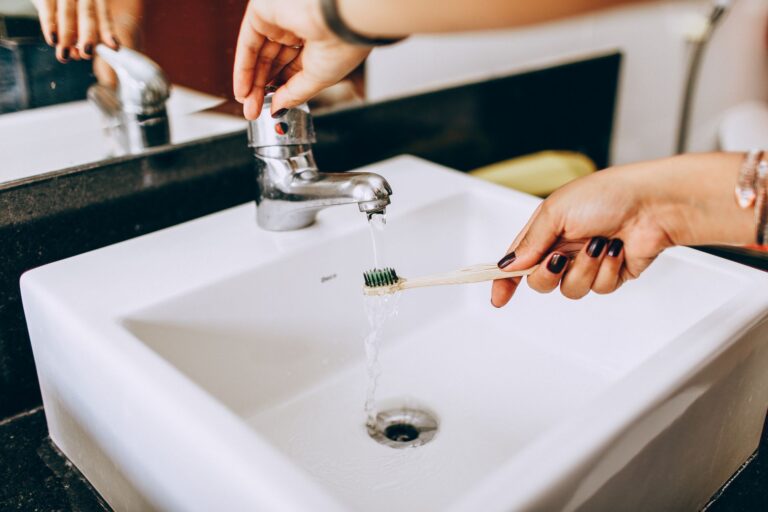
After each use, rinse the basin with warm water, wipe it with mild dish soap and a nonabrasive sponge, rinse again, and dry it with a microfiber cloth. You remove soap film and mineral residue without grinding grit into porcelain enamel, which keeps the dark glaze from looking cloudy or scratched.
This practical care routine suits you if white spots, streaks, utensil scuffs, or dull patches keep showing up on your black sink.
The Finish Behind a Clean-Looking Black Sink
Dark porcelain shows residue faster than white porcelain because pale minerals and soap film contrast against the glaze. A thin layer of dried tap water, flour dust, or dish soap can leave your basin looking hazy within hours.
Porcelain enamel differs from black composite materials
A black porcelain kitchen sink has a glass-like porcelain enamel coating fused over metal or cast iron. The coating handles routine kitchen soil well, yet scratches, chips, and harsh residue remain highly visible against a dark finish.
Your sink can resemble granite composite, acrylic, quartz, or fireclay, but those materials have different care limits. Check the product label or manufacturer paperwork before using a method intended for a matte composite basin.
| Surface | What causes pale marks | Care focus |
|---|---|---|
| Black porcelain enamel | Soap film, mineral residue, metal transfer | Gentle wiping and complete rinsing |
| Black granite composite | Hard-water deposits and oily residue | Surface-specific cleaner directions |
| Black acrylic | Fine scratches and dried water spots | Very soft cloths and low-abrasion products |
| Black fireclay | Mineral haze, stains, glaze damage | Glaze-compatible spot care |
White marks come from several sources
Hard-water stains form as water evaporates and leaves calcium and magnesium on the glaze. Food residue can dry into a gray cast, while aluminum pans and stainless utensils can leave dark metal-transfer scuffs near the drain.
A white ring around a drip tray points to mineral deposits, while a charcoal streak beneath a baking sheet points to metal contact. Start with the mildest method, then rinse away residue before you judge the dry finish.
A Gentle Cleaning Kit Protects Porcelain
Because dried residue shows so clearly, your daily tools matter more than aggressive products. A short list of soft materials handles routine grime without putting abrasive particles against the glaze.
Core supplies handle daily care
- Warm water: Warm water loosens food soil before your cloth or sponge touches the surface.
- Mild dish soap: Mild dish soap cuts cooking grease without the grit found in scouring powders.
- Soft cloth: A soft cloth lifts loose residue from the bowl, rim, and faucet-side ledge.
- Nonabrasive sponge: A nonabrasive sponge handles light stuck-on soil without steel fibers or rough texture.
- Microfiber cloth: A microfiber cloth removes remaining moisture before mineral haze dries in place.
Dawn Dish Soap is one familiar mild option, though any gentle liquid dish soap can work. Your goal is lubrication and soil removal, not friction, because added pressure does not improve porcelain enamel.
Specialty products need narrow jobs
White vinegar works for targeted hard-water stains, and baking soda works as a mild paste for an isolated mark. Neither belongs in your daily wash because leftover powder or acid can leave another cloudy film.
Read the sink maker’s care directions before using Bar Keepers Friend, Soft Scrub, hydrogen peroxide, bleach, CLR, or a drain cleaner. Kohler and American Standard product lines can vary by finish and installation material.
Strong products bring a trade-off. They can shift a stain, yet long contact can damage glaze, drain hardware, caulk, or a nearby countertop, leaving you with a larger repair than the original mark.
The Daily Wash Prevents Streaks and Haze
Five minutes after dish cleanup can spare you the chalky rings that form overnight. Warm water loosens loose material before dish soap reaches the porcelain, so the sponge needs less pressure.
Each pass removes a separate layer
- Clear the basin: Remove dishes, strainers, crumbs, and wet sponges so food soil does not stay trapped against the enamel.
- Rinse with warmth: Run warm water around the bowl, rim, drain flange, and faucet-side ledge for 20 to 30 seconds.
- Add minimal soap: Put a few drops of dish soap on a damp soft cloth or nonabrasive sponge.
- Wipe with light pressure: Move across the surface gently, giving the drain edge one extra pass.
- Rinse completely: Flush away suds until water sheets cleanly instead of gathering in slippery patches.
- Dry every area: Wipe the bowl, rim, and ledge with microfiber before droplets become visible spots.
Your hand should glide rather than press. A dried oatmeal spot needs a warm, wet cloth laid over it for two minutes; forcing a sponge across it can leave fine scratch lines.
Drying controls the final appearance
A rinse leaves dissolved minerals behind as droplets evaporate. Drying is the step that helps your black kitchen sink stay shiny, especially where mineral-heavy tap water leaves marks within a day.
Wipe the sink after rinsing pasta water at night, then inspect it under morning window light. You should see fewer white specks on a dried basin than on one left wet, even though both received the same wash.
Marks that survive regular rinsing usually need a method matched to their cause, rather than more of the same.
Targeted Methods Lift White Marks and Stubborn Stains
Residue left after the daily wash needs a narrow response rather than a stronger all-purpose product. Treating one mark at a time tells you whether you are lifting minerals, food color, or metal transfer.
Vinegar loosens mineral haze during short contact
For how to remove water spots from a black sink, mix equal parts white vinegar and water. Dampen a cloth, lay it on the white mark for 1 to 3 minutes, then rinse thoroughly and dry the area at once.
Mineral deposits lift from intact black porcelain because they sit on top of the glaze. Your cloth should stay damp rather than dripping, so vinegar does not pool around seams, caulk, or drain hardware.
Baking soda handles isolated scuffs and food stains
A thin paste of baking soda and a few drops of water lifts persistent gray scuffs and food stains. Rub with a soft damp cloth in light, short strokes, then rinse and dry before you reach for another product.
| Visible problem | Gentle response | Finish step |
|---|---|---|
| White water spots | Diluted white vinegar on a damp cloth for 1 to 3 minutes | Rinse fully and dry |
| Cloudy soap film | Warm water and mild dish soap | Rinse until no slickness remains |
| Gray utensil scuff | Light baking soda paste spot work | Rinse, dry, then inspect |
| Tomato or coffee stain | Soapy warm-water cloth held on the area for 2 minutes | Wipe gently and dry |
Keep vinegar and baking soda separate rather than mixing them into foam. The fizz spends the acid and powder quickly, while separate treatments give you clearer control over residue and contact time.
Stop after each treatment and inspect the dry surface. A film of vinegar, baking soda, or soap can resemble a stain until water removes it.
Cleaning Mistakes Dull or Damage the Surface
A dull patch is harder to hide than a water spot. Scratching changes how light hits the enamel, turning a temporary mark into a lasting visual flaw that you can see from several angles.
Abrasives damage gloss through friction
- Steel wool: Steel fibers scratch porcelain enamel and can leave rust-prone fragments near the drain.
- Scouring pads: Rough green pads leave fine lines that scatter light across a black surface.
- Harsh powders: Gritty cleansers wear down gloss, especially under forceful circular scrubbing.
- Metal tools: Knife tips, pan edges, and wire brushes can chip or mark the glazed coating.
- Long soaking: Acidic liquids, bleach, and wet metal objects can stain or damage vulnerable areas.
How to clean a black enamel sink without scratching it comes down to contact pressure and grit. Soften a crusted patch with a soaked cloth, then lift it away instead of scraping across the bowl.
Chemical mixing creates a separate hazard
Never mix white vinegar with chlorine bleach or bleach-containing products. That pairing can release hazardous fumes, so rinse the sink with plenty of water before switching between product families.
Your safest response to a deep scratch is restraint. Light metal-transfer scuffs can fade after gentle cleaning, but a chip, rough crater, or visible metal base needs manufacturer advice or professional refinishing rather than more abrasion.
Knowing when to stop scrubbing makes prevention the easier path, especially after damage has already appeared.
A Low-Effort Routine Keeps the Finish Shiny
Small habits reduce rescue work. A basin that gets rinsed and dried before minerals set needs far less vinegar or baking soda later.
A simple schedule limits residue buildup
- After meal prep: Rinse acidic food splashes, coffee grounds, and gritty vegetable soil before they dry.
- After dishwashing: Wipe the rim and faucet-side ledge where splashed soap water leaves pale streaks.
- After heavy water use: Dry the bowl with microfiber, especially where hard-water deposits appear within a day.
- At visible haze: Use diluted vinegar only on the mineral mark, then rinse and dry that area.
- At stubborn marks: Reach for a baking soda paste only after dish soap does not lift the spot.
Rinse after substantial use, do the soap wash once per day or after greasy cooking, and dry after cleaning or a heavy run of water. Your sink stays easier to maintain because minerals do not get hours to harden on the glaze.
Surface damage needs a different response
Discoloration that survives gentle care can sit beneath the glaze rather than on it. Stop escalating abrasives and contact the sink manufacturer around chips, drain openings, rough areas, or exposed metal.
How to restore shine to a black kitchen sink depends on the source of dullness. Mineral haze lifts with short vinegar contact, soap residue lifts with a thorough rinse, but worn enamel does not regain gloss through stronger scrubbing.
What to Remember
The durable-looking black finish needs a light touch. Use warm water, mild dish soap, a soft wiping tool, a complete rinse, and a dry microfiber cloth; reserve vinegar and baking soda for isolated marks, and stop once a mark becomes surface damage.
FAQ
What is the safest way to clean a black porcelain kitchen sink?
The safest method uses warm water, mild dish soap, a nonabrasive sponge or soft cloth, a full rinse, and microfiber drying. You protect porcelain enamel by using light pressure and removing moisture before calcium and magnesium leave pale spots.
Why does my black porcelain sink have white spots or cloudy streaks?
White spots and cloudy streaks are mineral deposits or soap film left behind after water dries. You can remove fresh film with warm water and dish soap, while mineral residue responds to diluted white vinegar on a damp cloth for 1 to 3 minutes.
Can I use baking soda and vinegar on a black porcelain sink?
Baking soda and vinegar work separately and sparingly on intact porcelain enamel. You can use diluted vinegar for mineral haze and a light baking soda paste for a stubborn scuff. Do not mix them together, and rinse between treatments so residue does not resemble a new stain.
Can I use Bar Keepers Friend on a black porcelain sink?
Before applying any cleanser, check the manufacturer’s guidance for approval on your specific sink finish. Check the care directions from Kohler, American Standard, or your sink maker, because product lines can have different glaze and installation-material limits.
What cleaners and scrubbers should I avoid on porcelain enamel?
Avoid steel wool, abrasive pads, harsh scouring powders, wire brushes, and forceful scraping because they can scratch or dull the glaze. You should also avoid leaving bleach, acidic liquids, wet cans, cast-iron pans, or metal utensils on the surface for long periods.
How do I remove hard-water stains from a black sink without leaving residue?
Dampen a cloth with equal parts white vinegar and water, place it on the mineral mark for 1 to 3 minutes, rinse fully, and dry with microfiber. Your cloth should not drip, because pooled vinegar can sit around drain hardware and seams.