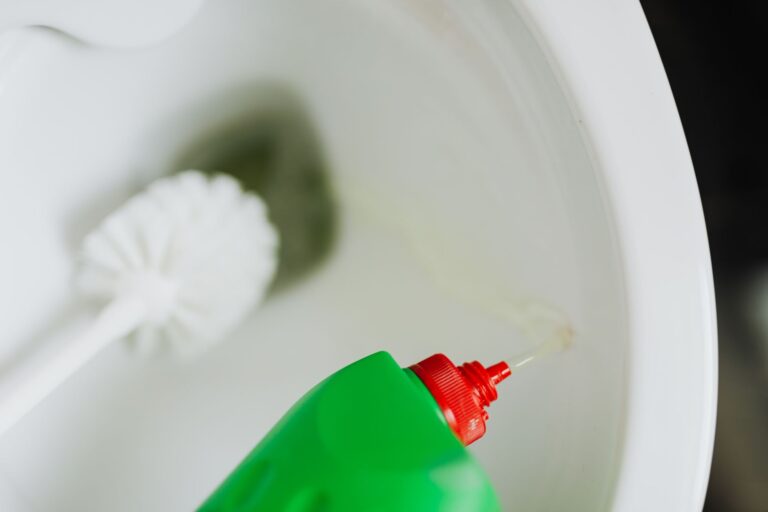
Most drain-cleaner labels limit contact to 15–30 minutes before a thorough rinse. That practice is safe only where the exact bottle permits it. Caustic liquids such as Drano tend to call for minutes, while some enzymatic formulas allow longer contact.
You will find practical steps for missed rinses, slow drains, PVC pipes, metal plumbing pipes, septic systems, and the point where a plumber should take over.
The Product Label Sets the Dwell Time
The printed directions on the bottle set the clock for your drain. Each formula has its own concentration, ingredients, fixture limits, and water-flush instructions. Treat the stated dwell time as a firm limit rather than a rough estimate.
Fast Chemical Formulas Work in Minutes
Caustic drain cleaners use alkaline ingredients such as sodium hydroxide to break down grease, hair, and soap residue. Acidic drain cleaners can contain sulfuric acid, which attacks organic material with far greater force. Both types can produce heat during the reaction inside your pipe.
Drano, Liquid-Plumr, Green Gobbler, and CLR sell formulas made for different drain problems. Your answer depends on the exact bottle in your hand, its clogged-drain directions, and its required water flush.
| Cleaner type | Common active ingredients | Usual label approach |
|---|---|---|
| Caustic liquid or gel | Sodium hydroxide, bleach-based compounds | Short dwell period followed by a directed water flush |
| Acidic cleaner | Sulfuric acid or hydrochloric acid | Strict handling rules and short contact periods |
| Enzymatic cleaner | Enzymes and bacterial cultures | Longer treatment periods, including overnight use on some labels |
| Foaming cleaner | Surfactants and reactive ingredients | Timed use based on fixture and blockage type |
Enzymatic drain cleaners can be made for extended contact, but your bottle still sets the allowed time. A label that says 30 minutes does not turn a slow sink into an overnight application.
Contact continues until water carries the product away. That detail shifts attention from the clog alone to your plumbing material, the standing liquid, and the condition of nearby seals.
Extended Contact Raises Damage and Exposure Risks
A blocked pipe can trap corrosive liquid above the obstruction. Heat can build in the drain trap, while caustic ingredients rest against seals, metal joints, or a fixture finish. That is what happens if drain cleaner sits too long.
Pipe Materials React Differently
Older metal plumbing pipes need extra care around harsh chemicals. Repeated contact can speed corrosion at thin spots, threaded fittings, and aging joints. Your leak may not appear until a later repair disturbs a weakened connection.
PVC pipes resist many household formulas, yet concentrated heat and incompatible products can still damage glued connections or deform weak sections. A slow drain can keep the chemical in one location rather than moving it through the line.
Your septic system adds another concern. Strong drain chemicals can disrupt the bacteria that process waste inside a septic tank, leaving you with a drainage issue that reaches beyond one sink.
Later Repairs Become More Hazardous
Plumbers face a practical hazard around unknown chemical residue. A cable, plunger, or loosened trap can throw liquid outward without warning. Your face, hands, flooring, and the plumber’s equipment can all fall within the splash area.
A dense hair plug or a small toy farther down the branch line can block the cleaner from reaching the real obstruction. More product does not clear a physical object. It can leave a corrosive pool above the blockage instead.
| Situation | What extended contact can cause | Your practical concern |
|---|---|---|
| Old galvanized or cast-iron pipe | Surface corrosion and weakened joints | Leaks can appear during later repair work |
| PVC drain assembly | Heat stress or damaged cemented joints | Leaks can hide inside a cabinet or wall |
| Porcelain or metal fixture | Etching, discoloration, or finish damage | Replacement can cost more than mechanical clearing |
| Septic-connected home | Disrupted tank bacteria | Waste processing can suffer after harsh chemical use |
Those hazards call for restraint rather than a rushed attempt to force water through. Your next step is a controlled response that keeps chemical residue contained and away from skin and eyes.
A Calm Response Limits Risk After an Overnight Mistake
Clear the room around the fixture before touching the faucet. Keep children and pets away, open a window or run the exhaust fan, and stay upright rather than placing your face over the drain. Fumes can collect close to a basin, shower pan, or tub opening.
The Label Directs the Immediate Response
Find the bottle before you touch the faucet. Your product label states the water temperature, flush volume, and warnings for standing water. Some products call for cold water, while hot water can worsen heat or vapor from another formula.
Wear gloves made for household chemical contact and close-fitting eye protection. Long sleeves and closed shoes reduce exposed skin near a sink cabinet, shower pan, or tub overflow.
- Clear the area: Keep pets, hands, and personal items away from the fixture until the chemical has moved through the drain.
- Ventilate the room: Open a nearby window and run the bathroom fan to move fumes away from your breathing space.
- Read every direction: Check the exact dwell time, water temperature, and stated flushing volume on your product.
- Flush as directed: Run the listed water flow without leaning over the basin or reaching into standing water.
- Stop at fumes: Leave the room and seek urgent help for severe fumes, coughing, dizziness, eye pain, or breathing trouble.
Mixing Products Creates a Separate Danger
Never add bleach, ammonia, vinegar, acids, another drain cleaner, or a household cleaner to neutralize residue. Your sink is not a chemistry lab. Mixed products can release irritating gases, produce heat, or cause violent splashing.
Do not pour another product into a drain that failed to clear. Unknown residue can react with the new liquid before either product reaches the clog.
Anyone who forgot to rinse drain cleaner with water should avoid plunging, snaking, or dismantling the trap at this stage. The label-directed flush comes before every physical clearing method.
Safe Flushing Comes Before Physical Clearing
Water needs to carry residue away before tools go near the opening. Follow the manufacturer instructions exactly, stand to one side, and keep your eyes above the basin rim. A steady directed flow is safer than leaning in to inspect bubbles.
Flushing Removes the Chemical Hazard
Use only the water temperature and amount printed on the container. Your faucet should run long enough to move the product beyond the fixture drain, but do not improvise with boiling water, a kettle, or a high-pressure hose.
Strong bubbling, sharp fumes, or heat at the fixture are stop signs. Shut off the water, leave the space, and contact poison control or emergency services for exposure symptoms. Call a plumber for a contained drain hazard that remains after the labeled flush.
Pressure Tools Can Launch Corrosive Liquid
Do not plunge a drain containing chemical residue. The plunger cup can propel caustic liquid onto your skin, into your eyes, across tile, or toward someone standing nearby.
A drain snake also waits until the cleaner has been thoroughly flushed and the hazard has passed. For how to remove drain cleaner from pipes, follow the product-directed flush and seek professional advice where water still will not pass.
After the chemical has cleared, the blocked line becomes a plumbing issue rather than an exposure issue. That distinction points you toward physical methods suited to trapped objects and packed debris.
Mechanical Methods Address Clogs Chemicals Miss
A hair wad at the stopper does not dissolve like grease film. Repeated chemical use can point to a physical obstruction, such as a toothbrush cap, dental floss, food scraps, or compacted sludge farther down the line.
Accessible Blockages Respond to Direct Removal
Remove the sink stopper after the line is clear of cleaner, then pull out hair and soap buildup with a plastic barbed strip. In a bathroom sink, the horizontal pivot rod can hold tangled hair around the stopper stem.
Your drain trap, the curved pipe beneath a sink, can catch rings, grease, and debris. Place a bucket beneath it before removal and loosen slip nuts carefully. Stop work where pipe joints look corroded or chemical residue remains.
| Drain symptom | Likely cause | Next approach after flushing |
|---|---|---|
| Single bathroom sink drains slowly | Hair at stopper or trap | Clean the stopper and accessible trap |
| Kitchen sink slows after greasy meals | Grease buildup in branch pipe | Remove accessible debris or arrange cable service |
| Tub backs up during showering | Hair and soap clog near the drain | Use a suitable hand snake after chemical clearance |
| Two fixtures back up together | Blockage deeper in a shared line | Contact a licensed plumber |
Recurring Symptoms Point Deeper Into the System
Water returning through another drain, sewage odors, or several affected fixtures point beyond a surface clog. A RIDGID-style cable machine can reach farther than a hand snake, yet forceful cabling can damage fragile pipe walls or snag in old fittings.
Leave drain cleaner overnight only under a label that expressly permits that timing. Do not pour another bottle after a failed attempt. Your repeat backup needs a diagnosis rather than a stronger chemical dose.
Persistent Clogs Need Professional Help and Prevention
Standing water that remains after the directed flush is a clear stop point. Leaks under the cabinet, strong fumes, repeated failures, unknown chemicals, or suspected pipe damage also call for a licensed plumber rather than another DIY step.
Clear Details Protect the Service Visit
Tell the plumber or landlord the product name, active ingredients, amount poured, dwell time, flush status, and every substance that contacted the drain. Your details help the person arriving select protective gear and a safer clearing method.
For a rental, report the issue before taking apart pipes behind a wall or beneath a shared fixture. Your lease and local maintenance rules can place responsibility for a main-line obstruction with the property owner.
Small Habits Reduce Harsh Chemical Use
- Fit drain screens: Catch hair in showers and food scraps in kitchen sinks before they reach your pipe.
- Discard grease properly: Cool cooking grease in a container, then place it in the trash instead of the sink.
- Clean stoppers monthly: Pull hair and residue from bathroom hardware before a slow drain becomes standing water.
- Use sink strainers: Keep coffee grounds, rice, and fibrous food scraps out of the kitchen trap.
- Report repeat backups: A recurring slow fixture deserves prompt attention before water reaches another drain.
A service call is especially justified after chemical exposure in old metal plumbing pipes or a septic-connected home. Your priority is a clear line without corrosion, splash exposure, or damage concealed behind finished walls.
What to Remember
The label is the reliable answer to dwell time. Chemical cleaners belong in a drain overnight only where their directions expressly permit it; fast caustic and acidic products rarely fit that category. Ventilate, flush exactly as directed, never mix products, and stop DIY work before pressure tools or pipe disassembly turn residue into an injury.
FAQ
Can you leave drain cleaner overnight?
Check the exact product label: extended contact is appropriate only when it explicitly permits it. Many caustic and acidic chemical drain cleaners call for a wait measured in minutes, while some enzymatic drain cleaners permit several hours or overnight contact. Your bottle directions control the safe dwell time and flush procedure.
What happens if I leave drain cleaner in for too long?
Long contact can continue the chemical reaction inside your drain, raising the chance of heat, pipe corrosion, damaged seals, fixture staining, and dangerous splashing during later work. Your risk rises with caustic or acidic products, old metal pipes, standing water, and a clog that blocks the cleaner from moving onward.
Why do plumbers say not to use drain cleaner?
Plumbers object because chemical products can fail to reach a solid obstruction while leaving corrosive liquid trapped above it. Your plumber then faces splash exposure during snaking or trap removal, and repeated use can worsen weak joints, harm septic bacteria, or obscure the actual cause of a recurring backup.
What happens if I forgot to run water after Drano?
Ventilate the room, keep your face away from the opening, and check the exact Drano label before taking action. Your next step is the stated flushing procedure with its listed water temperature and volume. Do not add bleach, vinegar, ammonia, another cleaner, or a plunger.
How long is too long for drain cleaner?
The dwell-time limit printed on your specific container marks when contact becomes excessive. Many caustic and acidic chemical drain cleaners call for a wait measured in minutes, while some enzymatic formulas permit several hours or overnight contact. Your product directions override broad timing advice found elsewhere.
Can drain cleaner damage PVC or metal pipes?
Corrosion can weaken metal plumbing, while concentrated heat or incompatible chemicals can stress PVC joints. Your plumbing is more vulnerable where joints are old, seals are worn, or cleaner remains trapped behind a blockage. A plumber can inspect persistent leaks or recurring slow drains.