Most homes need a weekly toilet bowl scrub, with sooner attention after visible soil, odor, illness, or heavy use. Your toilet bowl can collect a ring beneath the rim within seven days, even while the water appears clear.
You’ll set a practical schedule for bowl scrubbing, exterior surface care, hard-water stains, brush hygiene, and cleaner safety in bathrooms with different levels of use.
A Weekly Bowl Scrub Sets a Practical Baseline
Seven days is a sound starting point for a toilet used at a normal household pace. A clean bowl has no visible ring, stale odor, or film beneath the toilet rim and jets. Your toilet brush removes fresh residue before it settles into the waterline and trapway.
Routine bowl care focuses on the porcelain inside the bowl. It does not cover every exterior touch point during each scrub. Your weekly toilet cleaning routine can stay simple while the flush water clears waste and the bowl remains bright.
| Cleaning task | Main target | Normal timing |
|---|---|---|
| Bowl scrub | Rings, residue, odor-causing film | Once each week |
| Spot clean | Splashes, fresh marks, visible soil | Right after you see it |
| Surface wipe | Seat, lid, flush handle, hinges | Weekly or after contamination |
| Scale removal | Waterline deposits and rim channels | As mineral deposits appear |
Several skipped scrubs change the work. Deposits harden under the rim, bacteria and germs remain on trapped soil, and a pale waterline can turn brown or gray. Your later scrub takes longer because the brush has to lift layers rather than fresh film.
Brush the underside of the rim, not only the open bowl. Flush holes can collect residue that later leaves streaks down the porcelain.
Household Use Sets the Cleaning Schedule
More flushes, hands, and splashes call for a shorter interval than the seven-day baseline. A guest bathroom used twice a week needs less attention than one toilet serving four family members each day. Your schedule should follow bathroom use rather than a fixed calendar date.
| Bathroom situation | Bowl scrub schedule | Extra attention |
|---|---|---|
| One-person home | Once weekly | Spot clean rings or odors |
| Two adults with several bathrooms | Once weekly per active toilet | Clean seldom-used bowls before guests arrive |
| Family bathroom with young children | Two times weekly | Wipe splashes promptly |
| Older adult or illness-related care | Two or more times weekly | Clean contamination right away |
| High-use shared bathroom | Two to three times weekly | Check waterline and handle daily |
High-use rooms need a faster rhythm because each flush adds moisture, traces of soil, and splatter. You should scrub a busy household toilet two or more times each week. Handle fresh marks that day instead of leaving them for the scheduled session.
Flushing after every use remains the normal sanitary practice. Leaving urine in your bowl raises odor and gives residue more time to cling to the waterline. Warm weather and poor ventilation can make that stale smell appear sooner.
Visible Clues Override the Calendar
- Fresh waterline ring: Scrub before the line dries into a harder deposit around your bowl.
- Urine splash: Wipe nearby porcelain, the seat, and the floor edge without waiting for your next scrub.
- Lingering odor: Clean the bowl, brush beneath the rim, and inspect the base for missed soil.
- Heavy guest use: Wipe touch points and scrub the bowl after the bathroom returns to normal use.
- Illness contamination: Remove soil, then follow the product label for surface germ reduction.
A twice-weekly bowl scrub is still routine care, not a sign of poor housekeeping. The next choice is whether your bowl needs brush work or exterior surfaces need a labeled germ-reduction product.
Bowl Cleaning, Surface Care, and Deep Cleaning Have Separate Roles
Soil has to come off before a chemical product can work on exposed surfaces. Cleaning lifts residue, paper dust, body oils, and mineral film. Your germ-reduction product needs the labeled concentration and contact time, meaning the surface stays wet for the stated number of minutes.
Exterior Touch Points Need Separate Attention
The flush handle, seat, lid, hinges, and nearby light switch receive more hand contact than the bowl interior. Your weekly routine can include a cleaner on those areas, followed by a separate cloth dampened with a labeled hard-surface product during illness or visible contamination.
| Task | What it removes | Where it matters most |
|---|---|---|
| Routine cleaning | Soil, film, rings, odors | Bowl, rim, waterline |
| Surface germ reduction | Germs on cleaned touch points | Handle, seat, lid, hinges |
| Deep cleaning | Set residue and missed soil | Rim channels, jets, base, brush holder |
Gastrointestinal illness, visible body-fluid contamination, and contagious illness call for extra surface care. Soil can block contact between a product and the surface beneath it. That matches guidance from the Centers for Disease Control and Prevention, which directs cleaning before germ-reduction steps.
Clorox, Lysol, and Scrubbing Bubbles sell formulas with different directions. Check the bottle in your hand because bowl gel and hard-surface spray do not share the same contact time or suitable surfaces.
Using each product correctly is only half the job; the cleaning sequence also determines where germs can travel.
A Hygienic Order Limits Cross-Contamination
The toilet belongs at the end of a bathroom cleaning session. Start with mirrors, counters, and sink surfaces, then move to the tub or shower, floor, and toilet. Your cloth stays cleaner longer, and less toilet residue reaches the faucet handle.
A Reliable Cleaning Order
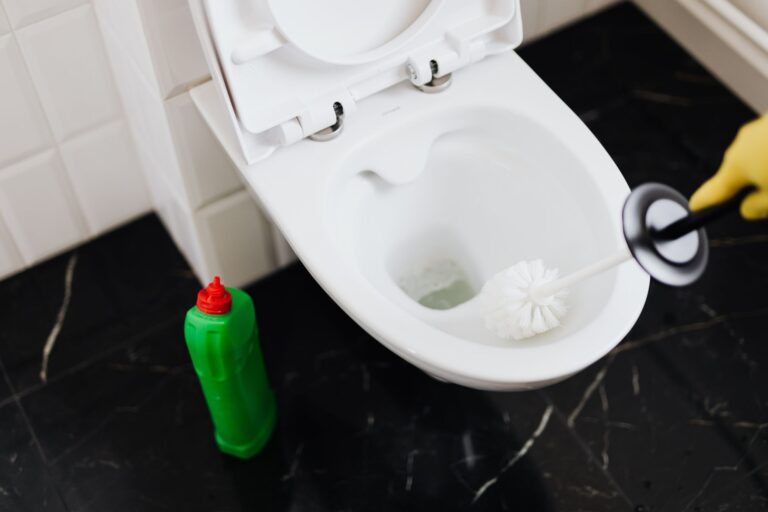
- Gather tools: Put on gloves and set out bathroom-only cloths, bowl cleaner, and your toilet brush.
- Wipe outer surfaces: Clean the tank, lid, seat, hinges, handle, and base before touching the bowl interior.
- Coat the rim: Place cleaner beneath the rim so it reaches channels that feed flush water.
- Wait as labeled: Leave the formula in place for its stated contact time before brushing or flushing.
- Brush key areas: Work beneath the rim, across the waterline, and into the trapway with firm strokes.
- Rinse and dry: Flush, rinse the brush in clean flush water, and leave it to dry before storage.
Use a brush holder that allows air around the bristles instead of trapping wet fibers inside a dark cup. Replace your toilet brush after bristles bend outward, the handle cracks, or soil remains after rinsing. Mold and mildew grow in damp holders with poor airflow.
Use bathroom-only cloths and wash them apart from kitchen towels. A color-coded set helps keep toilet residue out of food-preparation areas.
Handwashing closes the routine. Soap, running water, and 20 seconds of rubbing remove residue from your skin after gloves come off. Careful glove removal still leaves a chance for soil to reach fingertips.
Hard Water Stains Need Targeted Care
A white, chalky ring points to mineral buildup, while a rusty orange streak can point to iron in the water. Dark organic residue tends to smear or lift with brushing. Your stain type shows whether a regular toilet bowl cleaner, acidic descaler, or plumbing check belongs next.
Mineral Scale Needs Early Removal
Hard water stains form as water evaporates and leaves calcium and magnesium behind. Mineral deposits can narrow toilet rim and jets over time, weakening the rinse pattern that washes the bowl wall. Your bathroom may need descaling every one to two weeks where pale crust returns quickly.
Acidic descalers break down mineral scale more effectively than soap-based cleaners. Follow the label, ventilate the room, and rinse fully before using another product. Your porcelain stays smoother with gentle brushing, while abrasive pads and aggressive scraping leave scratches that hold later stains.
Recurring Odor Can Point to Plumbing Trouble
A bowl that smells bad soon after scrubbing needs closer inspection. Clean under the rim and around seat bolts, then check the water level and flush strength. Your next step can be a plumber where recurring odor comes from a worn wax ring, blocked vent, or poor seal at the base.
Brown staining that returns within days can also come from iron-rich water or a tank component shedding rust. Extra cleaner will not fix that source. Your attention belongs on the tank, water supply, or plumbing repair after normal brushing stops changing the pattern.
When recurring marks point to a mechanical problem, stronger chemicals add risk without addressing the underlying cause.
Product Safety Protects Your Bathroom and Septic System
Bleach and ammonia create dangerous fumes together. Bleach must never touch acidic toilet cleaners, vinegar, or another cleaner. Your safest habit is one product at a time, followed by thorough flushing and rinsing before another product enters the bowl.
Read the label before pouring liquid into the toilet bowl. Cleaner can injure skin and eyes, while mixed chemicals can release gases that irritate your lungs. Your gloves, ventilation, and measured use matter more than extra liquid.
Septic-Conscious Habits Reduce Chemical Exposure
Septic systems rely on bacteria to break down household waste. Occasional use of a toilet cleaner suited to septic systems differs from repeated heavy chemical use or continuous chemical tablets in the tank. Your tank and drain field benefit from modest amounts used as directed.
Skip tank tablets that rest against internal parts for months, since some formulas can wear rubber seals and metal pieces. A brush, regular flushes, and targeted descaling handle visible buildup without adding a chemical dose to every flush.
Practical Decisions Keep Work Manageable
- Scrub weekly: Keep the seven-day rhythm while your bowl stays bright, odor-free, and free of visible residue.
- Add touch-ups: Clean two or three times weekly in shared rooms, child-used bathrooms, or guest-heavy periods.
- Wipe touch points: Follow labeled germ-reduction directions after illness, body-fluid contamination, or heavy household use.
- Descale sooner: Address chalky rings before hard-water deposits restrict rim channels and flush jets.
- Check plumbing: Seek repair for repeating odor, weak flushing, low bowl water, or stains that return rapidly.
How often to clean a toilet bowl becomes clearer once you watch the bowl between scheduled scrubs. Your goal is not daily deep cleaning. It is steady care that removes fresh soil before it hardens, plus a prompt response to illness, heavy use, or water chemistry.
Final Thoughts
A weekly scrub is a sound starting point for your toilet bowl, yet the bowl sets the final schedule. Add a second cleaning in busy bathrooms, remove visible marks right away, and separate bowl scrubbing from germ-focused exterior care. Your safest results come from patient brush work, label-based contact time, dry tools, and never mixing cleaners.
FAQ
How often should you clean your toilet bowl?
Most homes need a bowl scrub once each week. Your toilet needs two or more scrubs each week in a busy shared bathroom, during illness-related care, or after repeated splashes and visible residue.
How often should you disinfect a toilet, especially in a busy household?
High-touch surfaces need germ-focused cleaning after illness, body-fluid contamination, or heavy bathroom use. Your flush handle, seat, lid, and hinges need cleaning before a labeled surface product can work for its stated wet contact time.
What do plumbers recommend for cleaning toilet bowls and removing stains?
Plumbers favor regular brushing with a toilet bowl cleaner rather than harsh scraping or repeated heavy chemical use. Your brush should reach beneath the rim and into the trapway, while weak flushing, base odor, or rapid stain return deserve a plumbing inspection.
Should I flush the toilet after every pee?
Yes, flushing after every use is the normal sanitary practice for a shared household bathroom. Leaving urine in your bowl can raise odor, leave residue at the waterline, and make your next cleaning session harder, especially during warm weather.
What happens if you do not clean your toilet bowl regularly?
Residue builds beneath the toilet rim, around the waterline, and inside the trapway after skipped scrubs. Your bowl can develop odor, darker rings, mineral crust, and stains that need more time and targeted cleaning to remove.
What is the most hygienic way to clean a toilet?
Clean less soiled bathroom surfaces before the toilet, then clean the exterior and bowl with dedicated tools. Your final steps should include rinsing the toilet brush, allowing it to dry, removing gloves carefully, and washing your hands with soap and water.