Aging municipal pipes, hard well water, and the steady drumbeat of news about forever chemicals make a strong case for filtering water where it enters the home. Whole house systems catch sediment, chlorine, and heavy metals before they reach faucets, water heaters, washing machines, and skin. The right setup turns every tap, from the kitchen sink to the outdoor hose, into a cleaner source, and the picks below cover a range of budgets, filter stages, and installation preferences.
An Overview Of The Picks
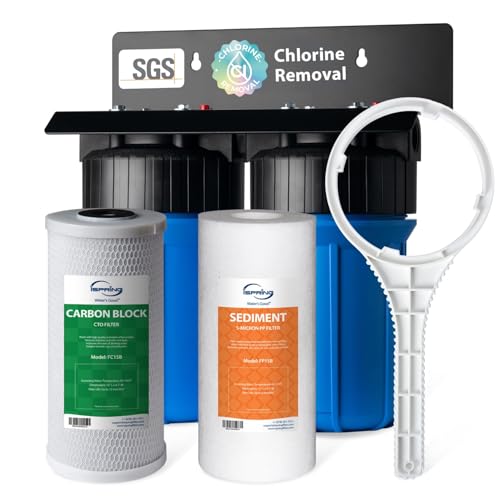
iSpring WGB21B 2-Stage Whole House Filtration (50,000 Gallons)
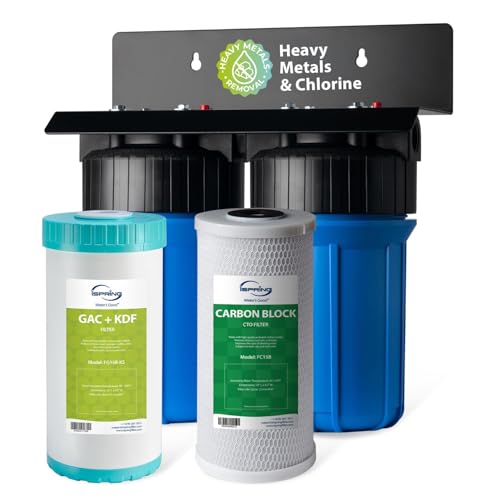
iSpring WGB21B-KS 2-Stage Heavy Metals Filter

iSpring WGB21B-PF Whole House PFAS Filter (10″)

iSpring FP15X50-N 5-Micron Sediment Cartridges (50-Pack)

iSpring F3 Under-Sink Filter Set (RCC7AK/US31)

Waterdrop 15UB Under-Sink System with Faucet

PUREPLUS 1-Stage Iron & Manganese Filter

Purevua PFW10 10″x2.5″ Filter Housing

PUREPLUS Clear Housing with Pressure Gauge (1″)

PUREPLUS 10″x4.5″ Housing with Pressure Gauge (1″)
The Details Behind The Selections
The WGB21B is the kind of starter setup that quietly handles the basics in a typical city-fed home. A 5-micron sediment stage sits ahead of a coconut shell carbon block, which means grit gets trapped before chlorine and the earthy taste that comes with it ever reach your showerhead.
Plumbing it in at the main line filters every outlet at once, from the kitchen tap to the laundry machine. Owners commonly replace the first stage a few times a year, but the carbon block tends to stretch longer, depending on how hard your municipal supply runs.
The Case For It
- Two-stage design tackles sediment and chlorine in one pass
- 50,000-gallon rated capacity suits most mid-size households
- Standard 1-inch inlet and outlet fit common plumbing
- Filter housings accept widely available 10-inch cartridges
Things To Consider
- Does not specifically target heavy metals or PFAS
- Sediment pre-filter needs swapping every few months in turbid water
- Pressure can dip slightly when both cartridges load up
Key Specs
Who It Suits Best
First-time buyers on municipal water who want a straightforward two-stage system without specialty media.
Where Another Pick Suits Better
Homes worried about lead or mercury should step up to the iSpring WGB21B-KS, which adds a KDF stage for heavy metal reduction.
Where the WGB21B focuses on sediment and chlorine, the KS variant swaps in a KDF (kinetic degradation fluxion) plus granular activated carbon stage. KDF media uses a redox reaction, basically a chemical swap, to bind heavy metals like lead and mercury so they cannot pass through.
Older homes with original copper or lead-soldered plumbing benefit most from this added layer. The carbon still handles taste and odor, so you get cleaner drinking water and gentler shower water from the same line.
The Good Stuff
- KDF stage reduces lead and mercury at the whole-house level
- Retains the chlorine and taste improvements of standard carbon
- Fits the same mounting footprint as the WGB21B
- Pair-friendly with sediment pre-filters for very old pipes
Worth Noting
- KDF media works best on city water, less so on certain well supplies
- Carbon component still requires routine replacement every several months
- Filter changes take a few extra minutes because the second stage is heavier
Right Fit For
Households in pre-1980 homes where lead solder or aging service lines are a real concern.
Consider Something Else When
You primarily worry about forever chemicals rather than heavy metals; in that case, the iSpring WGB21B-PF focuses specifically on PFAS reduction.
PFAS (per- and polyfluoroalkyl substances) are the so-called forever chemicals that have dominated water-quality headlines, and the WGB21B-PF was built to chase them down at the point of entry. SGS testing backs the system’s claim of up to 99% reduction in PFOA and PFOS alongside sediment, chlorine, and odor control.
The 10-inch format and 1-inch connections match standard whole-house plumbing. It is the pick for suburban families who already drink filtered water but want the same protection in the shower, where skin absorbs contaminants over long, hot exposures.
What Pays Off
- Targets PFAS, PFOA, and PFOS at the whole-house level, a rare feature at this tier
- SGS third-party testing adds confidence in the reduction claims
- Still handles sediment, chlorine, and chemical taste in the same pass
Trade Offs
- PFAS-specific media tends to cost more per replacement cartridge
- Not a substitute for a dedicated reverse osmosis unit at the kitchen tap for drinking
- Limited benefit if your municipal report already shows nondetect PFAS levels
Made For
Parents and homeowners near military bases, airports, or industrial zones where PFAS contamination is a documented concern.
Skip It When
Your primary concern is basic sediment and chlorine removal; the iSpring WGB21B delivers that without the PFAS premium.
Not every home needs a new system. Some need a steady supply of replacement cartridges so the existing one keeps doing its job, and that is exactly where the FP15X50-N 50-pack earns its keep. Each cartridge is a 5-micron, multi-layer melt-blown polypropylene filter designed for the standard 10-by-2.5-inch housing used across most whole-house setups.
Buying in bulk keeps the per-filter cost low and means you will not scramble when the pressure drop tells you it is swap time. They fit iSpring, PUREPLUS, Purevua, and other common housings.
Positive Takeaways
- NSF-certified third-party tested media for peace of mind
- Multi-layer construction catches fine sediment without choking flow early on
- Universal 10-by-2.5-inch sizing fits most housings
A Few Limitations
- Storage space matters, a 50-pack takes up real shelf room
- Cartridges have a shelf life, so buying more than a two-year supply is rarely worth it
Best Suited To
Homeowners who already run a whole-house system and want to stop paying single-cartridge prices at the hardware store.
Look Elsewhere When
You have not installed a system yet; the iSpring WGB21B is a better starting point than a pile of cartridges.
Under-sink reverse osmosis systems pull a lot of work from their pre-filters, which is why iSpring bundles three replacements into the F3 set: a sediment stage, a granular activated carbon stage, and a carbon block stage. They are sized for the RCC7AK and US31 series, plus most standard 10-by-2.5-inch RO manifolds.
Replacing all three at once keeps the RO membrane downstream from burning out early. Each filter arrives individually wrapped, so you can rotate them in as needed without losing freshness.
The Value In It
- Three pre-filters in one box streamlines annual RO maintenance
- Sediment plus dual carbon stages protect the RO membrane from chlorine and grit
- Individually sealed cartridges stay fresh on the shelf
Room For Improvement
- Does not include the RO membrane itself, which must be sourced separately
- Six-month lifespan assumes typical municipal water; well water may shorten it
Who Will Love This
Anyone running an iSpring RCC7AK or similar under-sink RO unit who wants the pre-filter swap to be a single errand.
Reach For A Different Pick When
You want whole-house coverage rather than point-of-use filtration; the iSpring WGB21B serves that role.
Not every filter job calls for a main-line system. The Waterdrop 15UB is an under-sink unit that slips into a tight cabinet, where its tankless design preserves space that a traditional RO tank would otherwise steal. A dedicated brushed-metal faucet is included so you can keep filtered water separate from unfiltered.
It is built for municipal cold water only, so well owners should look elsewhere. For apartment dwellers and renters, the dedicated faucet and slim housing make daily use feel almost invisible.
A Few Highlights
- Tankless profile frees up under-sink storage for cleaning supplies
- Multistage filtration targets chlorine, lead, and chemical taste
- Dedicated faucet included, no extra plumbing kit required
Points To Keep In Mind
- Municipal water only, not rated for well or hot water supplies
- Filters only one tap rather than every outlet in the home
- Replacement cartridges are model-specific, so check the SKU before reordering
Perfect Match For
Renters and small-kitchen owners who want better drinking water without modifying the main supply line.
Another Choice May Suit
You want filtration at every fixture, including the shower; the iSpring WGB21B whole-house system covers the whole plumbing network.
Well owners know the orange stains on fixtures and the metallic aftertaste that come from iron and manganese, two minerals that city systems usually handle before water leaves the treatment plant. The PUREPLUS 1-stage system sits at the main line and pulls those minerals out before they stain the toilet tank or clog the dishwasher inlet.
It also protects downstream equipment: water heaters, washing machines, and shower heads all run longer when iron-laden hardness is filtered first. For households on private wells, that protection alone can justify the install.
The Upside
- Targets iron and manganese, the minerals most well owners struggle with
- Shields downstream appliances from rust-scale buildup
- Single-stage simplicity keeps filter swaps quick
Honest Caveats
- Does not address sulfur smell, hardness, or bacterial contamination on its own
- Effectiveness drops once the cartridge is saturated, so routine checks matter
Built With In Mind
Rural households on private wells that deal with orange staining and metallic-tasting water.
Where A Sibling Pick Shines
You want a multi-stage setup for city water; the iSpring WGB21B handles sediment and chlorine in tandem.
The PFW10 arrives as an empty vessel, basically a filter housing waiting for whatever cartridge you choose to drop in. That makes it the right starting point for DIYers who already know their water profile: sediment, carbon, KDF, or specialty media can each be swapped in as priorities evolve.
High-flow 3/4-inch NPT threaded ports keep pressure loss minimal, and multiple housings can be plumbed in series for layered filtration. The mounting bracket and pressure-relief button round out a builder-friendly package.
A Strong Showing
- Universal cartridge acceptance means no commitment to one brand’s media
- 3/4-inch NPT ports preserve flow at standard residential pressures
- Modular design supports multi-stage builds over time
Some Limits To Know
- Housing ships without a cartridge, so the initial cost is a partial picture
- DIY install requires basic plumbing know-how, including a pressure-relief routine
The Right Fit
Tinkerers and homeowners building a customized multi-stage setup who want flexibility over a fixed bundle.
A Better Fit Elsewhere
You would rather buy a turnkey system with cartridges included; the iSpring WGB21B is ready out of the box.
Transparent filter bowls are a small thing that changes how a system feels to own. With the PUREPLUS clear housing, you can glance at the cartridge and see exactly how much sediment it has caught, which removes the guesswork from replacement timing. The built-in pressure gauge sits on top so you can also watch for the drop that signals a clog.
Like the Purevua PFW10, this housing accepts any standard 10-by-2.5-inch cartridge, but the larger 1-inch NPT ports move more water, which is helpful for larger households running multiple fixtures at once.
Notable Upsides
- Clear bowl offers a visual cue for cartridge replacement
- Pressure gauge helps spot clogs before they become problems
- 1-inch NPT ports keep flow strong across multiple fixtures
Worth Bearing In Mind
- Clear bowl can yellow over years of UV exposure
- Cartridge is not included, so plan to source one separately
Whose Shelf It Belongs On
Homeowners who like data and visibility, and want to see exactly when their filter needs attention.
Swap It Out When
You want a fully loaded turnkey setup out of the box; the iSpring WGB21B arrives with cartridges installed.
The big brother of the previous entry, this PUREPLUS housing trades a slim profile for a fatter 4.5-inch bowl that accepts high-capacity cartridges. That extra media volume means longer intervals between swaps and more contact time as water flows through, which generally improves filtration efficiency.
It still ships with a pressure gauge on top and standard 1-inch NPT ports, so install pairs neatly with the rest of a residential plumbing run. Homes with heavy daily demand, large families, or multi-bath layouts benefit most.
Practical Pluses
- 4.5-inch bowls accept high-capacity cartridges for longer service life
- Pressure gauge simplifies proactive maintenance
- 1-inch NPT ports match standard main-line plumbing
Where It Is Less Suited
- Larger bowl needs more clearance than slim housings
- Cartridge is not included, so factor in an extra purchase
Who Should Grab It
Larger households with high water use who want fewer change-outs and steadier pressure across multiple fixtures.
Not Your Match When
You are tight on space; the Purevua PFW10 slim housing fits where this 4.5-inch bowl cannot.
What To Weigh Before Choosing Whole House Water Filtration Systems For Home
Start with a water report. Your municipal consumer confidence report or a private well test tells you exactly which contaminants to target, and that report should drive every spec on your shortlist. Sediment, chlorine, lead, PFAS, and iron each call for different media.
Then match flow rate to household demand. A two-bath home with two adults can run a 1-inch inlet system comfortably, while a five-bath house with teenagers may want 1.25-inch ports to avoid pressure drops during simultaneous showers. Flow rating, measured in gallons per minute, is the number that matters most here.
Think about maintenance cadence before you buy. Every whole-house system on this list needs cartridge swaps on a schedule, and the cost of replacement media over five years often rivals the upfront purchase. Stocking a multi-pack, like the iSpring FP15X50-N 50-pack, softens that ongoing expense and prevents lapses that let contaminants slip through unnoticed.
Finally, weigh install location. Whole-house systems mount at the main supply line, typically where water enters the home, and that spot needs vertical clearance for housing swaps, a drain for pressure-relief purges, and freeze protection in cold climates.
Key Considerations Across These Picks
Where Shoppers Go Wrong
The most common misstep is buying on cartridge count alone. A three-stage system loaded with the wrong media does less for you than a one-stage system aimed at your actual contaminant profile. Test your water first, then match media to results.
Another trap is forgetting the bypass valve. Every whole-house install benefits from a bypass loop so you can shut off and service the filter without cutting water to the whole home. Skipping it turns a 20-minute cartridge swap into a household-wide outage.
When Paying More Pays Off
Premium pricing typically buys specialty media. PFAS reduction, KDF heavy-metal stages, and high-capacity 4.5-inch bowls all command more because the active ingredients inside cost more to manufacture. Homes with documented PFAS in their supply, or those running multi-bath layouts with heavy demand, see real returns from the upgrade.
For everyone else, a balanced two-stage system like the iSpring WGB21B covers the sediment and chlorine basics without overspending on media they will never use.
Frequently Asked Questions
Do whole-house filtration systems reduce water pressure?
Yes, slightly, especially as cartridges load with sediment. Most quality systems cause only a small drop at first, but a clogged pre-filter can noticeably reduce flow. Choosing 1-inch inlet ports and swapping cartridges on schedule keeps pressure steady.
How often do cartridges need replacing?
Sediment pre-filters typically need swapping every three to six months, depending on water clarity. Carbon stages often last six to twelve months, while specialty media like KDF or PFAS cartridges stretch longer. Heavy sediment or well water shortens every interval.
Can a whole-house system remove PFAS or lead?
Systems with KDF media, like the iSpring WGB21B-KS, target lead and mercury. PFAS-specific systems, such as the iSpring WGB21B-PF, focus on PFOA and PFOS. Always match the media to the contaminant you need to remove, since standard carbon alone will not catch forever chemicals or heavy metals.
Is a whole-house system better than an under-sink filter?
They serve different purposes. A whole-house system treats every tap, shower, and appliance, while an under-sink unit like the Waterdrop 15UB filters only one dedicated faucet. Homes with PFAS or lead concerns often run both, whole-house for showers and skin contact, plus under-sink reverse osmosis for drinking and cooking.
Do these systems work on well water?
Some do, others do not. The PUREPLUS iron and manganese filter targets common well-water minerals, and empty housings from Purevua and PUREPLUS accept cartridges you select for your specific well profile. Systems rated only for municipal cold water, like the Waterdrop 15UB, should be avoided for well use.
The Takeaway
The right whole-house filter depends less on brand and more on what is actually in your water. Run a test, match media to the result, and size the system to your home’s flow demand. From there, the picks above cover everything from basic two-stage setups to specialty PFAS defense, so you can find a system that fits both your water and your weekend.