City water travels through miles of pipe before it reaches your glass, and along the way it picks up chlorine, sediment, and the occasional trace of older plumbing. A whole house water filtration system for city water sits on the main line, so every tap, shower, and washing machine run runs through it. The right setup softens taste, protects appliances from scale, and cuts the chemicals you don’t want to breathe in during a long shower.
The systems below cover the most common municipal water complaints: chlorine taste, hard-water scale, lead, heavy metals, and iron discoloration. You’ll find complete two-stage units, specialty cartridges, and DIY housings for building your own stack.
An Overview Of The Picks
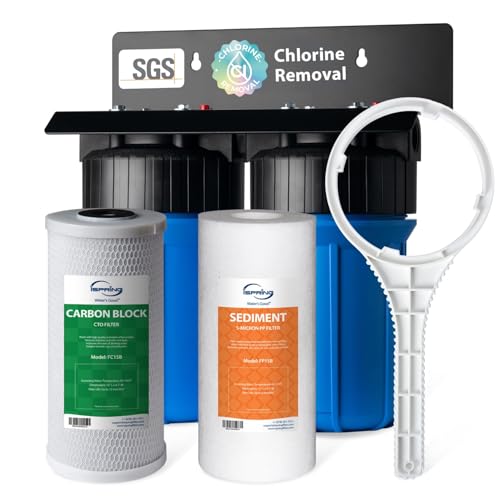
iSpring WGB21B 2-Stage Whole House Water Filtration System 50000 Gallons

iSpring WGB21B-DS 2-Stage Anti-Scale Whole House Water Filter System
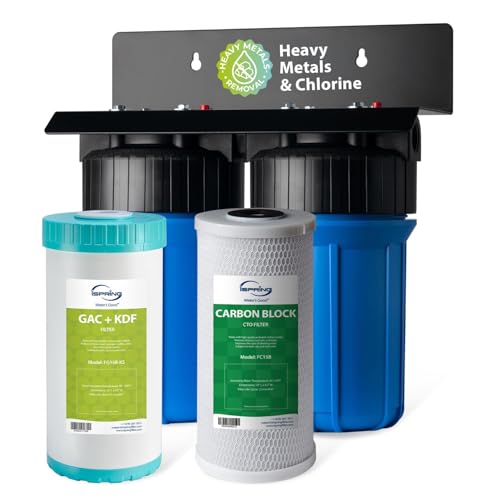
iSpring WGB21B-KS 2-Stage Heavy Metals Whole House Water Filter System
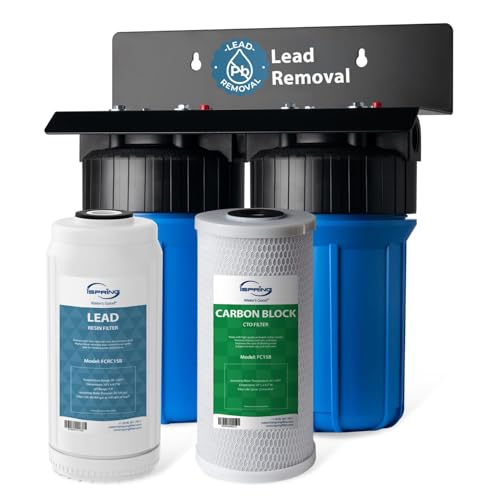
iSpring WGB21B-PB 2-Stage Lead & Chloramine Whole House Water Filter System

iSpring WGB21BM 2-Stage Whole House Water Filtration System 10 x 4.5

WECO Granular Activated Carbon Coconut Shell 1 cu.ft 20 x 50 MESH

PUREPLUS 1-Stage Whole House Water Filter System Iron and Manganese

PFW10 Whole House Water Filter Housing 10 x 2.5 Filters

PUREPLUS Clear Whole House Water Filter Housing Pressure Gauge 1 NPT

PUREPLUS Whole House Water Filter Housing 10×4.5 Pressure Gauge 1 NPT
What Each Pick Brings To The Table
The iSpring WGB21B is the unit most homeowners picture when they imagine a whole house filter: two clear housings stacked on a metal bracket, fed by 1-inch inlet/outlet ports. The first stage catches sediment down to 5 microns (a micron is one-millionth of a meter, useful for describing how fine a filter screens out particles), and the second stage knocks out chlorine taste and odor with a coconut shell carbon block.
It’s a workhorse design that suits renters and owners in typical municipal areas where the main complaints are sediment, chlorine smell, and a faint metallic aftertaste. For most households, the 50,000-gallon rating translates to roughly a year of use before the cartridges need swapping, though heavy water use can shorten that window.
The Helpful Details
- Two-stage layout handles both sediment and chlorine in one install
- 50,000-gallon capacity stretches cartridge life across a typical household year
- 1-inch ports keep flow strong enough for simultaneous showers and laundry
- Clear housings let you see sediment building up, so you know when to change stage one
- Standard 10-inch x 4.5-inch cartridges mean replacements are easy to source
Things To Consider
- Doesn’t target scale, so hard-water areas will still see mineral buildup on fixtures
- You’ll need basic plumbing tools and a nearby shutoff valve for installation
Key Specs
Who It Suits Best
First-time filter owners in a typical municipal area who want a straightforward sediment-and-chlorine setup without specialized media.
Consider Something Else When
Households dealing with hard-water scale should look at the iSpring WGB21B-DS instead, since that model adds a scale-inhibiting stage.
The DS variant swaps the sediment pre-filter for a carbon block up front and adds a polyphosphate anti-scale cartridge downstream. That chemical scale inhibitor keeps calcium and magnesium from sticking to heater elements, washing machine drums, and glass shower doors, which is the daily battle in hard-water zip codes.
Compared to the standard WGB21B above, this one trades the dirt-catching pre-filter for a stronger chlorine and chemical reduction role, so the first cartridge swap removes more of what causes taste issues. For homes where the kettle furs up fast and the dishwasher leaves spots, the trade feels right.
The Good Stuff
- Anti-scale stage extends the life of water heaters and washing machines
- Carbon block first stage removes a high share of chlorine and taste compounds
- Same 1-inch port layout as the standard model, so retrofitting is simple
- Helps soap lather properly, which is a small daily luxury in hard-water homes
Trade Offs
- Polyphosphate cartridges need more frequent changes than standard carbon blocks
- No dedicated sediment stage, so very turbid water may clog the carbon faster
Made For
Households in hard-water regions who care more about protecting appliances than catching every grain of sediment.
Look Elsewhere When
Anyone targeting lead or heavy metals should pick the iSpring WGB21B-KS, which uses a different specialty media.
The KS variant targets a different problem altogether: dissolved metals. The first stage is a carbon block that handles chlorine and cloudiness, while the second stage combines KDF (a copper-zinc alloy media that exchanges electrons with contaminants) with granular activated carbon to pull out lead, mercury, and other heavy metals that older municipal lines occasionally leach.
It’s the right pick for homes built before the 1986 lead-pipe ban, or anyone who has had a test come back showing trace metal contamination. The trade is that KDF media costs a bit more per cartridge than plain carbon, so ongoing maintenance runs higher than the basic WGB21B.
Positive Points
- KDF media actively reduces lead and mercury instead of just trapping sediment
- Granular carbon finish polishes taste after the metal-reduction stage
- Reasonable retrofit path for owners of the standard WGB21B bracket
Honest Caveats
- Replacement cartridges cost more than basic carbon blocks
- KDF performs less well on very hot water, so most installs run it on the cold inlet only
Key Specs
Right Fit For
Older homes with original plumbing or anyone whose municipal supply has tested high for trace metals.
Not Your Match When
You live in a newer subdivision and only need basic chlorine and sediment control, since the WGB21B does that at lower ongoing cost.
The PB variant earns its slot by handling chloramine, which is the disinfectant many cities have switched to because it lasts longer in the distribution system than plain chlorine. Standard carbon blocks don’t touch chloramine well, so this unit uses a catalytic carbon media in the first stage paired with a lead-specific reduction cartridge in stage two.
It’s a sensible choice if your local utility sends you an annual water quality report showing chloramine in the disinfectant column, or your tap water carries a faint chemical smell that doesn’t go away with a basic carbon filter. Compared to the KS model, the focus here is narrower but the lead-reduction cartridge is rated for a generous capacity window.
What Earns Its Place
- Catalytic carbon tackles chloramine where standard blocks fall short
- Second stage is specifically engineered to pull lead out of drinking water
- Useful retrofit for households already running an iSpring bracket
Points To Keep In Mind
- Chloramine reduction media depletes faster than standard carbon, raising cartridge costs
- Lead cartridge works best with regular replacement, so a maintenance calendar helps
Whose Shelf It Belongs On
Families in chloramine-treated municipal areas who also want a dedicated stage for lead reduction.
Swap It Out When
You don’t have lead concerns and just want to soften taste, in which case the standard WGB21B is a more efficient match.
The BM variant adds a problem-specific second stage for iron and manganese, two minerals that stain fixtures orange-brown or black even at low concentrations. The carbon block first stage handles the usual taste and odor duties, while the iron-reducing second stage oxidizes and traps dissolved metals before they reach the bathroom.
This is the right pick for homes near older well infrastructure or anyone whose utility draws from a source with naturally high mineral content. For a typical suburb on a fully treated municipal line, this setup is more media than you need.
A Few Strong Suits
- Dedicated iron and manganese cartridge prevents those telltale fixture stains
- Carbon block first stage keeps water tasting clean at the kitchen tap
- Same footprint as the rest of the WGB21 line, so install parts carry over
Softer Spots
- Iron-reducing media needs replacement more often than basic carbon
- Overkill for municipal lines that don’t carry detectable iron
Who Should Grab It
Homes with visible staining on porcelain or laundry, especially those transitioning from a private well to municipal supply.
Reach For A Different Pick When
Your water report shows no iron and your main concern is chlorine, in which case the standard WGB21B is more cost-effective.
This isn’t a finished filter, it’s the refill media that goes inside a custom-built carbon tank or a refillable cartridge. The coconut shell source gives the granules a highly porous structure, which means more surface area for chlorine, chloramine, and organic compounds to stick to. The 20 x 50 mesh size (a measurement of granule diameter, where higher numbers mean finer particles) is a common standard for whole-house backwash tanks.
If you’ve already got a large blue filter tank with a fill port, or you’re rebuilding a tank from scratch, this is the bag to pour in. It’s not the right product if you want a turnkey installation; you’d need a housing plus plumbing to make it work.
Well-Handled Touches
- Coconut shell base gives high adsorption capacity for taste and odor compounds
- One cubic foot fills most residential backwash-style tanks
- Steam- and acid-washed during processing, which reduces fine dust at install
- Useful for replacing depleted media in an existing carbon tank setup
Practical Considerations
- Requires a refillable tank or custom housing to function
- Granular media can channel over time, reducing effective contact with water
Feature Snapshot
Best Suited To
Homeowners rebuilding or refilling a backwash-style carbon tank who already understand the plumbing involved.
A Better Fit Elsewhere
Anyone wanting a simple install should pick the iSpring WGB21B instead, since it ships ready to mount.
The PUREPLUS 1-Stage unit does one job in one housing: pull iron and manganese out of the main line. With a single cartridge on a compact bracket, it fits where a full two-stage stack won’t, like a tight crawlspace or a utility closet with limited wall space.
It’s the right call when staining is the only complaint and chlorine taste is already acceptable from the tap. Pairing it with a separate carbon block on a different line gives you staged filtration, but as a standalone it solves one specific problem cleanly.
Useful Touches
- Compact single-housing footprint works in small mechanical rooms
- Targets iron and manganese without adding extra stages to maintain
- Cartridge change is a single-step job, faster than two-stage swaps
Where It Is Less Suited
- Won’t reduce chlorine on its own, so chlorinated water still tastes the same
- Sediment-heavy supplies may clog the single cartridge faster
Who Will Love This
Apartment dwellers, condo owners, and homeowners with limited wall space who need targeted iron reduction.
Where Another Pick Suits Better
Households also wanting chlorine reduction should pick the PUREPLUS Clear Housing with a carbon cartridge, which covers more bases.
The PFW10 is an empty housing designed to accept any standard 10-inch x 2.5-inch cartridge, which is the same size used by many under-sink units. That compatibility opens the door to mixing sediment, carbon, KDF, and specialty cartridges in whatever order your water needs demand.
The 3/4-inch NPT (National Pipe Thread, a standard tapered thread used to connect plumbing fittings) ports limit flow slightly compared to 1-inch setups, so it’s a better match for smaller homes or single-bath properties. Stack two or three of these in series and you’ve effectively built a custom whole-house system.
A Strong Showing
- Accepts any 10-inch x 2.5-inch cartridge for true build-it-yourself flexibility
- Can be chained with additional housings for staged filtration
- Common cartridge format keeps replacement costs low
- Good entry point for renters who want filtration without a permanent install
Factors To Consider
- 3/4-inch ports can throttle flow in larger homes with simultaneous fixtures running
- You’ll need to source cartridges separately to complete the system
Perfect Match For
DIY-minded homeowners who want to design a custom multi-stage system using off-the-shelf cartridges.
Skip It When
You’d rather have a turnkey two-stage unit, in which case the iSpring WGB21B is a more complete package.
The transparent sump on this PUREPLUS housing lets you see the cartridge inside, which sounds like a small thing until you’ve tried to guess when a filter needs changing in a dark basement. The built-in pressure gauge adds a second signal: as the cartridge loads up with sediment, the gauge needle creeps and you know it’s time.
It’s a 10-inch x 4.5-inch big blue format (the industry nickname for that larger canister size), so it accepts higher-capacity cartridges than the 2.5-inch housings. Pair it with a sediment cartridge for a pre-filter or a carbon block for taste control, depending on what your water needs.
Everyday Perks
- Clear housing makes cartridge condition visible at a glance
- Pressure gauge provides a numerical signal when flow is restricted
- 1-inch NPT ports handle full household flow rates
- Big blue format accepts long-life, high-capacity cartridges
Small Caveats
- Housing alone doesn’t include a cartridge, so factor that into the total
- Clear plastic can scratch over years of cleaning, reducing visibility
Built With In Mind
Homeowners who prefer visual maintenance cues over calendar-based guesses.
Another Choice May Suit
Anyone wanting a filled-and-ready system should pick the iSpring WGB21BM, which ships with cartridges in place.
The opaque sibling of the previous housing trades visibility for a sturdier sump that hides the cartridge from UV light. That’s a real benefit for carbon media, since sunlight can encourage algae growth on a wet carbon surface. The 1-inch ports and pressure gauge stay the same.
This is the right pick when you’re running a sediment pre-filter ahead of a carbon tank and want a high-flow housing for the heavy lifting. Compared to the clear version above, the trade is purely cosmetic: you trust the gauge and your replacement schedule instead of looking through the wall.
Why It Works Well
- Opaque housing protects carbon cartridges from light exposure
- 1-inch NPT ports support simultaneous shower and appliance use
- Pressure gauge makes cartridge loading easy to track
- 10-inch x 4.5-inch big blue format accepts long-life cartridges
Less Ideal Details
- Without a clear sump, you can’t eyeball sediment accumulation
- Housing alone, so cartridge selection is on you
The Right Fit
Larger households with high simultaneous demand who want a sturdy sediment or carbon pre-filter housing.
Where A Sibling Pick Shines
People who prefer a visual maintenance signal should pick the PUREPLUS Clear Housing just above, which shows the cartridge directly.
Choosing The Right Whole House Water Filtration System For Your Tap
Start with your local water quality report, which every municipal utility is required to publish annually. That document tells you whether you’re dealing with chlorine or chloramine, how hard the water measures, and whether lead or other contaminants are flagged. Matching the filter’s specialty media to the report saves you from paying for stages you don’t need.
Flow rate is the next practical filter. A 1-inch port handles most households running two showers plus laundry at the same time. 3/4-inch ports are fine for one-bath homes and apartments, but they throttle noticeably when fixtures stack up. If you have a large family or a multi-bath layout, prioritize larger port sizes.
Cartridge format matters over the long haul. Standard 10-inch x 4.5-inch cartridges are widely available and reasonably priced, while proprietary formats lock you into specific replacements. For city water, a sediment pre-filter plus a carbon polishing stage covers most taste and odor complaints without specialist media.
Finally, think about installation space and ongoing maintenance. Whole house filters need a spot near the main shutoff with enough clearance above the housing to unscrew the sump and swap cartridges. For most people, the realistic maintenance cadence is one or two filter changes per year, so build that cost and time into your decision.
Picking Smart For City Water
Common Shopping Slip Ups
The biggest mistake is buying a specialty filter without confirming the water actually needs it. Lead-reduction cartridges do nothing for hard-water scale, and iron filters don’t touch chlorine taste. Pull your utility’s water report first, then match the media to the problem you actually have.
A second trap is underestimating port size. 3/4-inch filters cost less up front, but the flow restriction becomes obvious when two showers run at once and the washing machine kicks on. For most households with two or more bathrooms, 1-inch ports are worth the upgrade.
Where The Extra Money Goes
Higher-tier models typically add a third or fourth stage of specialty media, like KDF for heavy metals or catalytic carbon for chloramine. The build quality also tends to be sturdier, with metal mounting brackets and pressure gauges that cheaper housings skip. For homes with confirmed contamination issues, that extra stage pays for itself in cartridge life and reduced maintenance. For typical city water, a solid two-stage unit is plenty.
Frequently Asked Questions
How Often Do Cartridges Need Changing?
Most whole house filters run on a six to twelve month cycle, depending on water use and sediment load. Pressure gauges help, but a calendar reminder is the reliable backup.
Can A Whole House Filter Reduce Hard Water?
Standard carbon filters don’t soften it, but anti-scale cartridges like the one in the WGB21B-DS use polyphosphate to keep minerals from sticking to surfaces. True softening requires a salt-based ion exchange system.
Do I Need A Pre-Filter If I Have City Water?
Yes, especially if you live in an area with older distribution mains. Sediment pre-filters catch rust flakes and sand before they reach the carbon stage, which extends that cartridge’s life noticeably.
Where Should A Whole House Filter Be Installed?
It goes on the main water line just after the shutoff valve and before the water heater. That way every cold tap, every appliance, and the hot side all run through it.
Is Professional Installation Required?
Handy homeowners with plumbing experience can usually handle a basic two-stage install in a few hours. If you’re not comfortable cutting into the main line, a plumber is the safer call.
Wrap Up
The right whole house water filtration system for city water depends less on brand and more on what your specific tap is delivering. Run your utility’s water report, match the media to the problem, and pick a housing size that matches your household flow. The picks above cover the most common scenarios, from chlorine taste to heavy metal concerns, and any of them will out-perform a basic pitcher filter at every tap in the house.