
Tap water that smells like a swimming pool or leaves orange streaks in the sink pushes most people toward a real filter eventually. The hard part is figuring out which setup actually fits your plumbing, your water, and your patience for maintenance. After comparing specs, certifications, and day-to-day ownership realities, these ten picks cover the main paths: under-sink reverse osmosis, whole-house filtration, and dedicated sediment pre-filters. One of them is going to match your home better than the rest.
A Fast Comparison Of The Options

Home Master TMAFC Artesian Full Contact RO System

iSpring WGB32B-KDS Whole House Water Filter

iSpring RCC7AK-BN 6-Stage RO System

iSpring WSP-50 Spin Down Sediment Filter

PUREPLUS KDF + Coconut Carbon Whole House Filter
5-Stage RO System with Leak Detector

PUREPLUS 10″x4.5″ Whole House Filtration System

PUREPLUS Clear Housing Iron & Manganese Filter
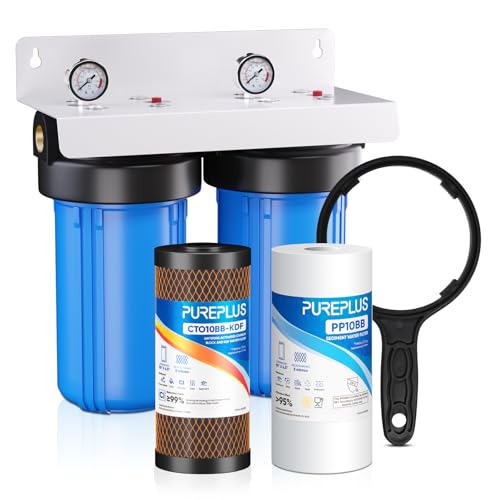
PUREPLUS PP Sediment & KDF Carbon Block Filter

PUREPLUS Chlorine, Iron & Manganese Whole House Filter
The Picks, Examined More Closely
Reverse osmosis systems built for under-sink use usually strip water down to almost nothing and then send it through a small holding tank. The Home Master TMAFC takes a different route by adding calcium and magnesium back into the water twice during the purification process, which can help reduce the long-term wear on that storage tank and gives the finished glass a rounder, less flat taste.
Compared to the RO systems later in this list, this one leans on a seven-stage design with a steady fill rate of about 4.5 seconds, so you spend less time drumming your fingers by the faucet. The components are built to meet NSF material-safety standards, and the unit is assembled in the USA, which can matter to shoppers who want domestic manufacturing. For households that care as much about how the water feels as what it filters out, this is the most thoughtful RO pick in the group.
A Few Highlights
- Patented remineralization step adds calcium and magnesium back into the finished water
- Seven-stage cartridge layout addresses common complaints about traditional RO canisters
- NSF-listed components, useful when you want independent material-safety documentation
- Rapid 4.5-second tank fill rate keeps kitchen workflow moving during busy mornings
Things To Consider
- Replacement cartridges tend to cost more than basic drop-in filters, so plan the long-term budget before committing
- Needs a dedicated faucet hole and a small under-sink footprint, which may not work in every cabinet
Feature Snapshot
Whose Shelf It Belongs On
Home cooks and bottled-water-alternative drinkers who want glass-ready RO water with a more mineral-forward taste.
Reach For A Different Pick When
The PUREPLUS 2-Stage KDF + Coconut Carbon Whole House Filter fits better when you want every tap filtered, not just the kitchen sink.
Hard water quietly destroys water heaters, dishwasher valves, and shower heads over the years, which is why the iSpring WGB32B-KDS leans so heavily on its scale-defense cartridge. The FWDS150K anti-scale media works by sequestering calcium and magnesium rather than just catching them, which the brand claims forms a protective layer on metal surfaces and stabilizes chlorine reactions inside the pipes.
For a home fed by a municipal supply with very hard water, this whole-house setup is one of the more practical choices in the roundup. Where the RO systems earlier in this list only protect the kitchen tap, this one filters everything that comes through the main line, including the laundry and the outdoor hose bib. DIY-minded owners can install it with the included documentation, though working with a 1-inch inlet will mean a short visit to the plumbing aisle.
Notable Upsides
- Patented scale inhibitor that targets calcium and magnesium before they bake onto heater elements
- Whole-house coverage means cleaner showers, longer-appliance life, and softer-feeling laundry water
- Corrosion-stabilizing media helps protect copper and galvanized plumbing over time
Worth Noting
- Larger footprint than a simple under-sink unit and requires a dedicated bypass loop
- Anti-scale cartridges have a finite lifespan and need scheduled replacement, which adds to yearly upkeep
Right Fit For
Owners in hard-water regions who want every fixture protected, not just the drinking tap.
Skip It When
The VIVA21 5-Stage Reverse Osmosis System fits better when the priority is a deeply filtered drinking glass rather than whole-house scale control.
The single most frustrating part of installing an under-sink RO system is lying on your back under the cabinet trying to thread a faucet nut onto a stem you can’t see. The iSpring RCC7AK-BN solves that with a patented top-mounted fastener that tightens from above the sink, which is a small change that makes a real difference for anyone who has wrestled with a wrench in a dark cabinet before.
Beyond the install story, the RCC7AK-BN delivers 75 gallons of filtered water per day through six stages, finishing with an alkaline remineralization cartridge that adds back calcium and other minerals for a higher-pH result. The transparent first-stage housing lets you see how much sediment is building up, so you know exactly when a swap is coming. Compared to the VIVA21 5-Stage RO System later in this list, this one is the more feature-rich alkaline option for drinkers who care about mineral content.
The Case For It
- Top-mount faucet design removes the worst part of the install experience
- Alkaline remineralization stage raises pH and rounds out the taste profile
- NSF-certified components give you third-party material-safety documentation
- Clear first-stage housing makes sediment load visible at a glance
- 75 GPD capacity covers most households for drinking, cooking, and pet water
Trade Offs
- Six cartridges mean more frequent replacement cycles than a basic two-stage setup
- Brushed-nickel faucet may not blend with kitchens that run a different finish
Who Should Grab It
Drinkers focused on alkaline, mineral-balanced RO water who also want the easiest install path of any under-sink RO system on this list.
Look Elsewhere When
The VIVA21 5-Stage Reverse Osmosis System fits better for shoppers who want WQA Gold Seal documentation and a simpler five-stage path.
If your water comes from a private well or an older municipal line, the first problem you usually notice is the visible grit. The iSpring WSP-50 sits at the front of the plumbing stack as a 50-micron spin-down prefilter, catching sand, rust flakes, and pipe scale before they ever reach the cartridges behind it.
Unlike the RO and whole-house picks above, this unit does one thing and does it well. The flushable, reusable screen can be cleaned by opening the valve at the bottom, which saves a stack of replacement cartridges over time. Owners with heavy sediment loads may still need to flush the unit often, but pairing it with one of the PUREPLUS 2-Stage whole-house filters further down the list extends the life of those downstream cartridges significantly.
Positive Takeaways
- 50-micron rating catches visible grit before it reaches finer downstream filters
- Flushable, reusable screen lowers long-term cartridge spend
- Pressure gauge and rotated head make routine checks straightforward
- Front-of-line placement protects every other filter in the system
A Few Limitations
- 50-micron screen is too coarse on its own for drinking-water polishing
- Heavy sediment sources can clog the screen fast and demand frequent flushing
Quick Facts
Made For
Well-water households and anyone tired of watching fine sediment pile up in their downstream cartridges.
Not Your Match When
The PUREPLUS PP Sediment & KDF Carbon Block Filter fits better for those who need sediment and chemical filtration in a single 2-stage unit.
KDF media (a copper-zinc alloy) is the workhorse stage that distinguishes the PUREPLUS KDF + Coconut Carbon system from simpler carbon-only setups. The first-stage RFN10BB-CKDF cartridge is built to reduce heavy metals like lead, mercury, and arsenic while still catching the sediment, rust, and sand that would otherwise clog the carbon stage behind it.
For shoppers comparing this against the iSpring WGB32B-KDS reviewed earlier, the difference is in the chemistry. Where iSpring leans toward scale defense, this PUREPLUS configuration focuses on chemical and metallic reduction paired with a coconut-shell carbon block finish that pulls chlorine, taste, and odor. It is an upgrade-tier whole-house filter that makes the most sense on a municipal line where chlorine and trace metals are the bigger concern than hardness alone.
Useful Strengths
- KDF stage targets heavy metals that carbon alone cannot reliably reduce
- Coconut-shell carbon block carries NSF/ANSI 42 certification for chlorine reduction
- First-stage sediment capture protects the carbon block and extends its working life
- Whole-house footprint means filtered water at every fixture, not just the kitchen
Softer Spots
- Two large 10-inch canisters need a dedicated mounting spot near the main shutoff
- KDF cartridges carry a higher per-change cost than basic carbon replacements
Who It Suits Best
Homeowners on municipal water who want heavy-metal reduction layered in front of a certified carbon polishing stage.
Consider Something Else When
The iSpring WGB32B-KDS Whole House Water Filter fits better when scale defense and corrosion protection matter more than metallic reduction.
The VIVA21 V21RS5S01 is a no-nonsense 5-stage reverse osmosis system designed for under-sink installation and includes a lead-free faucet, a storage tank, and a leak detector right in the box. Where many lower-priced RO units ship with vague certification claims, this one carries the WQA Gold Seal and is listed for NSF/ANSI 58 reverse osmosis performance and NSF/ANSI/CAN 372 lead content.
The leak detector is the kind of feature you only appreciate once you have had a slow drip under the sink ruin a cabinet floor. Pair that with the five-stage filtration path through sediment, carbon, RO membrane, and post-carbon polishing, and you get a budget-friendly system that covers the fundamentals without leaning on flashy marketing language. Versus the iSpring RCC7AK-BN above, this one skips the alkaline remineralization in favor of simpler, certified output.
Where It Helps
- WQA Gold Seal certification listed for NSF/ANSI 58 and 372 standards
- Leak detector included for early warning of drips under the sink
- Lead-free faucet and storage tank come in the box, so no separate add-ons
- Five-stage path covers sediment, carbon, RO, and post-carbon polishing
Points To Keep In Mind
- No alkaline remineralization means a flatter taste than the iSpring RCC7AK-BN
- Storage tank takes up real under-sink space and may not fit compact cabinets
Key Attributes
Best Suited To
Tight-budget shoppers who still want a certified 5-stage RO path and the safety net of a leak detector under the sink.
A Better Fit Elsewhere
The iSpring RCC7AK-BN 6-Stage RO System fits better when alkaline remineralization and the top-mount faucet design are worth the extra cost.
High-flow homes run into a problem with many whole-house filters: the cartridges throttle down the water pressure every time two showers and the dishwasher kick on at once. The PUREPLUS 10″x4.5″ system addresses that with a 1-inch inlet and outlet, which is a meaningful step up from the standard 3/4-inch ports found on many competing setups.
The first stage is a PP10GBBD grooved sediment filter that uses a layered 5/7/10-micron density to trap progressively finer particles before they reach the KDF and carbon block stage behind it. Pressure gauges are included so you can spot a clogged cartridge before flow drops noticeably. For shoppers who live in a larger household with simultaneous water demand, this configuration preserves pressure better than most of the smaller-port picks later in this roundup.
Real-World Strengths
- 1-inch inlet and outlet preserves flow during multi-fixture demand
- Layered grooved sediment filter captures finer particles without choking fast
- Pressure gauges included to flag cartridge changeouts before flow suffers
- Standard 10″x4.5″ cartridges make replacements easy to source
Honest Caveats
- 1-inch plumbing may require adapters if your existing main line is 3/4-inch
- Two-stage media is less specialized than dedicated iron or manganese reduction systems
Who Will Love This
Owners of larger homes who want whole-house filtration without surrendering shower pressure during peak demand.
Where A Sibling Pick Shines
The PUREPLUS Clear Housing Iron & Manganese Filter fits better when iron staining is the primary water-quality complaint.
Iron and manganese are the contaminants that announce themselves with rust-orange streaks in the bathtub and black slime in the toilet tank. The PUREPLUS Iron & Manganese system pairs a multi-layer sediment and carbon first stage (PP10BB-CC, certified by IAPMO R&T to NSF/ANSI 42) with an RFN10BB-SZ second stage built specifically to capture iron, manganese, sediment, and sand.
The clear housing is a quiet but useful upgrade over opaque sumps, because you can actually see when sediment starts to accumulate. That visual feedback matters in homes where iron levels can swing seasonally. For shoppers who do not need scale defense, this two-stage configuration keeps the focus narrow, which is often exactly what well-water homes want.
The Practical Payoff
- First-stage sediment and carbon certified by IAPMO R&T to NSF/ANSI 42
- Specialized iron and manganese reduction stage targets the staining culprits
- Clear sump lets you see sediment buildup at a glance
- Standard 10″x4.5″ form factor keeps replacements easy to source
A Few Limitations
- Iron-reduction media has a finite capacity and may need more frequent changes in high-iron wells
- Does not address hardness, so pairing with a softener may still be required
Feature Snapshot
Perfect Match For
Homeowners with well water whose fixtures show iron staining or black-residue buildup in cold-water lines.
Swap It Out When
The PUREPLUS Chlorine, Iron & Manganese Filter fits better when chlorine reduction and iron control are both wanted in one unit.
For a first-time whole-house filter install, the PUREPLUS PP Sediment & KDF Carbon Block setup is the gentlest entry point on this list. The first stage is a 5-micron PP10BB polypropylene sediment cartridge, certified by IAPMO R&T to NSF/ANSI 42 for material safety, which captures rust, sand, and silt that would otherwise clog the more expensive carbon block behind it.
The KDF and activated carbon block second stage adds the chemical polish that pure sediment filters cannot provide. Compared to the 1-inch PUREPLUS configuration reviewed earlier, this one uses a smaller port that fits more easily into a basic residential plumbing stack. It is the kind of filter first-time owners tend to appreciate before deciding whether to step up to a higher-flow configuration later.
Practical Advantages
- 5-micron sediment stage certified by IAPMO R&T to NSF/ANSI 42
- KDF and carbon block combo adds chemical reduction beyond simple sediment
- Standard form factor fits most entry-level whole-house plumbing stacks
- Replacement cartridges are easy to find and budget-friendly
Practical Considerations
- Smaller port geometry can throttle flow in homes with simultaneous multi-fixture demand
- Does not specifically target iron or manganese the way dedicated systems do
Who Should Grab It
First-time whole-house filter owners who want a certified sediment and chemical combo without a complex install.
Not Your Match When
The PUREPLUS 10″x4.5″ Whole House Filtration System fits better when higher flow and 1-inch ports are the priority.
Some wells throw everything at you at once: chlorine residual from a municipal crossover, plus iron and manganese staining from the geology. The PUREPLUS Chlorine, Iron & Manganese whole-house unit layers a PP10BB-CC multi-layer sediment and carbon first stage (certified to NSF/ANSI 42) with a 5-micron iron reduction cartridge as the second stage.
That combination handles the chemical smell of chlorine and the staining of iron in a single two-canister setup. It is broader than the dedicated iron filter reviewed earlier and simpler than the KDF + coconut carbon build. For multi-contaminant well homes that want one unit covering both stories, this is the most consolidated option in the roundup.
Useful Highlights
- Combined chlorine reduction and iron and manganese treatment in one unit
- PP10BB-CC first stage certified by IAPMO R&T to NSF/ANSI 42
- Replacement cartridges available as a dedicated dual-refill set for long-term ownership
- Standard 10″x4.5″ housing keeps future sourcing straightforward
Room For Improvement
- Does not address hardness, so homes with very hard water may still need softening
- Two-stage chemistry can be more demanding to maintain than single-purpose filters
Feature Card
Who It Suits Best
Multi-contaminant well homes that need chlorine, iron, and manganese control from one consolidated whole-house unit.
Reach For A Different Pick When
The PUREPLUS Clear Housing Iron & Manganese Filter fits better for shoppers who specifically want a transparent sump for visual cartridge checks.
Picking The Right Whole-House Configuration
Choosing a water tank filter system for your home really comes down to three questions: what is in your water, where do you want filtered water to come out, and how much ongoing maintenance are you willing to take on.
First, run a basic water test or read your municipal water quality report. Hard water regions benefit from scale-defense media like the iSpring WGB32B-KDS, while wells with iron staining call for the PUREPLUS Iron & Manganese configurations or the multi-contaminant unit reviewed last. RO systems make sense for households that mostly care about the drinking tap and want the most thorough contaminant reduction possible at that single fixture.
Second, decide whether you want point-of-use or whole-house coverage. Under-sink RO systems like the Home Master TMAFC or VIVA21 5-Stage are quieter and simpler to install but only filter one faucet. Whole-house units cover every shower, hose, and washing machine, but they need a dedicated mounting location near the main shutoff.
Third, plan the maintenance. KDF media, carbon blocks, and RO membranes all have different service intervals, and skipping changeouts hurts performance more than a less expensive filter would have in the first place. For most homes, a layered approach works best: a sediment prefilter like the iSpring WSP-50 in front, followed by a whole-house chemical or scale unit, and an under-sink RO system for the drinking tap if you want the cleanest glass of water possible.
Shopping Smart: Common Mistakes And Upgrade Trade-Offs
Where Shoppers Go Wrong
The most common slip is buying a filter rated for the wrong contaminant, then expecting it to fix a problem it was never designed to address. Carbon blocks do almost nothing for iron, and KDF media cannot replace a softener on truly hard water. A sediment prefilter cannot polish a glass of water for taste. Run a real test before you spend.
Another trap is ignoring port size. Standard 3/4-inch whole-house filters throttle flow in larger homes when two showers and the dishwasher run at the same time. If your plumbing already uses 1-inch lines, a smaller-port filter will quietly ruin your morning routine every time demand spikes.
When Paying More Pays Off
Higher-tier models in this roundup earn their keep through certification, specialized media, and refill convenience. NSF/ANSI 42 listings, IAPMO R&T verification, and WQA Gold Seal certifications give you third-party documentation that basic filters often skip. KDF and remineralization stages add chemistry that cheaper carbon blocks simply cannot match. For shoppers who replace cartridges on schedule, the extra upfront cost usually shows up as better-tasting water and longer cartridge life downstream.
Key Considerations Across These Picks
Pitfalls Shoppers Hit
Overlooking flow rate is the silent killer of whole-house installations, especially in homes that already run on 1-inch main lines. Sediment prefilter screens also clog faster than owners expect on heavy-sediment wells, so the flushable design on the iSpring WSP-50 is worth the install even when the chemistry filters behind it can handle the visible grit.
What The Higher Tier Buys
Spending up in this category generally buys three things: certifications you can show a landlord or inspector, specialized media that addresses specific contaminants like iron or heavy metals, and refill systems that make long-term ownership less painful. The Home Master TMAFC and iSpring RCC7AK-BN both deliver remineralization that changes how the water tastes, which is a daily, glass-by-glass benefit that cheaper filters cannot replicate.
Frequently Asked Questions
What Is The Difference Between An Under-Sink RO System And A Whole-House Filter?
An under-sink reverse osmosis system pushes water through a semipermeable membrane and is designed to deliver highly purified drinking water at a single faucet. A whole-house filter sits at the main line and conditions every drop entering the home, but typically does not reduce contaminants to RO purity.
Do These Systems Remove Iron And Manganese?
Some do, but not all. The PUREPLUS Iron & Manganese and Chlorine, Iron & Manganese systems include media built specifically for those minerals. Standard carbon-block filters and most RO systems do not address iron staining on their own.
How Often Do The Cartridges Need To Be Replaced?
Sediment and carbon cartridges typically run on a 3 to 6 month schedule depending on water quality and household demand. KDF media often lasts 6 to 12 months, and RO membranes can stretch a year or longer in low-TDS water. Manufacturers publish changeout intervals for each specific cartridge.
Can I Install These Without A Plumber?
The spin-down sediment prefilter and many 10″x4.5″ whole-house units can be a confident DIY project with basic tools and patience. The under-sink RO systems are also DIY-friendly for many owners, though first-timers may want a plumber for the initial faucet hole and shutoff installation.
Do Whole-House Filters Affect Water Pressure?
They can, especially when cartridges begin to clog or when the port geometry is smaller than the main line. Choosing a unit with 1-inch ports and a pressure gauge, like the PUREPLUS 10″x4.5″ Whole House Filtration System, helps preserve flow and signals when a cartridge change is overdue.
The Takeaway
A whole-house filter, an under-sink RO system, and a dedicated sediment prefilter each solve a different slice of the water-quality problem. Most homes end up happiest combining two: a front-of-line prefilter plus either an RO unit for the kitchen tap or a whole-house chemical filter for everything else. Pick the configuration that matches your water test, your plumbing, and your tolerance for cartridge changes. The honest read is that any of these systems, installed and maintained on schedule, will dramatically outperform the unfiltered tap you started with.