Hard water quietly does its damage. Mineral buildup lines your water heater, leaves spots on glassware, makes soap stubborn, and dries out skin after every shower. If you’ve noticed chalky residue around faucets or clothes that feel stiff out of the wash, a softener changes the daily experience without a remodel. This roundup covers full-home softeners, an iron-fighting combo unit, a sediment pre-filter, and a dedicated reverse osmosis drinking system so you can match capacity, water chemistry, and plumbing reality.
Your Options, Compared
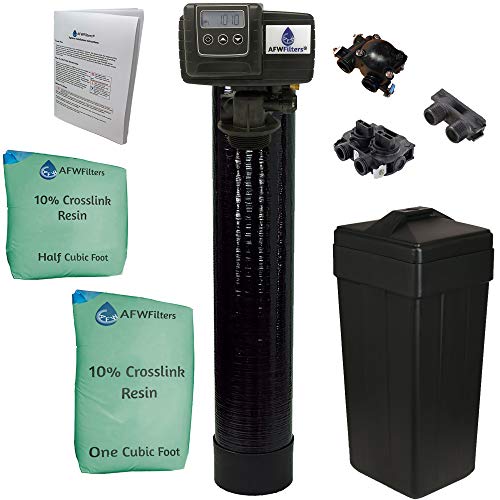
AFWFilters Fleck 5600 SXT Digital Water Softener 48K Grain Complete System

Aquasure Fortitude V2 Triple Purpose Sediment/Carbon/Zinc Pre-Filter

Express Water 6-Stage RO Deionization Filtration System 100 GPD

AFWFilters 48K Grain Water Softener Fleck 5600 SXT

AFWFilters Iron Pro 2 Combination Softener Iron Filter 64K Grain
AFW Premium Fleck 64K Whole House Water Softener 10% Resin

Aquasana SimplySoft Whole House Water Softener 40K Grain
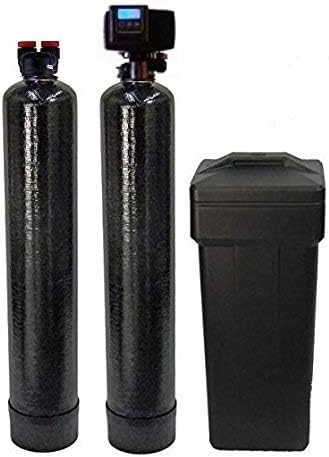
AFWFilters 5600SXT Softener Plus Upflow Carbon Filtration System
Fleck 64K Whole House Water Softener 10% Resin Complete System
More Details On Our Top Picks
For a household of three to five with moderate hardness, this 48,000-grain AFWFilters softener hits a sensible capacity sweet spot. The Fleck 5600 SXT control head is the workhorse of the home softening world, with a metered, on-demand regeneration cycle that triggers based on actual water use rather than a fixed timer, which means less wasted salt during low-activity weeks.
The system ships complete with a brine tank and bypass valve, so installation centers on the main line where water enters the home. For a basement utility room or garage corner, footprint is manageable, and the digital display makes setup forgiving if you’ve never programmed a softener before.
Where It Helps
- 10% crosslink resin resists chlorine breakdown in municipal water, lengthening media life
- Metered on-demand regeneration cuts salt waste on light-use weeks
- 48K grain capacity suits most mid-size households without frequent cycling
- Includes brine tank and bypass valve for a one-stop install kit
- Fleck 5600 SXT valve is widely serviced and familiar to local plumbers
Points To Keep In Mind
- Whole-home setup calls for basic plumbing skill or a pro for the main line tie-in
- Resin media eventually needs replacement after years of heavy service
- Brine tank demands occasional salt top-offs and cleaning to prevent bridging
Feature Snapshot
Who It Suits Best
Mid-size families on municipal water who want proven Fleck valve tech without stepping up to a 64K capacity.
Look Elsewhere When
You pull water from a private well with iron content, in which case the AFWFilters Iron Pro 2 Combination is a stronger fit.
This Aquasure unit is technically a pre-filter, not a softener, and that’s exactly the point: it sits ahead of your softener to strip sediment, chlorine, and a chunk of bacteria-inhibiting trace elements before water ever reaches the resin tank. If you see orange-tinted water from a well or know your municipal supply runs chlorinated, pairing this with a softener extends the softener’s media life.
It’s a five-stage housing system built around carbon-zinc and GAC filtration media. Compared to the AFWFilters Fleck 5600 SXT Digital Water Softener reviewed above, this doesn’t address hardness, but it clears the way for any softener to do its job without clogging on debris.
Bright Spots
- Five-stage media path targets sediment, chlorine taste, and odor in one housing
- Up to 100,000-gallon service life reduces annual cartridge swaps
- Compact design fits inside a basement utility cluster without dominating the wall
- Clear housing on many models lets you eyeball filter condition
Some Limits To Know
- Cartions still require housing swaps, which adds a yearly maintenance step
- Does not remove hardness minerals, so a softener is still needed downstream
Made For
Households on well or chlorinated municipal water who want cleaner inlet water feeding their primary softener.
Consider Something Else When
You want a single-tank softening solution and no extra housing to mount, in which case the AFW Premium Fleck 64K Water Softener keeps the install simpler.
This is a different kind of water treatment. Instead of softening every tap in the house, the Express Water system lives under the kitchen sink and targets what you actually drink and cook with. Six stages of reverse osmosis paired with a deionization stage strip dissolved solids, leaving water clean enough for aquarium use, coffee brewing, or households that want the most polished drinking water possible.
The 100-GPD tank keeps up with a family’s cooking and drinking habits without leaving you waiting at the faucet. Compared to the Aquasure Fortitude V2 pre-filter covered above, this one delivers far finer filtration at the point of use rather than whole-home coverage.
Strong Points
- Six-stage RO plus deionization captures the broadest contaminant range
- 100-GPD tank refills fast enough for family cooking and drinking use
- Includes dedicated faucet and tank in the box
- Designed for DIY-friendly under-sink install without pro plumbing
Trade-Offs
- Filter cartridges on RO systems need periodic replacement, adding to running costs
- Does nothing for shower, laundry, or other non-drinking water hardness
Right Fit For
Homeowners who already have a softener but want a dedicated polishing system for cooking and drinking water at the kitchen sink.
Reach For A Different Pick When
Hard water scale is your main complaint across the whole home, in which case the Aquasana SimplySoft Whole House Water Softener covers every fixture instead.
This is the leaner cousin of the first pick on the list. Same Fleck 5600 SXT control head and 10% crosslink resin, but stripped to the essentials for households that don’t need every accessory in the box. If you’re comfortable sourcing a brine tank separately or already have one in the garage, this trims the cost without sacrificing the core softening mechanism.
For smaller homes with two to four residents, the 48,000-grain tank should hold plenty between regenerations. The metered SXT head does the same on-demand logic as its bigger siblings, so you’re not paying salt for water you never used.
Practical Advantages
- Proven Fleck 5600 SXT control valve with metered regeneration
- 10% crosslink resin suits chlorinated municipal supplies
- Compact footprint fits tight basement or crawlspace corners
Points To Note
- Lower 48K capacity regenerates more often in homes with very hard water
- No bundled bypass fittings means sourcing parts ahead of install day
Best Suited To
Smaller households with two to four residents and modest hardness who want the same valve tech as bigger systems at a tighter capacity.
A Better Fit Elsewhere
You have five or more residents with above-average hardness, in which case the AFW Premium Fleck 64K Water Softener cycles less often.
If your water comes from a private well and you’ve seen reddish staining in sinks or laundry, you don’t just have hardness, you have iron in the mix. The Iron Pro 2 combines a 64,000-grain softener with an iron filter in one system, so a single Fleck 5600SXT valve runs the whole treatment train. That’s one tie-in, one drain, one brine tank.
It’s built for higher flow rates typical of whole-house use, which matters when two showers and a washing machine run at the same time. Unlike the standalone AFWFilters Fleck 5600 SXT Digital Water Softener reviewed earlier, this one targets manganese and rust along with hardness, making it the better answer on iron-rich wells.
Everyday Wins
- Combined softener and iron filter in a single treatment train
- High flow rate supports simultaneous showers and appliance use
- 64K grain capacity suits busy households on moderately hard well water
- Fleck 5600SXT metered digital valve for on-demand regeneration
Softer Spots
- Iron media eventually exhausts and requires specialized refills, not standard softener salt
- Item ships non-returnable due to hazardous materials regulation, so confirm your water profile before ordering
Who Should Grab It
Well water households dealing with hardness alongside visible iron staining or manganese issues.
Skip It When
Your water comes from a municipal source with chlorination and minimal iron, in which case the Aquasana SimplySoft Whole House Water Softener fits a cleaner city profile.
This is the bigger sibling in the AFWFilters Fleck family, bumped to 64,000 grains for households that push a lot of water through the pipes each day. The 10% crosslink resin handles chlorinated municipal water without the early media breakdown you sometimes see with cheaper 8% resin. The metered SXT head still regenerates only when needed, so larger capacity doesn’t automatically mean wasted salt.
Compared to the 48K AFWFilters reviewed above, you get roughly a third more softening capacity in a similar footprint. For families of five or six, or homes with high hardness levels, that extra grain buffer pays off in fewer mid-week regenerations.
What Helps Most
- 64K grain capacity stretches regeneration cycles in busy households
- 10% crosslink resin outlasts standard 8% resin under chlorine exposure
- Includes 1-inch bypass and brine tank for a complete install
- Metered on-demand head conserves salt versus timer-based valves
Honest Caveats
- Larger brine tank footprint requires dedicated floor space in the utility area
- Overkill for one- or two-person homes with low hardness readings
Feature Card
Built With In Mind
Large households with five or more residents and high hardness levels that demand fewer regeneration cycles per week.
Swap It Out When
You live alone or with one other person in a low-hardness area, where the AFWFilters 48K Grain Water Softener covers you without excess capacity.
Aquasana’s SimplySoft takes a different design approach than the AFWFilters Fleck tanks above. The base tank and cabinet system look more like an appliance than industrial plumbing gear, which makes the unit easier to tuck into a closet, laundry corner, or anywhere a traditional mineral tank would feel out of place. For a home with up to five people and four bathrooms, the 40K capacity covers daily softening without dominating the utility room.
You give up some of the heavy-duty commercial valve geometry, but you gain a more residential-friendly footprint and a 5/10-year limited warranty structure. If you’ve been put off by the look of exposed brine tanks and bypass plumbing, this is the gentler introduction.
What Pays Off
- Cabinet-style design hides the brine tank for a cleaner utility-room look
- 40K grain capacity suits homes up to five people and four bathrooms
- Limited warranty coverage for long-term peace of mind
- Phone-based support line for installation questions during setup
Less-Strong Areas
- Capacity runs lower than 64K alternatives, so regeneration cycles hit more often in hard-water zones
- Resin and valve details are less transparent than industrial Fleck setups
Whose Shelf It Belongs On
Homeowners in modest-sized properties who want a softer visual footprint than exposed mineral tanks in the utility area.
Another Choice May Suit
You run a household of six or more with extreme hardness, in which case the AFW Premium Fleck 64K Water Softener handles the heavier load.
This is the only two-tank system on the list, and the second tank matters. A 9-by-48-inch softener with 10% crosslink resin sits next to a 1-cubic-foot upflow carbon tank filled with coconut shell carbon. The carbon stage strips chlorine taste and odor, and the upflow design keeps the media bed loose for longer contact time. If you hate the chemical smell of chlorinated water in the shower, this combo fixes both hardness and odor in one install.
It comes ready to install, with detailed instructions and online video walkthroughs for homeowners tackling the project themselves. Compared to the AFWFilters Fleck 5600 SXT Digital Water Softener covered first, you add a second tank but gain noticeably better-tasting and smelling water at every tap.
Well-Handled Touches
- Coconut shell carbon upflow tank strips chlorine taste and odor
- 10% crosslink softener resin handles chlorinated municipal supplies
- Detailed instructions and online videos support DIY-minded installers
- Fleck 5600SXT control head on both tanks for familiar programming
Factors To Consider
- Two-tank layout demands more wall or floor space than single-tank options
- Carbon media eventually requires replacement beyond standard softener salt refills
Perfect Match For
Homeowners bothered by chlorine smell in the shower and want both problems solved through one coordinated install.
Consider Something Else When
Floor space is tight and you only need softening, in which case the Aquasana SimplySoft Whole House Water Softener fits a smaller footprint.
The final pick solves a problem the larger 64K Fleck systems can’t: older homes with 3/4-inch supply lines instead of modern 1-inch plumbing. The Fleck 64K Complete System ships with a 3/4-inch bypass, which means you don’t have to upsize fittings at the main shutoff. It’s a small detail that turns a “call a plumber” project into a manageable afternoon for handy homeowners.
You still get the same 64,000-grain capacity and 10% crosslink resin as the AFW Premium model reviewed above. The metered on-demand head regenerates based on use, and the install kit plus online videos give a confident DIY path. The trade-off is shipping: this item ships non-returnable due to hazardous materials regulation, so confirm your hardness reading and plumbing size before ordering.
What Earns Its Place
- 3/4-inch bypass fits older residential plumbing without upsizing fittings
- 64K grain capacity matches larger households on hard water
- 10% crosslink resin for longer media life in chlorinated supplies
- Install kit and online video support aid DIY setup
Potential Sticking Points
- Non-returnable shipping due to hazardous materials rules adds ordering risk
- Smaller 3/4-inch bypass limits flow compared to 1-inch setups under heavy simultaneous demand
Who Will Love This
Homeowners in older houses with 3/4-inch supply plumbing who want a high-capacity Fleck system without repiping.
Not Your Match When
Your home already has 1-inch modern supply lines, in which case the AFW Premium Fleck 64K Water Softener supports stronger simultaneous flow.
What To Weigh Before Choosing a Home Softener
Match Capacity to Household Size and Hardness
Grain capacity is the first number to anchor on. A 40K tank fits small families with moderate hardness, while a 64K tank absorbs the daily draw of larger households or homes where hardness tests well above the average. You can roughly estimate needs by counting residents and multiplying by gallons used per person per day, then matching that against the grain rating listed in the spec sheets. Bigger isn’t always better; oversized tanks can waste salt during long idle periods, so aim for a softener that regenerates every five to seven days in normal use.
Check Resin Quality and Valve Type
Resin is the media that actually swaps hardness minerals for sodium ions, so the crosslink percentage matters. Standard 8% resin does fine on non-chlorinated well water, but chlorinated municipal supplies degrade it faster, which is why the AFWFilters units lean on 10% crosslink media for longer service life. The control valve sits at the top of the tank, and the Fleck 5600 SXT has earned its reputation for reliability and easy serviceability. Metered, on-demand regeneration beats timer-based systems for salt efficiency.
Plan for Plumbing Reality, Iron, and Pre-Filtration
Before you commit, look at the supply line size, available floor space, and drain access near the install site. A 3/4-inch supply line rules out systems plumbed for 1-inch bypass fittings unless you upsize. If you’re on a well with iron staining, a combo unit like the Iron Pro 2 saves you from buying two separate systems. For chlorinated municipal supplies, a sediment and carbon pre-filter like the Aquasure Fortitude V2 protects the softener media and improves overall water quality at every tap.
Decide If a Point-of-Use RO System Belongs Too
Softeners handle hardness, but they don’t strip everything. If your concern extends to drinking water taste or contaminants like lead and fluoride, an under-sink reverse osmosis system such as the Express Water 6-Stage unit adds a polishing step at the kitchen tap without overhauling the rest of the house. Many homeowners end up pairing a whole-home softener with a dedicated RO system for the most complete coverage.
Picking Between These Models Without Second-Guessing
Common Buying Mistakes To Sidestep
Ordering the largest tank you can afford without measuring your actual space is a frequent slip. Softeners need clearance above the brine tank for salt refills and room beside the tanks for the bypass valve and drain line. Another trap is ignoring water source: buying a standard softener for iron-rich well water means the resin fouls quickly and the unit underperforms. Always confirm whether your supply is municipal or well, and test hardness and iron levels before committing to a specific model.
Why Premium Models Often Justify the Upgrade
Higher-tier softeners in this list earn their price through longer-lasting resin, smarter metered valves, and bundled install kits that save a separate parts run. The jump from 8% to 10% crosslink resin adds real years of media life in chlorinated supplies, and a Fleck 5600 SXT valve is serviceable rather than disposable. If your household runs five or more people with above-average hardness, paying for the 64K capacity and upgraded resin prevents the constant regeneration cycles that drive up salt and water waste on smaller tanks.
Frequently Asked Questions
How do I know if I need a water softener?
The easiest tell is white, chalky scale on faucets, showerheads, and inside kettles, plus soap that doesn’t lather well and laundry that feels stiff. A simple hardness test strip from a hardware store gives you a number in grains per gallon to size the right system. Anything above seven grains per gallon generally benefits from softening.
Can a softener handle iron in the water?
Standard softeners remove a small amount of iron, but high iron levels foul the resin over time. For visible staining or iron readings above a few parts per million, a combo unit like the AFWFilters Iron Pro 2 is built to handle both hardness and iron in one tank. Pairing a softener with a sediment pre-filter also helps in iron-prone supplies.
How often does the salt need refilling?
It depends on hardness level and household water use. A family of four with moderate hardness typically tops up the brine tank every one to two months. The metered Fleck valve on most of these units only regenerates when needed, so salt use tracks your actual consumption rather than a fixed schedule.
Do I need a plumber to install a softener?
If you’re comfortable with basic copper or PEX work, cutting into the main supply line and adding a bypass valve is within reach of a careful DIYer. Many of these systems come with install videos and phone support to walk you through it. For complex plumbing or older homes with non-standard fittings, a plumber makes sense.
Will a softener affect drinking water taste?
The water itself stays essentially the same in taste, though some people notice a slight difference right after installation as the resin settles. For the cleanest drinking water at the kitchen tap, an under-sink reverse osmosis system like the Express Water 6-Stage unit strips additional contaminants and gives you the most polished result at the faucet you use most.
Closing Thoughts
Hard water is one of those problems that gets worse quietly, and the right softener pays you back every day in cleaner fixtures, longer-lasting appliances, and skin that doesn’t itch after a shower. Match the tank size to your household, choose the resin and valve for your water source, and don’t overlook pre-filtration or point-of-use polishing if your concerns stretch beyond hardness. With the right match in place, you’ll stop noticing water and start noticing everything it was doing to your home.