
Tap water looks fine until you start thinking about what’s actually in it. Sediment, chlorine, the occasional heavy-metal trace, microplastics you can’t see. Picking a system that matches your plumbing, your household size, and how much fuss you want to deal with makes the whole thing less overwhelming.
Below are ten options that span the major routes into cleaner water at home: under-sink reverse osmosis for the serious filter crowd, whole-house sediment stages that protect every faucet, and simple pitcher swaps for the keep-it-easy shopper.
Your Options, Compared

Better Home Water Treatment Ultima 7/VII 5-Stage RO Replacement Cartridge Kit

Home Master TMAFC Artesian Full Contact RO System 7-Stage with Filter Change Set

Home Master TMAFC-ERP-L Artesian Full Contact RO System with Permeate Pump

APEC Replacement RO Filter Set Stages 1, 2 & 3 (US Made)

Home Master TMAFC-ERP-L Artesian Full Contact Loaded RO System with Tubing

Culligan P5 Whole House Water Filter 4-Pack

GE FXHTC Whole House Replacement Filter 4-Pack

LifeStraw Home Activated Carbon + Ion Exchange Replacement Filter 3-Pack
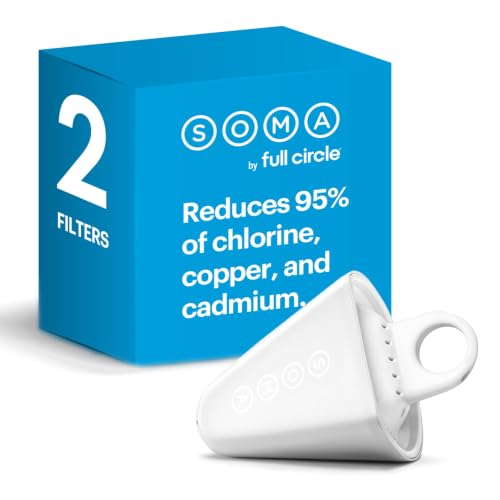
Soma by Full Circle Plant-Based Pitcher Filters 2-Pack
VIVA21 5-Stage Under Sink RO System with Leak Detector
Taking A Closer Look At The Options
Replacement cartridges are the unsexy part of owning a reverse osmosis (a membrane-plus-carbon process that strips dissolved solids from water) setup, and the Ultima kit leans into that reality with a full five-stage set rather than a single refill. Designed and assembled in the USA, this bundle drops into the existing Ultima frame and refreshes every stage at once, which is exactly the kind of chore homeowners tend to forget until the water tastes flat.
You won’t be installing anything new here. The kit matters most if you’re already running an Ultima 7/VII manifold and want a one-shot annual swap rather than chasing individual filters from different sellers.
The Case For It
- Five stages in a single kit, simplifying the yearly refresh
- Includes the 50 GPD (gallons per day) reverse osmosis membrane and a 1/4-inch NPT post-carbon finishing filter
- Activated coconut-shell carbon at the final stage, which commonly produces a cleaner taste profile
- US-made components, helpful for shoppers who track sourcing
- Universal fit across the Ultima 7/VII line, so no model-number guesswork
Things To Consider
- Only useful if you’re already running the matching Ultima system, which makes it a poor entry point for newcomers
- Annual five-stage swaps are more involved than pitcher-style replacements
Feature Snapshot
Who It Suits Best
Owners already running a Better Home Water Treatment Ultima 7/VII who want a single five-stage replacement kit on hand.
Where Another Pick Suits Better
Shoppers starting from scratch get a more complete package from the VIVA21 5-Stage RO System, which includes the actual hardware, tank, faucet, and leak detector in one box.
Home Master built its reputation on solving the small annoyances that plague traditional RO systems. The TMAFC uses a modular design with no canister housings to clean, plus a patented remineralization (a stage that adds back healthy minerals like calcium and magnesium) step that adds calcium and magnesium twice during purification, which addresses the flat-taste complaint that’s pushed many shoppers off RO entirely.
The 4.5-second fill rate translates to noticeably faster glass fills, and the included ISetTMA8 filter change set means a year of replacements ships in the same box. NSF-certified components round out the package.
Useful Highlights
- Patented remineralization adds calcium and magnesium twice, improving taste and reducing tank degradation
- Modular design sidesteps the canister-cleaning chore that turns some owners off RO
- NSF-certified components meet material safety and performance standards
- Filter change set bundled in, simplifying the first year of ownership
- Faster fill rate than many competing RO units in this class
Worth Noting
- Requires under-sink space for the storage tank, which tight galley kitchens may lack
- Remineralization adds minerals back, but the system still wastes some water in the RO process
Made For
Homeowners who want NSF-certified RO performance with minerals re-added for taste and tank longevity.
Skip It When
Studio apartments without under-sink room fit better with the LifeStraw Home pitcher filter route, which needs no plumbing.
The “Loaded” suffix on this TMAFC-ERP-L is doing a lot of work. Compared to the standard TMAFC above, this version adds a permeate pump (a small auxiliary pump that pushes purified water into the tank using the energy of the waste stream, so the system fills faster with less waste water), a brushed nickel faucet, a refrigerator connection kit, and a Dow Filmtec high-hardness RO membrane rated at 75 GPD with a 0.0001-micron rating.
Higher GPD plus the permeate pump means the storage tank refills faster, which matters in busy kitchens where the tank gets drained repeatedly during meal prep. The Watts Premier drain line adapter bundles in one more piece of the install puzzle.
Notable Gains
- Permeate pump speeds tank refill and trims waste-water ratios during operation
- Brushed nickel faucet included, avoiding the chrome-plastic look of basic kits
- Refrigerator connection kit lets you run a dedicated line to the fridge
- Dow Filmtec 75 GPD membrane handles higher hardness without choking output
- 0.0001-micron membrane rating captures very fine dissolved solids
Trade Offs
- The permeate pump adds a small mechanical part that owners occasionally report needing service on
- More included hardware means a longer install for first-timers, and you may want to budget for a plumber
Best Suited To
Households with higher water demand who want faster tank recovery and the option to plumb a refrigerator line.
Look Elsewhere When
Casual users in small apartments will over-buy here, and the Home Master TMAFC standard kit covers them at lower cost.
APEC has long been a fixture in the under-sink RO world, and this replacement trio covers the three pre-filtration stages (sediment, carbon block, and carbon polishing) that protect the expensive RO membrane downstream. The set is standard 10-inch sizing, which fits all standard under-sink RO housings, not just APEC’s own.
US-made construction and a rated life past twelve months are the main draws. Owners commonly stretch these past a year in low-turbidity water.
Where It Helps
- Covers Stages 1, 2, and 3 in one swap, simplifying the annual routine
- Standard 10-inch size fits most under-sink RO housings regardless of brand
- US-made components offer sourcing transparency
- High-capacity media that commonly runs twelve months between changes
Points To Note
- Doesn’t include the membrane or post-carbon stages, so owners need separate purchases to complete a full refresh
- Filter housing sanitation during swap is the kind of task first-timers occasionally skip
Perfect Match For
Anyone maintaining an existing APEC or compatible RO system who wants a US-made pre-filter refresh.
Consider Something Else When
Newcomers to RO should look at the Home Master TMAFC 7-Stage system, which ships with the full setup rather than requiring a pre-existing unit.
This listing packages the same loaded Home Master TMAFC-ERP-L covered above with a bonus length of John Guest 3/8-inch LLDPE tubing (a flexible, food-grade plastic line rated for cold-water plumbing). Twenty-five feet covers most under-sink runs with slack for routing around corners or to a secondary outlet.
For first-time installers, that bundled tubing removes one of the more annoying sourcing trips. The push-fit John Guest style is forgiving for newcomers, in our view.
Good Reasons To Consider
- Loaded RO system plus 25 feet of food-grade tubing in one box
- Push-fit John Guest connection style eases DIY installation
- Flexible LLDPE handles tight under-sink routing
- Permeate pump and Dow Filmtec membrane included from the loaded kit
- Brushed nickel faucet and fridge connection kit round out the bundle
Room For Improvement
- Paying for bundled tubing may not appeal to homeowners with plumbing leftovers from a prior project
- Still requires under-sink drilling if you don’t already have a dedicated RO faucet hole
Who Should Grab It
First-time installers who want the tubing, fittings, and RO hardware in one shipment rather than three.
A Better Fit Elsewhere
Renters who can’t drill into countertops should reach for the LifeStraw Home pitcher filter, which needs zero plumbing.
Whole-house filtration operates in a different lane from the under-sink RO units above. The Culligan P5 is a 5-micron spun-bonded polypropylene cartridge (a fine-melt-blown fiber filter that catches sediment and particulates) rated to roughly 8,000 gallons, sold here as a four-pack that covers two years for most households.
It doesn’t strip dissolved contaminants the way RO does. What it does do is defend every faucet, shower, and washing machine from sediment, dirt, and scale particles that shorten the lifespan of life of water heaters and appliances.
A Strong Showing
- Cuts sediment before it reaches any tap in the house, protecting appliances
- Four-pack extends replacement intervals for two years or so
- Works with both city water and well water supplies
- Standard drop-in cartridge format fits common whole-house filter housings
Small Caveats
- Targets sediment and particulate matter only, so dissolved contaminants require a separate stage
- Requires an existing whole-house filter housing; this listing is the cartridge, not the unit
The Right Fit
Rural and well-water homes needing broad sediment defense across every outlet before finer treatment downstream.
Another Choice May Suit
Shoppers who want whole-house chlorine and taste reduction should consider the GE FXHTC Whole House Replacement Filter 4-Pack instead, which broadens the contaminant list.
GE’s FXHTC targets the contaminants most whole-house owners care about: chlorine taste and odor, sediment, and rust. The four-pack replaces approximately every three months per filter, which is the manufacturer’s recommended interval, so the box covers a year for most households.
It’s NSF/ANSI certified for the listed contaminant reductions and fits the GXWH40L and GXWH35F whole-house systems. Note that this is the replacement cartridge, not the filter housing itself.
Where It Excels
- Reduces chlorine, sediment, and rust across every tap simultaneously
- NSF/ANSI certification backs up the contaminant claims
- Compatible with two of GE’s most common whole-house filter housings
- Four-pack spreads the maintenance cost across a full year
Honest Caveats
- Doesn’t strip dissolved solids, fluoride, or other RO-level contaminants
- Three-month swap interval can feel frequent for households accustomed to annual RO changes
Built With In Mind
Households already running GXWH40L or GXWH35F housings who want certified chlorine and sediment reduction across the whole home.
Swap It Out When
Owners seeking dissolved-solid removal need to pair this with an under-sink RO system like the Home Master TMAFC for the full picture.
Pitcher filters handle the “I just want better-tasting water” crowd without requiring under-sink plumbing. The LifeStraw Home replacement uses activated carbon plus ion exchange (a resin-based media that swaps dissolved contaminants for less harmful ions) to reduce a broad list including PFAS (often called “forever chemicals”), lead, mercury, chlorine, and microplastics.
A three-pack covers roughly six months of normal use, depending on household size. No tools, no drilling, no plumber.
Useful Touches
- No installation required, since it slots into a standard pitcher format
- Targets a wide contaminant list including PFAS and lead
- Activated carbon layer improves taste while ion exchange handles metals
- Three-pack covers roughly six months of use for most households
- Renter-friendly since there’s nothing to plumb into the wall
Points To Keep In Mind
- Slow filtration pace compared to a tap-fed RO system
- Pitcher capacity limits how much filtered water you can stash for cooking
Whose Shelf It Belongs On
Renters, dorm dwellers, and small kitchens where under-sink installation isn’t possible.
Reach For A Different Pick When
Large households drinking many liters a day will want the Home Master TMAFC-ERP-L under-sink system for higher volume.
Soma’s filters stand out in the pitcher category because the carbon media is plant-based, derived from coconut shells, rather than coal-based activated carbon. Coconut carbon is naturally porous, which gives it a high surface area for adsorbing chlorine and certain metals.
These are replacement cartridges designed specifically for Soma pitchers, so they won’t fit other brands. Two filters per pack, designed to slot into the existing Soma carafe.
What It Does Well
- Plant-based coconut-shell carbon is a renewable filter media
- Targets chlorine plus a short list of metals like cadmium, mercury, and copper
- Drop-in fit for Soma pitchers, no tools needed
- Clean, minimalist design pairs with the Soma carafe aesthetic
A Few Limitations
- Only works with Soma pitchers, so it doesn’t help owners of other brands
- Doesn’t address the broader contaminant list that LifeStraw Home targets, like PFAS
Perfect Match For
Soma pitcher owners who want a coconut-carbon replacement and care about plant-based filter sourcing.
Not Your Match When
Shoppers wanting the broadest pitcher-scale contaminant coverage should look at the LifeStraw Home replacement filter instead.
The VIVA21 rounds out the list with a complete under-sink RO kit plus an unusual safety touch. It’s WQA Gold Seal certified to NSF/ANSI 58 (the standard for reverse osmosis drinking water systems) and NSF/ANSI/CAN 372 (the lead-content standard), and ships with the tank, lead-free faucet, and a leak detector that catches drips before they become cabinet damage.
Five stages run through sediment, carbon, the RO membrane, and a post-carbon polish. For apartment dwellers worried about leak liability, the detector is a meaningful selling point, depending on how your unit is plumbed.
Everyday Wins
- WQA Gold Seal certification to NSF/ANSI 58 and NSF/ANSI/CAN 372 standards
- Built-in leak detector alerts you to drips before they damage cabinets
- Lead-free faucet included in the kit
- Complete bundle covers tank, filters, and faucet for first-time installers
- Post-carbon polish stage tightens taste after the membrane
Trade-Offs To Consider
- Leak detector adds a small electronic component that owners occasionally report needing battery checks
- Five GPD capacity and tank size are sized for typical household use, not large families pulling pitchers constantly
Feature Snapshot
Who Will Love This
Apartment dwellers and DIY newcomers who want a complete, certified under-sink RO kit with leak protection built in.
Where Another Pick Suits Better
Households needing a faster tank refill and brushed-nickel faucet should consider the Home Master TMAFC-ERP-L loaded system instead.
Picking The Right Match For Your Plumbing
Start with where the water enters your house, not where it leaves. Whole-house sediment and chlorine filters, like the Culligan P5 or GE FXHTC, treat everything that comes through the main line, which protects water heaters, washing machines, and showerheads from buildup. They don’t, however, strip dissolved contaminants like lead or PFAS.
For dissolved-contaminant removal, reverse osmosis remains the most thorough route. RO systems push water through a semipermeable membrane (a sheet with pores small enough to block dissolved solids while letting water molecules through) that captures contaminants down to a fraction of a micron. The trade-off is volume: RO units produce purified water slowly, store it in a tank, and send a portion of the feed water to drain. Loaded systems with permeate pumps, like the Home Master TMAFC-ERP-L, recover tank pressure faster and waste less water than basic units.
Pitcher filters occupy the third lane. The LifeStraw Home and Soma replacements need no installation and address a narrower contaminant list, but they fit renters and small kitchens that can’t host under-sink hardware. Match the system to your plumbing reality, your water concerns, and how much maintenance you want to take on each year.
Getting The Most Out Of These Picks
Pitfalls Shoppers Hit
Under-sink space gets measured after the trash can and cleaning supplies are already in place, not before. Measure the height under the cabinet from the floor to the lowest fixed shelf, then subtract space for the RO storage tank, which is taller than most people expect. If you can’t fit a tank, a pitcher filter route is more honest than forcing a square peg.
Annual filter swaps are the chore that quietly gets skipped. RO pre-filters and post-filters have a real lifespan, and owners who push past the recommended interval notice the taste drifting long before the system fails outright. Calendar reminders pay off here.
Whole-house replacement cartridges often get purchased without confirming the housing model. The GE FXHTC fits specific housings, and the Culligan P5 swap requires an existing whole-house filter unit. Match the cartridge to the installed housing before checkout.
When Paying More Pays Off
The jump from a basic five-stage RO to a loaded version with a permeate pump, brushed-nickel faucet, and refrigerator line kit mostly buys convenience and faster recovery. For a household that drains the storage tank several times a day, the upgrade is worth it in our view. For a single-person kitchen, the basic unit covers the same water at lower cost.
Remineralization stages, like the one Home Master uses in its Artesian line, add calcium and magnesium back into the water after the RO pass. The honest read is that taste improves noticeably for most people, but it’s a refinement rather than a necessity. If you’ve never minded the flat taste of bottled RO water, you can skip that premium.
Key Things To Weigh Before Buying
Common Slip Ups With Home Filtration
Shopping by filter count alone misses the point. Five cheap stages don’t equal one well-built stage with quality media. Focus on the specific contaminants each stage targets rather than the headline number, and lean on NSF or WQA certifications when they’re listed.
Forgetting about waste water is a recurring surprise. Standard RO systems send three to four gallons of brine to the drain for every gallon of purified water produced. Permeate pumps trim that ratio, and tankless designs reduce it further. If water bills or drought restrictions are a concern, this number deserves attention before checkout.
Where The Premium Tier Earns Its Place
Higher-tier picks tend to bundle the small hardware that turns into extra trips. Faucets, tubing, fittings, and adapters add up when sourced separately, and the loaded RO bundles in this list package them in one box. For first-time installers, that consolidation is worth the price bump.
NSF-certified components, like those on the Home Master Artesian and VIVA21 systems, carry independent verification rather than just manufacturer claims. That’s a quiet but meaningful upgrade for shoppers who want third-party backing on the materials touching their drinking water.
Frequently Asked Questions
How often do RO filters actually need changing?
Most pre-filters run six to twelve months depending on source-water quality, while the RO membrane itself typically lasts two to three years. Post-carbon polish filters usually match the pre-filter interval. Households on well water with high sediment tend to swap pre-filters more often.
Do whole-house filters replace the need for an under-sink system?
Not really. Whole-house sediment and chlorine filters protect plumbing and improve general water quality, but they don’t strip dissolved contaminants at the level RO does. Many homeowners run both, with whole-house filtration feeding an under-sink RO unit at the kitchen tap.
Can renters install an under-sink RO system?
Technically yes, but drilling a dedicated faucet hole in a countertop or sink typically violates lease terms. Apartment dwellers usually do better with pitcher-scale options like the LifeStraw Home replacement filters, which need no plumbing changes.
Is remineralization worth the extra cost?
Taste is the main reason. RO water comes out flat because the membrane strips minerals along with contaminants, and remineralization stages like those in the Home Master Artesian line put calcium and magnesium back in. Some owners swear by the difference, others can’t tell. The honest read is that it’s a refinement rather than a necessity.
How much wastewater does RO produce?
Standard systems typically waste three to four gallons per gallon of purified water. Permeate pumps and high-efficiency membranes trim that ratio, and tankless designs can push it lower. If water bills or local restrictions matter, this number deserves a close look before purchase.
Wrap Up
The right pick depends less on brand and more on the plumbing you have and the water you want. Whole-house cartridges handle sediment and chlorine, RO systems tackle dissolved contaminants, and pitcher filters cover renters and small kitchens. Match the system to your space, your water concerns, and how much annual maintenance you want to take on, and the rest sorts itself out.