

A water pressure tank quietly does the heavy lifting in homes that rely on well water or a booster pump. It stores a reserve under pressure so your faucets and showers stay calm, even when the pump is taking a breath. The right tank cuts down on short-cycling, keeps plumbing quieter, and stretches the life of your pump by reducing how often it kicks on. Picking the wrong size or the wrong diaphragm type, on the other hand, leaves you with pulsing taps and a pump that wears out early.
The lineup below covers whole-house well tanks, reverse osmosis storage tanks, and a few key accessories that round out a clean installation. Each pick is matched to a specific kind of homeowner: small homes with modest flow, larger households that run multiple fixtures at once, and under-sink filtration setups that need a pressurized reserve.
The Main Contenders
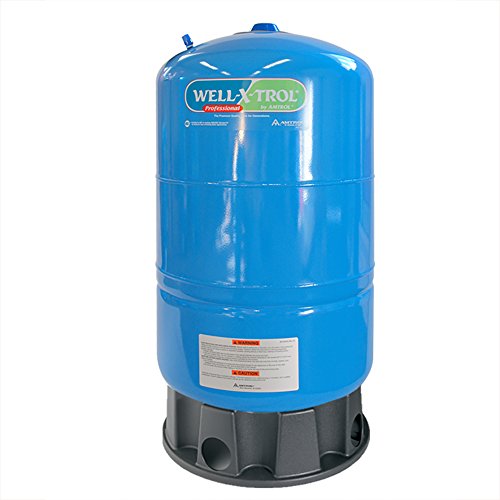
Amtrol-Well-X-Trol WX-202D 20 Gallon Pressure Tank

Red Lion RL34A 34 Gallon Vertical Pressure Tank

Red Lion RL14A 14 Gallon Vertical Pressure Tank

Amtrol Well-X-Trol WX-202 20 Gallon Free-Standing Tank

American Granby CVNL100BS 1″ Brass Check Valve

iSpring T55M 5.5 Gallon RO Storage Tank

iSpring T20M 20 Gallon Pre-Pressurized RO Tank

TOHONFOO Insulated Round Pressure Tank Cover

iSpring T11M 11 Gallon Pre-Pressurized RO Tank

Red Lion RL20A 20 Gallon Vertical Pressure Tank
Inside Each Recommended Option
The Amtrol-Well-X-Trol WX-202D is the kind of tank that suits a typical suburban well setup without much fuss. Its tall, narrow profile slots into a basement corner or utility closet where wider tanks simply do not fit. The high-strength steel shell runs at 150 psi working pressure, so it has noticeable headroom above common residential pump switch settings.
For most homes drawing from a private well, the 20-gallon capacity is a sensible middle ground: large enough to keep showers steady when a dishwasher kicks on, small enough to install without a helper. If your household runs two bathrooms back to back, you may notice the pump cycling a bit more often than with a 34-gallon model.
What Pays Off
- The composite DuraBase keeps the unit steady on uneven basement slabs, which avoids the wobble that cheaper stamped bases develop.
- An appliance-style blue finish blends into utility spaces better than industrial gray.
- NSF Standard 61 compliance confirms the water pathway stays safe for drinking.
- 150 psi working pressure sits roughly 20 percent above typical residential limits, giving you margin against pressure spikes.
- The vertical 20-gallon design saves floor space, useful when the mechanical room doubles as storage.
Points To Keep In Mind
- Pre-charge checks are still needed annually, since even well-sealed bladders lose a small percentage over time.
- For households with high simultaneous demand, a larger reserve reduces short-cycling.
Who Should Grab It
Standard suburban homes running one or two showers at a time, with a private well or booster setup.
Swap It Out When
Households that regularly run two bathrooms plus laundry at once should consider the Red Lion RL34A instead, since its larger reserve keeps pressure steadier under heavy draw.
When a household is large enough to drain a 20-gallon tank before the pump catches up, the Red Lion RL34A becomes the more honest choice. Its 34-gallon volume gives the pump longer rest periods between cycles, which is the single biggest factor in extending motor life on a deep well or high-demand city booster. The vertical orientation keeps the footprint manageable despite the extra capacity.
The build reads as deliberate: a 20-gauge steel tank shell, a 304 stainless steel water connection, and a variable-geometry butyl rubber diaphragm that flexes more cleanly than cheaper fixed-shape bladders. If you are running two showers, an outdoor spigot, and a washing machine at once, the RL34A absorbs that draw without the faucet pulse that smaller tanks produce.
What It Does Well
- 34-gallon reserve handles multi-bathroom homes without dropping pressure mid-shower.
- NSF/ANSI 61 and 372 certifications cover both drinking-water safety and lead-free status.
- The variable-geometry diaphragm reduces waterlogging over years of use, compared with fixed-shape designs.
- 304 stainless steel connection resists corrosion at the fitting point.
- Pre-charged at the factory, so installation is mostly plumbing rather than setup.
Trade-Offs To Consider
- The taller, heavier shell is harder to maneuver into a tight basement stairwell without a second pair of hands.
- Overkill for apartments or one-bath homes, where a smaller tank is more efficient.
- Annual pre-charge checks still apply, and the larger air volume means slightly longer recharge after top-ups.
Right Fit For
Larger households with two or more full bathrooms, irrigation pull, or frequent back-to-back appliance use.
Another Choice May Suit
Single-bath homes with modest flow will get more value out of the smaller Red Lion RL14A, since oversizing brings no real benefit when demand stays low.
The Red Lion RL14A is built for homes where space is the constraint and demand is modest. A 14-gallon reserve suits single-bath homes, small cottages, or properties with a single kitchen and a low-flow fixture set. Its vertical, slim shape slips into a closet or under-counter cavity that would reject wider horizontal tanks.
Construction mirrors its larger sibling: 20-gauge steel, 304 stainless water connection, and the same butyl diaphragm design. If your typical pattern is one shower, one sink, and the occasional dishwasher cycle, the RL14A covers that comfortably without paying for capacity you will never use.
The Case For It
- The 14-gallon size fits tight mechanical closets and stair landings where bigger tanks simply do not go.
- NSF/ANSI 61 and 372 certifications apply to this smaller unit as well, so safety does not shrink with capacity.
- The same corrosion-resistant stainless connection used on the larger Red Lion units carries over here.
Worth Noting
- Light commercial or large-residential demand will outrun the 14-gallon reserve quickly.
- Smaller tanks cycle the pump more often under heavy draw, which is worth thinking about for long-term pump wear.
Built With In Mind
Smaller households, guest cottages, or cabins where one fixture runs at a time and space is at a premium.
Reach For A Different Pick When
You regularly run two bathrooms at once; in that case the Amtrol Well-X-Trol WX-202D gives a more useful 20-gallon buffer without a major space jump.
For homeowners working with a plumbing pro or a confident DIYer, the Amtrol WX-202 is the unit most installers reach for by name. It ships factory pre-charged at 38 PSI, which sits right in the middle of the 30-50 psi switch range that residential pumps typically run. That means less fiddling at install time and fewer callbacks to fine-tune the cut-in pressure.
The 1″ NPT system connection matches standard residential plumbing, and the 125 psi working pressure is well-matched to standard 40-60 switch settings. Where the WX-202 differs from the WX-202D reviewed earlier is the base style, so picking between them often comes down to your floor surface and aesthetic preference.
What Helps Most
- Factory-set 38 PSI pre-charge removes the most common setup mistake: starting with an undercharged bladder.
- 200°F max operating temperature gives flexibility for hot-side applications or warm-basement environments.
- Standard 1″ NPT connection works with off-the-shelf fittings.
- Free-standing design keeps installation simple on level concrete pads.
Honest Caveats
- Without the composite base of the WX-202D, this unit can scuff or slightly mark softer floors.
- Pre-charge drifts slightly over time, so an annual top-up with a bicycle pump keeps performance steady.
Who It Suits Best
Homeowners comfortable checking pre-charge annually, working with a 40-60 psi switch and standard 1″ plumbing.
Look Elsewhere When
You want a tank that lives in a high-visibility spot: the Amtrol-Well-X-Trol WX-202D with its composite base and appliance-style finish sits better in finished utility rooms.
A check valve is not glamorous, but skipping one is the fastest way to drain a brand-new pressure tank back down the well. The American Granby CVNL100BS slots into the line between pump and tank, holding pressure on the tank side so the pump does not have to re-pressurize the entire system every cycle. The 1″ NPT thread matches the WX-202, Red Lion RL series, and most residential booster setups reviewed above.
The lead-free brass body matters more than it sounds. In a system that handles drinking water, lower-grade brass can leach small amounts of lead over years, especially at warm temperatures. Choosing a no-lead valve up front avoids a retrofit later.
Reasons It Performs
- No-lead brass body protects potable water lines from contamination, especially on hot-side installations.
- 1″ NPT thread matches the same fittings used by every well tank on this list.
- 200 lb series rating handles residential and light commercial pressure with margin.
- Installs at the pump, at the tank, or down the well, depending on system layout.
Practical Considerations
- Without a union fitting nearby, future replacement means cutting pipe, so plan the install location with that in mind.
Best Suited To
Anyone replacing a pressure tank, upgrading a check valve, or finishing a new well system with safe materials.
A Better Fit Elsewhere
If you do not need new plumbing hardware, skip to the iSpring T20M for a reverse osmosis storage upgrade instead.
The iSpring T55M sits in a different category from the well tanks above. It is a reverse osmosis storage tank, designed to sit under a kitchen sink or in a basement utility area and feed a dedicated RO faucet on demand. At 5.5 gallons total volume with roughly half usable, it suits a two-person household that runs an RO system for drinking and cooking water only.
The metal shell is paired with a stainless 1/4″ NPT valve thread and a food-grade butyl diaphragm that keeps the stored water from picking up plastic taste. Pre-pressurized between 7-10 PSI from the factory, it is ready to plumb into most standard RO systems without extra setup.
Good Reasons To Consider
- Compact 5.5-gallon body fits under most kitchen sinks alongside a filtration unit.
- Works in either vertical or horizontal orientation, which matters in shallow sink cabinets.
- Ball valve and tank connector included for a more complete install kit.
- Food-grade butyl diaphragm keeps stored water clean and neutral in taste.
Less Ideal Details
- Limited usable water volume, so families filling pots and pans in succession may notice depletion between refills.
- Not designed for whole-house use; pair it with a proper well or booster tank for that role.
Perfect Match For
Singles, couples, or small kitchens running an RO drinking-water system with light daily demand.
Where Another Pick Suits Better
Larger families pulling RO water for cooking, coffee, and frequent glasses should step up to the iSpring T20M for noticeably more usable reserve.
Where the T55M covers light demand, the iSpring T20M handles a household that treats filtered water as the main kitchen source. The total 20-gallon volume delivers roughly 14 gallons of usable water, which is enough to fill a pasta pot, run the coffee maker, and still pour a glass without waiting on the RO membrane to refill. It uses the same pre-pressurized bladder concept as the smaller iSpring unit but on a more practical scale for active kitchens.
Because it works efficiently in either vertical or horizontal mounting, the T20M can sit in a basement utility room, a garage, or a tall cabinet where plumbing runs are short.
Positive Takeaways
- 14 gallons of usable water removes the wait time between back-to-back RO draws.
- Tested against NSF and ANSI standards by an independent third party for material safety.
- Flexible position lets you place it where plumbing already runs, reducing install cost.
- Shut-off valve, tank connector, and tank stand are all included.
Things To Weigh
- Its size rules out under-sink placement; plan for a utility-area location instead.
- Without a registered warranty, missed registration can complicate any future claim.
The Right Fit
Mid-to-large households running an RO system as the primary drinking and cooking water source.
Skip It When
You only need filtered water for one or two taps; the iSpring T55M keeps things simpler under the sink.
For homes where the well tank lives in an unheated basement, a crawlspace, or an outdoor well house, the TOHONFOO insulated cover is the kind of accessory that prevents a midnight callout in January. A tank that freezes or sweats through temperature swings puts extra stress on fittings and diaphragms, and over years that adds up.
The 28-inch diameter and 24-inch height fit most standard residential well tanks, and the three-layer build (600D Oxford exterior, cotton batting, PE silver-coated inner liner) handles both cold snaps and direct sun. If your tank sits where winters bite or summers bake, this is the small upgrade that pays off in fewer service visits.
A Few Strong Suits
- Three-layer construction handles snow, frost, and intense sun on outdoor installations.
- Waterproof outer layer keeps insulation dry, which is what actually makes insulation work.
- Custom sizing for round well tanks means a snugger fit than a generic tarp.
Some Limits To Know
- Accessory only: it does not replace any tank on this list, so pair it with the underlying well tank of your choice.
- Unheated spaces in extreme climates may still benefit from a heat trace cable alongside the cover.
Whose Shelf It Belongs On
Homeowners with tanks in unconditioned spaces, especially in regions with sub-freezing winters or strong summer sun.
Not Your Match When
Your tank lives in a climate-controlled basement or utility room, where the insulation provides no meaningful benefit.
The iSpring T11M bridges the gap between the under-sink T55M and the larger T20M. With an 11-gallon total volume holding roughly 8.2 gallons of usable water, it gives a small family enough reserve to cook dinner, brew coffee, and refill water bottles without the constant trickle of refill cycles that a 5.5-gallon tank produces.
The build uses FDA-grade polypropylene liner and a high-grade butyl diaphragm, with 304 stainless steel connections that match the same standard as the Red Lion well tanks reviewed earlier. It is a quiet, low-fuss upgrade for an RO system that has outgrown its original small tank.
Strengths Worth Knowing
- FDA-grade liner and butyl diaphragm keep stored water neutral in taste and odor.
- 304 stainless connections resist corrosion at the fitting interface.
- Slim profile fits along basement walls or in tight utility closets.
- Plumbs directly into most residential RO systems with standard fittings.
Where It Is Less Suited
- Larger households filling multiple cooking pots in a row will still empty the usable reserve quickly.
Who Will Love This
Small families or couples running a dedicated RO drinking water system with steady daily use.
Consider Something Else When
You entertain often or cook with multiple pots at once; the iSpring T20M keeps up better under heavier demand.
The Red Lion RL20A closes out the list as the dependable middle path. Its 20-gallon capacity is the same sweet spot as the Amtrol units, but with Red Lion’s variable-geometry butyl diaphragm and 20-gauge steel construction. For homeowners replacing a tired existing 20-gallon tank, the RL20A is a clean drop-in upgrade on the same footprint.
Like its larger siblings, the RL20A carries NSF/ANSI 61 and 372 certifications for drinking-water safety and lead-free materials. For most average-sized homes, this is the tank that quietly does its job for years without much attention.
Where It Delivers
- Variable-geometry diaphragm flexes more cleanly than fixed-shape bladders over years of use.
- 20-gauge steel shell balances weight and durability for residential installs.
- Pre-charged at the factory and ready to plumb into standard 1″ residential lines.
- Certified lead-free under NSF/ANSI 372, important for potable water lines.
Factors To Consider
- 20 gallons is the common residential capacity, but it is not always the right size for high-demand homes.
- Annual pre-charge checks are part of ownership, just as with any bladder tank.
Made For
Average-sized homes with one to two bathrooms, replacing a worn-out 20-gallon tank on the same footprint.
Where A Sibling Pick Shines
Heavier-demand households should step up to the Red Lion RL34A, where the extra reserve makes the real difference.
Choosing The Right Size and Type for Your Home
A water pressure tank does three things at once: it stores a reserve of pressurized water, it smooths out the pump’s on-and-off cycle, and it delivers water between pump runs. Get those fundamentals right and most other decisions fall into place.
Match Capacity to Household Demand
The simplest sizing rule is to match gallons of storage to gallons of pump flow per minute, with a small buffer. A household running 10 gallons per minute of pump flow with two bathrooms active does well with a 20-gallon tank like the Amtrol WX-202D or Red Lion RL20A. Larger homes with multi-bath demand benefit from the 34-gallon Red Lion RL34A, while small cottages and cabins only need the RL14A. The bigger the reserve, the less often the pump cycles, and the longer the pump motor lasts.
Understand Pre-Charge and Working Pressure
The pre-charge is the air pressure sealed inside the tank before any water enters, and it should sit about 2 psi below the pump’s cut-in pressure. A 40-60 psi switch, for example, pairs with a 38 psi pre-charge, which is exactly what the Amtrol WX-202 ships with from the factory. Checking pre-charge annually with a tire gauge keeps the tank operating efficiently and prevents the short-cycling that wears out pump relays.
Decide Between Well Tanks and RO Tanks
Whole-house well tanks handle raw well or booster pump water for every fixture. RO storage tanks hold treated water from a reverse osmosis system and feed a dedicated filtered tap. They look similar but serve different roles: a well tank works with your pump, while an RO tank works with your filtration system. The iSpring T55M, T11M, and T20M all serve that RO role specifically.
Plan for the Installation Environment
A tank in a heated basement needs little extra thought. A tank in a crawlspace, garage, or outdoor well house benefits from an insulated cover like the TOHONFOO, paired with a check valve such as the American Granby CVNL100BS if the existing one is missing or worn. Climate dictates accessories as much as the tank itself dictates capacity.
Key Considerations Across These Picks
Pitfalls Shoppers Hit
The most common mistake is sizing down to save money. A 14-gallon tank looks appealing until two showers run at once and the pump starts cycling every few seconds. The second common slip is ignoring the pre-charge: tanks that have never had their air pressure checked run hot, waste pump cycles, and wear out diaphragms faster. Finally, skipping a quality check valve or reusing a worn one can drain a brand-new tank back down the well within hours.
What Separates Premium From Basic
The real cost difference between a value well tank and a heavier unit comes down to three details: diaphragm geometry, connection hardware, and shell thickness. Variable-geometry butyl diaphragms flex more cleanly and resist waterlogging. 304 stainless steel connections outlast plastic or lower-grade brass. Thicker steel shells resist the dents and corrosion that come with years of basement humidity. Those details show up years down the line, which is when the higher tier earns its price.
Frequently Asked Questions
How often should I check the air pre-charge in my pressure tank?
Check it once a year with a standard tire gauge, with the water drained and the pump off. A small drop of one or two psi per year is normal, but anything beyond that means topping up or replacing the valve.
Can I install a pressure tank myself, or do I need a plumber?
A confident DIYer with basic plumbing experience can handle a straightforward tank swap, but any system tied into a well pump and pressure switch is worth a licensed plumber’s eye for the electrical and check-valve work.
What is the difference between a bladder tank and a galvanized tank?
A bladder tank uses a sealed rubber diaphragm that separates water from the pressurized air charge. Older galvanized tanks rely on a simple air pocket above the water, which absorbs air over time and needs more frequent recharging.
How long does a residential water pressure tank last?
With annual pre-charge checks and steady water chemistry, a quality bladder tank typically lasts between 10 and 15 years before the diaphragm begins to waterlog and performance drops.
Can I use a well pressure tank for a reverse osmosis system?
They serve different roles. RO systems need smaller pre-pressurized tanks with food-grade liners, like the iSpring T55M, T11M, or T20M, sized for the membrane output rather than whole-house flow.
Final Verdict
For most homeowners, the Amtrol Well-X-Trol WX-202D and the Red Lion RL20A are the safe starting points, sized for typical residential demand and built to last. Larger households step up to the Red Lion RL34A, while compact homes and cottages find the RL14A a better match. For RO drinking water, the iSpring trio covers small, mid, and larger kitchens, and a few thoughtful accessories round out a clean, durable install. Match the tank to the demand, keep an eye on pre-charge, and the rest takes care of itself.




