Tap water in most homes carries chlorine, trace metals, and the occasional microplastic. A reliable filter changes the taste and the chemistry in your glass, and the category has grown far beyond the basic pitcher. Pitcher replacements, ultralight straws, gravity-fed steel systems, and full under-sink reverse osmosis units all live here now.
You likely care about one of three things: a quick drop-in upgrade, a rugged option for trails and emergencies, or a serious under-sink setup that scrubs the broadest list of contaminants. The picks below cover all three lanes, with honest caveats and clear ownership expectations for each.
The Essentials At A Glance

Brita Stream Replacement Water Filter, As-You-Pour (Pack of 12)
LifeStraw Personal Water Filter for Hiking and Travel

LifeStraw Peak Series Personal Water Filter Straw

Brita XL 27 Cup Water Pitcher Dispenser, Black
Brita Large 10-Cup Water Filter Pitcher, 1 Elite Filter

Purewell 3-Stage Gravity Water Filter 2.25 Gal (PW-OBT)
Purewell 8-Stage Gravity Water Filter 2.25 Gal (PW-OBT-CF)

Purewell 3-Stage Gravity Filter w/ Spigot (PW-OBT-K)
VIVA21 5-Stage Reverse Osmosis Under-Sink System
Meet The Standout Selections
Pour-through filters normally ask you to wait while water drips into the reservoir. The Brita Stream filter flips that script: it cleans the water as it leaves the pitcher, glass by glass. For households that refill small amounts throughout the day rather than dumping in a full top, that as-you-pour design kills the standing-water wait and keeps the dispenser usable between pours.
Dual-layer carbon filtration targets chlorine taste and odor along with Class VI particulates, meaning visible sediment and larger suspended particles get caught in the outer stage. You get WQA NSF/ANSI certification, which matters for anyone who wants third-party verification rather than marketing claims.
What Works In Its Favor
- As-you-pour design means a fresh glass never has to sit in a reservoir
- Dual-layer carbon catches chlorine taste and Class VI particulates together
- WQA NSF/ANSI certification provides third-party performance verification
- Pack of 12 keeps replacements covered for roughly a year for one user
- Drop-in fit for existing Brita Stream pitchers and dispensers
Worth Noting
- Only compatible with Brita Stream pitchers, so it won’t retrofit older Brita models
- Replacement cycle of about 40 gallons per filter means tracking the calendar
Who It Suits Best
Owners of a compatible Brita Stream pitcher who refill in small batches and hate the wait on a slow gravity drip.
Look Elsewhere When
You want one filter that scrubs the broadest range of contaminants. The Brita Large 10-Cup Water Filter Pitcher with Elite filter tackles lead and more.
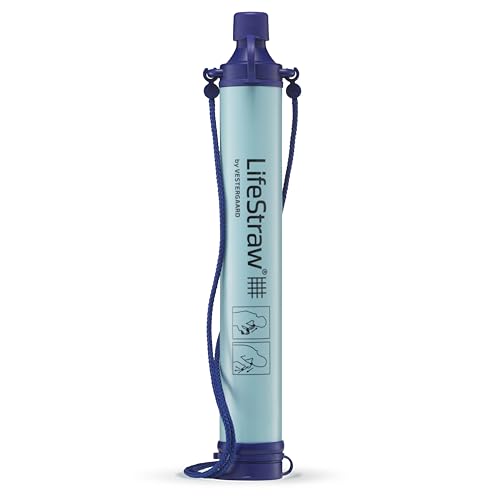
The original LifeStraw turned sipping straight from a stream into something a non-wilderness person could actually do. You drink through the straw like a tall tube, and a hollow-fiber membrane inside catches bacteria, parasites, microplastics, and silt before the water hits your mouth. No pumping, no chemicals, no batteries.
For backpackers, it weighs next to nothing and lives in a side pocket until needed. Emergency kits benefit from the same simplicity: pull it out of the bag and drink. The trade-off versus the pitcher picks above is capacity, since a straw treats one mouthful at a time.
Bright Spots
- Straw-style design needs no setup, pump, or power
- Targets bacteria, parasites, microplastics, and visible sediment in one pass
- Lightweight enough to stay in a daypack or emergency go-bag
Points To Note
- Drinking directly from a stream takes some getting used to, especially in murky water
- Doesn’t improve taste the way activated-carbon pitcher filters do
- Flow rate slows as the filter nears the end of its lifespan, which owners commonly report
Made For
Backpackers, day hikers, and anyone building a vehicle emergency kit who wants a no-fuss water backup.
Consider Something Else When
You want a longer sipping session with better ergonomics. The LifeStraw Peak Series Personal Water Filter Straw adds a grippier body and faster flow.
The Peak Series takes the proven straw concept from the original LifeStraw and rebuilds the body for trail comfort. A textured grip section sits where your fingers land, and the membrane inside has been tuned for a noticeably easier pull, which matters when you stop at an alpine stream after a long climb.
It’s still the same fundamental idea: a hollow-fiber filter that strips bacteria, parasites, microplastics, and silt from any clear-looking freshwater source. Where the Peak earns its keep is the carry experience and the materials, which lean more sustainable than the classic model.
A Few Strong Suits
- Improved grip texture reduces hand fatigue during longer sips
- Faster flow rate than the classic LifeStraw, especially mid-filter life
- No loose parts to track, since the straw is a single sealed unit
- Lightweight at roughly 2 ounces for ultralight packs
Trade Offs
- Premium build shows up in the cost versus the original LifeStraw
- Still doesn’t add activated carbon, so swampy or tannin-heavy water keeps its earthy taste
Best Suited To
Ultralight hikers and overlanders who want the lightest dependable straw and don’t mind paying a bit more for a better grip.
A Better Fit Elsewhere
You need to filter a campsite’s worth of water for cooking. The Purewell 3-Stage Gravity Water Filter 2.25 Gal handles volume without sipping.
Standard 10-cup pitchers run dry in a household that cooks pasta, fills kettles, and serves the dog. The Brita XL 27 Cup Water Pitcher Dispenser solves that by living in the fridge like a half-gallon jug, with a flip-top spout and enough capacity to cover dinner prep and lunchboxes in one fill.
It ships with one Elite filter, which is a meaningful step up from Brita’s standard cartridges. The Advanced Carbon Core formulation carries WQA NSF/ANSI certification for lead and a longer contaminant list, and you feel the upgrade when you pour a glass of cold water over ice.
Real-World Strengths
- 27-cup reservoir covers cooking, drinking, and pet bowls in a single fill
- Fridge-door shape with a flip-top spout speeds up daily pours
- Elite filter targets lead, microplastics, and 30+ other contaminants
- Indicator strip on the lid tracks replacement timing at a glance
Honest Caveats
- Bulkier than a standard pitcher, so it eats fridge shelf space
- Elite filters cost more per replacement than standard Brita cartridges
Feature Snapshot
Who Will Love This
Families of three or more who cook with tap water daily and want fridge-ready filtered water without babysitting a small reservoir.
Skip It When
You live solo or in a couple. The Brita Large 10-Cup Water Filter Pitcher with Elite filter fits smaller fridges more easily.
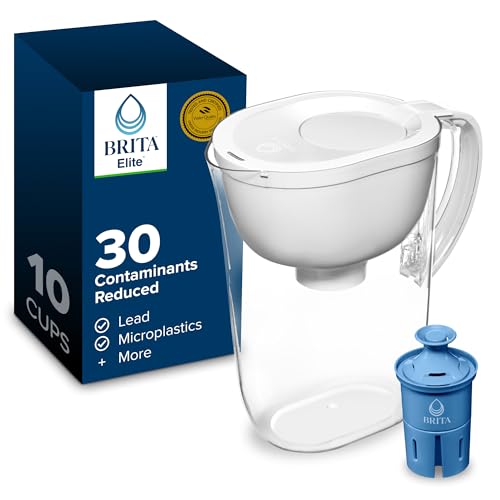
The 10-cup pitcher is Brita’s sweet spot: enough water for two people and a stovetop pot, small enough to park on any fridge shelf. What makes this particular version stand out is the bundled Elite filter, which uses the Advanced Carbon Core formula to handle the longer contaminant list, including 99% lead reduction per the WQA NSF/ANSI testing.
For most apartments and small households, this is the sensible upgrade over a standard Brita cartridge. You pour, the lid closes, the indicator strip reminds you when to swap, and the housing is BPA-free so the water only touches food-grade plastic.
A Few Highlights
- Elite filter certified to reduce 99% of lead along with chlorine, mercury, and cadmium
- 10-cup capacity fits a standard fridge shelf and covers a couple’s daily use
- WQA NSF/ANSI certification provides third-party validation
- BPA-free housing keeps filtered water in contact with food-grade materials only
Worth Bearing In Mind
- Elite filters carry a higher replacement cost than standard Brita cartridges
- Refilling frequency climbs quickly in a household of three or more
Perfect Match For
Couples and solo dwellers who want meaningful contaminant reduction without an under-sink install or a fridge-hogging dispenser.
Another Choice May Suit
You entertain often or have a large household. The Brita XL 27 Cup Water Pitcher Dispenser holds nearly three times the water.
Gravity filters trade the pitcher pour for a tall, two-chamber tower: you pour water into the top, it seeps through ceramic filters, and clean water collects in the bottom chamber. The Purewell 3-Stage unit lives on the counter in a stainless steel housing that looks more like a kitchen fixture than a plastic jug.
Each ceramic filter stacks three media layers: a ceramic outer shell that blocks visible sediment, an activated carbon core that pulls out chlorine, and a silver-ion inner layer that limits microbial growth once water sits in the chamber. The 2.25-gallon capacity covers a day of cooking and drinking for two without a refill.
Real Benefits
- Stainless steel housing stands up to kitchen use and resists staining
- Washable ceramic filters lower long-term replacement costs
- No electricity or water-line connection required
- Three-layer filter design combines sediment, carbon, and antimicrobial stages
Points To Keep In Mind
- Filtering speed depends on gravity, so plan ahead rather than at mealtime
- Takes up more counter space than a fridge pitcher
- Ceramic filters need occasional cleaning to keep flow consistent, which owners commonly report
Quick Facts
Right Fit For
Renters, off-grid kitchens, and preppers who want a fixed-position filter without plumbing it in.
Reach For A Different Pick When
You want fluoride in the reduction mix. The Purewell 8-Stage Gravity Water Filter 2.25 Gal adds a dedicated fluoride cartridge.
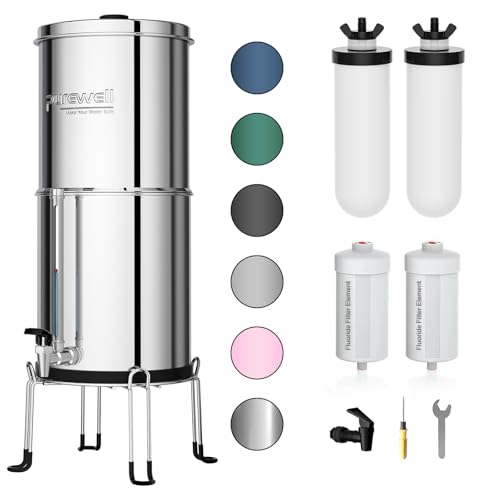
The 8-Stage version builds on the same stainless steel tower but swaps the cartridge layout for a broader media chain. Beyond the ceramic carbon stage, it adds a fluoride-reduction cartridge that pairs a fluoride-specific membrane with extra sediment layers and activated carbon. The result is a more aggressive filter path for people who care about the longer contaminant list.
Four filter elements live inside the unit, and a metal spigot on the lower chamber makes pouring a glass feel more like using a cooler than tipping a jug. The steel stand keeps the lower chamber at a comfortable height for most countertop placements.
Where It Excels
- 8-stage filter chain adds fluoride reduction on top of chlorine and sediment control
- Four replaceable cartridges spread workload across media types
- Metal spigot and stand improve daily ergonomics over tilt-to-pour designs
- Stainless steel housing holds up to long-term kitchen use
Some Limits To Know
- More cartridges means more replacements to track over time
- Filters more slowly than simpler systems, especially as cartridges age
- Premium feature set shows up in the asking price versus basic gravity units
Whose Shelf It Belongs On
Homeowners who specifically want to address fluoride alongside chlorine and prefer a fixed, no-install setup.
Swap It Out When
Fluoride isn’t a concern and you’d rather keep the filter path simple. The Purewell 3-Stage Gravity Filter w/ Spigot (PW-OBT-K) covers the basics for less.
The PW-OBT-K keeps the three-stage ceramic filter setup from the original Purewell tower but adds a metal spigot to the lower chamber. That single hardware change transforms the daily experience: you can fill a glass, a kettle, or a dog bowl without lifting or tilting a 2.25-gallon reservoir.
It uses the same ceramic-carbon-silver media chain as its sibling, so water quality stays consistent. The difference is purely mechanical, and it matters more than you’d expect in a shared kitchen or a small office pantry where multiple people pour throughout the day.
The Value In It
- Metal spigot makes single-handed pouring practical in shared spaces
- Same 3-stage ceramic media as the original Purewell tower
- Stainless steel housing suits both home and office environments
- Washable ceramic cartridges keep long-term costs predictable
Practical Considerations
- No fluoride stage, so heavy-fluoride water won’t see as much change here
- Counter footprint is similar to other 2.25-gallon gravity units
Built With In Mind
Shared kitchens, office pantries, and small cafes that want a fixed filter with a tap-style pour.
Where A Sibling Pick Shines
You need broader contaminant coverage, including fluoride. The Purewell 8-Stage Gravity Water Filter 2.25 Gal steps in there.
Reverse osmosis is the deepest filter path most homes will ever install, and the VIVA21 5-Stage system packages that technology into a complete under-sink kit. A sediment prefilter catches rust and silt, a carbon block strips chlorine, the RO membrane handles dissolved solids, and a post-carbon stage polishes the taste before the water reaches the lead-free faucet.
WQA Gold Seal certification to NSF/ANSI 58 means the membrane performance and contaminant reduction claims have been tested by an independent body. The included leak detector adds a quiet safety net, since a slow drip under the sink can go unnoticed for weeks.
Why It Works Well
- 5-stage path covers sediment, chlorine, dissolved solids, and taste in one unit
- WQA Gold Seal certification to NSF/ANSI 58 verifies membrane performance
- Lead-free faucet included in the kit, so no separate hardware run
- Leak detector helps catch under-sink drips early
Things To Weigh Up
- Under-sink install requires basic plumbing comfort or a handyman call
- RO systems produce a brine stream of wastewater along with the filtered output
- Tank takes up cabinet space, which renters may not want to commit to
At A Glance
The Right Fit
Homeowners who want the deepest contaminant reduction available without a full-house system and have the cabinet space to spare.
Where Another Pick Suits Better
You rent or move often. The Brita Large 10-Cup Water Filter Pitcher with Elite filter gives meaningful reduction with zero install.
What To Weigh Before Choosing A Water Filter
Filtration method drives almost every other decision. Pour-through pitchers, including the Brita Stream Replacement Water Filter and the Brita 10-Cup with Elite filter, use activated carbon to tackle chlorine taste and a growing list of contaminants, but flow depends on gravity and reservoir size. Gravity-fed steel systems like the Purewell 3-Stage add ceramic and silver-ion stages, and they handle sediment-heavy water better than standard pitcher cartridges. Reverse osmosis, as in the VIVA21 5-Stage system, uses a semipermeable membrane to strip dissolved solids, which is the deepest reduction available for residential use. Straw filters from LifeStraw live in a different lane entirely, since hollow-fiber membranes target bacteria and parasites in untreated outdoor water rather than improving tap water at home.
Capacity and footprint matter more than people expect. A 10-cup pitcher fits anywhere, but refills become a chore for a household of three or more. The Brita XL 27 Cup dispenser trades fridge shelf space for fewer fill-ups. Gravity systems sit on the counter and stay put, which suits permanent kitchens and rentals where under-sink installs are off the table. Under-sink RO units hide in the cabinet but require basic plumbing and produce a small amount of wastewater with each cycle.
Contaminant targets should match your local water report, not a marketing bullet. The Elite filter in Brita’s larger pitchers covers lead, microplastics, and 30+ other items, which is meaningful for older plumbing. The Purewell 8-Stage adds fluoride reduction, useful in regions with naturally high fluoride. RO systems handle the broadest list of dissolved contaminants, including nitrates and some heavy metals, which carbon-only filters miss.
Replacement cadence and long-term cost vary widely. Brita Stream replacement filters run about 40 gallons each, while Elite filters last longer per cartridge. Purewell ceramic cartridges are washable, which cuts the long-term cost once you have the system. RO units need periodic membrane and prefilter swaps, and skipping those shortens the system’s life. Outdoor straws like the LifeStraw and LifeStraw Peak have a fixed lifespan measured in liters, so they suit a specific use case rather than daily home use.
Key Considerations Across These Picks
Pitfalls Shoppers Hit
The most common misstep is choosing a filter by capacity alone and ignoring the contaminant list. A 27-cup dispenser with a standard carbon cartridge moves more water, but it doesn’t necessarily reduce more than a 10-cup pitcher with an Elite filter. The second pitfall is buying a straw filter for home tap water, which is the wrong tool since straw filters target untreated water, not municipal supplies. The third is skipping the install reality on under-sink systems: RO units look simple in photos, but they need a dedicated faucet hole, a drain saddle, and a pressure check.
Where The Extra Money Goes
The jump from a standard Brita replacement to an Elite filter covers a much longer contaminant list, including lead and microplastics, which matters in older homes with original plumbing. The jump from a basic 3-stage Purewell to the 8-stage adds a fluoride cartridge and more sediment layers, useful for users who care about specific contaminants. The jump to a 5-stage RO system buys the deepest reduction path, a lead-free dedicated faucet, and a leak detector. Each tier earns its keep for the right household; the honest read is that most people don’t need the deepest path, but those who do notice the difference every time they fill a glass.