
Tap water tells a different story depending on where you live. Some households wrestle with chlorine taste, others with hard mineral buildup, and some worry about aging pipes shedding sediment into morning glasses. Picking the right filter turns that anxiety into a daily habit you don’t have to think about. The lineup below covers whole-home sediment stages, multi-stage reverse osmosis setups, alkaline remineralization, travel-ready countertop units, and replacement cartridges for the gear you already own. You’ll find under-sink systems for committed DIYers, plug-in countertop models for renters, and trail-ready cartridges for backpackers. Each pick reflects a different ownership scenario, so you can match a filtration setup to your water, your kitchen, and your routine.
A Closer Look At The Lineup

Express Water ROALKUV10D 11-Stage RO System, Alkaline & UV

Bluevua RO100ROPOT-Lite Countertop Reverse Osmosis Water Filter

Express Water ROALK10D 10-Stage Under Sink RO System

Katadyn Hiker Pro Replacement Cartridge with Field Maintenance Kit
GE FXHTC Whole House Water Filter Replacement

Express Water ROELITE9 9-Stage Under Sink RO System

Culligan CW5-BBS Sediment Replacement Cartridge (Pack of 3)
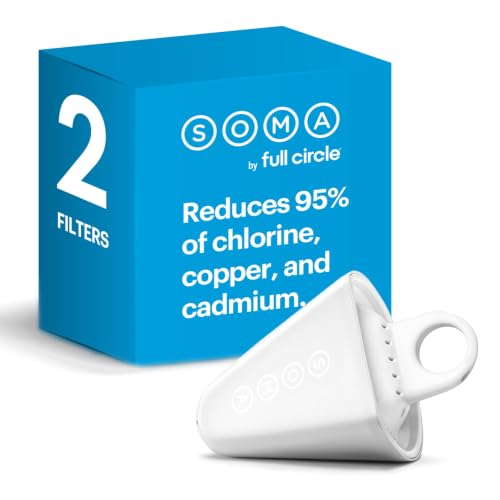
Soma by Full Circle Water Pitcher Filters (Pack of 2)

Bluevua RO100ROPOT Countertop Reverse Osmosis System
Bluevua RO100ROPOT-Travel Reverse Osmosis Countertop Filter
A Deeper Look At The Lineup
Eleven filtration stages is a serious commitment, and the Express Water ROALKUV10D earns every one of them. Reverse osmosis is a process that pushes water through a semipermeable membrane to strip dissolved contaminants, and this unit layers that membrane between sediment catches, carbon polishing, alkaline remineralization, and a UV-C stage (ultraviolet light used to neutralize microorganisms). For homeowners dealing with both mineral-heavy well water and microbiological concerns, that combination delivers coverage that simpler systems can’t match.
The tradeoff is footprint. Compared to the countertop Bluevua units covered later, this under-sink system demands cabinet space, a dedicated faucet, and a drain saddle. In return, you get glass-after-glass of mineralized water straight from a secondary tap, and the alkaline stage re-adds calcium, magnesium, and potassium after the RO process strips them out. For families who drink a lot of water daily and want minerals back in, the setup pays off.
What It Does Well
- Eleven stages stack RO, UV-C, and alkaline remineralization in a single under-sink package
- Mineral rebalancing adds calcium, magnesium, and potassium after the membrane strips them out
- Dedicated faucet keeps filtered water separate from unfiltered tap use
- UV stage addresses living contaminants that carbon alone may not fully neutralize
Things To Consider
- Installation requires drilling a dedicated faucet hole and adding a drain line connection
- Eleven filter stages mean staggered replacement schedules, with some cartridges swapped every six months and others annually
Quick Facts
Who It Suits Best
Homeowners with adequate cabinet space, well water, or municipal supplies that test high for dissolved solids benefit most from this system’s thorough mineral rebalancing.
Consider Something Else When
Renters who can’t drill a faucet hole should reach for the Bluevua RO100ROPOT-Lite Countertop Reverse Osmosis Water Filter instead, since it plugs into any outlet.
The Bluevua RO100ROPOT-Lite flips the script on under-sink systems. No plumbing, no drilling, no landlord negotiations. You fill the top reservoir from any tap, plug the unit into an outlet, and let it run. The borosilicate carafe (a glass container made to handle rapid temperature swings) catches the finished water instead of plastic, which matters if you’re sensitive to the taste of stored filtered water.
The tradeoff is capacity. A small countertop reservoir means you’re topping it off throughout the day rather than drawing on demand, so a four-person household may find themselves filling more often than they’d like. For one or two people in a studio or apartment, though, the daily habit fits neatly on a kitchen counter and disappears into the routine.
Bright Spots
- No installation required; fills directly from any existing tap
- Borosilicate glass carafe avoids plastic taste and thermal shock
- Smart LED indicators show filter life and tank status at a glance
Honest Caveats
- Reservoir size suits one to two people, not large families
- Requires counter space and a nearby outlet
Built With In Mind
Renters, studio dwellers, and small-household owners who want RO-grade water without altering plumbing will find this setup remarkably straightforward.
A Better Fit Elsewhere
If you’re a homeowner with whole-home ambitions and don’t mind drilling a dedicated faucet, the Express Water ROALKUV10D 11-Stage RO System delivers deeper mineral rebalancing under the sink.
Express Water’s ROALK10D is the workhorse sibling of the ROALKUV10D. The headline number is 100 GPD (gallons per day), which translates into roughly four gallons of filtered water ready every hour under optimal conditions. For a household where bottled-water habits have crept into the grocery budget, that throughput quietly replaces a stack of plastic.
Ten stages still deliver sediment, carbon, RO, and alkaline remineralization, so you’re not losing the mineral profile you might want from a flat RO system. In kitchens with a busy sink, the dedicated faucet cuts down on filtered-water waiting, since the tank refills while you unload the dishwasher or prep dinner.
Everyday Advantages
- 100 GPD output keeps up with cooking, drinking, and coffee brewing
- Ten-stage stack balances thorough filtration with mineral rebalancing
- Under-sink mounting keeps the counter clear for food prep
Worth Noting
- No UV stage; households worried about microbiological contaminants may want the ROALKUV10D instead
- Ten cartridges create a staggered replacement schedule that takes a calendar to track
The Right Fit
Mid-to-large households drinking and cooking with filtered water daily will appreciate the throughput and the under-sink footprint.
Look Elsewhere When
Anyone seeking microbial defense beyond what carbon and RO offer should consider the Express Water ROALKUV10D 11-Stage RO System, which adds a UV stage.
Backcountry hydration looks nothing like kitchen filtration, and the Katadyn Hiker Pro Replacement Cartridge reflects that. The cartridge uses a pleated glass-fiber element (a folded membrane of tightly woven microfibers) to push capacity up to roughly 200 gallons depending on water quality, which means a thru-hiker on a weeklong section of the AT can stop worrying about running dry mid-trip. A removable filter protector extends life when sources run silty after rainfall.
Unlike the under-sink and countertop picks above, this is a replacement cartridge, not a complete system. You pair it with the existing Hiker or Hiker Pro housing, and the included field maintenance kit keeps the pleats clearing when backcountry water turns opaque. Long-distance backpackers and paddlers already invested in the platform find it indispensable; first-time buyers need the full housing first.
Where It Excels
- Pleated glass-fiber design handles silty and muddy backcountry sources
- Up to 200-gallon capacity covers multi-day trips without a spare
- Removable protector shields the element from abrasion and sediment shock
Practical Considerations
- Requires the existing Katadyn Hiker or Hiker Pro housing; not a standalone filter
- Field maintenance adds steps you wouldn’t deal with in a kitchen system
Quick Facts
Who Should Grab It
Backpackers, paddlers, and emergency-prep households already using the Hiker platform will find this the natural next cartridge to keep on hand.
Skip It When
Households that want under-sink convenience should look at the Express Water ROALK10D 10-Stage Under Sink RO System instead, since it handles daily drinking water at home.

The GE FXHTC isn’t a new system, it’s the replacement heart for one you probably already own. The standard 10″ x 4.5″ drop-in sizing means it slips into the GXWH40L, GXWH30C, GXWH35F, GXWH38F, GNQH38S, and most housing units in that footprint. That compatibility makes it the boring, reliable choice for households that set up a whole-home filter years ago and just need to keep it running.
The filter pulls sediment, chlorine taste, and rust out of every tap in the house, which means the shower, laundry, and kitchen all benefit. A three-month replacement interval is the manufacturer guidance, and owners commonly report that stretching past six months lets chlorine and sediment creep back into the water.
What Makes Sense
- Standard 10″ x 4.5″ sizing fits most major whole-house housings
- Reduces chlorine, sediment, and rust across every tap, shower, and appliance
- Drop-in swap needs no tools beyond a housing wrench
Trade Offs
- Three-month replacement interval adds to ongoing maintenance cost
- Requires an existing compatible housing; not a complete system
Quick Facts
Made For
Homeowners with an existing GE or compatible 10″ x 4.5″ whole-house housing who want a reliable replacement cartridge on hand.
Swap It Out When
You need a complete under-sink RO system rather than a sediment pre-filter; the Express Water ROELITE9 9-Stage Under Sink RO System serves that scenario better.
Quick-twist cartridges are the underrated upgrade nobody talks about until they’ve wrestled with a sump full of water and a stuck filter housing at 11 p.m. The ROELITE9 swaps traditional sumps for cartridges that twist out by hand, which makes the four-to-six-month swap something you actually do instead of postpone. For a first-time RO buyer, that maintenance difference alone shifts the whole ownership experience.
The 0.0001-micron RO accuracy is the same membrane class as the heavier 10- and 11-stage systems reviewed earlier, and the alkaline rebalancing adds back the minerals the membrane strips. What you give up is a UV stage, so households on well water with microbial concerns should still favor the ROALKUV10D.
Practical Advantages
- Quick-twist cartridges eliminate the sump wrench and messy swaps
- 0.0001-micron RO accuracy matches higher-stage systems
- Alkaline rebalancing restores calcium, magnesium, and potassium
Things To Weigh
- No UV stage for microbiological treatment
- Still requires under-sink space and a dedicated faucet hole
Quick Facts
Best Suited To
First-time RO installers who want the cleanest possible swap routine without owning a filter wrench and bucket of towels.
Reach For A Different Pick When
You need UV microbial defense; the Express Water ROALKUV10D 11-Stage RO System handles that scenario with an extra stage and light.
Sediment filters rarely get attention until turbid water turns the shower glass cloudy. The Culligan CW5-BBS is a 5-micron cord-wound polypropylene cartridge (a yarn-wound filter element rated to trap particles down to five micrometers) sized for the HD-950A housing, with each cartridge rated for roughly 16,000 gallons. The pack of three keeps a year’s worth of swaps in a closet, assuming the four-month average usage guidance holds in your area.
What the CW5-BBS doesn’t do is filter chlorine or chemical taste. That’s deliberate; it’s a pre-filter stage that protects the finer carbon or RO stages downstream. Pairing it with a system like the GE FXHTC or an under-sink RO gives you a layered approach that the kitchen alone can’t match.
Key Advantages
- 5-micron cord-wound design captures sediment, rust, and silt
- Pack-of-three format covers roughly a year of scheduled swaps
- Drops into the HD-950A housing without modification
Room For Improvement
- Doesn’t address chlorine taste or chemical contaminants
- Requires the matching Culligan HD-950A housing to function
Whose Shelf It Belongs On
Workshop owners and homeowners maintaining a multi-stage whole-house setup who want a dependable sediment pre-filter on a rotating schedule.
Where A Sibling Pick Shines
If you want chlorine and sediment handled in a single replacement rather than layered stages, the GE FXHTC Whole House Water Filter Replacement covers both targets in one drop-in.
Sometimes the simplest path is the right one. The Soma pitcher filters use activated carbon made from coconut shells, a porous media that catches chlorine taste and a handful of heavy metals without electricity, plumbing, or a wrench. The pack-of-two format is built for households that already own a Soma pitcher and want six months of filtered water on hand.
The trade-off is throughput. A pitcher fills slowly and holds limited volume, so families that drink a lot of water daily will find themselves refilling constantly. For one or two people in a small space who value design and simplicity over gallons-per-hour, the Soma pitcher routine is calm and easy to keep up.
Standout Benefits
- Plant-based activated carbon from coconut shells cuts chlorine and metal taste
- Two-pack format covers several months of routine swaps
- Requires no installation, power, or tools beyond the pitcher itself
Some Limits To Know
- Low throughput compared to under-sink or countertop RO systems
- Requires an existing Soma pitcher housing; not a standalone filter
Perfect Match For
Pitcher users, small households, and design-minded minimalists who want quieter filtration without giving up counter space to a plug-in unit.
Not Your Match When
You drink large daily volumes or want RO-grade filtration; the Bluevua RO100ROPOT Countertop Reverse Osmosis Water Filter System handles that scenario in a more capable housing.
The full-size Bluevua RO100ROPOT sits between the Lite and the under-sink Express Water systems in capability and footprint. The borosilicate glass carafe replaces plastic storage, the multi-stage RO process strips dissolved solids, and the countertop format still requires only a power outlet and a fill point. Compared to the Lite, this model adds a longer filter life cycle and a more substantial production rate that suits a small family.
Design-conscious kitchens tend to appreciate this one. The glass carafe looks like it belongs next to a kettle and a French press rather than hidden under a sink, and the smart-display panel keeps filter status visible rather than buried.
Everyday Perks
- Borosilicate glass carafe elevates countertop aesthetics
- Higher production rate than the Lite for small-family demand
- Multi-stage RO plus remineralization in a single countertop unit
Soft Spots
- Larger footprint than the Lite; less suitable for tiny counters
- Still a fill-and-wait cycle, not continuous on-demand dispensing
Who Will Love This
Design-minded small families and home-office dwellers who want RO filtration on the counter without sacrificing visual calm.
Where Another Pick Suits Better
Strict minimalists or single occupants should consider the Bluevua RO100ROPOT-Lite Countertop Reverse Osmosis Water Filter for a smaller countertop footprint.
The Travel version of the Bluevua ROPOT is a curious hybrid: a six-stage RO system with UV that fits on an RV counter, a van galley, or a guest-house bar. The patented 5-in-1 filter combines several media layers into a single cartridge, and the UV stage addresses microbial concerns in unfamiliar water sources. For digital nomads and full-time travelers who carry their kitchen with them, that’s a meaningful upgrade over the pitcher filters reviewed earlier.
It’s still a fill-and-wait cycle, so on-demand continuous dispensing isn’t part of the package. Travelers with reliable campground hookups and a generator or inverter will find the routine easy; off-grid weekenders may need to plan production around power availability.
A Few Strong Suits
- Compact six-stage RO plus UV in a travel-friendly housing
- Patented 5-in-1 filter consolidates cartridge swaps
- Borosilicate carafe avoids plastic taste in stored water
Points To Keep In Mind
- Requires a power source, which limits boondocking usability
- Fill-and-wait cycle rather than continuous on-demand flow
Quick Facts
Right Fit For
Van dwellers, RV travelers, and frequent short-term renters who want RO-grade filtration without giving up mobility between locations.
Skip It When
You mostly stay put and want whole-home coverage; the Express Water ROALK10D 10-Stage Under Sink RO System serves that fixed-address scenario with higher daily throughput.
What To Look For In A Water Filtration Setup
Filtration type sets the ceiling on what a system can do. Reverse osmosis strips dissolved solids and heavy metals through a membrane, carbon captures chlorine taste and chemical traces, and UV neutralizes microorganisms that the others can’t reach. Sediment filters alone protect downstream hardware but don’t address taste or chemistry, so they work best as a first stage rather than a complete solution. Match the filtration class to your water profile: municipal users often focus on chlorine and lead, while well-water users typically need sediment plus microbial defense.
Throughput determines whether the system disappears into the background or nags at you all week. Whole-house filters run continuously through every tap, under-sink RO units produce 50 to 100 gallons per day, and countertop or pitcher setups fill on demand. Households that cook, brew coffee, and fill water bottles constantly should plan for higher daily production so the system never bottlenecks a routine.
Installation and maintenance own as much of the experience as the filtration itself. Under-sink systems need a dedicated faucet hole, a drain saddle, and a wrench-ready sump swap every four to six months. Countertop RO units skip the plumbing but ask for daily refills and a nearby outlet. Pitcher filters trade throughput for zero installation. Replacement cartridges vary widely in cost, so a quick look at the consumable schedule protects you from sticker shock six months in.
Key Considerations Across These Picks
Pitfalls Shoppers Hit
The most common slip is buying a filtration class that doesn’t match the water problem. A pitcher filter won’t meaningfully address lead or dissolved solids, and an RO system is overkill for chlorine taste alone. The second trap is forgetting the cartridge cost over a few years, which can quietly exceed the original system price. Sizing the system to the household is the third; undersized countertop units become the bottleneck in a busy kitchen.
What The Higher Tier Buys
Moving up the stack adds more filtration stages and more thorough rebalancing of minerals that RO strips out. The jump from a carbon pitcher to a multi-stage RO unit also brings dedicated faucets, faster daily throughput, and the option of UV microbial defense. For households drinking and cooking with filtered water daily, the upgrade tends to pay back in convenience and consistency rather than visible water changes alone.
Frequently Asked Questions
How often do replacement cartridges need swapping?
Most carbon filters swap every two to six months, while RO membranes last two to three years. Sediment pre-filters typically run on a three-to-four-month cycle.
Can an RO system strip water of healthy minerals?
Yes, the membrane removes dissolved minerals along with contaminants. Alkaline rebalancing stages like the ones in several Express Water models add calcium, magnesium, and potassium back into the finished water.
Do countertop RO units need a drain line?
No. Unlike under-sink systems, countertop units store wastewater and filtered water in the same housing, then dispense into the carafe. Drain saddle installation isn’t part of the setup.
Is UV light necessary in a home filtration system?
UV matters most for well water or any source where microbial contamination is a concern. Municipal water is typically disinfected before reaching the tap, so UV is a secondary safeguard rather than a primary filter.
What’s the difference between whole-house and under-sink filtration?
Whole-house systems treat every tap, shower, and appliance at once. Under-sink systems typically feed a dedicated drinking-water faucet and leave bathroom and laundry taps on unfiltered water.
Bottom Line
A filtration system that disappears into your routine is the one worth buying. Match the filtration class to your water profile, size the throughput to your household’s daily use, and account for the cartridge cost before you fall in love with the spec sheet. The picks above cover everything from trail-ready cartridges to eleven-stage under-sink systems, so you can find a setup that fits your kitchen, your lease, and your water.