Your kitchen tap does more than wash dishes, and the water flowing from it ends up in your coffee, your toddler’s sippy cup, and last night’s soup base. Choosing from the right under-sink lineup can feel like comparing ten nearly identical white boxes, especially when each one promises pure, fresh-tasting water. The goal here is a working shortlist that fits how you actually cook, drink, and entertain. Match the system to your water source, your counter space, and the trade-offs you can live with.
How The Shortlist Stacks Up

Waterdrop UL12A Under Sink Water Filter

iSpring RCC7P-BLK 5-Stage RO System

Waterdrop 10UB Under Sink Water Filter

APEC ROES-50 5-Stage RO System 50 GPD
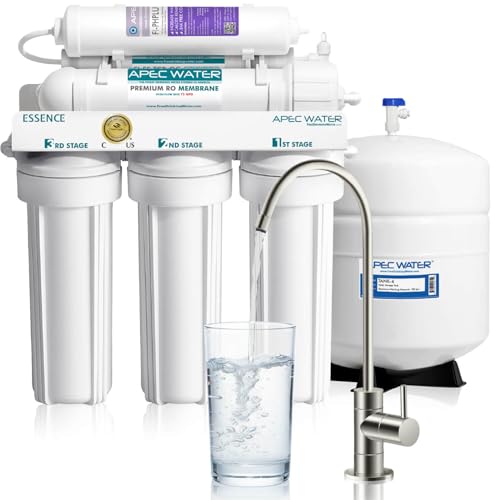
APEC ROES-PH75 6-Stage Alkaline RO 75 GPD
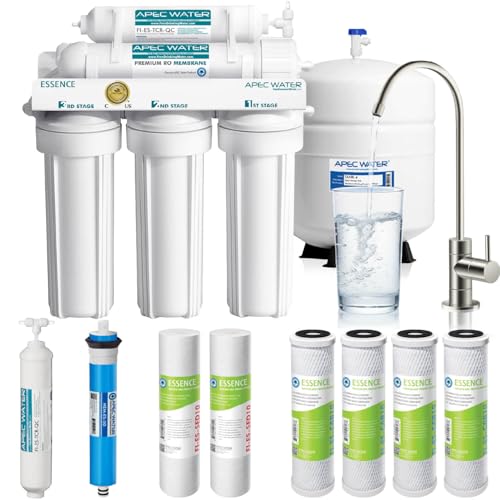
APEC ROES-50X 5-Stage RO with Extra Filters

APEC ROES-PHUV75 7-Stage Alkaline UV RO
Waterdrop DLA 2-Stage No-Drill Filter

Waterdrop DLG-P Dual-Flow PFAS Filter

APEC ROES-PH75X 6-Stage Alkaline RO
What Each Pick Brings To The Table
Designed for renters and busy cooks, the Waterdrop UL12A slides under the counter without a major plumbing detour. The upgrade from the 10UA brings a built-in timer that nudges you before filter life runs out, which matters once life gets busy. The shell is compact enough for tight sink bases, and the fittings tend to play nicely with common shut-off valves.
You’ll notice the difference most with morning coffee and baby formula, where chlorine off-notes tend to land hardest. For most municipal supplies, the UL12A handles the everyday reduction work without throwing a tank into the cabinet. The catch is that heavy metals and PFAS get filtered, but TDS stays put, so a TDS meter won’t move much.
Advantages To Know
- Time-reminder indicator takes the guesswork out of swap intervals
- Compact form factor slips into shallow sink cabinets
- Reduces chlorine, lead, and PFAS, which covers most city tap concerns
- Quick-connect fittings speed the install for first-timers
Things To Consider
- TDS reading stays flat, so anyone chasing mineral reduction will need a different setup
- Cold water only, so the hot-side tap stays unfiltered
Key Specs
Best Suited To
City-tap households and renters who want a low-maintenance, no-tank install that quietly improves everyday drinking water.
Where Another Pick Suits Better
Reach for the APEC Water ROES-50 if you want full reverse osmosis reduction and don’t mind a small storage tank under the sink.
The RCC7P-BLK is what happens when reverse osmosis gets dressed up. The included black faucet is real 304 stainless steel under the finish, and the top-mounted design means you tighten the base from above the counter. That alone saves knuckles during install, especially in cramped sinks where reaching under a dripping faucet is a workout.
The booster pump is the headline feature for anyone living with low home water pressure. The pump keeps RO production steady when the city supply dips, and it pushes recovery into a more efficient range. Where the Waterdrop UL12A is a quick carbon swap, this is a full 5-stage RO build with sediment, carbon, the membrane, and a polishing stage, so it covers the wide impurity profile.
Notable Gains
- Booster pump stabilizes output in low-pressure homes
- Top-mount faucet installation avoids under-sink contortion
- Full 5-stage RO covers the broader contaminant family
- 304 stainless steel faucet finish for a modern counter
Trade Offs
- RO systems produce some wastewater, which matters where water is metered or rationed
- Tank footprint claims more cabinet space than the Waterdrop UL12A setup
Who It Suits Best
Homeowners on low-pressure lines or larger families who want a complete RO build and a faucet that looks at home next to matte fixtures.
Not Your Match When
Pick the Waterdrop UL12A instead if you want a tankless under-sink install and care more about taste and chlorine than TDS reduction.
The 10UB is the value-focused sibling in the Waterdrop under-sink line, pairing a multi-stage filter with a dedicated drinking-water faucet. The dedicated tap keeps unfiltered hot water flowing for dishes while filtered cold water runs through its own spout. That separation reads as a small luxury, but it makes a daily routine feel intentional.
Where the UL12A added a time reminder, the 10UB keeps the interface simpler and leans on the multi-stage media for the work. Replacement filters run a sensible price, which matters over years of use. The unit is built for municipal cold water, so if you pull from a private well, look further down the list for the APEC ROES-PHUV75 with its UV stage.
Well-Handled Touches
- Dedicated filtered faucet keeps drinking water separate from dish water
- Multi-stage media covers chlorine, lead, and common sediment
- Replacement cartridges tend to be friendly to ongoing household budgets
Worth Noting
- Cold water only, with a clear no-well-water limitation
- Does not lower TDS, so mineral-conscious households may want an RO system instead
Feature Snapshot
Right Fit For
Tap-water households that want an affordable, dedicated drinking tap without committing to a full reverse osmosis tank setup.
Consider Something Else When
Choose the APEC Water ROES-PH75 if mineral reduction and alkaline remineralization matter more than budget.
The ROES-50 has been a long-running reverse osmosis pick for homeowners who want a straightforward 5-stage build. The 50 gallons per day output covers a small family’s drinking and cooking needs without producing so much waste that the unit becomes a water bill worry. APEC’s filter housing takes standard cartridges, which makes annual swaps accessible.
Setup is DIY-friendly, though a first-timer should set aside a weekend afternoon for the install and tank placement. The system targets arsenic, chlorine, lead, fluoride, and a wide spread of heavy metals, which is a step up from the carbon-only UL12A. The pressure of the supply line affects production, so homes with weak pressure may want to add a booster like the one in the iSpring RCC7P-BLK.
The Value In It
- 5-stage RO targets the broad impurity spread, including fluoride and arsenic
- Standard filter housings keep ongoing replacement easy to source
- DIY install without calling a plumber for a basic setup
Points To Keep In Mind
- RO systems waste some water during production, so drought-prone regions need to weigh that
- No booster pump included, so low-pressure homes will see slower tank fill
Who Should Grab It
Homeowners comfortable with a small tank under the sink who want broad contaminant reduction at a fair complexity level.
Skip It When
Pick the iSpring RCC7P-BLK instead if your home runs low on water pressure and you need the booster to keep RO production moving.
The PH75 steps the ROES-50 up with a sixth stage, a remineralization filter that adds back calcium and magnesium after the membrane strips the water. That gives the output a slightly higher pH and a rounder mouthfeel, which appeals to families who drink water straight through the day. The 75 GPD rating also means faster tank recovery between meals and school lunches.
The build feels more like a long-term install than a quick swap, with a clear RO train and a separate alkaline stage that you can replace on its own schedule. Compared to the Waterdrop UL12A, this is a heavier, more thorough setup. If you cook a lot, the alkaline stage softens the taste of coffee and tea in ways that purely stripped RO water doesn’t.
Practical Pluses
- 6-stage RO with a dedicated alkaline remineralization cartridge
- 75 GPD output suits a family that cooks and brews daily
- Targeted reduction covers chlorine, lead, fluoride, and heavy metals
- DIY-friendly layout with labeled filter housings
Honest Caveats
- Bigger under-sink footprint than tankless picks like the Waterdrop UL12A
- Alkaline cartridge adds a recurring replacement to track
Feature Snapshot
Perfect Match For
Families who drink a lot of water and want the smoother taste that comes from a remineralization stage after the RO membrane.
Another Choice May Suit
Reach for the APEC ROES-PHUV75 if your source is well water and you want the extra UV step on top of the alkaline build.
The ROES-50X is the ROES-50 with a thoughtful add-on: spare filter cartridges in the box. That small detail means you can install the system, run it through its break-in cycle, and not have to reorder cartridges for the first service interval. For first-time RO owners, that cushion lowers the friction of ownership.
Under the sink, the system behaves like the standard ROES-50, with a 5-stage RO train and a 50 GPD output. The pre-filter and post-carbon stages handle the typical sediment and taste polish, while the membrane does the heavy lifting. If you cook rice or pasta in filtered water, the 50 GPD rating usually keeps up with a family-sized pot without a long wait.
A Favorable Mix
- Extra cartridges in the box, so service is delayed, not immediate
- Standard 5-stage RO design covers the broad impurity list
- Compatible with the APEC upgrade path if you add a remineralization stage later
Room For Improvement
- Still produces RO wastewater like the other APEC RO models
- No booster pump, so check your home’s static pressure before install
Whose Shelf It Belongs On
First-time RO owners who want a smoother first year of ownership and the security of spare cartridges already on hand.
Look Elsewhere When
Pick the APEC ROES-PH75 if you want a 75 GPD build and a sixth alkaline stage from the start.
The PHUV75 is the over-builder of the APEC line, a 7-stage RO with both alkaline remineralization and a UV stage. The UV chamber addresses microorganisms that an RO membrane alone doesn’t always catch, which matters if your source water quality is unpredictable. Private well owners, this is the pick that pulls double duty.
The system hits 75 GPD, matching the PH75, but adds the UV polish at the end. NSF/ANSI 372 lead-free certification matters for anyone checking the drinking-water materials list. Compared to the Waterdrop UL12A carbon filter, this is a far more thorough build, and the trade-off is a larger cabinet footprint and more filters to track over time.
Positive Takeaways
- 7-stage RO covers sediment, carbon, membrane, alkaline, and UV
- UV stage addresses microorganisms that pass through mechanical filters
- 75 GPD supports a household that drinks and cooks a lot of water
- Lead-free certification on wetted parts
Worth Bearing In Mind
- Largest cabinet footprint in the APEC line, so measure before installing
- More cartridges to replace on staggered schedules, so owners commonly keep a stock on hand
Spec Overview
Who Will Love This
Well-water households and quality-focused families who want a comprehensive RO setup with both alkaline and UV stages.
Where A Sibling Pick Shines
Choose the APEC ROES-50X if you want to keep the build simpler, save cabinet space, and skip the UV chamber.
The DLA is built for renters and stone counters. The no-drill claim is real, the system ties into existing plumbing without a new hole in granite or quartz. The 2-stage media design uses PP cotton, KDF, and an activated carbon block to handle chlorine, rust, and sediment, which is the everyday tap complaint in older apartment buildings.
The trade-off is that “2-stage” is genuinely less aggressive than the multi-stage UL12A or any RO system on this list. The DLA keeps things simple, and the install path respects the deposit you paid on your apartment. Where the APEC ROES-50 leaves you scheduling six service items, the DLA asks for one or two annual swaps.
Good Reasons To Consider
- No-drill install protects counters and rental deposits
- Compact under-sink profile that fits shallow cabinets
- Simple cartridge schedule, easy enough for non-DIY households
Some Limits To Know
- 2-stage media is less thorough than the multi-stage UL12A, so PFAS and fluoride stay largely in the water
- No TDS reduction, since this is a carbon-and-KDF filter rather than RO
Who Should Grab It
Renters and stone-counter households that need a clean install without permanent modifications and a fuss-free annual service.
Swap It Out When
Pick the Waterdrop DLG-P if you want a dual-flow layout for cooking and drinking without giving up the no-drill approach.
The DLG-P splits its output into two lines, which is genuinely useful in a busy kitchen. One line uses a P1 carbon filter that handles chlorine, sand, silt, and rust, ideal for rinsing produce or filling pasta pots. The second line layers the P2 filter on top, so coffee, tea, and drinking water get a more thorough cut at PFAS, PFOA, and PFOS.
Compared to the no-drill DLA, the DLG-P pushes harder on contaminant reduction, especially the long-persistence PFAS compounds that show up on consumer water reports. The dual-outlet design means a slightly more involved install, but the routing stays neat under the sink. Home cooks who pour a lot of water into big pots will appreciate the high-flow rinse line.
The Practical Payoff
- Dual-flow lines match rinse and drink uses to the right filter
- Targets PFAS, PFOA, and PFOS on the drinking line
- Higher flow rate for cooking and produce washing
Practical Considerations
- Two filter cartridges on staggered replacement schedules, so owners commonly keep spares on hand
- TDS does not drop, since this remains a carbon-block design rather than RO
Feature Snapshot
Built With In Mind
Home cooks who boil a lot of water and want one faucet for heavy rinsing and a polished line for coffee, tea, and drinking.
Where Another Pick Suits Better
Pick the APEC ROES-PH75 if you want full RO reduction and don’t mind routing a tank and dedicated faucet.
The PH75X is the maintenance-conscious take on the PH75, a 6-stage alkaline RO with an extended pre-filter set covering stages 1 through 3. That longer pre-filter life means fewer swap visits in the first year, which matters in a busy kitchen where service tasks fall to the back of the to-do list. The 75 GPD output keeps tank recovery quick.
NSF/ANSI 58 and 372 certifications cover the contaminant reduction claim and the lead-free materials on wetted parts. If you already considered the APEC ROES-PHUV75 for its UV stage, the PH75X is the alkaline-only path with a longer service interval on the pre-filters. The trade-off is no UV polish, so households on well water should still favor the UV build.
Key Advantages
- Extended pre-filter set reduces the early service load
- 6-stage alkaline RO targets the broad impurity list
- NSF/ANSI 58 and 372 certifications for reduction and materials
- 75 GPD for fast tank recovery between uses
Soft Spots
- No UV stage, so well-water households may want the APEC ROES-PHUV75
- Still a tank-and-faucet install, not a tankless compact like the Waterdrop UL12A
Who It Suits Best
Busy households that want a thorough alkaline RO with a longer first-year service window and dual NSF certifications.
Look Elsewhere When
Pick the APEC ROES-PHUV75 instead if microbial concerns on well water matter more than the pre-filter interval.
How To Pick The Right Under-Sink Filter For Your Kitchen
Match The System To Your Water Source
Municipal tap water and private well water behave very differently. City water is typically chlorinated and tested for a wide spread of contaminants, so a multi-stage carbon filter like the Waterdrop UL12A or a tankless dual-flow like the DLG-P can handle the everyday profile. Well water can carry minerals, iron, sulfur, and microbial concerns that push you toward reverse osmosis with a UV stage, like the APEC ROES-PHUV75.
RO (reverse osmosis) pushes water through a semipermeable membrane, stripping dissolved solids, heavy metals, and many contaminants down to a small fraction of inlet levels. A standard carbon filter does not change TDS (total dissolved solids), so a TDS meter is a quick way to confirm what kind of system you have. If TDS is a concern, prioritize an RO build with a remineralization stage so the taste stays balanced.
Cabinet Space And Install Reality
Measure the under-sink cavity before ordering. Tankless carbon filters like the UL12A and DLA need only a few inches of vertical clearance, while RO systems with a storage tank need a flat spot and room for a 3- to 4-gallon pressurized tank. Renters with stone counters should look at the no-drill Waterdrop DLA, since granite and quartz drilling often requires landlord permission.
Plan for cartridge swaps. Most under-sink units need 6 to 12 inches of clearance below the filter housings to drop cartridges out without removing the entire bracket. Keep a towel nearby for the first flush, since the initial rinse carries loose carbon fines.
Pressure, Flow, And Daily Demand
Households with low static pressure see slow RO tank recovery. Adding a booster pump, as in the iSpring RCC7P-BLK, makes a measurable difference on lines below around 40 psi. Higher GPD ratings like 75 GPD in the APEC PH75 and PHUV75 fill the tank faster, which helps if you brew coffee, wash produce, and cook pasta in the same hour.
Daily demand also shapes whether you want a single line or a dual-flow design. The Waterdrop DLG-P splits rinse and drink water across two filters, which keeps the high-flow tap from wearing down the deeper polishing cartridge.
Service Intervals And Cartridge Costs
Replacement cartridges are the long-term cost. Carbon-only systems tend to swap annually, while RO systems rotate pre-filters, post-filters, the membrane, and a remineralization cartridge on staggered schedules. The APEC ROES-50X and PH75X bundle extra cartridges, which softens the first-year cost.
Look for standard-size filter housings if you want flexibility. APEC systems use common form factors that are easy to source, and the Waterdrop tanks and lines match a wide range of aftermarket faucets if you ever want to swap the included tap.
Key Considerations Across These Picks
Common Shopping Slip Ups
One of the most common mistakes is buying an RO system without checking home water pressure. Tanks fill slowly and production feels broken when the supply is below 40 psi, and the fix is a booster pump rather than a return. Another slip is underestimating cabinet space, since a 75 GPD RO with a tank needs a real footprint, not just the filter box itself.
Skip the assumption that any under-sink filter reduces TDS. Carbon filters do not, so a household chasing mineral reduction needs RO. Also, well water owners should confirm that the chosen system is rated for well use, or plan to add a UV stage.
What The Higher Tier Buys
The premium tier in this category adds two things: a booster pump and a UV stage. A booster pump, like the one in the iSpring RCC7P-BLK, keeps RO output stable when pressure dips. A UV chamber, like the one in the APEC ROES-PHUV75, addresses microbial concerns that mechanical filters do not. For most municipal kitchens, a mid-tier alkaline RO hits the right balance of coverage, taste, and cost.
Frequently Asked Questions
Do under-sink water filters reduce TDS?
Carbon filters do not lower TDS in any meaningful way, since they target chlorine, sediment, and some organic compounds. Reverse osmosis systems do reduce TDS by forcing water through a semipermeable membrane, and the APEC PH75 and PHUV75 pair that with a remineralization stage to balance taste.
How often do cartridges need to be replaced?
Carbon pre-filters typically run on a 6- to 12-month cycle, while RO membranes often last 2 to 3 years depending on use and source water. APEC stages 1 through 3 in the PH75X use extended-life pre-filters that stretch the early service window. Always follow the manufacturer’s interval for each cartridge type.
Can an under-sink filter handle well water?
Standard carbon filters are not designed for well water, since they do not address microbial activity. Reverse osmosis systems with a UV stage, like the APEC ROES-PHUV75, are a better fit. Sediment pre-filters and regular UV lamp replacement become part of the service rhythm.
Will a booster pump really change performance?
Yes, in homes with low static pressure. The iSpring RCC7P-BLK uses a booster pump to keep RO production steady, so the tank fills in a reasonable window and wastewater ratios stay where the manufacturer rates them. In homes with strong pressure, the booster is not strictly necessary.
Do these filters work with a dedicated drinking faucet?
Most kits include a dedicated drinking faucet, and the Waterdrop 10UB, UL12A, and DLG-P all ship with one. The dedicated tap keeps unfiltered hot water flowing to the main sink while filtered cold water routes through the smaller spout, which is the design most homeowners expect.
Final Verdict
The best under-sink filter is the one that fits your water source, your cabinet, and your tolerance for service. City-tap households get a lot of value from a tankless carbon unit like the Waterdrop UL12A, while broader contaminant concerns point to the APEC PH75 or the UV-equipped PHUV75. Pick the system that matches how you cook and drink, and the rest of the ownership story tends to take care of itself.