Tap water tells a different story depending on where you live, and most households quietly accumulate filters, pitchers, and gadgets trying to keep up. The picks below cover the two practical paths: serious under-sink reverse osmosis for people who want bottled-water quality at home, and countertop units for renters, travelers, and anyone who doesn’t want to drill into a cabinet. Each one was chosen for a specific kind of kitchen, so match the profile, not just the specs.
A Snapshot Of The Selections

Bluevua RO100ROPOT-Lite Countertop Reverse Osmosis Water Filter

Home Master TMAFC-ERP-L Artesian Full Contact Loaded RO System

Home Master TMAFC-ERP Artesian Full Contact Reverse Osmosis System

iSpring RCC7P-BLK 5-Stage Reverse Osmosis System

Purewell 3-Stage Gravity Fed Water Filter System
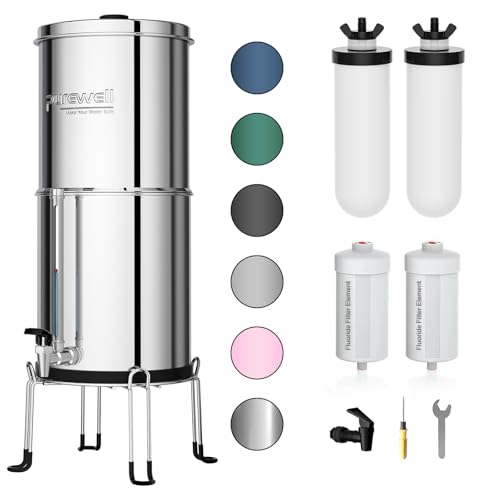
Purewell 8-Stage Gravity Fed Water Filter System

Purewell 3-Stage Gravity Water Filter with Spigot
VIVA21 5-Stage Reverse Osmosis System

Bluevua RO100ROPOT Countertop Reverse Osmosis System
Bluevua RO100ROPOT-Travel Reverse Osmosis Countertop Filter
Inside Each Recommended Option
The Lite version of Bluevua’s countertop RO exists for one reason: renters who can’t drill a feed line but still want the purity of reverse osmosis, where water is forced through a semipermeable membrane that filters out dissolved solids. The whole unit lives on the counter, fills from any kitchen tap, and runs on a standard outlet, so the morning routine stays a morning routine.
What separates this from a basic pitcher is the glass carafe. That borosilicate body, meaning a tough, heat-resistant glass, sidesteps the plastic-taste complaints owners raise about cheaper pitchers, and it doubles as a carafe for the table. Compared to the full RO100ROPOT covered later in this list, the Lite trims capacity and a few features, but the core RO cycle stays intact.
What It Does Well
- Zero plumbing or drilling, which keeps deposits and landlord negotiations off your list.
- Reverse osmosis on tap without the bulky under-sink tank.
- Borosilicate glass carafe adds a cleaner, table-ready presentation.
- Compact counter footprint suits apartments and small kitchens.
Worth Noting
- Output is slower than a plumbed unit, so large cooking sessions require patience.
- Filter replacements need to be ordered on a schedule; skipping them quietly reduces water quality.
Quick Facts
Right Fit For
Apartment dwellers, renters, and anyone who moves often and wants RO quality without a permanent install.
Look Elsewhere When
You cook for a crowd daily and need continuous output, where the Bluevua RO100ROPOT offers more capacity in the same plug-in family.
The Loaded version of the Home Master Artesian is the full kit: seven stages of filtration, a Dow Filmtec RO membrane rated at 0.0001 microns (so it can block particles thousands of times finer than a human hair), and the brushed nickel faucet plus a fridge connection kit already in the box. It is the kind of setup a homeowner installs once and then forgets about for years.
What makes Home Master interesting is the patented remineralization pass. After the membrane strips out the bad stuff, calcium and magnesium are added back in two stages, which is the common concern with bare RO water tasting flat or stripping minerals from tea and coffee. The LLDPE tubing (linear low-density polyethylene, a food-grade flexible plastic) bundled in this listing means the install gets close to turnkey if you already have a saddle valve or dedicated feed line.
The Practical Payoff
- Seven-stage process with mineral re-addition means better-tasting water for coffee and tea.
- Loaded kit ships with faucet, tank, and fridge hookup, reducing weekend hardware runs.
- High-performance Filmtec membrane handles high-hardness feed water without slowing down.
- Modular design makes filter swaps quicker than canister-style units.
Trade Offs
- Plumbing is required, including a drain saddle and possibly a hole for the dedicated faucet.
- Storage tank takes up real space under the sink, which tight galley kitchens may not have.
- Replacement filter costs add up over the long life of the unit.
Made For
Homeowners who want bottled-water taste at the kitchen tap and don’t mind a one-time install project.
Consider Something Else When
You rent or travel often, where the Bluevua RO100ROPOT-Lite keeps your deposit safe and your water filtered.
This is the non-Loaded sibling of the unit above, and the difference is mostly in what you bring to it. You still get the seven-stage architecture and the patented two-pass alkaline remineralization, but the faucet and fridge kit are sold separately. For DIYers comfortable with a saddle valve and a dedicated tap hole, that tradeoff buys a lower entry point.
The specs that matter here are the fast 4.5-second fill rate, the 1:1 waste-to-clean ratio (meaning every gallon of filtered water produces only one gallon of wastewater, much better than older 4:1 systems), and the catalytic carbon stage that addresses chloramines. For a busy family of four running through pitchers and cooking pots daily, those numbers translate to less waiting and less wasted water on the bill.
Good Reasons To Consider
- Fast fill rate keeps a tall glass from turning into a 30-second pour.
- 1:1 waste ratio protects both the environment and the water bill.
- Two-pass remineralization lifts taste above flat RO water.
- Catalytic carbon stage handles chloramines that standard carbon misses.
Some Limits To Know
- Faucet and fridge kit are separate purchases, so budget beyond the unit itself.
- Under-sink install still demands basic plumbing comfort.
Core Details
Best Suited To
Mid-to-high-volume households that drink, cook, and brew with filtered water every single day.
Skip It When
You’d rather not touch plumbing at all, in which case the iSpring RCC7P-BLK offers an easier under-sink experience with a booster pump.
RO membranes need consistent water pressure to push water through their tiny pores, and many homes simply don’t have enough coming out of the wall. The RCC7P-BLK solves that with a booster pump that lifts line pressure to membrane-friendly levels, so you stop losing the first half of every tank to slow production.
The other nice touch is the patented top-mounted faucet design. Instead of needing a separate hole drilled for the dedicated RO tap, the faucet sits on the counter or sink deck where you can reach it without crawling under the sink. That alone saves an hour of install time and a possible plumber bill. The black 304 stainless finish, a tougher, more corrosion-resistant grade than standard 430 stainless, also adds a modern touch that doesn’t look out of place in a contemporary kitchen.
Points In Its Favor
- Booster pump ensures steady output even on low-pressure mains (under about 40 psi).
- Top-mounted faucet removes the need for a second countertop hole.
- TDS and PFAS reduction target two of the most-discussed contaminants right now.
- Sleek matte black finish complements modern kitchens better than chrome.
Possible Compromises
- Booster pump adds a faint hum you may notice in open-plan layouts.
- Fridge connection requires a separately sold ICEK kit.
Whose Shelf It Belongs On
City dwellers and second-floor apartments where line pressure is weak and an under-sink install is still doable.
Reach For A Different Pick When
You want a no-install option instead, in which case the Purewell 3-Stage Gravity Water Filter with Spigot skips both plumbing and electricity.
Countertop RO units are great, but they still need an outlet. This Purewell drops the wires entirely with a gravity-fed design: water sits in a 2.25-gallon upper chamber and slowly migrates through ceramic filters into the lower chamber, where you pour from. For off-grid cabins, RVs with no shore power, or anywhere electricity is unreliable, that simplicity is the entire appeal.
The ceramic cartridges are washable, which means instead of throwing away spent filters every few months, you rinse the ceramic outer shell and put them back in service. That lowers both ongoing cost and waste, two things budget-minded shoppers and preppers tend to care about. Stainless steel housing keeps the unit stable on the counter and shrugs off the kind of dings that crack plastic pitchers.
Practical Pluses
- Zero electricity needed, so it works during outages and in remote setups.
- Washable ceramic filters cut long-term replacement spending.
- Stainless steel body holds up to years of counter use.
- 2.25-gallon capacity covers a couple of days for one or two people.
Soft Spots
- Gravity flow is much slower than RO, so plan ahead for pitchers and pots.
- Does not target TDS and dissolved solids the way an RO membrane does.
Right Fit For
Off-grid homes, RV travelers, and renters who can’t install anything but still want cleaner water than a basic pitcher offers.
A Better Fit Elsewhere
You want fluoride reduction as well as chlorine, where the Purewell 8-Stage Gravity Fed System adds dedicated fluoride media.
The 8-Stage sibling takes the same gravity approach as the 3-Stage Purewell and stretches it further. You get four filters instead of two, including a dedicated fluoride reduction cartridge layered with sediment PP membranes, meaning thin spun-polypropylene sheets that catch fine particles. The 2.25-gallon stainless body and metal water-level spigot stay the same.
For shoppers specifically worried about fluoride, heavy metals, and chlorine at the same time, this layered approach offers more peace of mind than the simpler 3-Stage. The trade-off is more filters to keep track of and a slightly slower effective throughput because water has to pass through more media before reaching the spigot.
The Good Stuff
- Dedicated fluoride cartridge for shoppers targeting that specific contaminant.
- Eight-stage composite media targets chlorine, sediment, rust, and organic matter.
- Stainless housing keeps the unit looking sharp on a counter for years.
- No power or plumbing means total placement flexibility.
Honest Caveats
- More filters mean more annual maintenance compared to the 3-Stage model.
- Throughput per hour is still limited by gravity, so big cooking days need planning.
Feature Snapshot
Best Suited To
Shoppers who care about specific contaminants like fluoride and want a no-power, no-plumbing system to handle them.
Swap It Out When
Your main concern is dissolved solids rather than chemical contaminants, where the Bluevua RO100ROPOT-Travel brings true RO membranes into play.
Think of this 3-Stage unit as the simpler Purewell with one small upgrade: a metal water-level spigot on the lower chamber. Instead of lifting the whole top off to pour, you just open the spigot into your glass or pot, which is genuinely handy for daily use and especially welcome when you don’t want to wrestle with a full 2.25-gallon unit.
The two ceramic filters handle chlorine reduction and sediment, which covers the basics for most municipal water. Stainless steel housing means you can leave it on a cabin counter or a porch without worrying about UV yellowing plastic pitchers tend to develop.
The Helpful Details
- Spigot pour is easier than lifting a heavy filled chamber.
- Washable ceramic filters trim ongoing filter cost.
- Stainless body resists the wear that cracks plastic over years.
Points To Keep In Mind
- Gravity flow can’t keep up with the kind of demand a big dinner party creates.
- Does not reduce dissolved solids like an RO membrane would.
Built With In Mind
Casual kitchens, weekend cabins, and small households that want better-tasting water without hauling gear.
Where Another Pick Suits Better
You need faster fill rates for cooking, where the Home Master TMAFC-ERP offers a 4.5-second pour that gravity cannot match.
VIVA21 keeps things traditional: a five-stage under-sink RO with sediment, carbon, the membrane, and post-carbon polishing. That structure is the tried-and-true layout most plumbers recognize, which makes service calls and DIY repairs easier if anything ever goes wrong.
The standout detail here is the leak detector. Pin-hole leaks under the sink are one of the most common household water-filtration headaches, and having a sensor that shuts flow down or alerts you before damage spreads is a small touch that prevents big headaches. The lead-free faucet and tank come in the box, so you don’t have to budget for extras after purchase.
What Works In Its Favor
- Five-stage filtration covers sediment through to post-carbon polishing.
- Leak detector reduces the risk of cabinet damage from slow drips.
- Lead-free faucet and tank included in the kit.
- Standard under-sink form factor is familiar to most installers.
Where It Is Less Suited
- No booster pump, so very low pressure can starve the membrane.
- Storage tank footprint still takes up under-sink space.
Key Product Details
Who It Suits Best
Homeowners who want third-party-tested performance and a quieter under-sink setup with safety insurance built in.
Not Your Match When
Your home has very low static water pressure, where the iSpring RCC7P-BLK’s booster pump saves the day.
Where the Lite trim focuses on minimum counter space, the full RO100ROPOT brings more output for shared kitchens. It still needs only an outlet and a tap to fill the upper chamber, so installation is genuinely zero, but each cycle produces enough filtered water to fill a carafe and a cooking pot in the same run.
Glass carafe construction continues here, sidestepping plastic taste complaints. The four-stage RO process (sediment, carbon, membrane, post-carbon) is a familiar ladder that takes care of chlorine, dissolved solids, and the off-flavors that build up in storage tanks. For households that want serious filtration without committing to a permanent install, this is the middle ground between the Lite and a full under-sink project.
What Earns Its Place
- Higher per-cycle output than the Lite, useful for couples and small families.
- Glass carafe avoids plastic aftertaste complaints.
- Four-stage RO ladder covers the most common contaminants in tap water.
- No plumbing required, so it works in apartments and shared spaces.
A Few Limitations
- Needs a power outlet nearby, unlike gravity-fed options.
- Larger counter footprint than the Lite version.
Perfect Match For
Shared kitchens, roommates, and renters who want more capacity than a pitcher but can’t install anything under the sink.
Where A Sibling Pick Shines
You want even more aggressive contaminant reduction while staying plug-in, where the Bluevua RO100ROPOT-Travel adds UV and a sixth stage.
The Travel version is the most aggressive countertop unit in this list, pairing a six-stage RO process with UV light to neutralize biological contaminants that RO alone doesn’t address. For travelers staying in hotels, Airbnbs, or RVs where the local water is a question mark, that combination provides more confidence than the standard four-stage setup.
Like the rest of the Bluevua ROPOT line, no plumbing is involved: fill the upper chamber from any tap, plug into a wall outlet, and walk away. The Travel unit is also compact enough for a suitcase or RV counter, and the filter cartridges are designed to be replaceable on the road. For extended stays abroad or anyone sensitive to unfamiliar water supplies, that portability is the whole reason to pick this over a fixed system.
Why It Works Well
- Six-stage RO plus UV light addresses both chemical and biological concerns.
- Compact enough to live in an RV or suitcase for extended trips.
- No install, so it travels between hotels, rentals, and home.
- Replaceable cartridges mean service on the road is possible.
Factors To Consider
- Higher per-cycle cost than gravity-fed or simpler RO units.
- UV lamp adds a small ongoing replacement item to track.
Who Should Grab It
Frequent travelers, full-time RVers, and anyone spending extended time in places where water quality is unpredictable.
Look Elsewhere When
You mostly drink water at home and want the best long-term value, where the Home Master TMAFC-ERP-Loaded RO delivers more capacity for a permanent install.
How To Choose Water Filtration Systems That Actually Fit Your Kitchen
The “best” filter is the one matched to your tap water, your kitchen, and your tolerance for install work. Three things tend to decide the winner: what you want removed, how much water you actually drink, and whether you can or want to drill into a cabinet. RO systems pull out dissolved solids that carbon alone misses, but they need pressure, drainage, and filter swaps on a schedule. Gravity units trade throughput for zero-power simplicity, which is exactly right for some homes and totally wrong for others.
If you’re a renter, start with the countertop Bluevua line. If you’re a homeowner with normal pressure, an under-sink RO delivers the cleanest, most consistent pour at the tap. Off-grid and weekend-cabin folks should look at the Purewell gravity systems first. Match the install type to your living situation before chasing the deepest spec sheet.
Pressure And Plumbing Reality
Most RO membranes want at least 40 to 60 psi of incoming pressure to push water through efficiently. Below that, you get slow production, partial filtration, and shorter membrane life. If your home sits at the end of a low-pressure municipal line, choose a unit with a booster pump, like the iSpring RCC7P-BLK, rather than fighting the wall pressure every morning.
Filter Maintenance You Can Live With
Every filtration system has a consumable cycle, and the honest difference between products is how visible and easy that cycle is. Ceramic and washable filters in the Purewell line trade raw throughput for low recurring cost. RO units need membrane and carbon swaps on a calendar, and forgetting them quietly degrades water quality without making obvious noise. Pick the maintenance rhythm you’re actually going to follow.
Counter Space And Daily Habits
A 2.25-gallon gravity unit on the counter means refilling a chamber instead of turning a handle. A countertop RO means an outlet, a carafe, and a quiet hum during the cycle. Under-sink systems hide everything but steal cabinet space for a tank. None of these are deal-breakers on their own; what matters is whether your routine actually accommodates them.
Key Considerations Across These Picks
Mistakes Worth Dodging
A common trap is buying the most aggressive filter without checking whether your water actually needs it. RO is overkill for some municipal supplies where a quality carbon system handles the main concerns, and you pay for it in waste water and slow flow. The opposite trap is buying a pitcher when your real concern is dissolved solids, lead, or PFAS, which a carbon filter can’t address.
Skipping a pressure check is another familiar miss. Under-sink RO without a booster pump in a low-pressure home leads to frustrating tank refill times and owners who quietly stop using the system. Measure your static pressure at the kitchen tap before you commit.
What The Higher Tier Buys
The premium tier earns its keep in three places: more filtration stages, mineral re-addition for taste, and longer-lived components. The Home Master Loaded kit, for example, throws in a brushed nickel faucet and fridge connection, while the cheaper sibling expects you to source those. Booster pumps, UV stages, and remineralization passes all live in that upper tier because they solve real problems for specific households.
For most people, a mid-tier under-sink RO is the sweet spot. For shoppers chasing specific contaminants like fluoride or with travel-heavy lives, the higher tier genuinely earns the difference.
Frequently Asked Questions
Do I actually need reverse osmosis, or is a carbon filter enough?
Carbon filters handle chlorine, sediment, and a wide range of organic compounds, which covers many municipal supplies. RO goes further by stripping dissolved solids, lead, and many contaminants carbon can’t touch. Your local water quality report is the deciding document.
How often do filters need to be replaced on these systems?
Carbon and sediment pre-filters typically run six to twelve months, while RO membranes can last two to five years depending on usage and feed water. Ceramic cartridges in gravity units are washed instead of replaced, though they eventually wear out.
Are countertop RO units as effective as under-sink ones?
The filtration chemistry is the same, so contaminant reduction is comparable. The differences are capacity, refill frequency, and noise. Countertop units are slower per cycle but skip the install entirely.
Can these systems reduce fluoride specifically?
Standard RO membranes reduce fluoride, and some multi-stage filters use dedicated fluoride cartridges. Basic carbon filters do not reduce fluoride meaningfully, so check the spec sheet if fluoride is a target.
Will an RO system waste a lot of water?
Older units wasted three to four gallons per gallon of filtered water. Modern systems, like several in this list, run closer to a 1:1 ratio, which is far easier on the water bill and far better for the environment.
Bottom Line
The right pick comes down to where you live and how you drink water. Renters and travelers get the most from a countertop Bluevua. Homeowners with normal pressure should weigh a Home Master or VIVA21 under-sink unit. Off-grid and small households land on Purewell’s gravity systems. Match the install to your situation, and you’ll stop thinking about your water filter because it just works.