Tap water tells a different story depending on where you live. Some homes deal with hard scale that clouds glasses, while others wrestle with chlorine taste or the faint metallic edge of aging pipes. A well-matched pitcher pulls those notes out of every glass without crowding the fridge door.
The lineup below balances whole-home sediment filters, install-free reverse osmosis countertop units, and replacement cartridges that slot into existing pitcher housings. The eight picks span everything from sediment reduction at the point of entry to multi-stage purification for households tracking TDS readings on their drinking water.
A Quick View Of The Lineup

Culligan P5 Whole House Premium Water Filter 8,000 Gallon

DREO Reverse Osmosis Water Filter Countertop with 2 Pitchers

DREO RO Water Filter Countertop 112 with Autofill Pitcher

DREO 7-in-1 Reverse Osmosis Replacement Filter (112/113/114/115)

LifeStraw Home Activated Carbon + Ion Exchange Replacement Filter
DREO Reverse Osmosis Countertop RO with TDS and Filter Life Display

DREO 7-Stage RO Countertop Water Filter Pitcher WF511 Upgraded

DREO 7-Stage RO Countertop Water Filter Pitcher WF511
Inside Each Recommended Option
The Culligan P5 lands in a different lane than the countertop RO systems below. It’s a sediment cartridge designed to thread into a whole-house filter housing, meaning it treats every drop entering the plumbing rather than a single glass at a time. For homes where the incoming water carries visible grit, rust flakes, or a sandy cloud after work on the municipal lines, that front-line defense pays off quickly.
The 8,000-gallon rating per filter makes the math easy. A family of four running normal indoor water use cycles through cartridges roughly every four to six months. The 3-pack configuration, sold as 6 filters total, stretches that replacement cycle out to over a year of coverage in most households, which helps when the alternative is a hard-to-reach basement filter housing.
Where It Delivers
- Cuts sediment, rust, and coarse sand before water reaches faucets or appliances
- Multi-pack format stretches replacement intervals past a year for typical families
- Standard whole-house housing fit means installation is a cartridge swap, not a remodel
- Protects water heaters, washing machines, and dishwasher solenoids from grit buildup
- Visibly clearer water at every tap within the first hour of use
Things To Consider
- Doesn’t strip chlorine taste or chemical contaminants, so a separate drinking-water stage still makes sense
- Requires an existing filter housing or a one-time install of one before the cartridge drops in
Built With In Mind
Homeowners on older municipal lines or private wells where sediment shows up in the washing machine or showerhead.
Where Another Pick Suits Better
Renters or anyone without a whole-house housing should look at the DREO WF511 Upgraded instead, since it’s install-free and lives on the counter.
This DREO countertop unit ships with two autofill pitchers, a detail that quietly solves one of the most common RO pain points. Most reverse osmosis systems trickle filtered water into a single tank that everyone fights over at breakfast. With two pitchers, one stays on the counter while the other chills in the fridge or rides upstairs to an office.
The 3:1 pure-to-drain ratio is the spec worth lingering on, since traditional RO systems can waste three or four gallons of water for every gallon they purify. The system also surfaces a TDS reading (total dissolved solids, a quick measure of how many minerals and contaminants remain) and a filter-life timer, so there’s no guesswork on replacement timing. Setup requires no plumbing, which keeps renters and apartment dwellers in the running.
Positive Points
- Two pitchers remove the bottleneck at peak kitchen hours
- 3:1 ratio conserves water compared to standard RO waste ratios
- Real-time TDS display takes the mystery out of water quality
Worth Noting
- Tank and two pitchers eat more counter space than a slim fridge-door pitcher
- Replacement cartridges are an ongoing cost to budget for every few months
Who It Suits Best
Larger households or shared workspaces where one filtered pitcher is never quite enough.
Look Elsewhere When
Solo dwellers in tight kitchens will get more mileage from the slimmer LifeStraw Home replacement approach below.
The DREO RO 112 carries the same install-free, self-cleaning platform as the dual-pitcher unit above, but pairs it with a single 3-liter autofill pitcher. For kitchens where a second pitcher would just collect dust, this trim keeps the feature stack intact without the extra footprint.
The autofill design pulls purified water directly into the pitcher on demand, so there is no manual pour step between tank and glass. TDS monitoring and a filter-life indicator sit on the front panel, which beats the old-school “remember to swap the cartridge every X weeks” approach. The 3:1 pure-to-drain ratio keeps water waste in line with the larger dual-pitcher version.
Good Reasons To Consider
- Single-pitcher format fits tighter counters and smaller apartments
- Autofill pitcher removes the manual transfer step entirely
- SGS-tested filtration targets PFOA, PFOS, chlorine, and fluoride
Trade Offs
- One pitcher means less filtered water ready to drink at once
- RO systems always run louder than passive pitchers during the filtration cycle
Quick Facts
Right Fit For
Singles or couples who want reverse-osmosis-grade filtration without a two-pitcher commitment.
Swap It Out When
Families or shared kitchens juggling multiple glasses at once will appreciate the DREO dual-pitcher unit (Item 2) more.
This listing isn’t a new system; it’s the cartridge that keeps the DREO RO 112, 113, 114, and 115 units running at spec. The 7-in-1 cartridge drops in without tools and is rated for 265 gallons, which translates to roughly three to four months of use for an average household before a swap is due.
The reason it earns its own slot here is compatibility. Many RO owners discover after purchase that third-party cartridges underperform or trigger error codes, so staying within the DREO family removes that variable entirely. SGS testing against NSF/ANSI 58 standards covers PFOA, PFOS, and chlorine reduction, which matches the claims of the host units.
Points In Its Favor
- Direct compatibility with four current DREO RO models removes fitment guesswork
- 265-gallon rating keeps replacement intervals reasonable for daily drinkers
- SGS-verified contaminant reduction matches host-system claims
Honest Caveats
- Useless without a compatible DREO RO host unit already in service
- Sticker shock can sting if you’re not yet budgeting for ongoing cartridge costs
Who Should Grab It
Anyone already running a DREO RO 112, 113, 114, or 115 who values matched-spec replacements.
Skip It When
You’re shopping for a first-time filtration setup, since the LifeStraw Home cartridge (Item 5) drops into standard pitchers instead.
LifeStraw built its name in outdoor and emergency filtration, and the Home cartridge brings that chemistry into a standard pitcher format. The activated carbon paired with ion exchange media targets the contaminants that carbon alone misses, including lead, mercury, PFAS (often called “forever chemicals” because they resist breaking down in the environment), and microplastics.
The pack covers a 6-month supply at roughly 120 gallons of total throughput, which suits households that want scheduled replacements without counting every glass. For well-water homes where sediment pre-filters handle the grit and the pitcher focuses on chemical polishing, this cartridge slots in cleanly.
What Pays Off
- Targets 30+ contaminants including microplastics and PFAS
- Six-month supply means fewer reorder trips
- Fits standard pitcher housings already in many kitchens
Small Caveats
- Does not reduce TDS the way a reverse osmosis system does
- Requires an existing pitcher housing to function
Feature Snapshot
Made For
Households already using a compatible pitcher who want a cartridge upgrade for chemical and microplastic reduction.
Not Your Match When
You want countertop simplicity and TDS tracking, in which case the DREO RO 112 (Item 3) is a cleaner starting point.
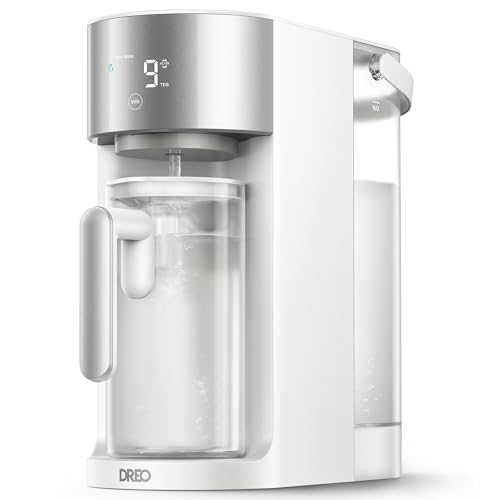
This DREO countertop variant leans into the live readout angle, with both TDS and filter-life status shown on the front panel. For home cooks who track recipes by water mineral content, or anyone curious about how much the filter is actually catching, that real-time feedback changes the experience from “trust the cartridge” to “watch it work.”
The platform is otherwise consistent with the RO 112 covered above: install-free setup, autofill pitcher, and SGS-tested filtration against PFOA, PFOS, chlorine, and fluoride. The 3:1 pure-to-drain ratio keeps the sustainability story intact.
A Strong Showing
- Visible TDS numbers turn water quality into a daily data point
- Filter-life countdown removes replacement guesswork
- Same install-free setup as siblings in the DREO RO family
- Autofill pitcher streamlines the pour path from tank to glass
Points To Keep In Mind
- Front-panel readouts add slightly to the cost over non-display siblings
- Glossy display surface picks up fingerprints in bright kitchens
Best Suited To
Tinkerers and home chefs who want numbers to back up the filtering claim.
Consider Something Else When
You’d rather not think about the readings at all and just want a clean glass, in which case the WF511 Upgraded (Item 7) keeps things simple.
The WF511 Upgraded represents the second-generation take on DREO’s countertop RO pitcher. Seven filtration stages (each stage tackles a different class of contaminant, from sediment to heavy metals to volatile compounds) handle the polishing work, with a 0.0001-micron RO membrane catching particles well below what carbon alone can stop.
Setup stays install-free, which keeps the upgrade accessible to renters. The 3:1 pure-to-drain ratio carries over from earlier DREO RO models, so the sustainability claim remains intact. In real kitchens, the refinement shows up as smoother taste and noticeably less plastic-rubbery aftertone in the first glass.
Everyday Wins
- Seven stages deliver a noticeable step up in taste clarity over single-stage pitchers
- No plumbing means setup stays within reach of any household
- Compact pitcher footprint fits beside a coffee maker or toaster
Practical Considerations
- Replacement filters are a recurring line item worth budgeting for
- Purification cycle is slower than pouring from a pre-filled pitcher
Whose Shelf It Belongs On
Anyone ready to retire a basic carbon pitcher and step into RO-grade filtration without a plumber.
Reach For A Different Pick When
Sediment is the primary headache at your tap, in which case the Culligan P5 (Item 1) handles it at the point of entry.
The original WF511 carries the same 7-stage RO architecture as the Upgraded unit above, without the second-generation refinements. For shoppers who want a proven platform at the entry price of DREO’s countertop line, this is the version that surfaces most often in comparison roundups.
It runs the same install-free setup, the same 3:1 pure-to-drain ratio, and the same 0.0001-micron RO membrane. The 265-gallon replacement cadence and SGS-verified contaminant list (PFOA, PFOS, chlorine, fluoride) round out the package. Pitchers using the WF511 tend to see slower wear on the membrane than single-stage carbon filters, though cartridge cost still applies.
The Upside
- Original WF511 platform priced for first-time RO shoppers
- Seven filtration stages remain a strong baseline for taste and clarity
- Tool-free setup keeps the barrier to entry low
Areas To Watch
- Newer Upgraded version adds refinements worth comparing side by side
- RO cycles still produce some waste water during operation
Feature Card
Perfect Match For
First-time RO shoppers who want the platform without paying for second-generation refinements.
A Better Fit Elsewhere
Households wanting the latest refinements should spend up to the WF511 Upgraded (Item 7).
What To Weigh Before Choosing Water Filtration Pitchers Homes
Filtration Type And Contaminant Targets
The first decision is whether you need sediment reduction, chemical polishing, or both. Whole-house sediment filters like the Culligan P5 catch rust and grit before they reach your appliances, which protects plumbing but doesn’t change taste much on its own. Reverse osmosis systems strip dissolved minerals and chemical contaminants, including PFOA and PFOS, which is why they show up in homes where tap taste is the main complaint. Replacement cartridges such as the LifeStraw Home slot into existing pitchers for households already running a basic setup.
Format And Footprint
Countertop RO units trade fridge-door space for purification power. Pitchers stay passive and quiet but filter slowly and need regular refills. Homes with limited counter real estate do well with slim fridge pitchers, while households drinking multiple liters a day often prefer the always-on convenience of a countertop system with an autofill pitcher. The dual-pitcher DREO above solves the bottleneck for shared kitchens without dominating the counter.
Replacement Costs And Cadence
Filter cartridges are an ongoing line item, not a one-time purchase. RO cartridges often run 265 gallons before swap, while carbon and ion-exchange cartridges for standard pitchers tend to last 40 to 120 gallons. Before settling on a system, check the replacement filter price on the listing and how often it will need ordering. The DREO replacement cartridge covers four compatible models, which simplifies stocking up if you’re already in the family.
Smart Features And Readouts
TDS displays, filter-life countdowns, and self-cleaning cycles shift the experience from passive to interactive. For home cooks and tinkerers, a TDS reading offers proof that the cartridge is doing its job. For households that want water without thinking about it, those displays add cost without much day-to-day payoff, and a passive pitcher remains the right call.
Key Considerations Across These Picks
Mistakes Worth Dodging
Buying a pitcher that doesn’t fit your housing is the most common slip. Cartridges from one brand rarely seat properly in another’s pitcher, so matching the model number matters more than color or capacity. Skipping the replacement-cost check ranks second; a cheap pitcher with expensive cartridges flips the math fast. Skipping the TDS or contaminant list is the third trap, since “filtered” covers everything from sediment to chemical polishing, and the two solve very different problems.
Where The Extra Money Goes
The jump from a basic carbon pitcher to a multi-stage RO system buys finer membrane filtration, lower waste ratios, and often real-time water quality readouts. For households on municipal water with no taste complaints, that upgrade is hard to justify. For well-water homes or anyone tracking PFAS and microplastics in their drinking supply, the step up pays back in every glass poured.