

Hard water doesn’t announce itself loudly at first. A faint chalky film on shower glass, stiff towels after a wash, a stubborn ring inside the kettle, water heaters working harder than they should. For households where minerals like calcium and magnesium tip past comfortable levels, a dedicated conditioner takes that quiet daily friction off your hands and your pipes. The picks below cover whole-home systems, portable RV units, and a few specific treatment accessories, so you can match equipment to your home size, your water source, and how much hands-on upkeep you want.
Your Options, Compared

iSpring WGB32B-KDS Whole House Water Filter System

On The Go Double Standard 16,000 Grain RV Softener

On The Go OTG3NTP3M Portable Water Softener

Pro Products HP22N Neutra Sul Peroxide Solution

AFWFilters 5600sxt 48,000 Grain Water Softener
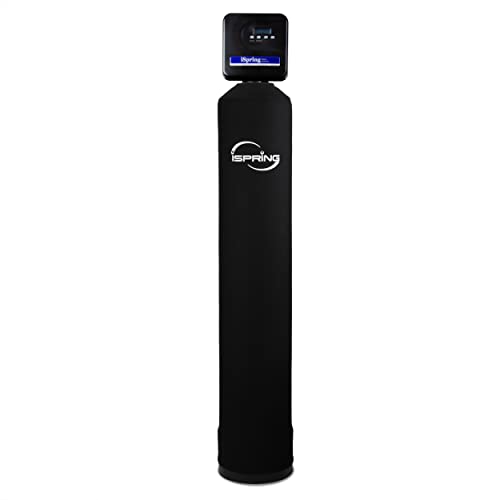
iSpring WF150K Whole House Filtration System

iSpring WCS50KG 50,000 Grain Water Softener

Aquasure 64,000 Grain Whole House Filtration Bundle

Aquasure Harmony Series 48,000 Grain Water Softener

Cam and Gear for High Flow 1″ Softeners
Meet The Standout Selections
For homeowners tired of chalky buildup on faucets and water heaters, the iSpring WGB32B-KDS tackles two jobs at once: filtering sediment and chlorine at the main line, then sequestering (binding into solution) the calcium and magnesium that cause scale. It installs at the point of entry, so every shower, dishwasher cycle, and laundry load benefits, and the included manual plus video walkthroughs make a self-install realistic for handy homeowners.
If you live in a region with moderately hard water, this unit pays back fast in the form of longer-lasting appliances and softer towels. Compared to the portable RV units later in this list, it’s a stationary, set-and-forget solution built for daily residential use.
Features That Help
- Whole-house coverage means one unit serves every tap, not just the kitchen sink.
- The scale-defense media helps water heaters and dishwashers run more efficiently over time.
- DIY-friendly install with documentation and video support, no plumber required for handy homeowners.
- Reduces chlorine taste and odor across showers and drinking water in one pass.
Things To Consider
- Filter cartridges need periodic replacement, a maintenance cost owners commonly factor into the annual budget.
- Whole-home systems require dedicated space near the main shutoff, which older basements may not offer easily.
Made For
Suburban homeowners with city or moderately hard well water who want a single point-of-entry solution and don’t mind swapping filters on a schedule.
Look Elsewhere When
RVers and frequent travelers will find the On The Go Double Standard RV Softener far better suited to life on the road.
Anyone who has parked an RV at a campground knows the telltale signs of hard water: soap that won’t lather, spots on the trailer’s exterior, and a crusty buildup in the water heater. The On The Go Double Standard targets that exact scenario, doubling the softening output over the brand’s standard model while still slipping into tight bays. A 16,000-grain capacity translates to roughly 1,600 gallons of soft water between regenerations.
Regeneration (the process of flushing the resin tank with salty water to reset its softening power) takes two boxes of ordinary table salt and under thirty minutes. Compared to the iSpring WGB32B-KDS reviewed above, this is a portable companion built for the road, not a permanent home install.
The Case For It
- Compact footprint fits the tight bays common in Class B and Class C motorhomes.
- High flow rate with minimal pressure drop, important when you’re running a shower and a sink at once.
- Up to 1,600 gallons of soft water per regeneration cycle suits week-long trips comfortably.
- Standard table salt works for regeneration, so you don’t track down specialty pellets.
Room For Improvement
- Salt and water for regeneration add routine upkeep that weekend-only users may forget.
- Designed specifically for RVs and marine use, so it’s an awkward fit for a stationary cabin unless plumbing is customized.
Who It Suits Best
Full-time RVers and frequent road-trippers pulling into campgrounds with notoriously mineral-heavy water.
Consider Something Else When
Homeowners with municipal water and a basement utility room will get more value from the Aquasure Harmony Series 48,000 Grain Softener.
Not every traveler needs a 16,000-grain workhorse. For weekend warriors running a small camper or a towable, the On The Go OTG3NTP3M delivers softened water in a noticeably lighter, more compact package. The large-mouth opening makes adding salt less of a juggling act, and a built-in handle keeps the unit portable enough to move from storage to hookup without a hand truck.
Tool-free hookup means no trips to the hardware store for adapters mid-trip. Compared to the Double Standard above, this is the lighter sibling best suited to short, occasional use rather than full-time living.
What Pays Off
- Lighter weight and integrated handle make setup genuinely one-person friendly.
- Tool-free hookup saves time on arrival and departure days.
- Wide opening simplifies salt pouring and cleanout.
- Produces roughly 320 to 800 gallons per regeneration depending on source hardness.
Honest Caveats
- Smaller grain capacity means more frequent regenerations on hard-water sites.
- Best for occasional use, since heavy daily demand drains the resin faster than larger RV units.
Right Fit For
Weekend campers and seasonal travelers who want softer water without hauling a full-size softener along.
A Better Fit Elsewhere
Full-time RVers will benefit from the higher capacity of the On The Go Double Standard instead.
Well water brings its own personality to a home, and a sulfur smell is one of the more stubborn personalities. Pro Products Neutra Sul is a peroxide-based additive formulated to neutralize that rotten-egg odor before it ever reaches the kitchen tap. It’s an additive rather than a tank-style conditioner, which means it pairs with an existing system or injects directly into the supply line.
Where the previous three picks address hardness, this one tackles a different water complaint entirely: odor and mild oxidation. The NSF/ANSI 60 certification (a third-party safety standard for drinking water treatment additives) is a meaningful trust signal for something that ends up in drinking water.
Everyday Perks
- Specifically targets hydrogen sulfide, the gas behind the rotten-egg odor in well water.
- NSF/ANSI 60 certified for drinking water additives.
- Made in the U.S.A., a plus for homeowners who prioritize domestic manufacturing.
- Used in place of generic hydrogen peroxide to avoid unwanted color and scaling side effects.
Points To Keep In Mind
- It’s an additive, not a whole-home conditioner, so hardness and sediment still need separate treatment.
- Proper dosing typically requires a small feed pump, adding installation steps for first-time users.
Best Suited To
Households on sulfur-heavy well water who want to knock out odor at the source.
Not Your Match When
City-water homeowners without odor issues will find the iSpring WF150K Whole House Filtration System more directly relevant.
For mid-sized homes that burn through water daily, a 48,000-grain metered unit like the AFWFilters 5600sxt makes sense as a workhorse. The metered, on-demand control head regenerates only when needed, which saves salt and water over older timer-based designs. The included bypass valve (a plumbing fitting that lets you route water around the softener) and 1-inch adapters make installation more straightforward for homeowners comfortable with basic plumbing.
Where the iSpring WGB32B-KDS earlier focuses on filtration plus scale defense, this unit is a traditional ion-exchange softener that swaps calcium and magnesium for sodium. The double backwash feature (two rinsing cycles that clean the resin bed more thoroughly) extends media life.
The Upside
- On-demand regeneration cuts salt and water waste compared to clock-based units.
- 48,000-grain capacity handles households with three or more bathrooms comfortably.
- Double backwash helps the resin last longer between full service intervals.
- Bypass valve and adapters are included, so you’re not running to the hardware store mid-install.
Worth Noting
- Bigger brine tank footprint demands floor space in a utility area.
- Adds a small amount of sodium to softened water, something owners on sodium-restricted diets may want to discuss with their doctor.
Who Will Love This
Homeowners with five or more residents and a dedicated utility room ready for a full-size softener.
Reach For A Different Pick When
Apartment dwellers without floor space will find the iSpring WCS50KG One-Tank Softener far easier to place.
The WF150K sits in an interesting middle ground: it’s a whole-house filtration system (not a softener in the traditional ion-exchange sense), but it carries a smart valve designed to run up to ten years without constant babysitting. For homeowners who don’t love the idea of monthly media swaps, that long service interval is the headline feature.
The system targets chlorine, lead, and a wide spread of chemical contaminants at the main line, which is a different problem than hardness. If your water is reasonably soft but tastes off, this is closer to your fit than a classic ion-exchange softener like the AFWFilters 5600sxt above.
The Helpful Details
- Set-and-forget smart valve runs up to a decade between media changes in many households.
- Lab-tested filtration addresses chlorine, lead, and a broad contaminant spread.
- Single point-of-entry install treats every faucet and shower in the home.
- Auto back-flushing (the system reverses flow to clean its own filter bed) keeps media clear without manual rinsing.
Practical Considerations
- Does not soften water in the ion-exchange sense, so very hard water may still need a separate softener.
- Larger media tank demands planning for floor space and drain access.
Spec Snapshot
Perfect Match For
Homeowners with municipal water who want broad contaminant reduction without a salt-based softener.
Skip It When
Households with very hard well water should pair a dedicated softener like the Aquasure Harmony Series 48,000 Grain instead.
Tight utility rooms, crawlspaces, and modest basements often rule out traditional two-tank softener setups. The iSpring WCS50KG solves that with a one-tank design that consolidates the resin chamber and brine tank into a single vertical footprint. It still delivers 50,000 grains of softening capacity, enough for many family homes.
The 1-inch or 3/4-inch NPT (National Pipe Thread, a standard plumbing thread size) connector option gives flexibility during install, and the unit is rated for indoor cold-water supply. Compared to the AFWFilters 5600sxt above, this is the better pick when horizontal floor space matters more than absolute capacity.
The Good Stuff
- Single-tank design slashes the floor footprint versus traditional two-tank softeners.
- 50,000-grain capacity suits mid-sized households comfortably.
- Dual inlet/outlet connector sizes ease retrofits into existing plumbing.
- Indoor-rated build fits basement, garage, or utility closet placement.
Small Caveats
- Cold-water only, so outdoor or warm-climate garage installs need shading and ventilation.
- Single-tank design means a slightly tighter salt-loading access than split designs.
Whose Shelf It Belongs On
Homeowners with limited utility room space who still want whole-house softening capacity.
Swap It Out When
Large four-to-six bathroom homes will outgrow the 50,000-grain rating and should consider the Aquasure 64,000 Grain Bundle instead.
Bigger homes need bigger answers, and Aquasure’s 64,000-grain bundle stacks a digital metered softener with sediment pre-filters and a 75 GPD (gallons per day) reverse osmosis system under the kitchen sink. RO (reverse osmosis) is a membrane filtration process that forces water through a semipermeable membrane to remove dissolved contaminants. The result is one integrated setup rather than a patchwork of separate purchases.
Targeted at four-to-six bathroom households, this is the most comprehensive bundle in the roundup. Where the iSpring WF150K above filters without softening, this Aquasure model softens and filters, with RO finishing the job at the kitchen tap for drinking and cooking.
Notable Gains
- 64,000-grain capacity handles high-demand households with multiple bathrooms.
- Triple-purpose pre-filters catch sediment, carbon, and zinc-treated media before water reaches the softener.
- 75 GPD reverse osmosis unit delivers polished drinking water at the kitchen tap.
- Digital metered control regenerates on actual usage, not a fixed clock.
Less Ideal Details
- Larger installation footprint demands planning across utility room and under-sink space.
- Multiple filtration stages mean more media replacements over the system’s life.
Who Should Grab It
Owners of larger homes who want a single integrated solution rather than piecing together separate units.
Where Another Pick Suits Better
Smaller homes without the demand for RO polishing will do fine with the Aquasure Harmony Series 48,000 Grain Softener.
The Aquasure Harmony Series sits in a comfortable middle ground for three-to-four bathroom homes. Its high-efficiency digital metered control head tracks actual water use and regenerates only when needed, which keeps salt consumption and water waste lower than older timer-based systems. The 48,000-grain rating matches the capacity of the AFWFilters 5600sxt reviewed earlier, but pairs it with Aquasure’s control electronics.
Where the iSpring WGB32B-KDS focused on scale defense plus filtration, this unit is a more traditional ion-exchange softener aimed squarely at the family-sized home.
The Value In It
- High-efficiency digital meter minimizes salt and water waste per regeneration cycle.
- 48,000-grain capacity fits three-to-four bathroom households with room to spare.
- Removes hard minerals that dry skin and leave residue on glass and dishes.
- Pairs naturally with pre-filters if sediment is also a concern.
Possible Compromises
- Bigger physical size than tankless or portable options, requiring a utility area.
- Adds sodium to softened water, which matters for some dietary considerations.
Built With In Mind
Mid-sized families with classic suburban homes and a dedicated utility room for installation.
Another Choice May Suit
Tight-space dwellers will appreciate the smaller footprint of the iSpring WCS50KG One-Tank Softener.
Sometimes the right “product” isn’t a full system at all but a single replacement part. The cam and gear assembly is the moving component inside many 1-inch high flow softener control heads. When a softener starts cycling erratically or skipping steps, this little assembly is often the culprit, and finding an OEM (original equipment manufacturer) part that fits multiple brands can save a service call.
Compatible with several common softener brands, this part is for the hands-on homeowner or technician restoring an existing unit, not for someone shopping for a brand-new conditioner. It rounds out this list as a maintenance option rather than a primary system.
Standout Benefits
- OEM-style replacement part restores function to worn 1-inch high flow softeners.
- Cross-brand compatibility covers several common residential softener lines.
- Metal cam construction suits the high-cycle demands of larger household units.
Areas To Watch
- Will not fit smaller-sized softener models, so confirming valve size before ordering matters.
- Replacement part only; you’ll still need basic tools and a willingness to disassemble the control head.
The Right Fit
DIY homeowners and technicians repairing an existing high flow softener with a worn cam assembly.
A Better Fit Elsewhere
Anyone shopping for a complete softener should look back to the iSpring WCS50KG or Aquasure Harmony Series instead.
What To Weigh Before Choosing Water Conditioners For Home
Hardness Level And Water Source
Start with a number, not a feeling. A simple water test tells you grains per gallon (gpg) of hardness and flags other issues like sulfur or high iron. City homeowners with 7 to 12 gpg hardness usually get solid results from a 40,000 to 50,000-grain softener like the Aquasure Harmony Series. Well owners with much higher readings sometimes need more capacity plus pre-filtration.
Tank Size And Regeneration Style
A softener’s grain capacity is only half the story; regeneration style affects salt use and water waste. Metered, on-demand units like the AFWFilters 5600sxt regenerate based on actual use, while older timer-based models cycle on a clock. The on-demand approach usually wins for water and salt savings, especially in homes where usage swings seasonally.
Filtration Versus Softening, Or Both
These are different jobs. A softener swaps minerals; a filter scrubs chemical contaminants. The iSpring WGB32B-KDS handles both at once, while the iSpring WF150K focuses on filtration alone. Homes with both hard water and chlorine taste should look at bundled or multi-stage solutions rather than picking one function and hoping for the best.
Space, Drain Access, And Climate
A softener needs floor space, a nearby drain for regeneration discharge, and protection from freezing. Compact one-tank designs like the iSpring WCS50KG help where room is tight. Cold-climate installs in uninsulated garages need extra insulation or relocation indoors to avoid freeze damage.
Key Considerations Across These Picks
Common Buying Slip Ups
Under-sizing the grain capacity is the most frequent mistake. Households that grow over time often push a smaller softener past its efficient cycle, wasting salt. Skipping a pre-filter is another common miss, especially with well water carrying sediment that fouls softener resin. Always test the water first and match equipment to the actual numbers.
Where The Extra Money Goes
Higher-tier models earn their keep through metered controls, larger resin capacity, and bundled filtration stages. A premium bundle like the Aquasure 64,000 Grain system replaces several separate purchases and consolidates maintenance into one schedule. The upgrade makes sense when your home’s water demand is high, your source carries multiple issues, or you’d rather not maintain three separate filters at once.




