Tap water tastes different in every city, and the same kitchen pipes carry whatever the local treatment plant sends through. For homeowners who want a steady supply of cleaner drinking water without crowding the counter, undercounter water filtration systems tuck the heavy lifting below the sink and deliver filtered water through a dedicated faucet.
Reverse osmosis (RO) has become the go-to technology for serious home filtration, stripping out dissolved solids, heavy metals, and other contaminants that basic carbon filters leave behind. Tankless designs have largely replaced the bulky pressurized tanks of older systems, freeing up cabinet space and reducing the risk of biofilm growth. Deciding between them comes down to flow rate, drain ratio, mineral addition, and how much hot-water functionality matters to you.
The Picks In Brief
The Picks In Brief

iSpring RCC7P-AK 6-Stage Reverse Osmosis System with Pump
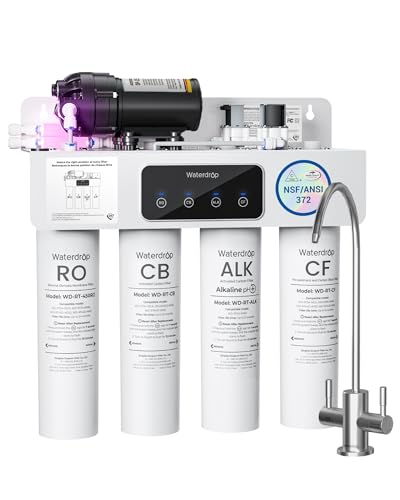
Waterdrop T4-A Alkaline Mineral Tankless RO System

Waterdrop KJ600 Instant Hot Reverse Osmosis System

Waterdrop 10UB Under Sink Water Filter System

Waterdrop G3P600 Tankless RO Water Filter
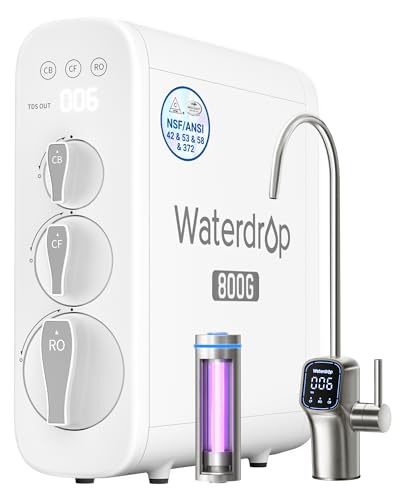
Waterdrop G3P800 Tankless RO System

Waterdrop G2P600 Under-Sink RO System

Waterdrop X8-WAN Alkaline Mineral RO System

Waterdrop X12 Alkaline Mineral RO System

Waterdrop G5P500A Alkaline RO System
The Picks, Examined More Closely
The iSpring RCC7P-AK stands apart from the tankless crowd because it keeps the traditional pressurized tank layout, paired with a top-mounted faucet and an electric booster pump. The pump matters most in older homes and rural properties where incoming pressure sits below the threshold most RO membranes need to push water through effectively. The six-stage configuration adds an alkaline remineralization stage at the end, which raises pH and adds back some of the dissolved minerals that RO otherwise strips out. In everyday use, that translates to water that tastes closer to spring water than the flat profile of straight RO output.
Because it uses replaceable cartridges in numbered stages, routine upkeep feels familiar to anyone who has owned a refrigerator filter. The system fits standard under-sink cabinets, though the tank does take up a meaningful chunk of floor space. Owners commonly report that the first-time setup runs smoother when a saddle valve feeds the unit, but most modern installs use a dedicated T-fitting instead. If your home has soft water and low pressure, this is one of the most forgiving picks on the market.
What It Does Well
- The booster pump keeps filtration consistent when household pressure drops below 40 psi.
- Six stages with an alkaline finishing filter produces water with a more rounded, less flat taste.
- Individual numbered cartridges make the replacement schedule easy to track.
- The top-mounted faucet design simplifies installation compared to traditional setups.
- Compatibility with standard RO fittings means aftermarket parts are easy to source.
Things To Consider
- The pressurized tank takes up cabinet space that tankless systems like the Waterdrop G3P600 free up.
- Filter replacements happen more often than on higher-stage tankless units, adding to long-term upkeep.
- The pump introduces a faint electrical draw and a small operating hum during filtration cycles.
Quick Facts
Who It Suits Best
Homeowners with low municipal water pressure or private well systems who need a pump-equipped RO unit that handles alkaline finishing in one package.
Consider Something Else When
You want a tankless footprint and quieter operation, in which case the Waterdrop G3P600 handles 600 gallons per day without the pressurized tank taking up cabinet space.
Most under-sink RO units give you one filtered stream and ask you to live with it. The Waterdrop T4-A flips that script by offering two separate outputs through the same dedicated faucet: a standard RO-purified stream and a mineral-enriched alkaline option. The ten-stage filtration process handles the heavy lifting before the mineralization stage reintroduces calcium and magnesium ions. For households where some people prefer flat-tasting pure water for coffee and others want mineral-rich water for drinking, that flexibility removes a recurring point of friction at the sink.
Setup requires a power outlet under the cabinet because the system is tankless and needs electricity to drive filtration on demand. The 450 gallons-per-day capacity suits a household of two to four that drinks and cooks with filtered water but doesn’t run heavy commercial-style demand. Compared to the iSpring RCC7P-AK, this unit trades the booster pump and storage tank for a slimmer wall-mounted profile, which is a meaningful gain in cramped under-sink cabinets.
A Few Highlights
- Two-stream dispensing from a single faucet covers different taste preferences without a second tap.
- Ten-stage cartridge chain refines water further than most five-stage systems on this list.
- Tankless footprint opens up cabinet space that the iSpring RCC7P-AK’s pressurized tank would occupy.
- The 2:1 pure-to-drain ratio keeps wastewater output lower than older RO designs.
Worth Noting
- Installation needs countertop drilling for the dedicated faucet, which renters may not be able to do.
- The plug-in power requirement means an outlet must sit within reach under the sink.
- 450 GPD throughput can feel tight for large families compared to the Waterdrop G3P800’s 800 GPD.
Right Fit For
Two-to-four-person households that want a choice between pure and mineral-enriched water from one compact under-sink unit.
Look Elsewhere When
You want built-in hot water dispensing for tea, in which case the Waterdrop KJ600 adds an adjustable heating function to its cold stream.
For tea drinkers and pour-over enthusiasts, waiting for a kettle to boil is part of the ritual. For everyone else, it’s a chore. The Waterdrop KJ600 collapses that wait by integrating a heating element into an under-sink RO unit, dispensing filtered hot water on demand through an LED faucet. The temperature range adjusts across roughly 104 to 203 degrees Fahrenheit, which covers green tea, French press water, instant oatmeal, and anything else that benefits from precise heat without a stovetop step.
The five-stage filtration chain keeps things simple on the maintenance side, with two filters to swap rather than three or four. At 600 GPD, throughput handles a household of four or five without leaving anyone drumming fingers at the tap. Compared to the Waterdrop T4-A, this unit trades the dual-stream flexibility for instant hot capability, which is the right trade for kitchens where cold filtered water is rarely the goal.
The Practical Payoff
- On-demand hot water eliminates the kettle step for tea, French press, and instant preparations.
- Adjustable temperature range fits delicate greens and rolling boils from the same faucet.
- Two-filter design simplifies the annual replacement routine.
- 600 GPD supports active households without noticeable flow drops during peak use.
Trade Offs
- The heating element draws more power than a standard RO system, so a dedicated under-sink outlet is essential.
- Without a remineralization stage, the hot output tastes flat, which some drinkers dislike.
- Hot-water systems tend to be noisier during dispensing than cold-only units like the Waterdrop G3P600.
Made For
Daily tea drinkers and home cooks who want filtered hot water on demand without a separate kettle or countertop boiler.
A Better Fit Elsewhere
You prioritize cold-water throughput and mineral taste over heating, in which case the Waterdrop X8-WAN adds alkaline remineralization without the heating hardware.
Not everyone wants or needs a full reverse osmosis system. The Waterdrop 10UB is a multistage carbon-and-KDF filter that slots under the sink, attaches to a dedicated faucet, and runs on incoming water pressure alone. That last point matters: there is no electricity requirement, no drain line to plumb, and no membrane to flush. For renters, condo owners, and anyone who wants cleaner tap water without committing to RO waste ratios, this is the easy on-ramp.
The unit is rated for municipal cold water only, so well water and hot feeds need a different setup. Replacement filters cost less than RO membranes, which keeps long-term ownership simple for shoppers who plan to stay in the home for years. Compared to the iSpring RCC7P-AK, the 10UB doesn’t strip dissolved minerals or reduce TDS, but it does handle chlorine, lead, and other common contaminants at a fraction of the install effort.
Points In Its Favor
- Pressure-driven operation means no electrical outlet is required under the sink.
- No drain line simplifies install in cabinets where routing wastewater would be a headache.
- Replacement filters are noticeably cheaper than RO membranes, lowering ongoing costs.
- Multistage media addresses chlorine taste, lead, and sediment in a single cartridge.
Minor Gripes
- Not suitable for well water or any hot-water feed, limiting placement flexibility.
- Without RO capability, dissolved solids, fluoride, and arsenic pass through the membrane that isn’t there.
Feature Snapshot
Best Suited To
First-time filter shoppers, renters, and homeowners on municipal water who want cleaner drinking water without a full RO install.
Skip It When
Your water has high TDS or you want dissolved-mineral reduction, in which case the Waterdrop G2P600 runs a proper RO membrane in a tankless package.
The Waterdrop G3P600 quietly became a benchmark for tankless under-sink RO when it landed, and it still holds up well against newer arrivals. The 600 GPD flow handles the demands of a four-person household without the slow trickle that older tankless units produced. NSF/ANSI 58 certification covers TDS reduction, while the lead-free material certification under NSF/ANSI 372 gives an extra layer of assurance for anyone tracking plumbing safety.
Two filters handle the full job, which keeps the swap-out routine to a single annual task instead of a multi-cartridge juggling act. The slim vertical profile tucks into the back of a standard cabinet, leaving room for trash, cleaning supplies, or a recirculation pump. Compared to the iSpring RCC7P-AK, this unit sacrifices the booster pump but wins back floor space and runs quieter during operation.
Notable Gains
- NSF/ANSI 58 certification confirms TDS reduction performance.
- Two-filter design keeps the annual maintenance fast and uncomplicated.
- Tankless format recovers cabinet space and eliminates the risk of tank biofilm.
- Quiet operation during filtration cycles compared to pump-equipped systems.
Points To Note
- No alkaline remineralization stage means output tastes flat to some drinkers.
- The 600 GPD rate is solid but trails the Waterdrop G3P800’s 800 GPD ceiling.
Whose Shelf It Belongs On
Mid-size households that want reliable under-sink RO without mineral stages or heating hardware getting in the way.
Reach For A Different Pick When
Mineral taste matters more than peak GPD, in which case the Waterdrop X8-WAN adds calcium and magnesium at a similar throughput.
When a household runs multiple pitchers a day, fills pasta pots, and still wants drinking glasses topped off, 600 GPD starts to feel tight. The Waterdrop G3P800 lifts the ceiling to 800 gallons per day while keeping the tankless footprint intact. The ten-stage filtration chain addresses a long list of targets including PFAS compounds, fluoride, heavy metals like lead and chromium, plus chloride and nitrate salts. For homeowners with private wells or aging municipal infrastructure, that breadth of coverage is the real story.
The unit still runs on standard household pressure supplemented by a small internal pump, so no external booster is required for most installs. The 2:1 pure-to-drain ratio holds the line on wastewater, which matters in drought-prone regions where every gallon sent to the sewer counts. Compared to the Waterdrop T4-A, the G3P800 trades dual-stream dispensing for raw throughput, which is the right call when cold filtered water is the daily workhorse.
Good Reasons To Consider
- 800 GPD throughput handles large families and entertaining without flow drops.
- Ten-stage filtration covers PFAS, fluoride, heavy metals, and salts in one pass.
- Tankless design preserves cabinet space and reduces potential biofilm buildup.
- 2:1 drain ratio keeps wastewater in check relative to older RO systems.
A Few Limitations
- No alkaline remineralization stage, so output tastes flat to mineral-water drinkers.
- The higher throughput is overkill for one-or-two-person households paying for capacity they rarely use.
Perfect Match For
Large families and frequent entertainers who pour a lot of filtered water daily and want PFAS and heavy-metal coverage built in.
Swap It Out When
Your household is small and mineral taste matters more than raw GPD, in which case the Waterdrop G5P500A delivers alkaline pH+ at a quieter pace.
The Waterdrop G2P600 earns its place by keeping things uncomplicated. Seven filtration stages, two replaceable cartridges, and 600 gallons per day of output cover the needs of most households without making the install feel like a plumbing project. NSF/ANSI 372 certification confirms lead-free materials, which matters in any system that sits in contact with drinking water for hours at a time.
The tankless vertical profile mounts to the cabinet wall or floor and clears out enough room underneath for a small trash can or cleaning supplies. Compared to the Waterdrop G3P600, this earlier-generation unit has a simpler filter arrangement and a slightly lower stage count, which translates to a more approachable maintenance routine. Owners who want RO performance without juggling multiple cartridges or paying for stages they don’t need tend to land here.
Why It Works Well
- Two-cartridge setup keeps annual replacement to one quick swap-out session.
- NSF/ANSI 372 certification verifies lead-free materials throughout the system.
- 600 GPD capacity serves mid-size households without flow compromises.
- Tankless profile opens up cabinet floor space for storage or a recirc pump.
Less Ideal Details
- The seven-stage chain covers fewer contaminants than the Waterdrop G3P800’s ten stages.
- No remineralization means flat-tasting water that some drinkers find unappealing.
Who Will Love This
Shoppers who want a straightforward under-sink RO with easy filter swaps and don’t need extra mineral or heating features.
Not Your Match When
You entertain large groups and want hot-water capability, in which case the Waterdrop KJ600 covers heating needs at a similar throughput.
Reverse osmosis strips out dissolved minerals along with contaminants, which leaves the output tasting flat to many palates. The Waterdrop X8-WAN closes that gap with an alkaline mineralization stage that reintroduces calcium, magnesium, sodium, and potassium ions after the RO membrane does its work. The ten-stage chain starts with a precise 0.0001-micron RO membrane, fine enough to catch particles most other filters wave past.
For drinkers who prefer the taste of bottled mineral water over the laboratory-clean profile of straight RO, this unit threads the needle. The tankless format keeps the cabinet footprint modest, and the dedicated faucet integrates without crowding the main tap. Compared to the Waterdrop G3P600, this model trades some raw throughput for the remineralization hardware, which is the right move for households that prioritize taste over maximum flow.
A Favorable Mix
- Alkaline mineralization stage restores calcium and magnesium for a more rounded taste.
- 0.0001-micron RO membrane handles particles finer than standard RO ratings.
- Ten-stage chain addresses a wide contaminant list without external add-ons.
- Tankless design keeps cabinet space clear for storage or cleaning supplies.
Honest Caveats
- Mineral content may not appeal to shoppers who want the purest possible RO profile.
- The added mineralization stage requires an extra slot in the filter schedule.
Built With In Mind
Drinkers who find flat RO water unappealing and want a built-in mineral profile closer to spring or bottled water.
Where A Sibling Pick Shines
You entertain large groups where raw GPD matters more than taste refinement, in which case the Waterdrop X12 pushes 1200 GPD with similar mineral options.
When the household runs through pitchers the way some kitchens run through coffee, 1200 GPD is the figure to beat. The Waterdrop X12 pairs that throughput with eleven filtration stages, NSF/ANSI 42, 58, and 372 certifications, and a smart silver faucet that signals filter status and dispensing mode at a glance. The alkaline remineralization stage reintroduces minerals after the membrane pass, so the output reads as mineral water rather than laboratory distillate.
The 3:1 pure-to-drain ratio is a step behind the 2:1 systems earlier in this list, but the trade buys real-time dispensing at household-scale volumes. Owners commonly report that the smart faucet makes filter-status tracking effortless, which avoids the common pitfall of running past the swap date. Compared to the Waterdrop X8-WAN, this unit pushes harder on throughput and certification breadth for households that treat filtered water as a primary utility.
What Makes Sense
- 1200 GPD throughput handles large families and frequent hosting without flow drops.
- Triple NSF/ANSI certification covers chlorine, TDS reduction, and lead-free materials.
- Eleven-stage chain with alkaline remineralization addresses taste and contaminants together.
- Smart silver faucet surfaces filter status so replacement timing stays on schedule.
Small Caveats
- 3:1 drain ratio sends more water to the sewer than 2:1 models like the Waterdrop G3P800.
- Eleven stages mean a longer filter-replacement learning curve than simpler two-cartridge units.
Feature Rundown
The Right Fit
Large families, frequent hosts, and homeowners who want premium certifications, smart features, and household-scale flow in one unit.
Consider Something Else When
You want a quieter install with simpler maintenance, in which case the Waterdrop G3P600 covers 600 GPD with just two filters.
The Waterdrop G5P500A closes the list by hitting a sweet spot that earlier picks miss. At 500 gallons per day, the throughput covers a household of two to four without paying for capacity that sits idle, and the 2:1 pure-to-drain ratio keeps wastewater in check. The eight-stage chain pulls double duty: it strips PFOA, PFOS, chlorine, lead, fluoride, and heavy metals, then the alkaline pH+ stage reintroduces minerals so the water tastes closer to bottled spring than laboratory distillate.
NSF/ANSI 58 and 372 certifications cover TDS reduction and lead-free materials, which is the right baseline for any under-sink RO. The tankless profile fits standard 30-inch sink cabinets, and the slim footprint leaves room for cleaning supplies or a small trash can. Compared to the Waterdrop X8-WAN, this unit steps down slightly on stage count and GPD but lands in a friendlier price-and-size bracket that fits more kitchens.
The Case For It
- Eight-stage filtration with alkaline pH+ remineralization balances purity and taste.
- 500 GPD suits two-to-four-person households without overspending on unused capacity.
- 2:1 pure-to-drain ratio keeps wastewater output modest.
- NSF/ANSI 58 and 372 certifications cover the essentials shoppers should expect.
Soft Spots
- Lower throughput than the Waterdrop G3P800 or X12 for large-family demand.
- Eight stages mean more cartridge management than two-filter systems like the G3P600.
Who Should Grab It
Two-to-four-person households on municipal water who want alkaline taste, modest wastewater, and straightforward install in one balanced unit.
A Better Fit Elsewhere
Your household is bigger or you entertain weekly and need more flow, in which case the Waterdrop X12 covers 1200 GPD with similar mineral-stage hardware.
Matching Under-Sink Filtration To Your Kitchen Reality
Picking an undercounter water filtration system gets easier once you separate the marketing layers from the attributes that actually shape daily use. Flow rate, drain ratio, remineralization, and heating tend to do the heavy lifting in real ownership, while stage counts and certifications matter more for shoppers with specific water-quality concerns.
Flow Rate And Household Size
Reverse osmosis is measured in gallons per day (GPD), which sounds abstract until you translate it into pitcher fills and pasta pots. A household of two rarely needs more than 400 GPD, while a family of five with frequent cooking and drinking habits will feel the limits of a 500 GPD unit within weeks. The Waterdrop G3P800 and X12 push 800 and 1200 GPD respectively, which keeps the tap running when multiple people fill glasses back-to-back.
Drain Ratio And Water Waste
Every RO system sends some water to the drain as it flushes the membrane. Older designs ran closer to 4:1, meaning four gallons of waste for every gallon produced. Modern systems cluster around 2:1 or 3:1, with the Waterdrop G3P600, G3P800, G2P600, and T4-A leading on efficiency. In drought-prone regions or homes with metered water bills, the lower ratios add up over a year of operation.
Remineralization And Taste
RO removes dissolved minerals along with contaminants, which produces water that tastes flat to many drinkers. Alkaline remineralization stages reintroduce calcium, magnesium, sodium, and potassium ions to restore a more rounded flavor. The Waterdrop X8-WAN, X12, G5P500A, and T4-A all carry some form of mineralization, which is the right pick if your household prefers bottled-style water over laboratory-clean output.
Heating And Multifunction Faucets
For tea drinkers and instant-coffee households, on-demand hot water from the filtration faucet replaces the daily kettle ritual. The Waterdrop KJ600 is the only unit in this roundup with adjustable hot output, which covers everything from green tea to rolling boil without a separate appliance on the counter. Cold-only systems can pair with a kettle, but that adds time and clutter for anyone making multiple hot drinks daily.
Key Considerations Across These Picks
Pitfalls Shoppers Hit
Under-sink RO installs need a drain line, an outlet for powered units, and clearance for the tank or vertical manifold. Skipping the measurement step is the most common cause of mid-install frustration, especially in older homes where the cabinet floor sits lower than modern units expect. Also worth checking: whether your cold-water supply line uses a saddle valve (older installs) or a dedicated T-fitting, since each dictates different fittings and tools.
What The Higher Tier Buys
Premium models like the Waterdrop X12 and X8-WAN add alkaline remineralization, higher GPD, and smart faucets that surface filter status. For large families or anyone who treats filtered water as a daily utility, those upgrades translate to fewer flow drops, better taste, and less guessing about filter timing. For one-or-two-person households, a mid-tier 500 to 600 GPD unit often delivers the same drinking-water quality at a more approachable price. The upgrade pays off when you actually use the extra capacity; otherwise it sits idle.
Frequently Asked Questions
How often do under-sink RO filters need replacing?
Most cartridges last six to twelve months depending on usage and source-water quality. Tankless systems with two filters typically swap both once a year, while higher-stage units may stagger replacements across the chain.
Do tankless RO systems need electricity?
Yes, most tankless designs require a power outlet under the sink to drive filtration on demand. Pressure-driven multistage filters like the Waterdrop 10UB run without electricity but lack RO capability.
Can RO water be safe for people who need minerals in their diet?
Yes, but alkaline remineralization stages help restore calcium and magnesium after the membrane pass. Households with specific mineral needs can also adjust diet or use a separate mineral supplement.
What is a good pure-to-drain ratio?
Modern systems cluster around 2:1 or 3:1, which keeps wastewater modest. Older designs ran closer to 4:1, so any unit under 3:1 is a reasonable efficiency baseline.
Is a dedicated faucet required for under-sink filtration?
Yes, most under-sink systems need a separate hole in the countertop for the filtered-water faucet. Renters should confirm with their lease before drilling, since some agreements restrict countertop modifications.
Closing Remarks
The right undercounter water filtration system depends less on stage counts than on how your household actually uses water day to day. Large families running through pitchers benefit from 800 to 1200 GPD throughput, while smaller households save money with 500 to 600 GPD units that cover daily needs. Mineral taste, heating capability, and drain ratio round out the real decision points beyond raw filtration. Match those attributes to your kitchen routine, and the rest of the choice tends to fall into place.