Tap water carries a different character in every home, and most people notice it only when the chlorine hits the nose or the kettle starts spotting. Under sink filtration solves that quietly, mounting out of sight and delivering cleaner water through a dedicated tap. The ten systems below cover the everyday drink-and-cook crowd, families worried about specific contaminants, renters who can’t drill a countertop, and homeowners chasing the deepest possible purification. Each picks sits in a different lane, so you can match the right setup to your water, your plumbing, and your patience for DIY.
The Shortlist At A Glance
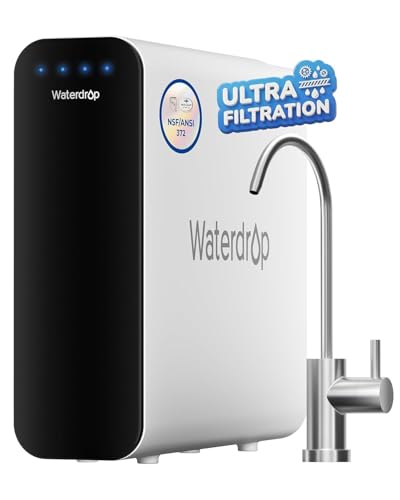
Waterdrop TSU 0.01 Micron Ultra Filtration System

iSpring RCC7P-BLK 5-Stage Reverse Osmosis System

Pro Products Pot Perm Greensand Iron Filter Regenerant

Waterdrop TSA 8 Layer Under Sink Filter System

Waterdrop TSB 8 Layer Under Sink Filter System
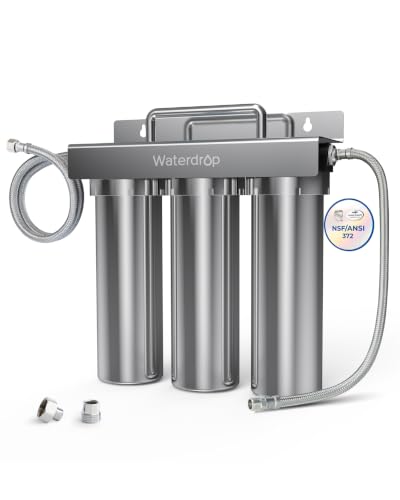
Waterdrop TST-UF 0.01μm Ultra-Filtration System

Waterdrop TSB-10-CM Chloramine Reduction System
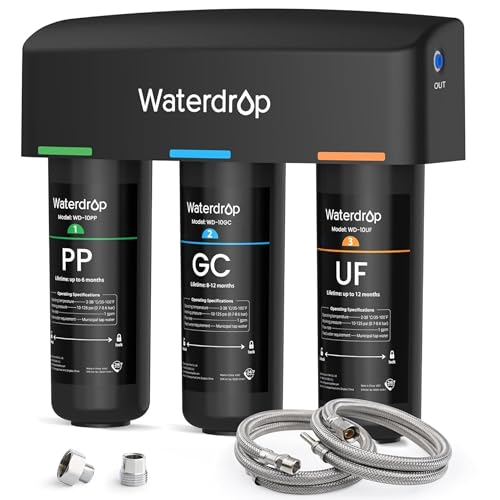
Waterdrop WD-TSA-UF 0.01μm Ultra Filtration System

Waterdrop TSB-ALK Slightly Alkaline Filter System

Waterdrop TSB-PF 9 Layer PFAS Filter System
More On The Choices That Made The List
Most kitchen filters promise cleaner water, but the TSU’s 0.01 micron membrane takes that literally. That pore size (about 100 times finer than a human hair) catches particles most carbon-only filters wave right past, while letting calcium and magnesium stay in the glass.
For anyone on municipal water who drinks from the tap every day, this is a confident baseline. The dedicated faucet requires a small countertop hole, so renters should weigh that before ordering.
Where It Helps
- 0.01 micron ultrafiltration membrane screens out microscopic sediment without stripping beneficial minerals.
- Three-stage design combines sediment, carbon block, and membrane layers for a layered defense.
- No wastewater stream, so the system runs on tap pressure alone and conserves water.
- Filter swaps take seconds with the twist-and-pull housing, helpful for anyone who’d rather not wrestle plumbing.
Points To Keep In Mind
- The included faucet needs a drilled hole in the countertop or sink rim, which rules out some rentals.
- Not designed for hot water lines or well water sources.
Best Suited To
City water shoppers who want finer-than-carbon filtration without going full reverse osmosis, and who don’t mind a small faucet install.
Skip It When
You need true TDS reduction, in which case the iSpring RCC7P-BLK further down the list pulls much harder.
Reverse osmosis (a process that forces water through a semi-permeable membrane, leaving contaminants behind) is the heavy hitter of home filtration, and the RCC7P-BLK layers five stages plus a booster pump to push that performance further. The pump matters most in homes with low tap pressure, where a basic RO unit would trickle.
Unlike the TSU above, this system actively reduces total dissolved solids, so anyone chasing the cleanest possible glass of water lands here. The matte black 304 stainless steel faucet reads as an upgrade piece over the usual chrome.
A Few Highlights
- Five-stage filtration handles sediment, chlorine, heavy metals, and dissolved solids in sequence.
- Booster pump keeps flow strong even under 40 psi household pressure.
- Top-mounted faucet design streamlines install by cutting the number of under-sink connections.
- Optional ICEK kit (sold separately) feeds filtered water to a fridge or ice maker.
Trade Offs To Consider
- RO systems produce wastewater, typically a few gallons per gallon of filtered output.
- Tankless-feel design still needs the supplied storage tank to handle demand peaks.
- More filters means more annual replacement parts to track.
Feature Snapshot
Who Will Love This
Homeowners on lower-pressure municipal lines who want full RO purification and don’t mind the wasted-water trade.
Consider Something Else When
You want to keep healthy minerals in the glass, in which case the Waterdrop TSA 8 Layer covers that lane without RO.
Most entries in this roundup install at the kitchen tap, but Pot Perm does something else entirely. It’s a regenerant (a chemical that refreshes filter media) for greensand iron filters, the kind of whole-house system that pulls iron and manganese out of well water before they stain a sink orange.
If your water comes from a private well and you’ve already got a greensand tank under pressure, this 76 oz bottle keeps the media active. It doesn’t replace the filter; it revives it.
Key Advantages
- Converts dissolved iron and manganese into insoluble particles that the greensand bed can capture.
- Free-flowing formula feeds easily into most regeneration setups.
- Extends the working life of an existing greensand filter, delaying media replacement.
Honest Caveats
- Not a standalone filter, so it’s only useful for households that already run a greensand system.
- You’ll go through several bottles a year on a typical regenerating tank.
Made For
Rural homeowners on well water who already own a greensand iron filter and need to keep it performing.
A Better Fit Elsewhere
City water shoppers should skip this entirely and look at the Waterdrop TST-UF above for daily drinking filtration.
The TSA leans into straightforward value without skipping the certification that matters. NSF/ANSI 42 covers material safety and chlorine reduction, which is the baseline most people actually need from a kitchen filter.
Where the TSU earlier requires a drilled hole, the TSA threads onto existing faucets with 1/2″ or 3/8″ female NPT fittings, meaning it taps into standard plumbing sizes without extra adapters. That makes it a friendly first install for renters and first-time filter shoppers.
Well-Handled Touches
- Eight layers of filtration media stack multiple carbon grades for thoroughness.
- NSF/ANSI 42 certification adds third-party credibility to chlorine and taste claims.
- Direct-connect design fits standard faucet threads, sparing countertop drilling.
Worth Noting
- Doesn’t reduce TDS, so mineral content stays untouched.
- Quick-connect faucet users may need an adapter from Waterdrop’s support.
Quick Facts
Right Fit For
Renters or first-time DIYers who want a certified filter without modifying the countertop.
Reach For A Different Pick When
You want a dedicated filtered-water faucet, in which case the Waterdrop TSB below ships with one.
The TSB takes the TSA’s filtration and adds the dedicated faucet that the TSU originally required. That combination lands it as the most balanced pick in the Waterdrop stable: a complete system that swaps once a year and doesn’t ask for any countertop drilling you didn’t plan.
Home cooks who fill kettles, coffee makers, and pasta pots every day benefit from the eight-layer stack, which keeps minerals intact while pulling out the things that alter flavor.
Everyday Perks
- Includes a dedicated filtered-water faucet, so you can keep your existing tap in place.
- Eight-stage filtration balances thoroughness with mineral retention.
- Replacement filters share compatibility with the TSA line, simplifying spares.
Things To Consider
- Still won’t drop TDS, so anyone wanting zero mineral content should pick the iSpring RO unit instead.
Built With In Mind
Families who drink, cook, and brew with filtered water daily and want a complete kit in one box.
Another Choice May Suit
Renters who can’t drill a counter should step back to the Waterdrop TSA above, which skips the new faucet.
Stainless steel housing sets the TST-UF apart visually and practically. It sidesteps the countertop hole that bothered renters about the TSU, threading directly to most existing faucets instead.
The 0.01μm membrane sits in the same precision class as the TSU, but the steel shell shrugs off the kind of bumps and scrapes that happen in shared spaces or underneath heavy bins.
Useful Highlights
- No-drill install hooks up to standard faucet threads in minutes.
- Stainless steel housing holds up better to under-sink clutter than plastic alternatives.
- 0.01μm ultrafiltration catches fine particles without removing minerals.
Practical Considerations
- Steel adds a bit of weight, so mounting brackets need a solid shelf.
Feature Card
Who Should Grab It
Apartment dwellers and lease-holders who want fine-particle filtration without modifying the sink area.
Swap It Out When
You want alkaline water on tap, in which case the Waterdrop TSB-ALK further down fits that brief.
Chloramine (a chlorine-and-ammonia blend many cities now use because it lasts longer in distribution pipes) resists plain carbon filters more stubbornly than chlorine alone. The TSB-10-CM exists for households where the local utility made that switch and the kitchen tap started smelling faintly of swimming pool.
It runs the same chassis as other TSB units but swaps media tuned for chloramine, so it’s a targeted fix rather than a general upgrade.
Bright Spots
- Media formulated specifically for chloramine, which most carbon blocks leave partially behind.
- Maintains the minerals that carbon-only filters keep anyway.
Points To Note
- Less useful on municipal supplies that still rely on straight chlorine.
- Filter availability can vary, since this is a more specialized cartridge.
Perfect Match For
Homes on chloramine-treated city water who notice taste or odor that standard filters leave behind.
Where Another Pick Suits Better
Anyone worried about PFAS specifically should jump ahead to the Waterdrop TSB-PF.
Compare the WD-TSA-UF to the larger TSA earlier in the list and the difference shows up in the cabinet footprint. This is the TSA chassis fitted with a 0.01μm membrane, trimmed down for tighter installs where every inch matters.
Small galley kitchens and under-sink setups already crowded with a garbage disposal appreciate the slim profile. It still connects directly to standard faucet threads and still keeps the minerals in the glass.
What Earns Its Place
- Slim housing fits where wider three-stage units won’t.
- 0.01μm membrane matches the filtration class of the larger TSU.
- Standard 1/2″ or 3/8″ NPT threads simplify install.
Small Caveats
- Smaller housing usually means shorter filter life than bulkier units.
- Not suited for well water without a pre-filtration stage.
The Right Fit
Anyone with a tight under-sink cabinet who still wants membrane-level particle filtration.
Look Elsewhere When
You want the broad contaminant list the TSB-PF delivers further along.
Alkaline water has its fans, and the TSB-ALK adds a remineralization stage to nudge the pH slightly upward while keeping TDS steady. The eight-layer stack first filters, then reintroduces a measured mineral balance.
It’s a niche choice, but a real one for shoppers who prefer alkaline pH in their drinking water and don’t want to chase bottled alternatives.
A Strong Showing
- Eight-stage design filters first, then remineralizes for a slight pH lift.
- Maintains TDS, which many alkaline systems inadvertently lower.
- Includes the dedicated filtered-water faucet.
Things To Weigh Up
- Remineralization stage can shorten cartridge life relative to a plain carbon block.
Whose Shelf It Belongs On
Drinkers who specifically prefer alkaline pH and want it from the tap rather than from a pitcher.
Where A Sibling Pick Shines
You care more about chloramine than pH; the Waterdrop TSB-10-CM handles that target.
PFAS (a group of persistent “forever chemicals” linked to long-term health concerns) have pushed many shoppers past simple carbon filters. The TSB-PF responds with nine layers, including MicroSpine technology and KDF media (a copper-zinc formulation that tackles chlorine and heavy metals) to address a long impurity list without dropping TDS.
Third-party lab testing backs the claims, which adds weight when shopping for a more aggressive filter. It’s the broadest-reaching option in this roundup short of going to reverse osmosis.
Positive Takeaways
- Targets 80+ impurities including PFAS, chlorine, chloramine, fluoride, and VOCs.
- MicroSpine and KDF media layer active treatment beyond passive carbon.
- Maintains beneficial minerals and stable TDS.
Practical Considerations
- Higher-end cartridges can cost more to replace than basic carbon blocks.
- Three-minute install claim depends on a standard cold-water valve under the sink.
At A Glance
Right Fit For
Shoppers specifically worried about PFAS or VOCs who still want mineral retention and a non-RO install.
Swap It Out When
You actually want full TDS removal, which only the iSpring RCC7P-BLK RO unit delivers.
What To Weigh Before Choosing Under Sink Filtration
Filtration type sets the tone for the whole decision. Carbon-only stages handle chlorine, taste, and odor cheaply. Ultrafiltration adds a 0.01 micron membrane that catches finer particles without changing TDS. Reverse osmosis goes furthest, stripping dissolved solids but sending wastewater down the drain. Match the technology to the contaminant that bugs you, not to the biggest number on the box.
Water source narrows the field fast. Municipal cold water lines welcome nearly every unit on this list. Well water, hot water feeds, and high-pressure homes need different choices, since some membranes degrade in heat and several filters require municipal chemistry to perform as tested.
Install effort matters more than most people expect. A direct-connect filter threads onto an existing faucet with no drilling, which is ideal for renters. A dedicated filtered faucet needs a small hole in the counter or sink rim, which is fine for owners and awkward for leases. RO systems add a tank, a drain line, and sometimes a booster pump, multiplying the install time.
Filter cost over time deserves a quick estimate. Replacement cartridges run anywhere from modest to meaningful over a few years, and the most advanced media (PFAS-specific, alkaline, chloramine-tuned) usually cost more per swap than basic carbon blocks.
Certifications add real trust. NSF/ANSI 42 covers material safety and chlorine reduction. Third-party lab testing, where the manufacturer publishes it, gives extra confidence on longer impurity lists.
Key Things To Know Before You Order
Mistakes First-Time Buyers Hit
Buying for contaminants you don’t actually have wastes money on filters you’ll never notice working. Skipping the install requirements leaves a system sitting in its box while you return parts. Assuming all faucets match standard threads skips a five-minute check that prevents a half-day adapter hunt. Most returns happen because of these three oversights, and they’re all fixable with a quick look at the source line, the cabinet space, and the faucet before clicking order.
When The Higher-End Option Earns Its Place
The premium tier earns its place when you want a dedicated filtered faucet in the kit, when PFAS or VOCs are the actual worry, or when TDS reduction matters enough to justify an RO system. For straight chlorine and taste complaints, the value tier does the same job for less, so save the upgrade spend for the problem that actually shows up in your glass.