

A slow drip behind a wall or a soggy patch on the lawn can quietly drain your water bill for weeks. The right diagnostic gear turns guesswork into a precise pinpoint, whether you’re chasing a clogged drain line, an automotive vacuum leak, or a buried main. This roundup covers handheld cameras, acoustic listening devices, and pneumatic smoke tools suited to different skill levels and pipe depths, so you can stop searching and start fixing.
Your Options, Compared

OBDMONSTER Universal Quick Intake Adapter with Expandable Bladder

Anysun Self-Leveling Sewer Camera with Meter Marking, 9” IPS Screen

Anysun Self-Leveling Sewer Camera with 512Hz Sonde, 100ft Cable

Anysun Sewer Camera with Locator, 150ft Fiberglass Cable

PQWT PQ125D Indoor and Outdoor Water Leak Detector
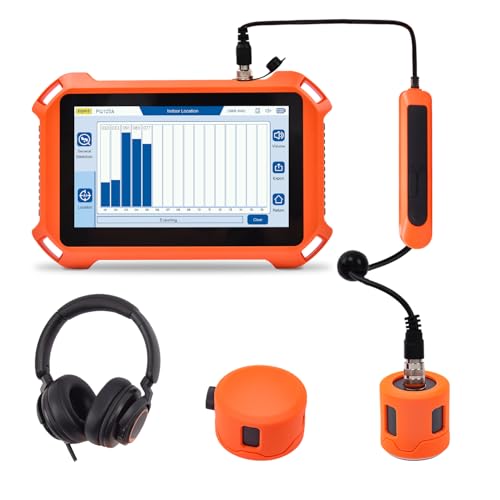
PQWT PQ125A Wall and Ground Leak Detector

PQWT PQ125E Multi-Sensor Indoor and Outdoor Leak Detector
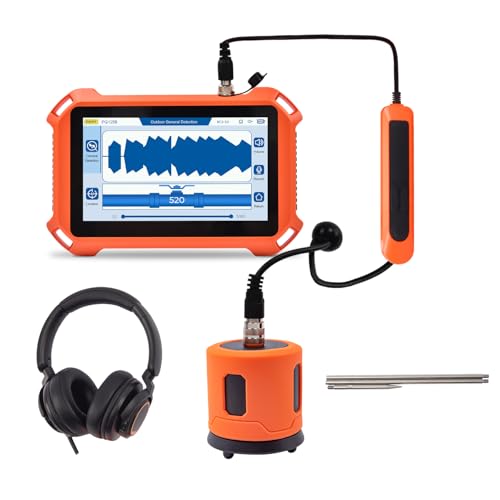
PQWT PQ125B Outdoor Water Leak Detector

Solary Smoke Machine Leak Detector
A Deeper Look At The Lineup
This expandable bladder adapter takes a different angle than the sewer cameras in the lineup, sealing off an automotive intake or exhaust port so you can pressurize the system with shop air. It is built for engine diagnostics rather than plumbing, but the underlying leak-hunting logic is identical: isolate a section, push air through it, and listen for the tell-tale hiss at the fault. Home mechanics chasing a mysterious idle dip or a pending EVAP code get a focused tool for that specific job.
The bladder inflates inside the port to create a sealed passage, which keeps the air moving through the system rather than escaping back out. Anyone who has wrestled with tape, foam, and clamps to mock up a homemade pressure tester will appreciate a purpose-built seal that fits bores of at least two inches across.
The Upside
- Seals intake and exhaust ports cleanly, removing one of the messiest steps from classic smoke and pressure tests.
- Compatible with bores at or above two inches, which covers most passenger vehicle throttle bodies and exhaust manifolds.
- Reusable bladder design saves money over repeated cycles of tape-and-foam improvisation.
- Speeds up pinpointing of vacuum and exhaust leaks that an OBD-II scan tool alone cannot locate.
Things To Consider
- You still need a shop air supply or compressor, which adds to the overall kit cost for casual users.
- Smaller motorcycle and powersports intakes below the two-inch threshold will not seat properly.
- Owners commonly report keeping the bladder clean and dry between uses extends its service life noticeably.
Who Will Love This
Shade-tree mechanics and small shop owners hunting down vacuum, intake, or exhaust leaks without renting a commercial smoke machine.
A Better Fit Elsewhere
For whole-vehicle EVAP and cooling system smoke testing in one pass, the Solary Smoke Machine Leak Detector covers a broader range of systems.
Drain lines rarely cooperate with the angle you fed the cable in, which is why a self-leveling camera head pays off so quickly. This Anysun unit keeps the image upright regardless of how the cable twists inside the pipe, so you always know whether you’re looking at a sag, a root intrusion, or just standing water. For first-time users staring down a slow kitchen sink, that orientation clarity is the difference between a confident diagnosis and pure guesswork.
The 9-inch IPS screen is generous for the price tier, and the meter counter along the cable tells you exactly how far you have pushed into the line. Anyone who has tried to estimate depth by feel alone knows that guesswork leads to digging in the wrong place.
A Few Strong Suits
- Self-leveling head removes the mental gymnastics of mentally rotating upside-down footage.
- Meter counter on the cable marks distance, which helps correlate the image with the actual pipe run.
- IPS display at this size keeps details visible even in a poorly lit basement or crawlspace.
- Stainless steel camera housing resists corrosion through repeated wet inspections.
Worth Noting
- No sonde transmitter, so you cannot locate the head from above ground once it is in the pipe.
- Cable length on entry-level units tends to cap out, limiting reach into long yard runs.
Feature Snapshot
Made For
Homeowners tackling a single slow drain or a backed-up basement floor drain who want clear footage without a steep learning curve.
Look Elsewhere When
You need to pinpoint the camera head from the surface. The Anysun Self-Leveling Sewer Camera with 512Hz Sonde Transmitter includes a locatable transmitter for that exact workflow.
Adding a 512Hz sonde transmitter (a small radio beacon inside the camera head that a locator wand can trace from above ground) turns a sewer camera from a viewing tool into a true locating system. Push the head to the suspected break, walk the yard with the locator, and you can mark the dig site within a foot or two. For homeowners whose mainline runs under a driveway or mature landscaping, that precision is what saves the project.
The 1080P sensor paired with twelve adjustable white LEDs gives usable footage even in fully silted or flooded pipes. Compare that to the previous pick’s stripped-down spec sheet, and the trade-off becomes clear: you pay more here for genuine locating ability and longer cable reach.
Points In Its Favor
- Integrated 512Hz sonde saves buying a separate locator for one-off projects.
- 1080P image sensor pulls finer detail out of pipe walls than standard-definition alternatives.
- IP68 rating on the camera head keeps the unit sealed during fully submerged inspections.
- 16GB memory card included for DVR recording, useful when sharing footage with a plumber or inspector.
- 145-degree viewing angle covers more pipe wall per push than narrower lenses.
Trade Offs
- Sonde locator is sold separately, so budget for the wand if you don’t already own one.
- Owners commonly report that the 23mm camera head may feel tight in older 2-inch clay tile laterals.
Key Product Details
Best Suited To
DIY homeowners and remodel contractors who need to confirm a blockage, mark a dig point, and document the finding on a single job.
Swap It Out When
Your line runs past the 100-foot mark. The Anysun Sewer Camera with Locator stretches to 150ft of fiberglass cable for deeper commercial runs.
Long runs call for a 7mm fiberglass push rod, which this Anysun model ships with at 150 feet. Fiberglass matters because it flexes through tight bends without kinking, and the slim 7mm diameter slips past small-diameter cleanouts that thicker cables cannot enter. Municipal-style laterals and long residential driveways are where this length really earns its keep.
The integrated locator offers two detection modes: a far mode that scans up to about 23 feet for general positioning, and a near mode that pinpoints within roughly 13 feet for the actual mark. That two-step approach speeds up the walk-down considerably compared to single-range wands.
The Value In It
- 150-foot fiberglass cable reaches deep laterals that shorter units cannot touch.
- Dual-range locator (23ft far, 13ft near) reduces guesswork during the marking pass.
- Meter counter along the cable correlates head position with pipe distance.
- 32GB memory card included, doubling the storage of the 100ft sibling.
A Few Limitations
- Heavier reel than the 100ft version, so it leans toward truck-mounted or cart-based setups rather than over-the-shoulder carry.
- Fiberglass push rods require careful coiling to prevent micro-cracks over time.
The Right Fit
Plumbing contractors, home inspectors, and serious DIYers running inspections on long residential or small commercial laterals.
Reach For A Different Pick When
You mostly inspect short interior drains. The Anysun Self-Leveling Sewer Camera with Meter Marking is lighter, cheaper, and easier to carry upstairs.
Acoustic leak detection works on a simple principle: pressurized water escaping a pipe produces a hiss, and a sensitive microphone plus filter can pinpoint where that hiss originates. The PQWT PQ125D shifts the category away from push-cameras and toward listening, which is exactly what you need when the leak is hidden in a wall, under a slab, or deep in a yard. It comes with multiple sensors that swap in for different scenarios, from narrow wall cavities to buried plastic pipes.
The RCS-S3 sensor reaches metal or plastic pipe at depths of up to six meters under favorable soil conditions. Compared to the camera-based picks above, this one trades visual confirmation for the ability to find leaks you cannot see at all.
What Helps Most
- Multi-sensor kit covers walls, narrow cavities, indoor pipe runs, and buried lines from one carrying case.
- RCS-S3 sensor locates metal or plastic pipes at depths up to 6m under matching conditions.
- Two-mode operation: General Detection for sweeping large areas, Location Mode for narrowing down the exact spot.
- Non-invasive approach that avoids breaking drywall or concrete during diagnosis.
Honest Caveats
- Acoustic detection takes practice to interpret, especially amid ambient household noise.
- Performance depends heavily on soil composition and pipe material; rocky fill or noisy plumbing can mask small leaks.
- Sensor heads are delicate instruments that benefit from protective storage between uses.
Spec Overview
Whose Shelf It Belongs On
Homeowners and property managers dealing with mysterious wet spots, rising water bills, or suspected slab leaks without any obvious source.
Consider Something Else When
The suspected leak is in a specific drain line you can access. A sewer camera like the Anysun Self-Leveling Sewer Camera with Meter Marking gives you eyes on the actual pipe.
The PQ125A simplifies the kit to two sensors, DMR-H40 for walls and DMR-V59 for indoor pipe runs, which makes it approachable for first-time acoustic users. Location Mode claims accuracy to within 10 centimeters under ideal conditions, which is closer than most DIYers expect from a listening device. The trade-off is the absence of the deep-buried pipe sensor found in higher PQWT models, so this one targets interior diagnostics rather than yard work.
For someone staring at a water stain on a ceiling or a damp baseboard with no obvious pipe behind it, this scope feels right. You get the precision without paying for sensors you would rarely use.
Advantages To Know
- Two-sensor kit focuses on the most common residential leak scenarios.
- Location Mode accurate to within 10cm reduces unnecessary wall or floor opening.
- Detects minor leaks early, before they turn into structural repair bills.
- Lightweight compared to the multi-sensor PQWT kits.
Points To Keep In Mind
- No buried-pipe sensor means outdoor mainline leaks fall outside its reach.
- Background noise from HVAC, refrigerators, or traffic can complicate readings in some homes.
Who Should Grab It
Homeowners chasing a suspected leak behind drywall, under a sink, or along an accessible pipe run where breaking the surface is the last resort.
Where A Sibling Pick Shines
For yard and mainline work, the PQWT PQ125B Outdoor Water Leak Detector adds the deep-buried sensor for exterior diagnostics.
The PQ125E pulls together every sensor from the rest of the PQWT lineup and adds a tracer gas option. Tracer gas leak detection (a process where a non-toxic hydrogen-nitrogen mix is injected into a depressurized line and migrates toward the leak) reaches depths of up to eight meters, which is meaningfully deeper than the acoustic-only sensors in the PQ125D. For inspectors who handle varied job sites, having both acoustic and gas-tracing methods in one case eliminates the need to swap tools mid-project.
The kit covers walls, narrow spaces, indoor pipes, and buried lines up to 6m acoustically, with tracer gas extending effective range. Compare that to the pared-down PQ125A, and the value calculation depends almost entirely on whether your work crosses between interior and exterior sites.
Where It Excels
- Full sensor lineup plus tracer gas capability in one case.
- Tracer gas detection extends locating depth to about 8m for tricky buried runs.
- Two-mode acoustic operation for sweeping then refining.
- Suited to varied job sites where one tool needs to cover walls, floors, and yard.
Where It May Fall Short
- Higher learning curve than single-purpose acoustic kits.
- Tracer gas adds consumable cost and setup time compared to pure acoustic work.
- Carrying case and accessories bulk up the loadout for quick residential calls.
Feature Rundown
Perfect Match For
Leak detection specialists and serious property inspectors whose work spans residential walls, slabs, and buried yard lines on a regular basis.
Not Your Match When
Your needs are limited to indoor wall leaks. The PQWT PQ125A handles that scope at a lower entry cost.
The PQ125B zeroes in on what the previous PQWT kits scatter across four sensors: the deep-buried acoustic sensor (RCS-S3), optimized for low-frequency resonance that penetrates thick-walled pipe and deep burial layers. For external network pipes, industrial supply lines, and large-diameter underground water mains, this focused design typically outperforms general-purpose kits. Yard work is where it earns its keep.
You give up the wall and indoor pipe sensors to concentrate the investment in the outdoor scenario. Anyone whose suspected leak sits under a lawn, driveway, or municipal tap will recognize the logic.
What Makes Sense
- Optimized low-frequency resonance penetrates thick pipe walls and deep burial.
- Effective on external network, industrial, and underground water supply lines.
- Two-mode operation for broad sweeps then targeted location.
- Streamlined kit compared to multi-sensor alternatives.
Less Ideal Details
- No wall or narrow-cavity sensor, so indoor diagnostics require a different tool.
- Soil conditions still affect accuracy, with rocky fill particularly challenging.
Built With In Mind
Utility crews, irrigation specialists, and homeowners with suspected leaks in buried supply lines between the meter and the house.
Skip It When
The leak signal points to an interior wall or ceiling. The PQWT PQ125A carries the right sensors for that confined work.
Smoke testing remains the gold standard for chasing vehicle system leaks, and the Solary unit removes the most common barrier to entry by including a built-in air pump. No more dragging a shop compressor out for a quick EVAP check. Pump smoke into the system, watch for the wisp, and you have the answer in seconds.
The coverage spans EVAP systems, vacuum lines, EGR passages, exhaust cracks, and cooling systems. For DIYers who already own the OBDMONSTER intake adapter from pick 1, this smoke machine layers on top to cover the systems the bladder alone cannot reach.
Good Reasons To Consider
- Integrated air pump makes the unit self-contained for field or garage use.
- Multi-system coverage includes EVAP, vacuum, EGR, exhaust, and cooling circuits.
- Rapid results, often within about 30 seconds of pressurization.
- Compatible with a wide range of adapters for different vehicle fittings.
Potential Drawbacks
- Requires dedicated smoke fluid, which is a recurring consumable cost.
- Smoke machines need ventilation, so outdoor or well-aired shop use is more comfortable.
- Owners commonly report cleaning the smoke wand and hose between vehicles extends component life.
Right Fit For
Garage hobbyists and small auto shops running EVAP and vacuum diagnostics without an external air supply on hand.
Where Another Pick Suits Better
For sealing off an intake port specifically, the OBDMONSTER Universal Quick Intake Adapter with Expandable Bladder handles port isolation more cleanly than a general smoke approach.
What To Match Between Tool And Pipe Type
Pipe material and depth drive tool choice more than any other factor. Push cameras with self-leveling heads, like the Anysun models covered here, work best when you can access the line through a cleanout and the leak is somewhere visible on screen. For pipes buried under slabs, lawns, or behind finished walls, acoustic listening picks up the pressure-escape hiss that cameras cannot see. Tracer gas extends that reach further when soil conditions or pipe depth challenge pure acoustic work.
Cable length is the next constraint to weigh. A 100-foot cable covers most residential mainlines from a single cleanout. Longer yard runs, municipal taps, or commercial laterals push you toward 150-foot fiberglass push rods that flex through bends without kinking. Camera head diameter matters for older homes with 2-inch clay tile laterals, where a 23mm head may feel tight; smaller-diameter heads exist for that exact reason.
For automotive work, the math is different. Vacuum and EVAP leaks respond well to smoke testing, while intake and exhaust port leaks call for sealed bladders or shop-air pressurization. Mixing the two methods covers a broader swath of vehicle systems than either alone. Indoor acoustic work and outdoor acoustic work also split into different sensor kits, so plan around the dominant scenario rather than buying one tool for every possible job.
Key Considerations Across These Picks
Wrong Turns To Avoid
Buying a sewer camera for a slab leak is the most common mismatch, since cameras need a clear view of the pipe wall, which a buried line under concrete cannot provide. Acoustic gear or tracer gas is the right answer there. On the automotive side, expecting a smoke machine to pinpoint a specific port leak without isolating sections first will leave you chasing the wrong hose. Seal or cap the system deliberately before pumping smoke, so the wisp reveals the actual fault rather than the path of least resistance.
When Paying More Pays Off
Higher-tier acoustic kits earn their premium through extra sensors and tracer gas capability, which lets one tool cover walls, indoor pipe, and buried lines. For contractors, that consolidation cuts truck weight and job-switching time. On the camera side, the jump from a basic self-leveling head to a 512Hz sonde model pays off when you actually need to mark a dig site from the surface, since visual confirmation alone leaves you guessing at depth and location.




