A sump pump is the kind of appliance you forget about until the moment you really need it. Whether you’re protecting a finished basement from spring thaw, draining a hot tub after a soak, or moving water off a construction site, the right pump turns a stressful situation into a manageable one. The ten picks below cover residential basements, job sites, and portable utility chores, with flow rates, materials, and switch types suited to each. Pick the one that matches your pit, your debris load, and your tolerance for manual oversight.
The Picks In Brief

WAYNE CDU800 1/2 HP Submersible Sump Pump
Multiquip ST2040T Electric Submersible Trash Pump

WAYNE CDU790 1/3 HP Submersible Sump Pump

Tsurumi LB-480 Submersible Dewatering Pump

WAYNE CDU980E 3/4 HP Submersible Sump Pump

AQUASTRONG 1 HP Sump Pump 4500 GPH

Aquastrong 1/2 HP Portable Utility Pump
Aquastrong 1/2 HP Utility Pump with Float Switch

Aquastrong 1/2 HP Automatic Sump Pump

Green Expert 1/2 HP Submersible Utility Pump
Taking A Closer Look At The Options
The WAYNE CDU800 sits in the sweet spot for most homeowners who simply want a reliable pump in the basement pit. Its 1/2 HP motor moves up to 5,100 gallons per hour, which is genuinely more headroom than the smaller 1/3 HP models without jumping to a heavier 3/4 HP unit. The cast iron housing paired with corrosion-resistant steel components is the kind of build you’d expect from a long-serving residential workhorse.
The vertical float switch is rated for one million cycles, which in plain terms means the part that actually turns the pump on and off should outlast the basin it’s mounted in. Top-suction design reduces air lock and pulls water down without requiring a separate weep hole. For most mid-size basements with moderate inflow, this is the pick that quietly does the job.
What Stands Out
- 5,100 GPH output handles multi-story discharge runs without bogging down
- Cast iron and steel construction resists corrosion in permanently submerged pits
- Top-suction design reduces the risk of air lock and debris recirculation
- Vertical float tested to a million cycles for years of automatic operation
- Three-year warranty covers the pump itself, which is more than many competitors offer
Trade Offs
- Cast iron body adds weight, so installation in tight basins takes more effort
- Float switch needs pit diameter clearance; very narrow pits may catch the float
Who Will Love This
Homeowners with mid-size basements and standard 18-inch sump pits who want a workhorse they can install once and forget.
Consider Something Else When
Pick the WAYNE CDU790 instead if your pit is smaller and the 5,100 GPH output is more than your drainage load requires.
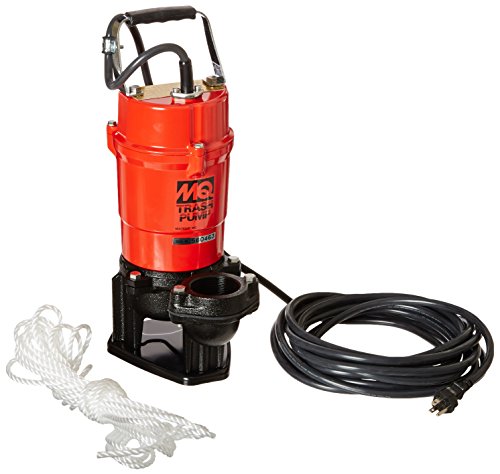
The Multiquip ST2040T isn’t your typical basement pump; it’s a trash pump built for jobs where the water is dirty and the solids are real. A 1 HP motor moves 79 gallons per minute through a 2-inch port, and the cast iron volute pairs with an abrasion-resistant cast iron impeller that has a neoprene rubber overlay. That combination is what lets the unit chew through up to 1-inch solids without quickly wearing itself out.
Single-phase power means you can run it from a standard outlet, and internal thermal overload protection keeps the motor from cooking itself during long dewatering shifts. Unlike the WAYNE CDU800 above, which is built for clean sump water, this one expects muck. Construction sites, flooded basements with debris, and pond overflow are the realistic callings.
The Case For It
- Handles up to 1-inch solids that would clog a standard sump pump
- Neoprene-lined cast iron impeller resists abrasive wear in dirty water
- Internal thermal overload prevents burnout during extended duty cycles
- Compact body and carrying handle make transport to a site realistic
Worth Noting
- Higher flow means higher amp draw; confirm your circuit can handle the load
- Trash pump construction costs more than a basic sump unit
- Not designed for permanent installation, so you’ll need to set it up each time
Best Suited To
Contractors and homeowners dealing with muddy construction water or post-storm flooding where debris is part of the load.
Look Elsewhere When
The Tsurumi LB-480 makes more sense for continuous dewatering in tight caisson setups where slimline dimensions matter most.
For indoor residential use, the WAYNE CDU790 brings cast iron and stainless steel construction to a smaller, more budget-friendly footprint. The 1/3 HP motor delivers up to 4,600 gallons per hour, which covers the typical basement during heavy rainfall or snowmelt. It’s also indoor-rated, so you don’t need to worry about the housing standing up to direct sun or weather.
Compare that to the heavier-duty CDU800 reviewed above: this one trades peak flow for a smaller form factor, which can matter if your sump pit is shallow or narrow. The integrated vertical float switch keeps the pump hands-off once it’s installed, and stainless fasteners plus an epoxy-coated motor housing add years of service life.
Notable Gains
- Cast iron volute and stainless fasteners resist corrosion in wet basements
- 4,600 GPH is more than enough for typical single-pump residential setups
- Indoor-rated build suits finished basements and utility rooms
- Smaller form factor drops into shallow pits more easily than 1/2 HP units
Things To Consider
- Lower flow means slower recovery if your pit fills quickly during storms
- Not designed for continuous commercial duty
Right Fit For
First-time pump owners and homes with modest water tables who want a quiet, set-it-and-forget-it residential unit.
Swap It Out When
The AQUASTRONG 1 HP 4500 GPH unit is worth a look if you need stronger vertical lift and don’t mind a slightly larger footprint.
The Tsurumi LB-480 is purpose-built for situations where space is the constraint. Its slimline body slips into an 8-inch caisson, which is roughly two inches narrower than many residential sumps can manage. A 2/3 HP motor pushes 63 gallons per minute, or about 3,780 gallons per hour, with a 2-inch discharge port suited to construction hose.
A 32-foot power cord is longer than what most residential pumps ship with, which means fewer extension cords on a busy site. The urethane impeller and wear plates are designed for abrasive slurry, and oil-lifter technology keeps lubricant circulating for cooler running during long dewatering cycles. Where the WAYNE CDU790 is built for clean indoor basements, this one expects a workday.
A Strong Showing
- Slimline design drops into 8-inch caissons that reject bulkier pumps
- 32-foot cord reaches distant outlets without extension cord chaining
- Urethane impeller handles abrasive slurry better than standard rubber
- High-grade build suits continuous commercial and industrial dewatering
Honest Caveats
- Construction-grade pricing exceeds most residential budgets
- No float switch included; you’ll need a separate controller for automatic operation
Made For
Contractors, utility crews, and homeowners with narrow sump setups who prioritize fit and continuous-duty engineering over price.
Reach For A Different Pick When
The Multiquip ST2040T is a more practical option if you only need trash-handling capability occasionally rather than continuous slimline dewatering.
The CDU980E is the muscle car of the WAYNE residential line. A 3/4 HP motor pushes 5,490 gallons per hour, which is genuinely meaningful headroom during a multi-day storm when the pit never fully empties. The same cast iron and stainless steel recipe as its smaller siblings gives it durability, but the five-year warranty is what sets it apart from the rest of the field.
The integrated vertical float switch and top-suction anti-airlock design carry over from the CDU800, so installation is familiar if you’ve worked with that pump before. For homeowners in flood-prone regions or with high-water-table basements, the upgrade from a 1/2 HP unit to this 3/4 HP one is often the difference between a dry basement and a wet one.
Why It Works Well
- 5,490 GPH output clears high inflow fast enough for storm-season duty
- Five-year warranty exceeds most residential sump pump coverage
- Cast iron and stainless steel construction is built for permanent submersion
- Top-suction design protects against air lock without a weep hole
Points To Note
- Larger housing needs a wider pit; very narrow basins won’t accept it
- Premium pricing over the CDU800 may not be justified for modest water tables
Who Should Grab It
Homeowners in heavy-rain regions or with finished basements where the cost of a single flood far outweighs the price difference between models.
Skip It When
The WAYNE CDU800 already covers most residential basements and saves you money if your pit fills slowly rather than rapidly.
The AQUASTRONG 1 HP brings more raw flow than most residential pumps, with 4,500 gallons per hour at a 5-foot lift and the ability to push water up to 30 vertical feet. That last figure matters when your discharge line has to climb up out of a deep basement or run to a distant yard drain. The bottom-suction design pulls water down to about 1/5 inch from the surface, which is genuinely useful when you want a pool or tub nearly empty.
Unlike the cast iron WAYNE models above, this one runs as a portable utility pump: plug it in, it runs; unplug it, it stops. Solids handling up to 1/5 inch makes it better suited to clean water than construction mud, but hot tub drainage, flooded basement cleanup, and pond work all fit naturally.
Real Benefits
- 30-foot vertical lift covers deep basements and high discharge runs
- Bottom-suction design removes nearly all standing water
- Plug-and-play operation with no separate switch to install
- Handles 1/5-inch solids without clogging in typical residential use
A Few Limitations
- 1 HP motor pulls more amps; verify your outlet circuit is rated
- Portable design means manual oversight rather than set-and-forget
Perfect Match For
Homeowners with deep basements, hot tubs, or pool drainage chores who need strong vertical lift and don’t mind manual operation.
Another Choice May Suit
The Aquastrong 1/2 HP Automatic Sump Pump is the right call if you’d rather have electronic on/off control than plug-and-play manual use.
This Aquastrong 1/2 HP trades the cast iron body of the WAYNE units for thermoplastic construction, and that’s actually a feature if you carry the pump around. Output lands at 3,159 gallons per hour with up to 26 feet of vertical lift, which handles pool covers, garden ponds, and basement window wells without the shoulder strain.
The 10-foot power cord is short compared to construction-grade units, but typical for residential utility chores. Like the AQUASTRONG 1 HP above, this one runs only when plugged in, with no automatic switch. For most homeowners, that tradeoff is fine: drop it in the pool, plug it in, and unplug when the water is gone.
Useful Touches
- Thermoplastic body keeps weight low for one-person transport
- 3,159 GPH covers most household drainage chores quickly
- Bottom suction pulls water down to 1/5 inch for nearly complete removal
- 10-foot cord reaches typical residential outlets without an extension
Points To Keep In Mind
- Thermoplastic body is less impact-resistant than cast iron
- No float switch means you need to watch the water level yourself
- Not built for permanent sump pit installation
Built With In Mind
Homeowners who need a grab-and-go pump for pools, ponds, window wells, and the occasional flooded basement corner.
A Better Fit Elsewhere
The WAYNE CDU800 makes more sense if you want a permanent basement pump with automatic float switch operation.
The 1/2 HP Aquastrong with float switch is the friendly middle ground between a permanent sump pump and a manual utility pump. It pushes 3,159 gallons per hour, lifts water up to 26 vertical feet, and passes up to 1/5-inch solids. The adjustable tether float switch is the headline feature: it turns the pump on and off based on water level, so you don’t have to babysit it.
A clever little trick is the upward lock position, which keeps the pump in continuous run regardless of the float setting. It’s handy for pool draining or any job where you want it running flat-out. The 10-foot cord and lightweight build mirror the sibling model reviewed above, but the included float gives it a more set-it-and-forget-it character.
Positive Points
- Adjustable tether float switch turns the pump on and off automatically
- Lock-up position forces continuous run for timed drainage jobs
- 3,159 GPH is enough flow for typical residential basements
- Lightweight design makes it easy to move between tasks
Small Caveats
- Tether float requires adequate pit diameter for the swing arc
- 10-foot cord may need an extension for distant outlets
The Right Fit
New pump owners who want automatic operation without committing to a hardwired basement sump installation.
Where A Sibling Pick Shines
The Aquastrong 1/2 HP Automatic Sump Pump with electronic sensor is worth choosing over this one if you want preset water-level triggers instead of a tether.
This Aquastrong swaps the tether float for an electronic sensor with six adjustable water levels. Trigger points at roughly 5, 4.1, 3.4, 2.6, 1.8, and 1 inch let you tune the on-cycle to your pit depth, and the pump shuts off at about 0.4 inch. For most residential basements, that’s more granular control than a basic float delivers.
Flow remains at 3,159 GPH with 26 feet of vertical lift, matching the float-equipped sibling reviewed above. The bottom-suction design clears water to roughly the same near-empty level. For owners who want a sealed electronic switch in place of a mechanical float that can occasionally snag, this is a quietly meaningful upgrade.
Points In Its Favor
- Six adjustable trigger levels tune the pump to your specific pit depth
- Electronic sensor avoids the snag risk of mechanical float switches
- Shuts off at 0.4 inch, leaving almost no standing water behind
- Standard 1/2 HP flow covers typical residential inflow
Potential Drawbacks
- Electronic sensors can fail differently than floats; check warranty terms
- Same 10-foot cord as the float-equipped sibling
Whose Shelf It Belongs On
Homeowners replacing an older float-style pump who want finer control over activation depth in tight or unusually shaped pits.
Not Your Match When
The Green Expert 1/2 HP Submersible Utility Pump is a better choice for quick-drain chores where you don’t need any automatic switching.
The Green Expert 1/2 HP is the no-nonsense option when you just want a pump that turns on when plugged in and stops when unplugged. An oil-free PSC motor with thermal overload protection moves up to 2,500 GPH at zero feet and 25 GPM at a 10-foot discharge lift. For a quick basement corner, a hot tub, or a stock tank, that flow is plenty.
The included check valve and hose adapters are a real perk if you don’t already own fittings, saving a trip to the hardware store. Compared to the AQUASTRONG 1 HP reviewed earlier, this one runs slower but handles the typical residential chore with less fuss and a smaller price tag.
Reasons It Performs
- Manual plug-in operation keeps controls simple and obvious
- Thermal overload prevents motor burnout during extended use
- Included check valve and hose adapters save a separate purchase
- Lightweight build suits grab-and-go drainage tasks
Where It May Fall Short
- No automatic switch means you must plug and unplug manually
- 2,500 GPH is slower than most 1/2 HP competitors on this list
- Last-inch drain design leaves a small puddle compared to bottom-suction units
Right Fit For
Homeowners with occasional, short-duration pumping jobs who want a simple unit without automatic controls.
A Different Pick May Suit
The Aquastrong 1/2 HP Utility Pump with Float Switch handles the same chores but adds automatic on/off for hands-free operation.
What Matters Most Before Choosing Sump Pumps
Matching Flow Rate To Your Pit
Flow rate, measured in gallons per hour (GPH), tells you how fast the pump clears standing water. A 3,000 to 4,500 GPH unit covers most residential basements where water rises gradually. Heavy rain regions or high water tables push you toward the 5,000+ GPH range, where the WAYNE CDU980E and Multiquip ST2040T live. Slow-flow utility chores like hot tubs or ponds only need 2,500 to 3,200 GPH, which is where portable utility pumps fit comfortably.
Float Switches And How They Trigger
A float switch is the mechanism that turns the pump on when water rises and off when it drops. Vertical floats, like those on the WAYNE CDU800, are compact and fit narrow pits, but they need swing clearance. Tether floats hang from the pump and adjust to different pit depths, while electronic sensor switches offer preset water-level triggers without moving parts. For most residential pits, any of the three works; pick by clearance and preference.
Solids Handling And Construction Materials
Cast iron and stainless steel pumps last longest in permanently submerged pits, which is why the residential WAYNE models lean on that combo. Thermoplastic utility pumps are lighter and cheaper but tolerate less abuse. Solids handling ranges from 1/5 inch for clean-water utility pumps up to 1 inch for trash pumps like the Multiquip ST2040T. Match the solids spec to whatever might actually end up in your water.
Key Considerations Across These Picks
Pitfalls Shoppers Hit
Underestimating pit depth is the most common misstep, since some pumps activate at water levels the pit never reaches. Buying a 1/2 HP pump for a basement that cycles dozens of gallons per minute also leads to frustration. Forgetting about discharge run length is another classic; a long horizontal or vertical run cuts flow meaningfully, so confirm the pump’s lift rating covers the actual route.
Where The Extra Money Goes
Higher-tier residential pumps buy longer warranties, cast iron housings, and float switches tested to a million cycles. Construction-grade models add abrasion-resistant impellers and continuous-duty motors. The trade-off is real durability versus initial cost, and for a basement pump that may sit idle for months before a critical storm, the upgrade often pays for itself the first time it runs without failing.
Frequently Asked Questions
How Long Do Sump Pumps Typically Last?
Most residential sump pumps run for seven to ten years before the float switch or motor bearings wear out. Units with cast iron housings and million-cycle float switches, like the WAYNE CDU800, often outlast budget thermoplastic models by several years.
Can One Sump Pump Handle Heavy Rain?
A single 1/2 HP pump moves roughly 4,500 to 5,100 gallons per hour, which covers most single-pump basements. During sustained heavy rain, the WAYNE CDU980E or a similar 3/4 HP unit provides headroom, while many homeowners add a battery backup for power outages.
What’s The Difference Between A Sump Pump And A Utility Pump?
A sump pump is built for permanent installation with a float switch and runs automatically. A utility pump is portable, plugs in to run, and unplugs to stop, suiting pool draining, pond work, and occasional basement cleanup. Some pumps blur the line with add-on float switches.
Do Sump Pumps Need A Check Valve?
A check valve prevents water from flowing back down the discharge pipe into the pit after the pump shuts off. Without one, the pump cycles more often and works harder. The Green Expert unit includes one, while most residential sump pumps require a separate purchase.
How Often Should Sump Pumps Be Tested?
Quarterly testing is the common recommendation: pour water into the pit until the float triggers the pump, then watch the cycle complete. Testing every few months catches a stuck float or worn motor before the next storm arrives.
Wrap Up
A sump pump is one of those quiet investments you only think about when water is creeping across the basement floor. The right match comes down to your pit size, your inflow rate, and how hands-on you want to be. Cast iron residential workhorses like the WAYNE CDU800 cover most homeowners, while portable utility and trash pumps fill the gap for job sites, pools, and one-off cleanups. Pick the pump that fits your actual water load, test it a few times a year, and the next storm will be just another rainy day.