

Draining a pool the wrong way wastes time and can leave debris clinging to the walls. The right submersible pump clears thousands of gallons per hour without burning out, lifts water uphill when your yard slopes away from the pool, and handles the small solids that settle to the bottom after a long season. Below is a curated list of submersible and utility pumps suited to backyard pool work, hot tub draining, and seasonal cover removal.
Your Options, Compared

WAYNE CDU800 1/2 HP Submersible Sump Pump

Tsurumi Pump LB-480 Submersible Dewatering Pump

Little Giant VCMA-15UL Automatic Condensate Pump

Liberty Pumps 237 1/3 HP Submersible Sump Pump
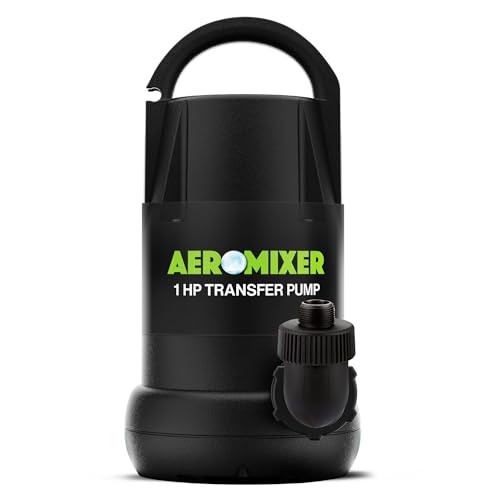
Aeromixer 1 HP Submersible Transfer Pump

AQUASTRONG 1 HP Sump Pump 4500 GPH

Aquastrong 1/2 HP Thermoplastic Utility Pump
Aquastrong 1/2 HP Utility Pump with Float Switch

Aquastrong 1/2 HP Automatic Sump Pump

Green Expert 1/2 HP Submersible Utility Pump
A cast-iron body paired with corrosion-resistant steel gives the WAYNE CDU800 the kind of weight and feel you want when moving a pump between pool jobs season after season. The 1/2 HP motor pushes water at up to 5,100 gallons per hour, which clears a typical 15,000-gallon backyard pool in roughly three hours of continuous run time.
Compared with the Tsurumi and Little Giant picks below, this model trades raw slimness for outright durability. The vertical float switch is rated for one million cycles, so automatic on-and-off operation should keep working through years of seasonal starts and stops. For homeowners who want one heavy pump that handles both pool draining and basement groundwater, this is the workhorse choice.
The Value In It
- Top-suction design pulls water down without needing a weep hole, which simplifies setup.
- Cast-iron and stainless steel construction resists corrosion in chlorinated pool water.
- 5,100 GPH flow rate handles residential pools in a single afternoon of run time.
- Float switch rated to one million cycles for dependable automatic operation.
- Three-year warranty coverage protects against early mechanical failures.
Points To Keep In Mind
- The pump weighs noticeably more than thermoplastic alternatives, so lifting it out of a deep pool takes effort.
- Its 1/2 HP output is robust, but larger commercial pools may drain faster on a higher-horsepower unit.
Who It Suits Best
Homeowners with a residential pool who want a long-lasting cast-iron pump that doubles as a basement sump pump during stormy months.
Skip It When
Shed-stored seasonal users who want the lightest possible carry should consider the Aquastrong 1/2 HP Thermoplastic Utility Pump instead.
The Tsurumi LB-480 has the slim profile and contractor-grade build you’d expect from a jobsite dewatering pump, and that pedigree shows up in the 2/3 HP motor pushing 63 GPM through a 2-inch discharge. The slimline body slips into an 8-inch caisson, which means it works in narrow sump basins where chunkier pumps simply do not fit.
Where the WAYNE CDU800 leans residential, the LB-480 leans commercial. Owners commonly deploy it for pool draining where a fast flow at moderate head is required, and the urethane impeller with replaceable wear plates keeps it running through dirty water without losing prime. The 32-foot power cord adds reach for deeper or farther-out installations.
A Favorable Mix
- Slimline housing fits an 8-inch caisson, opening up tight installations.
- 63 GPM flow handles pool draining and construction dewatering with equal ease.
- Urethane impeller resists wear from silt and small debris.
- 2-inch discharge moves high volumes quickly with less backpressure loss.
- 32-foot cord reaches deep basins without needing an extension.
A Few Limitations
- The slim profile means it can tip in very shallow water; flat placement on a paver helps.
- Higher horsepower draws more amperage, so a dedicated 15-amp circuit is wise.
Key Attributes
Right Fit For
Contractors, pool techs, and homeowners with tight sump basins who want commercial-grade flow and a slim body.
Look Elsewhere When
Casual pool owners seeking a quiet household pump should consider the Green Expert 1/2 HP Submersible Utility Pump.
The Little Giant VCMA-15UL sits in a different lane than the rest of this list. Rather than moving thousands of gallons per hour, it pushes 65 GPH through a 1/50 HP motor, which is exactly what an HVAC condensate line, dehumidifier drain, or small refrigeration overflow tray needs. The vertical float switch keeps the footprint low, so it tucks behind an air handler without crowding service access.
For pool owners with indoor equipment rooms, this pump quietly handles dehumidifier runoff that would otherwise drip onto the floor. It pairs with pool-area dehumidification gear rather than the pool itself, and that is worth clarifying before you buy. CSA certification to US and Canadian standards adds confidence for permanent installations.
Practical Advantages
- Vertical switch design keeps the tank footprint compact in tight equipment rooms.
- CSA-certified for residential HVAC and refrigeration installations.
- Thermally protected fan-cooled motor prevents overheating on long cycles.
- ABS tank resists corrosion from condensate chemicals.
Where It May Fall Short
- 65 GPH flow is far too low for pool draining, so this only suits condensate applications.
- 6-foot cord limits placement near distant outlets.
Whose Shelf It Belongs On
Pool-house owners running a dehumidifier or HVAC system who need a compact condensate pump, not a full pool drainer.
Not Your Match When
Anyone needing actual pool draining capacity should reach for the WAYNE CDU800 or Aeromixer 1 HP Submersible Transfer Pump instead.
The Liberty Pumps 237 is a textbook residential sump pump dressed for pool work. The 1/3 HP motor, deep-finned aluminum housing, and vortex-style impeller combine to handle 3/8-inch solids without losing prime, which matters when you drain a pool that has collected leaves and grit over the off-season.
Compared with the WAYNE CDU800 above, the Liberty trades raw flow for a more compact form factor and a 1-1/2-inch discharge that fits standard sump basin plumbing. The vertical magnetic float switch delivers automatic operation, and the thermally protected motor guards against burnout during long unattended runs. For pool owners who want a quiet, predictable drain cycle rather than maximum gallons per minute, this is a calm middle-ground pick.
Practical Pluses
- Vortex impeller resists clogging from leaves, twigs, and silt.
- Vertical magnetic float switch starts and stops the pump automatically as the water level changes.
- 1-1/2-inch discharge matches common sump plumbing, simplifying hookups.
- Thermal protection extends motor life during extended drain cycles.
Honest Caveats
- Lower horsepower means slower pool draining than 1 HP alternatives.
- Aluminum housing, while corrosion-resistant, is lighter than cast iron for very heavy daily use.
Feature Snapshot
Best Suited To
Residential pool owners who value clog resistance and automatic operation over maximum gallons per hour.
A Better Fit Elsewhere
Owners with larger pools who want faster drain times should look at the Aeromixer 1 HP Submersible Transfer Pump.
The Aeromixer 1 HP pump is the high-capacity workhorse of this roundup. With a max flow of 5,120 GPH and the ability to handle up to 1/4-inch solids, it is sized for serious jobs: draining large in-ground pools, moving thick liquids, transferring fertilizer mixes, or clearing yard flooding after a heavy storm.
What separates it from the WAYNE CDU800 is the higher horsepower and the explicit 1/4-inch solids rating, which is meaningfully larger than the cast-iron residential pick. The trade-off is weight and current draw, so you will want a sturdy extension cord and a dedicated outlet. For pool owners with 20,000-gallon-plus pools or anyone who wants one pump that handles pool draining plus muddy utility work, this earns its place.
Everyday Wins
- 5,120 GPH max flow handles large residential and small commercial pools quickly.
- Passes 1/4-inch solids, so leaves and twigs do not stall the impeller.
- Works as a sump pump, transfer pump, or pool drainer without modification.
- Thick-liquid handling opens up fertilizer transfer and pond work.
Trade-Offs To Consider
- The 1 HP motor pulls more current, so older 15-amp circuits may need a dedicated run.
- Heavier build makes carrying it up pool ladders harder than 1/2 HP options.
Made For
Pool owners with large bodies of water, hobby farmers, and homeowners who want one pump to cover pool, pond, and yard drainage.
Consider Something Else When
You only need to spot-drain a hot tub or small inflatable pool; the Green Expert 1/2 HP Submersible Utility Pump is a lighter, simpler choice.
The AQUASTRONG 1 HP sump pump clears up to 4,500 GPH and lifts water up to 30 vertical feet, which is the standout spec on this list for sloped yards. Where the WAYNE and Liberty pumps drop performance quickly as head increases, this model keeps moving meaningful volume up a hill, useful when your pool sits higher than the drainage point.
The bottom-suction design pulls water down to within roughly 1/5 inch of the surface, so you get the last inch of pool water without scooping. It handles up to 1/5-inch solids, which is a step below the Aeromixer’s 1/4-inch rating, but adequate for typical pool debris. The plug-and-play operation means there is no priming ritual; just plug in and stop by unplugging.
Real Benefits
- 30-foot vertical lift handles pools that sit uphill from drainage points.
- Bottom-suction design drains pools to a near-dry finish without manual mopping.
- No priming needed; plug in to start and unplug to stop.
- 4,500 GPH flow rate is competitive with 1 HP pumps at a friendlier price tier.
Practical Considerations
- The 1/5-inch solids rating is more restrictive than the Aeromixer’s spec.
- 1 HP draw means you will want a healthy extension cord and a dedicated outlet.
Feature Snapshot
Who Will Love This
Homeowners with sloped yards who need serious vertical lift and want a near-complete drain without priming steps.
Swap It Out When
You mostly drain flat yards or small pools; the WAYNE CDU800 is a quieter residential option with a tougher cast-iron body.
Where the cast-iron WAYNE CDU800 weighs you down, the Aquastrong thermoplastic model lightens the load. The 1/2 HP motor pushes 3,159 GPH at a 5-foot lift and reaches 26 feet of vertical head, and the 10-foot cord is enough for most backyard pool placements.
You can drop it into a pool, a garden pond, a window well, or a flooded basement without ceremony. The bottom-suction design clears water to about 1/5 inch from the surface, similar to its AQUASTRONG sibling above. For seasonal users who only handle a pool once or twice a year, the lower weight and lower price tag matter more than cast-iron durability.
What Pays Off
- Thermoplastic body cuts weight, making it easier to lower into deep pools.
- 3,159 GPH flow is solid for typical residential pools.
- 26-foot vertical lift covers most yard slopes.
- Multi-use design fits pools, ponds, basements, and window wells.
- 10-foot cord reaches most outdoor outlets without an extension.
Some Limits To Know
- Thermoplastic housing will not take the same abuse as cast iron over many seasons.
- Manual operation means you have to watch the water level.
Feature Card
Perfect Match For
Seasonal pool owners who value a lightweight pump they can carry, store, and redeploy without strain.
Not Your Match When
You want automatic on/off cycling without standing watch; the Aquastrong 1/2 HP Automatic Sump Pump handles that role.
This Aquastrong model keeps the same 3,159 GPH motor as its manual sibling above but adds an adjustable tether float switch. That single upgrade changes how you drain a pool: instead of standing by the pump with an extension cord ready to pull, you set the float and let the pump cycle itself as the water drops.
For pool owners who pair the pump with a garden hose run to a distant drainage point, the float switch removes the need to babysit the unit. It still passes 1/5-inch solids and reaches a 26-foot vertical lift, so the performance numbers track with the manual version. The handle-lock mechanism also lets you pin the float upward for manual continuous-run mode when you want the pump to keep going past the float’s natural shutoff point.
Bright Spots
- Adjustable tether float allows you to set the on/off trigger at the right water height.
- Handle-lock mode keeps the pump running continuously when needed.
- 3,159 GPH flow matches the manual Aquastrong above, so performance does not take a hit.
- Lightweight build is easier to reposition between pool, pond, and basement use.
Things To Weigh
- The float switch can snag on debris, so periodic inspection during a long drain is wise.
- Thermoplastic housing still does not match cast-iron longevity.
Who Should Grab It
Pool owners who want to set up a long hose run and let the pump cycle itself rather than monitoring continuously.
Reach For A Different Pick When
You prefer fine-grained electronic level sensing rather than a mechanical float; the Aquastrong 1/2 HP Automatic Sump Pump uses a six-level sensor instead.
Where the float-switch Aquastrong uses a mechanical tether, this model uses a built-in electronic sensor with six adjustable water-level triggers between 5 inches and 1 inch. The pump shuts off at 0.4 inch, which leaves a thinner residual than most mechanical floats manage. That makes it a sensible choice when you want near-complete pool drainage without manual timing.
At 3,159 GPH and a 26-foot lift, it tracks the rest of the Aquastrong family for raw flow, so you are not trading power for precision. The trade-off, of course, is electronic complexity: a mechanical float switch is easier to clean and inspect than a sealed sensor head, and a stray bit of debris near the sensor can occasionally confuse it during long unattended runs.
What It Does Well
- Six adjustable trigger levels give precise control over when the pump turns on.
- Shuts off at 0.4 inch for a near-complete drain without manual mop-up.
- Matches the 3,159 GPH output of its mechanical siblings.
- No moving float to snag on hoses or pool walls.
Room For Improvement
- Electronic sensors can occasionally misread turbulent water near the intake.
- Repair options are more limited than with a replaceable mechanical float.
Best Suited To
Pool owners who want fine-grained electronic level control and do not want to manually mop the last half-inch of water.
Another Choice May Suit
Shoppers who prefer simple mechanical reliability and easy cleaning should look at the Aquastrong 1/2 HP Utility Pump with Float Switch.
The Green Expert 1/2 HP pump runs at 2,500 GPH at zero head, which lands it at the lower-flow end of this list, but that comes with a manual plug-in design that gives you full control. No float switch means no auto shutoff at exactly the level you want; instead, you monitor the water and unplug when the last inch is gone.
What sets this pump apart is the included check valve and hose adapters, which let you build a sealed hose run without buying extra fittings. The thermal-overload-protected PSC motor is oil-free, which simplifies storage between pool seasons. For hot tub draining, aquarium changes, and quick spot jobs around the yard, this is a simple, no-frills companion.
The Good Stuff
- Manual plug-in control gives precise control over the last inch of water.
- Includes a check valve and hose adapters to build a sealed run without extras.
- Oil-free PSC motor simplifies long-term storage.
- Thermal overload protection prevents burnout during long cycles.
Where It Is Less Suited
- 2,500 GPH is the lowest flow on this list, so large pools drain slowly.
- No automatic switch means you must stand watch for the full cycle.
Quick Facts
Built With In Mind
Hot tub owners, small-pool users, and homeowners who want a manual pump with a complete hose kit for spot jobs.
A Better Fit Elsewhere
Anyone needing unattended operation should step up to the Aquastrong 1/2 HP Automatic Sump Pump with electronic sensing.
What Matters Most When Choosing Pool Sump Pumps
Picking a sump pump for pool work is less about horsepower numbers and more about how the pump fits your specific drainage path and the debris load in your water. A few variables end up mattering more than the spec sheet suggests.
Match The Flow Rate To Your Pool Volume
A 15,000-gallon pool at 5,000 GPH takes roughly three hours to drain. Smaller 1/2 HP pumps at 2,500 to 3,200 GPH stretch that to five or six hours. If your drainage target is uphill, remember that GPH drops sharply as vertical lift increases, so pick a pump with at least 25 feet of head above the actual rise.
Watch The Solids Rating
Pools collect leaves, twigs, and grit between cleanings. Pumps rated for 3/8-inch solids (like the Liberty Pumps 237) handle more debris than 1/5-inch-rated thermoplastic units. If you drain a pool with a tree nearby, err on the higher solids rating to avoid mid-cycle clogs.
Float Switches Versus Manual Operation
Mechanical float switches (Aquastrong tether style) are easy to clean and replace but can snag on hoses. Electronic sensors (the Aquastrong automatic model) offer precise level control but are harder to service. Manual plug-in pumps (Green Expert) give full operator control but require you to monitor the run.
Consider Storage And Weight
Cast-iron pumps like the WAYNE CDU800 last decades but weigh enough to make ladder work harder. Thermoplastic models weigh less and store more easily between pool seasons, which matters for occasional users.
Smart Habits For Pool Pump Shoppers
Pitfalls Shoppers Hit
The most common mistake is choosing a pump based purely on peak GPH, which sounds impressive but drops fast once you factor in vertical lift and hose length. A pump rated at 5,000 GPH at zero head may deliver 1,500 GPH through a long hose run over a slope. Another frequent slip is forgetting to confirm the pump’s solids rating against the actual debris in the pool. A 1/5-inch rating handles grit but stalls on a stray twig, so drain the pool through a leaf net first or pick a higher-rated unit.
When Paying More Pays Off
Higher-tier models like the WAYNE CDU800 and Tsurumi LB-480 earn their price with cast-iron or contractor-grade construction, longer cords, and stronger impeller materials. For pool owners who drain more than once a season, those upgrades translate into years of reliable service rather than mid-season replacements. Lighter thermoplastic units cost less up front and work fine for occasional use, but heavy users will see the lifespan difference.
Frequently Asked Questions
Can a sump pump actually drain a pool?
Yes, most submersible sump pumps can drain an in-ground or above-ground pool. The key is matching the pump’s flow rate and vertical lift to your pool’s size and your yard’s slope. A 1/2 HP pump handles residential pools; a 1 HP model clears large pools faster.
How long does it take to drain a typical backyard pool?
A 15,000-gallon pool takes roughly three hours with a 5,000 GPH pump, and around five to six hours with a 2,500 to 3,200 GPH unit. Slower pools are fine if you do not need the pool refilled quickly.
Do these pumps handle chlorinated water?
Most submersible sump pumps use corrosion-resistant materials suitable for chlorinated pool water. Cast-iron and stainless steel models like the WAYNE CDU800 hold up longest, while thermoplastic units resist corrosion for years in typical seasonal use.
Can I leave a sump pump unattended while draining?
Automatic models with float switches or electronic sensors can run unattended. Manual pumps like the Green Expert 1/2 HP need someone to monitor the cycle and unplug at the right moment.
How do I store a sump pump between pool seasons?
Rinse the pump with fresh water, dry the exterior, and store it indoors in a dry spot. Oil-free motors (like the Green Expert model) simplify long-term storage, while oil-lubricated pumps occasionally need a quick check before reinstallation.
Closing Remarks
The right sump pump for your pool depends on pool size, yard slope, and how often you drain. Heavy residential users benefit from cast-iron durability, while seasonal pool owners often prefer lighter thermoplastic models with automatic switches. Match the flow rate to your pool volume, double-check the solids rating, and confirm the vertical lift covers your drainage path before you commit.




