A damp crawl space quietly undermines everything above it: warped floorboards, musty air, mold along the joists. You probably don’t see the problem until the humidity sensor ticks past 70%, or a puddle appears after a heavy rain. The right pump paired with a properly sized dehumidifier changes that story fast. This lineup covers submersible cast-iron workhorses, compact condensate units, and crawl-space dehumidifiers built to handle real moisture loads day after day.
An Overview Of The Picks

WAYNE CDU800 1/2 HP Submersible Sump Pump

Little Giant VCMA-20ULST Condensate Removal Pump
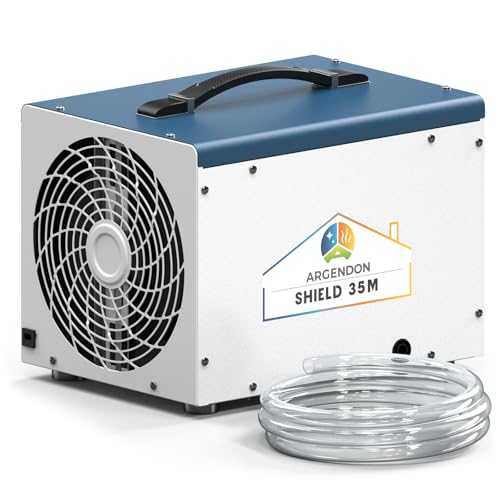
ARGENDON Dehumidifier for Crawlspace and Commercial
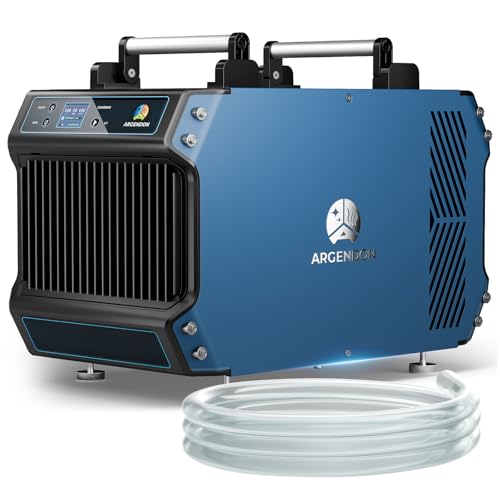
ARGENDON 180 Pints Crawlspace Dehumidifier with Pump

ARGENDON 145 Pint Crawl Spaces Dehumidifier, Guardian 60P
ARGENDON Commercial Dehumidifier for Crawlspace

ARGENDON Crawl Space Dehumidifier with Pump and Drain Hose
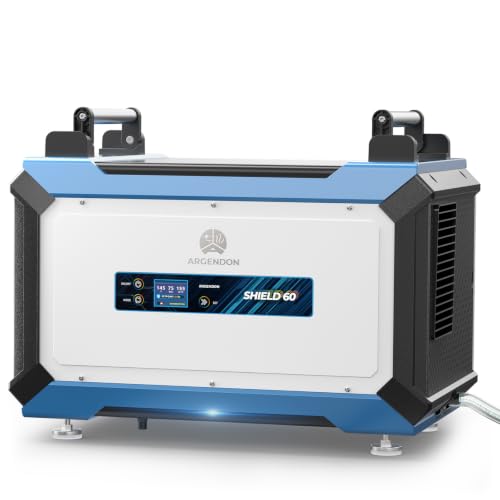
ARGENDON 145 Pint Crawl Space Dehumidifier with Drain Hose
A Breakdown Of The Leading Choices
When a crawl space floods during spring rains or rapid snowmelt, you want a pump that shrugs off silt and keeps cycling. The WAYNE CDU800 delivers 1/2 HP from a cast-iron and stainless-steel body, rated to move up to 5,100 gallons per hour at peak. That capacity matters in tight residential pits where standing water can wick into insulation and wooden framing within hours.
The vertical float switch has been tested to one million cycles, which is the kind of spec that signals long-term reliability rather than a season or two of service. A top-suction inlet design pulls water from above the impeller, reducing the chance of air locks and minimizing clogging from debris on the pit floor. For homeowners replacing an older unit, that anti-clog geometry often translates to fewer trips down the access hatch.
Positive Points
- 5,100 GPH peak handles heavy inflow from storm surges without bogging down
- Cast-iron housing with stainless components resists corrosion in constant submersion
- Top-suction intake cuts down on pit-floor sediment clogging the impeller
- Vertical float tested to a million cycles supports years of unattended operation
- 3-year warranty backs the motor and housing against early failures
Things To Consider
- 1/2 HP draws meaningful current, so a dedicated GFCI-protected circuit is wise
- Cast iron adds weight, which makes lowering it into deep pits a two-person job
- Float switches can snag on pit walls if the basin is narrow or unevenly sized
Key Specs
Who It Suits Best
Homeowners with finished or semi-finished crawl spaces in regions that see seasonal flooding benefit most from this level of capacity and build quality.
Where Another Pick Suits Better
For a tight utility closet pulling condensate from an HVAC system, the Little Giant VCMA-20ULST makes far more sense than a 5,100 GPH workhorse.
Condensate pumps serve a different job than full sump pumps, and the Little Giant VCMA-20ULST leans into that niche. Rated at 80 gallons per hour from a 1/30 HP motor on standard 115V household current, it handles the steady drip produced by high-efficiency furnaces, air handlers, and dehumidifiers that pull moisture out of a crawl space.
Unlike the cast-iron WAYNE CDU800 reviewed above, this unit is built around an ABS tank with a vertical float switch, and the small footprint is what makes it useful. You can tuck it into a utility corner, above a ceiling return, or beside a dehumidifier without reworking the layout. The integrated overflow detection switch adds a useful safety layer when an outlet line clogs or the tank fills faster than expected.
Useful Strengths
- Vertical float design shrinks the tank depth, fitting shallow utility spaces
- Overflow detection switch shuts the system down before a spill occurs
- 20-foot discharge tubing supports flexible routing toward a drain or outside
- 115V plug-in operation avoids hardwiring for most DIY installations
Points To Note
- 80 GPH is fine for condensate but undersized for any standing-water event
- ABS tank can discolor over years of exposure to iron-rich water
- Float switches need occasional cleaning when algae builds up inside the tank
Feature Snapshot
Made For
Homeowners pairing a crawl space dehumidifier with an automatic pump to remove daily condensate without manual emptying.
Not Your Match When
Standing groundwater is the real problem, and the WAYNE CDU800 1/2 HP Submersible Sump Pump will outperform this unit in that role.
Where the first two items handle water that has already collected, an ARGENDON crawlspace dehumidifier attacks the moisture in the air before it settles on joists and insulation. Pulling 70 pints per day with a 115 CFM (cubic feet per minute) air output, it covers spaces up to roughly 1,000 square feet, which fits most residential crawl areas comfortably.
The 5-year limited warranty gives a longer horizon than many dehumidifiers in this category, which matters because crawl space units often run continuously through humid months. Compared to the higher-capacity ARGENDON units covered later, this one is the practical mid-tier choice for homeowners who need dependable humidity control without stepping up to commercial-grade removal rates.
Where It Delivers
- 70-pint daily removal fits standard residential crawl spaces under 1,000 sq ft
- 115 CFM airflow keeps air moving through tight, low-clearance areas
- 5-year limited coverage protects against compressor and sealed-system failures
Trade Offs
- No built-in pump listed, so a gravity drain or external pump may be needed
- Mid-range capacity won’t keep up with severe groundwater intrusion situations
- Coil cleaning is part of routine ownership when running in dusty crawl spaces
Right Fit For
Homeowners in moderately humid climates who want steady moisture control rather than emergency-grade water removal.
Look Elsewhere When
Standing water and heavy seepage demand the WAYNE CDU800 1/2 HP Submersible Sump Pump instead of any dehumidifier-only approach.
For larger crawl spaces and light-commercial environments, capacity separates useful from underwhelming. The ARGENDON 180-pint unit steps up to 180 pints per day at saturation and covers areas up to about 2,300 square feet, which is a meaningful jump over the 70-pint model reviewed above. The integrated pump is the real headline feature: collected water exits through a hose rather than pooling in an internal reservoir.
The ETL listing (a third-party safety certification recognized across North America) signals that the unit has been tested against published electrical and fire-safety standards. For property managers running multiple crawl spaces, that paperwork matters during inspection. Where the Little Giant condensate pump handles drip output, this unit takes ownership of moisture plus drainage in one box.
Practical Advantages
- 180-pint daily removal handles high-humidity crawl spaces and basements
- Built-in condensate pump eliminates daily reservoir emptying
- Coverage up to 2,300 sq ft supports larger floor plans and small commercial layouts
- ETL certification adds credibility during property inspections
Honest Caveats
- Larger capacity draws more power, so electrical capacity is worth checking upfront
- Higher airflow may push unit cost up versus the 70-pint ARGENDON model
- Drain hose routing needs a clear downhill path or a small lift pump
Quick Facts
Whose Shelf It Belongs On
Property managers, builders, and homeowners with very damp crawl spaces who want pump-equipped drainage as part of the package.
A Better Fit Elsewhere
Tight residential budgets and small crawl areas are better served by the ARGENDON Dehumidifier for Crawlspace and Commercial covered earlier.
The Guardian 60P sits in the middle of the ARGENDON lineup, and that middle ground is often the smartest place to land. It removes up to 145 pints per day at saturation and 60 pints per day under standard AHAM conditions (the Association of Home Appliance Manufacturers’ 80°F and 60% relative humidity test), covering areas up to roughly 1,800 square feet.
Energy efficiency is part of the value pitch here: high-efficiency dehumidifiers draw less power than conventional units at comparable removal rates, which lowers the operating cost during long humid seasons. Compared to the 180-pint commercial unit, the Guardian 60P is sized for residential demand without the heavier electrical draw, and it still ships with an integrated pump for automatic drainage.
What Helps Most
- 145-pint saturation removal plus 60-pint AHAM rating suits real-world residential humidity
- Integrated pump pushes collected water out without manual reservoir trips
- Energy-efficient design cuts long-term electrical costs versus older dehumidifiers
Some Limits To Know
- Still larger and heavier than the 70-pint ARGENDON model in tight crawl spaces
- Drain hose placement requires a slight downward slope for reliable flow
- Filter checks become routine when the unit runs continuously through humid months
Best Suited To
Homeowners in humid regions who want commercial-style moisture removal in a residential-sized footprint with pump-driven drainage.
Skip It When
A smaller footprint is the priority and the 70-pint ARGENDON Dehumidifier for Crawlspace and Commercial is the better match.
Built for industrial-grade duty, the ARGENDON Commercial Dehumidifier pulls 145 pints per day at saturation and covers up to 1,800 square feet. The 5-year limited warranty matches the smaller residential model, but the build and componentry target long run-hours in harsher environments than a typical basement corner.
This unit is the right answer when a crawl space also doubles as equipment housing or sits beneath a commercial tenant space. Unlike the Guardian 60P reviewed just above, this model leans toward heavier-duty construction, and that distinction tends to show up after a few humid seasons of continuous duty rather than on day one.
Advantages To Know
- 145-pint daily removal handles industrial moisture loads without falling behind
- 5-year limited warranty covers the compressor and sealed system for long ownership
- 1,800 sq ft coverage supports mixed-use crawl spaces under commercial buildings
Where It May Fall Short
- Commercial-grade pricing typically outpaces the residential ARGENDON models
- Larger chassis may not fit low-clearance residential crawl spaces
- Higher airflow can stir settled dust that collects on the intake filter
The Right Fit
Facility managers and commercial property owners who need sustained humidity control in crawl spaces under offices, warehouses, or mixed-use buildings.
Swap It Out When
A standard residential crawl space under a single-family home is the project, and the Guardian 60P delivers similar pint removal at a friendlier size.
The smallest-capacity entry on this list still earns a spot because it pairs an integrated pump with a compact chassis. Removing 35 pints per day under AHAM conditions and 70 pints per day at saturation, it covers up to 1,000 square feet. For a typical single-zone residential crawl space under a ranch or small two-story, that footprint is plenty.
Where the WAYNE CDU800 tackles standing water, this unit works the air side: pulling humidity down before it condenses on cool surfaces. The included drain hose simplifies routing to a sump, floor drain, or outside exit, and the high-efficiency design lowers energy use compared to older dehumidifier generations.
The Case For It
- Compact body fits tight crawl spaces with limited headroom
- Built-in pump plus included hose streamlines installation
- Energy-efficient operation suits always-on humid-season use
Things To Weigh
- 35-pint AHAM capacity is the lowest in this lineup
- Drain hose routing needs a clear path or a small lift in some basements
Built With In Mind
Homeowners with smaller crawl spaces who want a pump-equipped dehumidifier in a body that actually fits through the access hatch.
Reach For A Different Pick When
Heavy moisture intrusion is the daily reality and the WAYNE CDU800 1/2 HP Submersible Sump Pump is the more capable answer.
The 145-pint capacity here matches the Guardian 60P, but this version is sold as a versatile basement and crawl space unit with a drain hose for gravity-fed drainage. That difference matters in installations where a powered pump is overkill and a continuous downhill drain exists. AHAM-rated at 60 pints per day, the unit covers up to 1,800 square feet, which fits a wide range of residential layouts.
Multi-room reach is the practical selling point: a basement dehumidifier plus a crawl space unit could potentially run off the same model line for consistent parts and filter replacements. Compared to the pump-equipped Guardian 60P, this version trades the internal pump for simpler routing in homes where a gravity drain is already in place.
Standout Benefits
- 145-pint saturation capacity covers up to 1,800 sq ft of basement or crawl space
- Drain hose simplifies installations with an available gravity drain
- Energy-efficient design lowers long-term operating costs
- User-friendly controls make day-to-day adjustments easy without specialized knowledge
Practical Considerations
- Gravity drain requirement rules this out for homes without a floor drain
- Same 145-pint chassis as the Guardian 60P, so access-hatch clearance still matters
Feature Card
Who Should Grab It
Homeowners with a usable floor drain who want strong moisture removal without the maintenance load of a built-in pump.
Consider Something Else When
No gravity drain is available, and the pump-equipped ARGENDON 145 Pint Crawl Spaces Dehumidifier, Guardian 60P handles that scenario better.
Picking The Right Combination For Your Crawl Space
Sump pumps and dehumidifiers solve different halves of the same problem, so the right setup usually pairs one of each. A submersible pump like the WAYNE CDU800 handles incoming water, while an air-side dehumidifier such as the Guardian 60P keeps humidity low enough to prevent mold on wood and insulation. Capacity, headroom, and drainage path drive most of the decision.
Match Pump Capacity To Inflow
Peak flow ratings tell you how fast a pump can empty a flooded pit, but the more practical question is how often the pump will cycle during a storm. Crawl spaces with high water tables or chronic seepage benefit from pumps rated above 4,000 GPH, while drier climates can usually get by with smaller units. The 1/2 HP motor in the WAYNE CDU800 sits in a comfortable middle range for residential use.
Size Dehumidifiers To Square Footage
Manufacturers rate dehumidifier coverage in square feet, but humidity load matters more than raw floor area. A vented crawl space in a humid coastal climate pushes a 70-pint unit harder than a sealed and insulated crawl space in a drier inland region. For tight residential projects, the 70-pint ARGENDON Dehumidifier for Crawlspace and Commercial covers up to 1,000 square feet comfortably.
Decide Between Pump-Equipped And Gravity Drain
Integrated pumps push water uphill or over longer distances, which suits crawl spaces where the nearest drain sits higher than the unit. Gravity drain hoses rely on a continuous downward slope, which is simpler but only works where the layout allows it. The ARGENDON 145 Pint Crawl Space Dehumidifier with Drain Hose fits the second case, while the Guardian 60P fits the first.
Plan For Power And Access
Submersible pumps and high-capacity dehumidifiers draw meaningful current, so a dedicated GFCI-protected outlet (a ground-fault circuit interrupter that cuts power quickly if moisture contacts the wiring) is worth confirming before installation. Crawl space access hatches also limit which chassis sizes fit without disassembling framing, and the 70-pint compact ARGENDON models are easier to maneuver than the 180-pint commercial units.
Practical Details That Shape Ownership
Common Shopping Slip Ups
The most common error is treating a dehumidifier as a replacement for a sump pump, or vice versa. Air-side units manage humidity but cannot remove standing water. Conversely, a sump pump cycling endlessly in a sealed crawl space without dehumidification still leaves moisture in the air that condenses on cool ductwork. Verifying crawl space dimensions, drainage slope, and electrical capacity before ordering prevents the frustrating return trip.
What Separates Premium From Basic
Higher-tier models in this category add integrated pumps, larger coils, longer warranties, and commercial-grade sealed systems. The ARGENDON commercial units and the Guardian 60P fall into that bracket, while the 70-pint residential model is the budget-conscious entry point. Spending up makes sense when the crawl space runs hot and humid for six months a year, since the compressor does most of the work and quality components handle the run-hours better.
Frequently Asked Questions
Do I really need both a sump pump and a dehumidifier?
Crawl spaces with any water intrusion benefit from both. The pump removes standing water after storms or seepage, and the dehumidifier keeps ambient humidity low enough to prevent mold growth and wood rot between pump cycles.
How many pints per day do I actually need?
Roughly 70 pints covers standard residential crawl spaces under 1,000 square feet. Larger spaces, sealed encapsulation projects, or humid coastal climates usually push that up to 145 or 180 pints.
Can a condensate pump replace a submersible sump pump?
No. Condensate pumps like the Little Giant VCMA-20ULST move small steady trickles from HVAC drains and dehumidifiers. Submersible sump pumps handle the much higher flow rates needed during a flood.
What is GFCI protection and why does it matter?
GFCI stands for ground-fault circuit interrupter, a type of outlet that shuts off power instantly when current leaks through water or a person. Sump pumps and dehumidifiers in crawl spaces should plug into GFCI outlets because moisture is always present.
How often should the dehumidifier filter be cleaned?
A monthly check is a reasonable starting cadence during humid months. Dusty crawl spaces or continuous-run operation may need more frequent cleaning to keep airflow at the rated level.
Closing Remarks
A dry crawl space starts with matching the equipment to the water source. A cast-iron submersible pump handles the inflow side, and a properly sized dehumidifier keeps the air dry once the water is gone. Start by measuring the space, confirming your drainage path, and matching capacity to your climate rather than your floor size alone.