When the grid blinks off and your fridge full of food starts warming up, the right portable power setup changes everything from stressful to manageable. Homeowners prepping for hurricane season, remote workers tired of frozen Zoom calls, and RV travelers wanting off-grid comfort all land on the same shelf: solar generators for home backup, paired with panels and a wall outlet. Capacity, output, and how fast the unit refills matter more than raw specs, and the difference between a 768Wh weekend unit and a 12kWh whole-home stack is enormous.
Check on AmazonA Side-By-Side Look
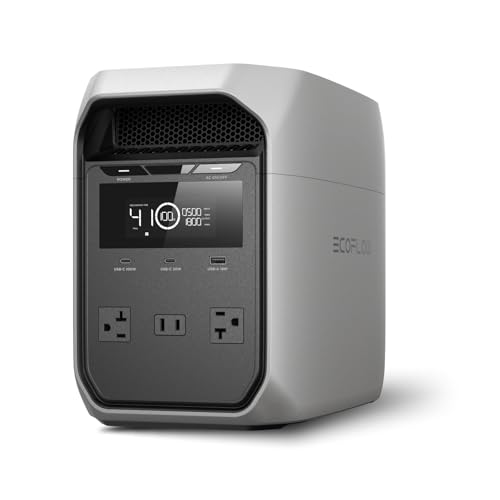
EF ECOFLOW Delta 3 Classic 1024Wh Power Station

Honda EU2200i Companion Inverter Generator

EF ECOFLOW DELTA Pro 3 4096Wh Power Station

EF ECOFLOW RIVER 2 Pro 768Wh Power Station

EF ECOFLOW DELTA 3 Ultra Plus 3072Wh Power Station

EF ECOFLOW Delta 3 Ultra 3072Wh Power Station

EF ECOFLOW DELTA Pro 3600Wh Power Station

EF ECOFLOW DELTA 2 Max 2048Wh LiFePO4 Station

EF ECOFLOW DELTA Pro Ultra 12kWh Power Station
Why These Options Stand Out
The EF ECOFLOW Delta 3 Classic sits in the sweet spot for a first-time owner: a 1024Wh lithium iron phosphate (LiFePO4) battery paired with 1800W of AC output, surge-rated higher for short bursts when a fridge or microwave kicks on. For homeowners who mostly want to ride out a few-hour outage without firing up the gas can, the unit handles kitchen essentials and home office gear without breaking a sweat.
Where it pulls ahead of older ECOFLOW designs is the charging speed: AC input pushes the battery from empty to 80% in roughly 45 minutes, which matters when the grid is flickering back and forth. Setup is also painless, with a clean front-panel layout and a familiar app for monitoring draw in watts. For most urban households, that combination covers the common outage scenarios without overpaying for capacity you won’t touch.
The Upside
- 1800W continuous output handles a mid-size fridge plus a laptop and a lamp at the same time.
- LiFePO4 chemistry means the battery stays useful for thousands of charge cycles, useful if you top off weekly.
- Rapid AC refill (around 45 minutes to 80%) reduces the stress of unpredictable blackouts.
- X-Boost mode temporarily raises the threshold for higher-draw appliances you might forget about.
- Compact footprint for the capacity class, easier to stash in a closet or under a desk.
Honest Caveats
- 1024Wh drains fast on a full-size fridge; budget for extra batteries if your outages run overnight.
- Solar charging depends on having panels matched to the unit’s input spec, sold separately in most setups.
- Fan noise ramps up under sustained heavy load, noticeable in a quiet bedroom.
Whose Shelf It Belongs On
Homeowners in outage-prone suburbs who want a grab-and-go backup for a fridge, router, and phones during a same-day blackout.
A Better Fit Elsewhere
RVers needing parallel-friendly 30A outlets will get more from the Honda EU2200i Companion, especially for longer off-grid trips.
Honda’s EU2200i Companion is the only fuel-burning unit in the roundup, included because some homeowners specifically want a gas-powered workhorse that doesn’t depend on sunshine. The 2200W inverter output is clean enough for sensitive electronics, and the built-in 30A outlet is a real convenience for RV owners who want a parallel-friendly setup.
What makes this generator genuinely pleasant to live with is the noise profile: rated at 48 to 57 dB(A), which lands closer to a conversation than a lawn mower. Compared to the silent-but-battery-bound Delta 3 Classic, this unit trades zero emissions for unlimited runtime as long as fuel is on hand. For jobsite use, camping with high-draw tools, or backup at a cabin without solar exposure, that tradeoff is worth it.
Key Advantages
- 30A twist-lock outlet supports RV hookups and easy parallel operation with a second unit.
- Inverter technology produces stable sine wave power safe for laptops and medical-style electronics.
- Fuel-based runtime extends to many hours on a single tank, no solar exposure needed.
- Honda’s reputation for reliability shows in the simple recoil start and durable frame.
Points To Keep In Mind
- Gasoline storage, oil changes, and seasonal carburetor draining add routine maintenance a battery station avoids.
- Cannot be operated indoors due to carbon monoxide risk.
- Heavier and louder than any battery station on this list.
Who Should Grab It
RVers, food truck operators, and rural homeowners with shaded yards who need sustained high output without solar.
Reach For A Different Pick When
Apartment dwellers wanting silent indoor backup will be happier with the ECOFLOW Delta 3 Ultra, which stays in the room with you.
The EF ECOFLOW DELTA Pro 3 jumps two product tiers above the Delta 3 Classic: a 4096Wh LiFePO4 cell stack with 4000W of continuous AC output and a 120V/240V split-phase capability for heavier home circuits. Where the Classic keeps the lights on, the Pro 3 runs a sump pump, a window AC, and a kitchen circuit together without flinching. It also accepts extra battery packs and even smart generator hybrids, which turns a single purchase into a long-term power architecture.
For households in regions with multi-day outages, that expandability is the headline feature. Compare that to the Delta 3 Ultra’s 3072Wh, which is generous but caps out faster on continuous heavy loads. The honest read is that the Pro 3 is overkill for a one-bedroom apartment and a near-perfect match for a four-bedroom home that wants to keep a full-size fridge, well pump, and internet gear running through a 48-hour grid failure.
Noteworthy Benefits
- 120V/240V output opens up well pumps, electric ranges, and some dryer circuits.
- 4000W continuous handles three or four heavy appliances running simultaneously.
- Expansion path to tens of kWh with extra batteries, a long-term investment rather than a one-shot purchase.
- LiFePO4 chemistry gives thousands of cycles for households that cycle the unit daily.
Some Limits To Know
- The unit is heavy and stays heavy, so plan a permanent spot near your breaker panel rather than frequent moving.
- Total cost climbs quickly once you add the expansion batteries and inverter accessories.
- Solar input requires a dedicated panel array, a separate investment from the station itself.
Made For
Suburban and rural homeowners who have lived through multi-day outages and want serious headroom for well pumps or central AC circuits.
Skip It When
Urban dwellers in small apartments will save money and space with the ECOFLOW DELTA 2 Max, which covers daily cycling without the 240V premium.
The EF ECOFLOW RIVER 2 Pro is the lightest full-feature station in the lineup, weighing in at a fraction of the larger DELTA units. At 768Wh with 800W of output, it covers a laptop, a phone, a camera battery bank, and a small cooler for a full day off-grid. For campers, remote workers who bounce between cafes and couches, or anyone needing a clean emergency kit, the RIVER 2 Pro hits a sweet spot on portability.
Compared to the Delta 3 Classic, you trade raw output and capacity for a unit you can carry one-handed to a picnic table. The trade-off shows up the moment you try to run a microwave or hair dryer; the RIVER 2 Pro is built for slow sippers of watts, not surge-heavy loads. For tent campers and balcony solar setups, that focus is exactly the point.
What It Does Well
- Sub-8kg carry weight makes it the easiest full-feature station to transport by hand.
- Full recharge in roughly 70 minutes from a wall outlet, fast for the capacity.
- 11 ports cover everything from USB-C laptops to AC appliances in a single brick.
- LiFePO4 battery chemistry gives long cycle life despite the smaller footprint.
Practical Considerations
- 800W output won’t run a kettle or most microwaves, which limits kitchen use.
- 768Wh drains overnight if you try to run a CPAP machine plus phone charging.
The Right Fit
Campers, van-lifers, and remote workers who prioritize weight savings over high-watt kitchen appliances.
Look Elsewhere When
Homeowners wanting fridge-and-stove backup during a power outage should size up to the EF ECOFLOW DELTA 2 Max, which handles the heavier loads.
The EF ECOFLOW DELTA 3 Ultra Plus keeps the same 3072Wh base capacity as the Delta 3 Ultra but layers in a more aggressive expansion path, scaling up to roughly 11kWh with extra battery packs. The 3600W continuous output covers a fridge, a window AC, and a microwave running on a typical evening rotation. For homeowners who want one unit today and room to grow tomorrow, this Plus variant sits at a useful middle ground.
What separates it from the original DELTA Pro 3 is the price-versus-capacity curve: most households don’t need 240V split-phase power, and the 3600W output is plenty for standard 120V appliances. Compared to the Honda EU2200i, you give up unlimited runtime for silent indoor operation and the freedom to stack batteries as needs change.
A Few Strong Suits
- Expandable from 3kWh to 11kWh, future-proof for households expecting more draw.
- 3600W continuous output supports most 120V home appliances simultaneously.
- X-Quiet technology keeps noise low enough to live next to during a dinner.
- Surge capacity up to 7200W handles motor-start loads like well pumps and fridges.
Worth Bearing In Mind
- Extra batteries cost separately and add floor weight to your setup.
- Solar input requires a robust panel array to refill the larger bank in a useful timeframe.
Best Suited To
Growing families who want a future-proof home backup they can expand as their power needs climb.
Not Your Match When
Single-person households in small apartments will find the ECOFLOW RIVER 2 Pro more practical and easier to store.
The EF ECOFLOW Delta 3 Ultra trades the Plus model’s expansion path for a tighter focus on quiet operation. With 3072Wh of capacity and 3600W of continuous AC output, it’s the same power class as the Ultra Plus but emphasizes low-decibel performance, claimed at around 25 dB under lighter loads. For light sleepers and apartments where a noisy fan is a deal-breaker, that detail is meaningful.
Compare it to the Honda EU2200i and the difference is night and day: this unit lives in the same room as your bed without complaint. Against the Delta 3 Classic, you get more than triple the capacity at the cost of bulk and price. For homeowners in apartments or condos with shared walls, the quiet operation often justifies the upgrade on its own.
Notable Gains
- Whisper-quiet operation around 25 dB under low to moderate loads, livable next to a bed.
- 3600W continuous output handles kitchen and home office loads with room to spare.
- 7200W surge supports motor-start appliances like refrigerators.
- Silent backup option for indoor use, no fuel or fumes to worry about.
Where It May Fall Short
- Heavier and bulkier than the smaller Delta 3 Classic, less grab-and-go friendly.
- Quieter operation under heavy loads shortens once you max out the inverter.
Perfect Match For
Apartment owners and condo dwellers in shared buildings who need indoor backup without disturbing neighbors.
Swap It Out When
Homeowners needing whole-home expansion will prefer the EF ECOFLOW DELTA Pro 3 for its higher 4000W output and 240V support.
The original EF ECOFLOW DELTA Pro is the unit that established the 3600Wh class, pairing 3600W AC output with a LiFePO4 battery and a deep accessory ecosystem. Where newer Delta 3 models add incremental refinements, the DELTA Pro remains a workhorse for whole-home backup and RV trips alike. Expansion is generous, scaling from 3.6kWh up to 25kWh with extra batteries and Smart Generator hybrids.
For homeowners who want a proven design and a wide range of compatible add-ons, this station still earns its place. The trade-off shows up in raw charging speed and noise profile, both slightly behind the Delta 3 Ultra Plus. In our view, the original DELTA Pro is the safer choice if you value a long track record over the newest specs.
The Value In It
- 3600W continuous AC output, expandable up to 4500W with the right configuration.
- Massive expansion ceiling up to 25kWh for whole-home resilience.
- Wide accessory ecosystem including solar panels, extra batteries, and Smart Generator add-ons.
- LiFePO4 chemistry supports long daily cycles for solar households.
Things To Weigh Up
- Charging speeds trail the newer Delta 3 series.
- Heavier than the Delta 3 Ultra, less portable despite similar capacity.
Built With In Mind
Established homeowners and off-grid enthusiasts who value a mature ecosystem and proven reliability over bleeding-edge specs.
Where Another Pick Suits Better
You might prefer the Honda EU2200i Companion if you need unlimited fuel-based runtime for outdoor projects instead of indoor battery backup.
The EF ECOFLOW DELTA 2 Max sits at the heart of the lineup: 2048Wh of LiFePO4 storage and 2400W of AC output, sized for daily cycling rather than emergency-only use. Solar households running a partial off-grid setup, or homeowners topping off overnight with cheap off-peak rates, get the most from this unit. The charging specs are particularly notable when paired with solar: up to 1000W of solar input combined with AC for fast refills.
What sets this unit apart is the LiFePO4 cycle rating, advertised at around 3000 cycles to 80% capacity. For a household that cycles daily, that chemistry choice pays off in years of useful life. Compared to the Delta 3 Classic, the DELTA 2 Max offers more capacity and a higher continuous output but loses the latest-generation X-Boost refinements.
What Stands Out
- 80% charge in roughly 43 minutes when combining AC and solar input.
- 3000-cycle LiFePO4 chemistry, well above the industry average for daily cycling.
- 2400W continuous output supports most kitchen and home office appliances.
- Expansion path via extra batteries for growing household needs.
Less Ideal Details
- Solar input topping out at 1000W means a sizeable panel array is needed to use that speed fully.
- Slightly dated interface compared to the Delta 3 series.
Who Will Love This
Daily-cycling solar households and frequent travelers wanting a unit that pays for itself over years of regular use.
Where A Sibling Pick Shines
Quiet-focused households will appreciate the ECOFLOW Delta 3 Ultra for its lower-decibel operation under typical loads.
The EF ECOFLOW DELTA Pro Ultra is the top of the lineup, an inverter-plus-battery combo that ships at roughly 12kWh of capacity and 7200W of output from a single inverter unit. For homeowners treating backup power as a long-term infrastructure investment rather than a gadget, this station sits in a different category altogether. It’s also the only unit in the roundup designed to triple its inverter output to 21.6kW for estate-level coverage.
The trade-off is total cost and physical footprint. Compared to the Delta Pro 3, you pay a steep premium for the higher output ceiling and larger base battery. For a one-bedroom apartment dweller, the unit is overkill; for a homeowner in a wildfire-prone region who has watched the grid fail for a week, the price is a rounding error against the cost of spoiled food and displacement.
Real Benefits
- 7200W output per inverter runs a 3-ton central AC or similar heavy appliance.
- Triple-inverter expansion pushes output to 21.6kW, the highest in this roundup.
- 12kWh base capacity covers multi-day outages for typical households.
- 120V/240V support covers nearly any residential circuit without rewiring.
Honest Trade Offs
- Higher cost than every other unit in the roundup, requires serious commitment.
- Physical size demands a dedicated equipment space near the main breaker panel.
Best Suited To
Estate owners and homeowners in regions with prolonged outages who view backup power as core infrastructure.
Another Choice May Suit
Most households will be better served by the EF ECOFLOW DELTA 3 Ultra Plus, which delivers solid 120V coverage without the premium price.
What To Weigh Before Choosing A Solar Generator For Home
Match Capacity To Your Real Draw
The single biggest decision is matching capacity (measured in watt-hours, or Wh) to what you actually want to keep running. A fridge pulls around 100 to 200W running but spikes higher on compressor start; a window AC needs 500 to 1500W; a router and laptop together draw under 100W. Add up the watt-hours you need over a 24-hour period, then double it for safety. Underbuy and you run out of juice at 3 a.m.; overbuy and you carry extra weight you never use.
Output Wattage Sets The Ceiling
Output (measured in watts, or W) is the second number to watch. Continuous output is what the unit can deliver indefinitely; surge output is the brief spike for motor-starting appliances. A 1800W unit covers most household essentials. If you want to run an electric kettle or a 1500W space heater, look for 3000W or higher. Mismatched output is the most common reason new owners end up disappointed.
Charging Speed And Solar Compatibility
Fast AC charging matters when the grid is flickering back briefly. Solar input matters when you want true off-grid independence. Look for units that accept at least 400W of panel input for meaningful daytime refills; the top units handle 1000W or more. Note that solar panels are sold separately in most configurations.
Battery Chemistry And Long-Term Cost
Most modern stations use LiFePO4 (lithium iron phosphate), which lasts thousands of cycles versus the few hundred of older lithium chemistries. For households that cycle daily, the chemistry choice affects how many years of use you get before noticeable capacity loss. It also affects weight, safety, and cold-weather performance, so check the spec sheet for your climate.
Traps First Timers Fall Into And When Paying More Pays Off
Pitfalls Shoppers Hit
The most common mistake is shopping by battery size alone and ignoring output limits. A 5000Wh unit with only 1000W output cannot run a microwave, no matter how big the tank. The second is forgetting solar panels are sold separately, then being surprised at the total cost. Third is undercounting overnight draw, especially for medical-style equipment like CPAP units that run 6 to 8 hours per night. Always build a load list before picking a capacity class.
What Separates Premium From Basic
Higher-tier stations like the DELTA Pro 3 and DELTA Pro Ultra add 120V/240V split-phase output, much larger surge capacity, and ecosystem maturity for serious expansion. For a small apartment, that overhead is wasted; for a homeowner in a fire or hurricane corridor, it can be the difference between a working week and a forced evacuation. The upgrade earns its price when you genuinely need the extra headroom, not as a hedge against hypothetical outages.
Frequently Asked Questions
How long can a solar generator power a refrigerator?
Most full-size fridges draw 1 to 2 kWh per day, so a 2kWh station covers roughly a day, while a 4kWh station doubles that. Cycling the compressor and ambient temperature both affect real-world runtime.
Can I run central air on a solar generator?
Only the largest units with 240V split-phase output and at least 4000W continuous, like the DELTA Pro 3 or DELTA Pro Ultra, can realistically handle central AC. Smaller window units are a more practical target for mid-size stations.
Do solar panels come with solar generators?
Most portable power stations are sold without panels, so you add them separately. Look for panel wattage that matches the unit’s solar input spec, often 400W to 1000W for meaningful refills.
How fast can a solar generator recharge?
AC wall charging is fastest, often 1 to 1.5 hours for an 80% top-up on mid-size units. Solar charging depends on panel wattage, sunlight, and angle, and typically runs 4 to 10 hours for a full refill.
Is a solar generator quieter than a gas generator?
Yes, by a wide margin. Battery stations run fans under load but stay under 30 to 45 dB in most cases. Gas generators like the Honda EU2200i are designed for low noise but still produce 48 to 57 dB under typical loads, and cannot be used indoors.
Closing Remarks
The right solar generator for home backup comes down to honest sizing, not headline-grabbing watt-hour counts. For most households, a mid-size unit like the ECOFLOW DELTA 2 Max or Delta 3 Ultra Plus covers the realistic outage scenario, while the larger Pro series suits households with serious multi-day concerns. Start with a load list, then match capacity and output to that list, and the right choice becomes much clearer.