

A package on the porch, a dog walker showing up after dark, the side gate nobody remembers to lock. The right outdoor or indoor camera setup changes how confidently you handle those moments. This lineup sorts nine current picks by what actually matters: image quality, install effort, subscription pressure, and how each one fits a specific home layout.
The Main Contenders
JCMNETE Light Bulb Security Camera, 5G&2.4GHz WiFi Lightbulb Camera

REOLINK 4 pcs PoE Outdoor Home Security Cameras Bundle, 5MP Surveillance

Blink Outdoor 4 (4th Gen) + Blink Mini Smart Security Camera System

Wlofoisz Dome Security Camera, 2.4/5GHz Smart Indoor Baby/Pet Cam

SOIADV Window Cameras for Home Security 4Pack, 2.5K Color Night Vision
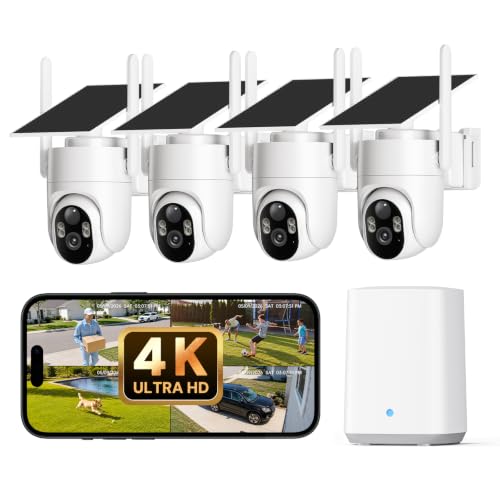
ELYSOO 4K Solar Security Cameras Wireless Outdoor Home System, 4-Cam Kit

aosu D1 Max, 4-Cam Kit, 4K Solar Security Cameras System Wireless Outdoor

aosu 2K Solar Security Cameras Wireless Outdoor System, 4-Cam-Kit
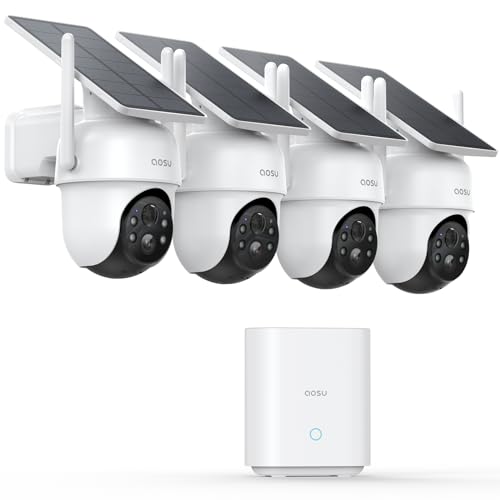
aosu D1 Classic 4-Cam Kit, Security Cameras Wireless Outdoor, Solar Powered
What Each Pick Brings To The Table
Screw-in cameras solve a problem most outdoor setups face: you want eyes on a porch or garage but you do not want to drill holes, run cables, or deal with landlords. The JCMNETE unit drops into any standard E26 or E27 socket (the everyday household bulb base) and starts streaming over your existing WiFi in minutes. It pairs with both 2.4GHz and 5GHz networks (the two common home WiFi frequency bands), which matters because 5GHz travels faster over short distances while 2.4GHz punches through walls better.
The dual-band support is unusually flexible for this category, and the bulb form factor means a porch light fixture becomes a covert viewing angle. For renters, this is one of the few ways to add real coverage without modifying the property. Compare that to the wired Reolink bundle coming up next, which trades stealth for permanent installation.
The Upside
- Dual-band WiFi compatibility keeps the connection stable in houses with crowded networks.
- Standard E26/E27 socket means zero tools and no electrician required for most fixtures.
- 1000-lumen output covers a normal entryway while the camera streams, so you get lighting and surveillance in one body.
- Smart AI motion detection filters out swaying branches better than older passive sensors.
Points To Keep In Mind
- You depend on a working light socket for power, so a switch left off kills the camera too.
- The bulb shape limits aim, and finding the right viewing angle inside a deep fixture can be finicky.
- Glass globes and enclosed fixtures can trap heat around the camera electronics over time.
Who It Suits Best
Apartment dwellers and short-term renters who need front-door coverage without mounting hardware.
Where Another Pick Suits Better
Homeowners wanting a dedicated, weather-sealed outdoor camera will get more reliable results from the ELYSOO 4K Solar kit.
PoE (Power over Ethernet) cameras run video and electricity through a single Ethernet cable, which removes two headaches at once: no power adapters near each camera, and no WiFi dropouts when your router gets busy. This four-camera Reolink bundle uses 5MP sensors that hold detail better than the usual 1080p baseline, with onboard detection that distinguishes people from vehicles and pets. Night vision reaches roughly 100 feet in pure darkness using infrared LEDs (small built-in lights invisible to the human eye that illuminate the scene for the sensor).
The trade-off shows up on day one. You need a PoE switch or NVR (network video recorder, a dedicated box that stores footage from multiple cameras), a drill, and some patience routing cables through walls or attic. For new builds or homeowners comfortable with low-voltage work, this kit rewards the effort with rock-solid 24/7 coverage. It is the most permanent option in the lineup.
Features That Help
- Single-cable PoE cuts clutter at each camera and keeps power delivery consistent.
- 5MP resolution gives you usable zoom for license plates at driveway range.
- SD card support up to 512GB stores footage locally without monthly fees.
- Time-lapse recording adds a creative use case beyond pure security.
Trade-Offs To Consider
- Installation is more involved than any wireless option here, and routing cable through finished walls is a job many homeowners hire out.
- The system requires an NVR or compatible Reolink recorder for full multi-camera management.
Feature Snapshot
Made For
Homeowners planning a permanent whole-property system who can run Ethernet and want zero subscription fees.
Consider Something Else When
Renters and short-term residents should pick the JCMNETE bulb camera to avoid any wiring work.
Blink built its reputation on batteries that last, not on resolution bragging rights. The Outdoor 4 runs on AA lithium cells for roughly two years per set, which removes the ladder climb from your maintenance calendar. Pair it with the wired Blink Mini indoor camera and you get front door, backyard, and living room coverage from a single app. The optional Pan-Tilt mount (a motorized base that rotates the Mini side to side) lets one indoor camera sweep a full room corner to corner.
You will live inside the Blink app, and the Alexa integration is unusually deep for this category: voice commands to arm, disarm, and pull up a live feed work smoothly. For shoppers already running an Echo Show or Echo Dot, this kit ties together with almost no extra setup. The compromise is cloud storage, which requires a Blink subscription for full clip history after the trial period.
What Helps Most
- Battery life measured in years, not weeks, means very few trips up the ladder.
- The five-camera count covers a typical home’s main points in one purchase.
- Two-way audio through the app lets you talk to delivery drivers or shoo a pet off the counter.
- Setup is genuinely fast, often under 10 minutes per camera.
Honest Caveats
- Full clip history needs a subscription; without it you only get live view and motion alerts.
- The 1080p resolution is lower than most newer kits on this list.
Feature Card
Right Fit For
Alexa households wanting a mix of wire-free outdoor units and a plug-in indoor camera managed from one app.
Not Your Match When
You prefer local-only storage, in which case the ELYSOO 4K Solar kit or the Reolink PoE bundle keeps footage on your own hardware.
Most indoor cameras point in one direction and leave you blind to the corners. The Wlofoisz dome rotates its lens up to 250 degrees, which essentially lets a single camera cover a wide nursery, open-plan living area, or a long hallway. The wireless charging pad on top doubles as a phone dock, which is a thoughtful touch for nightstand placement. Dual-band WiFi keeps the feed smooth even on congested home networks.
For pet owners and parents, the rotating lens means you do not need a multi-camera setup to keep an eye on a kid’s room or a new puppy. The catch is that it is purely an indoor unit with no weather sealing, so plan to keep it inside. Against the Blink Mini in the previous kit, this Wlofoisz wins on field of view but loses on ecosystem depth.
The Helpful Details
- 250-degree rotating lens covers an entire room from one outlet.
- Built-in wireless charging pad removes a cable from the nightstand.
- Dual-band WiFi avoids the buffering that plagues single-band indoor cams.
- Motion alerts push to the phone app almost instantly.
Worth Noting
- Indoor-only construction rules out any garage or porch placement.
- The rotating mechanism adds a moving part that can wear with heavy daily panning.
Who Should Grab It
Parents and pet owners wanting one camera to watch a large indoor space without buying multiple units.
Look Elsewhere When
Outdoor coverage is your priority, in which case the ELYSOO 4K Solar kit or aosu D1 Max will serve you better.
Window-mounted cameras sound niche until you live somewhere you cannot drill into siding or stucco. The SOIADV pack sticks to the inside of a window pane and looks outward, capturing color night vision at 2.5K resolution. A four-camera bundle covers most windows that face a street or shared courtyard. This format is genuinely useful for apartments, condos, and leased homes where exterior mounting is not an option.
The pre-roll recording feature, which captures a few seconds of footage before motion triggers, helps with the awkward gap where many cameras wake up too late to catch the start of an event. Owners commonly report that glare from indoor lights can affect image quality at night, so positioning away from direct lamp reflections matters.
The Good Stuff
- Adhesive mount avoids any holes in walls or window frames.
- 2.5K resolution outclasses most budget doorbell cams on detail.
- Pre-roll capture keeps the beginning of each event on file.
- Four units in one pack covers most rooms at once.
Some Limits To Know
- Window reflections can wash out footage, especially with curtains or blinds behind the lens.
- Power cable routing inside can be visible and tricky in older windows.
Best Suited To
Apartment residents and leaseholders needing outdoor-facing views without touching the building exterior.
Skip It When
You own your home and want true outdoor-rated units, in which case the aosu 2K Solar system gives you weather-sealed coverage.
Subscription fatigue is real. Cloud storage plans add up faster than most shoppers expect, and several camera brands have raised prices year over year. The ELYSOO kit sidesteps that entirely with a base station that holds a 32GB card (expandable to 256GB) and encodes footage in H.265, a video compression standard that halves file size without losing visible detail. The result is roughly two months of loop recording (where the oldest footage is automatically overwritten by new footage once storage fills up) per camera, all stored locally and encrypted.
Resolution is the headline here: 4K sensors capture enough detail to read a package label across a driveway. The solar panel keeps batteries topped off in most climates, though heavily overcast regions may need the occasional manual charge. Compared to the Reolink PoE bundle, you trade wired reliability for a fully wireless install.
The Practical Payoff
- Local encrypted storage means no monthly fees and no data leaving your home network.
- 4K resolution helps identify faces and license plates at typical driveway distances.
- Solar panels paired with internal batteries keep the cameras running year-round in most climates.
- PTZ (pan-tilt-zoom) movement lets one camera sweep a wide area.
Room For Improvement
- Solar charging depends on panel placement; shaded eaves can shorten battery life noticeably.
- The base station must stay within WiFi range of your router, which dictates install location.
Quick Facts
Built With In Mind
Homeowners who want premium outdoor resolution and full ownership of their footage without recurring fees.
A Better Fit Elsewhere
Renters should pick the SOIADV Window Cameras to avoid permanent exterior mounting.
Detail at distance separates a useful camera from a decoration. The aosu D1 Max shoots in 8MP (around 4K) with 6x digital zoom and claims legible license plate capture from roughly 33 feet. Built-in spotlights deliver full color night vision, while infrared mode gives you discreet black-and-white footage when you want to keep the cameras low-key. On-device AI distinguishes people from vehicles, which trims the false alert count that plagues cheaper setups.
The solar panel design uses a split panel, meaning the panel and camera can be mounted separately for better sun exposure. That detail matters more than it sounds: in real-world installs, the spot with best coverage rarely matches the spot with the most sunlight. Compared to the ELYSOO kit, the D1 Max leans harder on AI-driven notifications.
A Favorable Mix
- 8MP imaging paired with 6x digital zoom keeps distant subjects identifiable.
- Split solar panel design lets you optimize sun exposure independent of the camera angle.
- On-device AI reduces unnecessary phone notifications from passing cars or swaying branches.
- Spotlights plus infrared give you a choice between color and discreet night footage.
Worth Bearing In Mind
- Digital zoom loses clarity fast past 3x, so the 6x figure is best-case marketing.
- Spotlights can attract insects at night, which occasionally triggers motion alerts.
Feature Rundown
Whose Shelf It Belongs On
Owners of larger properties needing clear detail across driveways, gates, and side yards.
Reach For A Different Pick When
Budget matters more than peak resolution, in which case the aosu 2K Solar kit delivers similar coverage at a friendlier price tier.
Not every home needs 4K out of the gate, and the aosu 2K kit leans into the idea that a starter system should grow with you. The four-camera count covers essentials, but the system is designed to accept additional units later without re-buying a hub. The split solar panel gives you the same flexibility the D1 Max offers, letting you angle the panel for sun while pointing the camera at the target.
For shoppers not ready to commit to premium resolution but still wanting wireless solar convenience, this is a sensible middle step. Image quality at 2K remains crisp enough for most home uses, and you avoid paying for resolution you may not use. Think of it as the path between the Blink Outdoor 4 starter kit and the full 4K systems.
Benefits That Matter
- Expandable ecosystem means you can add cameras later as blind spots show up.
- 2K resolution hits a sharp-but-not-excessive sweet spot for general home coverage.
- Split solar panel design reduces install compromises between sun and sight lines.
- Wireless setup means no drilling through exterior walls for cable runs.
Less Ideal Details
- 2K detail falls short of the D1 Max if you need to read plates at long range.
- Adding more cameras later means an extra purchase decision before full coverage.
Perfect Match For
Homeowners starting a multi-camera setup who want flexibility to expand without replacing their first investment.
Swap It Out When
You already know you want top-tier resolution from day one, in which case the aosu D1 Max is the same ecosystem at 4K.
The D1 Classic sits at the entry of the aosu lineup for a reason: it covers the basics well without piling on features most households never use. The aosuBase hub stores footage locally with 32GB built in, and the four cameras run on solar panels that keep the internal batteries topped off through typical seasons. Cross-camera tracking is a notable perk here, letting one camera hand off a moving subject to a second unit so you do not lose a person at the corner of the property.
For most suburban homes with one driveway and a backyard, this kit is genuinely enough. Where the Classic loses to the D1 Max is resolution and zoom reach, so shoppers with long driveways or distant gates may want to step up. As a daily driver for typical coverage, it earns its place as the most balanced solar option.
Everyday Wins
- Cross-camera tracking keeps subjects in frame as they move between camera zones.
- Local storage with 32GB eliminates monthly subscription pressure.
- Solar power keeps maintenance low across typical sun exposure.
- Four-camera count suits most small to mid-size properties.
Practical Considerations
- Resolution is lower than the D1 Max, so distant details are softer.
- The aosuBase hub needs a central location with stable WiFi and power.
Who Will Love This
First-time solar camera shoppers who want a complete kit that handles the basics without overspending.
Another Choice May Suit
Homes needing sharper detail at distance should consider the aosu D1 Max instead, which keeps the same ecosystem at higher resolution.
Matching Smart Security Cameras To The Way You Live
Before picking a camera, think about how it will live in your space, not just what it does on paper. The clearest way to narrow this list is to match three questions to your situation: where the camera will sit, how it will be powered, and where you want the footage to live.
Indoor vs outdoor placement drives your first split. Indoor units like the Wlofoisz dome and Blink Mini focus on room coverage, two-way audio, and quiet operation. Outdoor cameras like the ELYSOO and aosu kits add weather sealing, stronger night vision, and solar or PoE power options. The JCMNETE bulb camera blurs that line for renters who need outdoor views without drilling.
Power source is the next filter. Wired PoE (the Reolink bundle) gives you the most stable connection but demands cable routing. Battery and solar units trade a small amount of reliability for fast, tool-light installs. Plug-in indoor cameras need an outlet but skip battery anxiety entirely.
Storage decides your long-term cost. Cloud-based systems like Blink work well but charge monthly fees after the trial period. Local storage on a base station or microSD card keeps footage on your hardware with no recurring charge. For shoppers tired of subscription creep, the ELYSOO and aosu kits lead that category.
Key Considerations Across These Picks
Common Buying Mistakes Worth Dodging
The most common slip is choosing by resolution alone. A 4K camera mounted in the wrong spot still misses the driveway, while a well-placed 1080p unit captures everything that matters. Walk the property, identify the actual entry points and blind spots, and place cameras where they will catch faces and license plates first.
Another trap is ignoring the subscription math. A camera that costs less up front can cost more over three years once monthly cloud fees stack up. Shoppers who plan to keep footage longer than a week usually save money with local storage options. Conversely, those who want hands-off cloud backup should budget the subscription into the total cost from day one.
Where The Extra Money Actually Goes
Premium tiers in this category buy you three things: better sensors, smarter AI, and stronger build quality. A 4K sensor with larger pixels (the tiny light-capturing dots on the image sensor) produces cleaner night footage and usable digital zoom. Smarter on-device AI reduces the false alert fatigue that pushes people to ignore their cameras after the first month. Better weather sealing and battery management extend the life of the unit across harsh seasons.
Spending up makes sense when your property has long sight lines, varied lighting, or coverage gaps a single camera cannot fill. For a small apartment or a single entry door, mid-tier picks handle the job without the extra outlay.
Frequently Asked Questions
Do Smart Security Cameras Work Without WiFi?
Most need WiFi for live streaming and app alerts, though some record locally to a microSD card and upload later when the network returns. PoE cameras also need a network connection, but it can be a wired Ethernet link rather than WiFi.
How Long Do Solar-Powered Outdoor Cameras Last?
Solar panels paired with internal batteries keep cameras running through typical seasons in most climates. Heavily shaded installs or regions with extended overcast weather may need a manual charge every few weeks.
Can I Use These Cameras Without A Subscription?
Yes, several kits on this list, including the ELYSOO and aosu models, store footage locally on a base station. You give up cloud convenience, but you avoid monthly fees and keep recordings on your own hardware.
Are Indoor And Outdoor Cameras Interchangeable?
Not really. Outdoor cameras carry weather sealing and stronger night vision that indoor units skip. Indoor cameras usually offer quieter operation and friendlier designs but fail quickly when exposed to moisture.
How Many Cameras Does A Typical Home Need?
Most households start with three to four cameras: front door, back door, driveway, and one interior view. Larger properties or homes with side gates often extend to six or more cameras for full coverage.
Bottom Line
The best camera is the one you will actually install and check on. Renters get the most from screw-in or window-mounted options, owners planning a permanent system get the most from wired PoE or premium solar kits, and households wanting flexibility without subscriptions lean toward local storage systems. Pick the format that matches your home, place cameras where they catch faces, and let the kit grow as your needs do.
