

Whether you’re checking on a porch in a new neighborhood, running a small business with inventory worth protecting, or simply tired of missing package deliveries, modern home security has grown past the grainy VHS look of yesterday. Today’s smart security camera systems pair high-resolution sensors with smart motion detection, smartphone alerts, and remote viewing that fits in a busy life. The trick is finding a setup that matches the actual layout of your property without paying for features you’ll never touch.
The Picks In Brief

Ring Floodlight Cam Wired Plus + Doorbell Bundle

REOLINK 8CH 5MP PoE Camera System 2TB

REOLINK 8CH 4K PoE Camera System 2TB
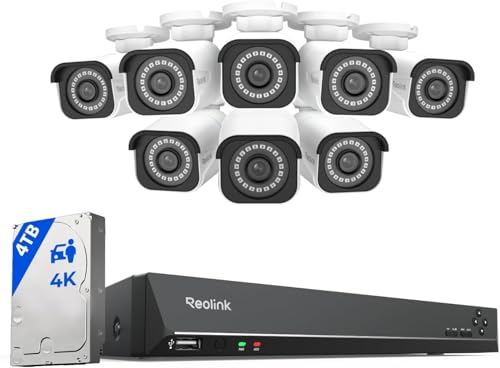
REOLINK 16CH 4K Bullet Camera System 4TB

REOLINK 16CH 4K Dome Camera System 4TB
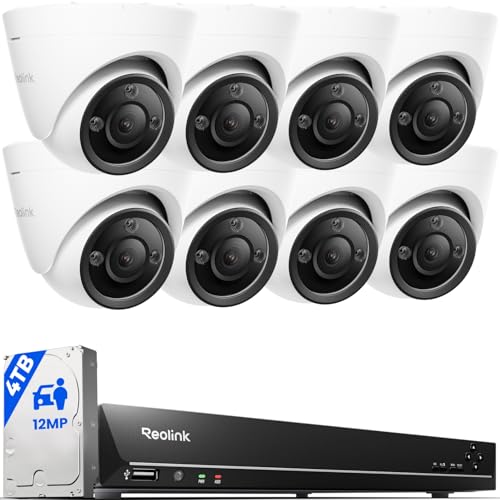
REOLINK 16CH 12MP PoE Camera System 4TB

REOLINK 5MP 8CH Home Camera System 2TB
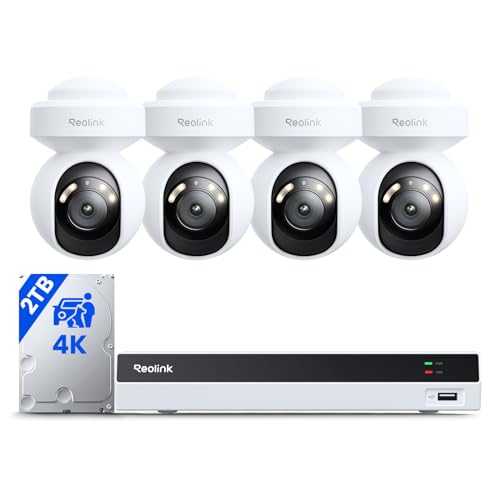
REOLINK 8CH 4K PT Auto-Tracking System
More Details On Our Top Picks
The Ring Floodlight Cam Wired Plus + Doorbell Bundle is the only setup in this roundup built around two distinct entry-point devices working together. The 1080p HD floodlight camera covers a wide outdoor zone with motion-activated LED lighting rated at 2000 lumens, enough to wash a driveway in bright white the second something crosses the beam. The bundled Video Doorbell handles the front stoop, giving you a separate feed for visitors and deliveries without sharing bandwidth with the larger camera.
For most suburban homes, this combination cuts down on blind spots between the front door and the side yard. You’ll get motion-activated alerts through the Ring app, customizable motion zones so a passing car doesn’t trigger a notification, and a tap-to-activate siren that adds an audible layer if needed. The wired design means no battery swaps, though you’ll want existing low-voltage wiring at both mounting points.
What Earns Its Place
- The 2000-lumen floodlight covers large driveways and side yards in one sweep, replacing the need for a separate porch light.
- Customizable motion zones let you focus on the walkway while ignoring the sidewalk, trimming false alerts noticeably.
- Two-device coverage from one app means you check both feeds without juggling accounts or juggling logins.
- The hardwired connection removes the hassle of recharging batteries, a quiet convenience owners appreciate over time.
Things To Consider
- Wired installation requires existing low-voltage wiring or a planned electrical run, which adds setup complexity.
- 1080p resolution looks dated next to the 4K and 12MP options later in this list.
- Some advanced features depend on a Ring subscription plan on top of the hardware.
Best Suited To
Homeowners with existing doorbell wiring who want lighting and video coverage at the front of the house from a recognizable ecosystem.
Look Elsewhere When
Property owners needing multi-zone coverage across a larger lot should consider the REOLINK 16CH 4K Bullet Camera System, which scales to more cameras and wider properties.
REOLINK’s 8-channel 5MP PoE kit is the friendliest entry point into wired home security, and for a small home or workshop it punches above its weight. Each one sends both power and video through a single Ethernet cable, so a single cable per camera removes the need for separate power adapters at every mounting point. You get a 2TB hard drive already installed in the NVR, giving you weeks of continuous recording before the storage starts rewriting itself.
Compared to the Ring bundle above, this is a different category of install. Where Ring leans on Wi-Fi and app-driven alerts, REOLINK leans on a dedicated recorder that keeps recording through router hiccups. For most first-time installers willing to run a few cables through an attic or basement, the trade-off is worth it.
The Good Stuff
- Single-cable PoE (Power over Ethernet) simplifies installs by sending power and data through one run.
- Eight channels leave room to grow; you can add cameras later without swapping the recorder.
- 2TB storage handles continuous recording for small setups without a monthly subscription.
- Smart person and vehicle detection reduces notifications from leaves, shadows, and weather.
Trade Offs
- 5MP resolution is a clear step behind the 4K options further down this list.
- PoE requires an Ethernet run to each camera, which may need a drill and some attic work.
- The included recorder is a black box that needs a dedicated shelf or rack spot.
Feature Snapshot
Made For
DIYers outfitting a small home or workshop for the first time and comfortable routing a few Ethernet cables.
Skip It When
Anyone needing sharper zoom detail should jump to the REOLINK 8CH 4K PoE Camera System 2TB, which doubles the resolution for the same channel count.
Stepping up to 4K on the same 8-channel platform, this REOLINK kit is where most mid-size households land. The 8MP sensor delivers roughly four times the clarity of 1080p, which is the difference between reading a face across the yard and squinting at a blob. Same PoE simplicity, same smart detection, same on-site storage, just a noticeably sharper image when something happens at the edge of the frame.
Compared to the 5MP kit above, the extra resolution pays off in two places. You can crop into recorded footage and still make out details, and digital zoom on live feeds holds up better when something moves quickly. For most homes with a two-to-four-camera install, this is the sweet spot between cost and image quality.
A Few Highlights
- 4K resolution makes recorded footage usable when cropping into specific events.
- Smart person, vehicle, and animal detection filters out weather and shadow triggers.
- PoE installation keeps the wiring simple, one cable per camera.
- The same 8-channel NVR gives room to expand without swapping hardware.
Honest Caveats
- 4K footage fills the 2TB drive faster than lower-resolution streams, so retention drops.
- You’ll want a 4K-capable monitor to actually appreciate the image at full clarity.
- Each 4K camera generates more network traffic, which can bottleneck on older switches.
Who It Suits Best
Mid-size homeowners who want sharper footage without jumping to 16 channels or specialty cameras.
Consider Something Else When
Installations needing even more detail per frame should consider the REOLINK 16CH 12MP PoE Security Camera System, which pushes resolution further.
When the property stretches beyond a single home, this 16-channel 4K bullet system is built to keep up. Sixteen channels means coverage for larger homes, multi-building lots, and small commercial spaces, all on one recorder. The 4TB hard drive doubles the storage of the 8-channel kits, which matters once you fill the system with high-resolution streams from a full install.
Bullet cameras work well at outdoor perimeter points where you want a clear sightline and a visible deterrent. Where the Ring bundle above covers a front porch and a floodlight zone, this kit covers side yards, gates, outbuildings, and parking areas simultaneously. For most properties over half an acre, sixteen channels leaves a sensible buffer for future expansion.
A Few Strong Suits
- 16 channels support full-perimeter installs on larger properties and small commercial spaces.
- 4TB storage handles 4K streams across more cameras without a monthly subscription.
- Bullet form factor projects a visible deterrent at fence lines and gate posts.
- PoE installation keeps each camera on a single cable run back to the NVR.
Points To Note
- Sixteen PoE ports and sixteen cable runs take real planning during install.
- Bullet cameras are more visible than domes, which may or may not suit your aesthetic.
- A 4K stream from sixteen cameras at once demands a robust network switch on the back end.
Spec Overview
Right Fit For
Owners of larger properties, small businesses, and multi-building lots who need full-perimeter coverage from a single recorder.
Swap It Out When
Installations where ceiling-mounted or less visible cameras are preferred should consider the REOLINK 16CH 4K Dome Camera System instead.
The dome version of the 16-channel 4K kit swaps the bullet form factor for a ceiling-friendly shell. Where the bullet kit works best along fence lines, this one is built for overhangs, soffits, and indoor ceilings where the lens direction is harder to read at a glance. The 8MP sensor is identical to the bullet kit, so image quality stays consistent across the lineup.
For most retail spaces, lobbies, and covered patios, the dome shape is the more practical pick. The recessed mounting hides the lens angle, which can discourage tampering because the camera’s exact aim isn’t visible from below. Same 4TB storage, same 16-channel headroom, same PoE simplicity.
Good Reasons To Consider
- Dome housing makes lens direction harder to read, which deters tampering in covered areas.
- Mounting under eaves and overhangs is straightforward with the dome’s low-profile shell.
- Same 16-channel NVR and 4TB storage as the bullet version for matched retention.
- 4K resolution holds up under the wider, lower-mounted fields of view.
Smaller Limits To Know
- Dome covers can pick up glare from certain angles of overhead lighting.
- Less visible deterrent effect than a bullet camera at a fence line.
- Ceiling mounting requires a stable surface, which limits placement in older buildings.
Whose Shelf It Belongs On
Property owners with covered entries, retail spaces, and lobbies who want a less obvious camera shape.
Another Choice May Suit
Installations prioritizing visible perimeter coverage should reach for the REOLINK 16CH 4K Bullet Camera System, which projects a clearer deterrent.
The 12MP upgrade is the resolution jump most shoppers don’t realize exists until they see footage from one. At 12 megapixels, you can zoom into recorded clips and still read small details that disappear on a 4K stream. Compared to the 4K kits above, the difference shows up most when something happens at the far end of a long driveway or across a parking area.
You still get the same 16-channel headroom and 4TB storage as the other 16-channel kits, plus full-color night vision through the built-in spotlight feature. For most people, this is more resolution than a typical home needs, which is exactly why it’s the premium tier rather than the default recommendation.
Notable Gains
- 12MP resolution captures details that 4K clips blur into pixels.
- Full-color night vision through onboard spotlights adds context to nighttime events.
- Same 16-channel NVR keeps the door open for future camera additions.
- Smart person, vehicle, and animal detection reduces notification noise.
A Few Limitations
- 12MP streams fill storage noticeably faster than 4K streams.
- Viewing the full benefit requires a 4K or higher display on the viewing end.
- Higher per-camera cost makes this a meaningful jump from the 8MP kits.
Feature Card
Perfect Match For
Detail-focused property owners who want zoomed-in review to remain useful across long sightlines.
Where Another Pick Suits Better
Smaller homes without long sightlines should consider the REOLINK 8CH 4K PoE Camera System, which delivers sharp footage without the storage demands of 12MP.
The 5MP 8-channel dome kit is the smaller-sibling counterpart to the 5MP bullet kit earlier in this list. Same resolution, same 2TB storage, same smart detection, but in a dome housing that suits indoor ceilings and covered porches. For most apartment dwellers and condo owners, this is the configuration that fits the architecture without forcing visible bullet cameras onto a shared facade.
Compared to the 4K options above, you trade resolution for a more discreet profile and a lighter footprint on your network. Eight channels give you room to expand from a four-camera starter into fuller coverage as your needs grow.
What Stands Out
- Dome housing blends into indoor ceilings and covered porches.
- 5MP resolution is a clear step above 1080p without the storage hit of 4K.
- Smart detection trims the alert fatigue that comes with motion-only setups.
- PoE keeps wiring simple with one cable per camera back to the NVR.
Trade-Offs To Consider
- 5MP looks dated next to the 4K and 12MP kits elsewhere in this list.
- Dome covers can attract dust and spider webs over time, which needs an occasional wipe-down.
- Eight channels means expansion room is more modest than the 16-channel kits.
Who Should Grab It
Apartment and condo owners who want a wired PoE system that won’t clash with a shared building facade.
Reach For A Different Pick When
Anyone needing sharper recorded detail should consider the REOLINK 8CH 4K PoE Camera System, which steps up resolution at the same channel count.
The PT (pan-tilt) system rounds out the list with something the fixed-lens kits can’t do: follow a moving subject. Each camera pans 355 degrees and tilts 50 degrees, and the auto-tracking feature picks up a moving target and follows it through the frame. For most driveways, that turns a single mounted camera into something closer to a watchman at the gate.
Compared to the fixed bullet and dome kits above, the PT cameras cover more area from a single mounting point. You also get 4K resolution, color and IR night vision, and the same smart detection features across the lineup. The trade-off is that PT cameras have moving parts, which adds a small layer of mechanical concern over time.
Noteworthy Benefits
- Auto-tracking follows movement across the frame, reducing the need for multiple fixed cameras.
- Preset points let you jump between key zones with a tap in the app.
- 4K resolution pairs naturally with the moving subject for clearer review footage.
- Color night vision through onboard warm lights adds context after dark.
Points To Note
- Pan-tilt mechanisms add a moving part that may wear faster than fixed-lens housings.
- PT cameras draw more power per unit than fixed bullet or dome cameras.
- Active tracking can occasionally lock onto the wrong target during busy scenes.
Quick Facts
Built With In Mind
Property owners who want one camera to cover a wider area and don’t mind the slightly higher mechanical complexity.
A Better Fit Elsewhere
Anyone needing weatherproof fixed-angle coverage across many simultaneous zones should consider the REOLINK 16CH 4K Bullet Camera System, which scales further with no moving components.
What To Weigh Before Choosing a Smart Security Camera System
Resolution sets the ceiling for how useful your footage will be when you actually need it. 1080p is enough to see that someone is at the door, but 4K and 12MP matter most when you need to read a license plate or zoom into a face at the back of a yard. If your property has long sightlines, the extra resolution pays for itself over time.
Channel count and storage work together. An 8-channel NVR (network video recorder) covers most homes, while a 16-channel unit gives you headroom for outbuildings, gates, and additions. A 2TB drive fills up faster on 4K streams than on 1080p, so the 4TB kits make sense once you commit to higher resolution.
Wired PoE versus Wi-Fi comes down to install tolerance. PoE sends power and video over a single Ethernet cable, which means more reliable recording but a real cabling job. Wi-Fi cameras install in minutes but depend on your wireless network staying healthy through weather and router reboots. For most permanent installs, PoE wins on reliability; for renters, Wi-Fi keeps the install reversible.
Form factor matters more than people expect. Bullet cameras project a visible deterrent at fence lines, while dome cameras disappear into overhangs and indoor ceilings. For shared facades and covered entries, domes are usually the less intrusive choice. PT cameras add tracking but bring moving parts that need occasional attention.
Key Considerations Across These Picks
Pitfalls Shoppers Hit
Undercounting channels is the most common mistake. Most people count the cameras they need today, not the cameras they will want in a year. Buying an 8-channel system when you need twelve means replacing the whole recorder later. Aim for at least 25% headroom beyond your current plan.
Ignoring storage math catches a lot of first-time installers off guard. 4K cameras fill a 2TB drive faster than expected, especially with continuous recording. Either budget for a larger drive upfront or accept that you’ll keep fewer days of footage.
Where The Extra Money Goes
Higher tiers buy resolution, channel headroom, and storage. The jump from 5MP to 4K quadruples the pixel count, and the jump from 4K to 12MP adds another 50%. That extra detail matters most across long sightlines where you need to identify what’s happening, not just confirm that something moved. The 12MP and PT kits in this list are worth the premium for anyone protecting a large property where zoomed-in review is the difference between a useful clip and a wasted one.
Frequently Asked Questions
What resolution do I actually need for a home security camera system?
For most homes, 4K (8MP) hits a strong balance between clarity and storage. 5MP works for short sightlines where zoom review isn’t critical. 12MP pays off across long driveways or wide lots where small details matter.
How many channels should my NVR have?
Pick a recorder with at least 25% more channels than cameras you plan to install today. An 8-channel system covers most small properties, while 16-channel systems support multi-building lots and small commercial spaces.
Do I need PoE or is Wi-Fi fine?
PoE (Power over Ethernet) is more reliable because each camera uses a dedicated wired connection, but it requires running cables. Wi-Fi installs in minutes and suits renters, though it depends on a stable wireless signal at every camera location.
Can I mix bullet, dome, and PT cameras in one system?
Most modern NVRs (network video recorders) accept a mix of camera styles as long as the cameras share the same recording standard. Mixing is a common approach: bullets at fence lines, domes under overhangs, and PT units at gates.
How long does footage stay on the hard drive?
Retention depends on resolution and drive size. A 2TB drive typically holds a few weeks of 4K footage from four cameras, while 12MP streams fill storage faster. Adjusting motion-only recording or upgrading to a larger drive extends retention.
Bottom Line
The right smart security camera system depends on property size, sightline length, and how often you plan to review footage. The Ring bundle suits front-of-home deterrence with minimal cabling, while the REOLINK kits scale from a four-camera starter setup all the way up to sixteen-channel installs on larger lots. Pick the resolution and channel count that match your layout today, then leave yourself room to grow.
