

Voice-controlled lighting changes the feel of a room in seconds. If you own a Google Nest display or have set up Assistant routines, the right bulb turns lights into one of the most useful smart home upgrades you can install this year. This roundup focuses on picks that play nicely with Google Home, fit common fixtures, and won’t lock you into a complicated hub setup unless you actually want one.
The Leading Options At A Glance

Philips Hue Smart 60W A19 LED Bulb 2-Pack

Philips Hue Premium Smart Bulbs 2-Pack

Philips Hue Smart LED A19 Bulb 7.2W

Philips Hue White & Color Ambiance BR30 Bulbs
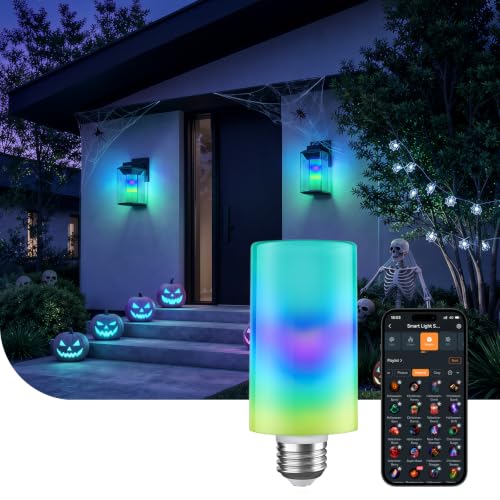
Linkind Smart Light Stick 850lm
Philips Hue Smart 40W B39 Candle Bulb

Philips Hue A19 LED Smart Bulb 3-Pack

Linkind Smart Light Bulbs for Google Home
Taking A Closer Look At The Options
The Hue 2-pack is the friendliest door into the Hue ecosystem, especially if you only plan to run one room to start. Each bulb uses a familiar E26 screw base and outputs around 800 lumens, which roughly matches a standard 60W incandescent. You can pair them straight to Google Assistant over Bluetooth for on-the-spot voice control without buying extra gear.
Owners commonly pair a Hue Bridge later to unlock remote control, automations, and the full color range. The color options here go well past a few novelty tints: deep reds for movie nights, focused whites for work-from-home calls, slow gradients for dinner. The honest read is that the bulbs run fine without the hub, but the app’s best routines only really sing once the bridge is on the network.
A Few Strong Suits
- Works out of the box with Google Assistant using just Bluetooth, which keeps setup fast for first-time users.
- Full color range plus tunable whites means one bulb covers relaxation lighting and productive daytime lighting.
- Standard E26 base fits lamps and ceiling fixtures you already own, so no rewiring or adapter hunt.
- Bridges cleanly to a Hue Bridge later without re-pairing each bulb from scratch.
Things To Consider
- Bluetooth-only control limits range to one room; whole-home voice control needs a Bridge.
- Premium pricing per bulb is noticeable if you plan to fill a large house all at once.
Built With In Mind
Beginners who want a reliable entry point into smart lighting and only need to outfit a single room or two.
Look Elsewhere When
The Philips Hue Premium Smart Bulbs 2-Pack suits you better if you already plan to invest in a Hue Bridge for whole-home routines.
The Premium 2-pack steps in for shoppers who already know they want the long game. Sixteen million colors sounds like marketing fluff until you actually use the Hue app’s scene library: sunrise gradients, fireplace flicker, deep ocean blue. Pair the bulbs with a Hue Bridge and they slide into Google Home routines without missing a beat.
Because these need a hub, they’re really for households planning a larger installation. If you only want one lamp to respond to voice commands, the Bluetooth-only 2-pack at pick 1 makes more sense. For multi-room setups, automations, and away-from-home control, the Premium bulbs are the cleaner path.
What Stands Out
- Hue Bridge integration unlocks remote control from anywhere, which is handy for security-style lighting while traveling.
- Compatible with Alexa, Apple HomeKit, and Google Assistant, so you can mix ecosystems without rebuying bulbs.
- Wide library of community-made scenes gives you creative presets beyond what most competitors ship.
- Stronger Zigbee mesh stability once the hub is online, which helps in larger homes.
Worth Noting
- Hub requirement adds upfront cost and another device on the network shelf.
- Older Bridge generations may need a firmware update before these bulbs connect smoothly.
Key Specs
The Right Fit
Households building out a full smart home with multiple rooms, automations, and away-from-home control.
Swap It Out When
The Linkind Smart Light Bulbs suit you better if you’d rather skip the hub and stay on a Wi-Fi-only setup.
This single A19 bulb punches above its size. CCT (correlated color temperature) is the technical term for how warm or cool a white light looks, and this one stretches from below 2700K on the cozy end up to a crisp 12000K that mimics a midday sky. For home offices or crafting tables, that range is genuinely useful rather than decorative.
You also get ultra-low dimming down to 0.2 percent, which is the kind of detail you only appreciate after a late movie night. Chromasync tech keeps color matching tight across multiple bulbs, so two fixtures on the same scene don’t drift. You may find the single-pack price a touch steep if you only want casual lighting, but the precision is the point.
Standout Benefits
- Extended CCT range supports focus work, reading, and wind-down hours without swapping fixtures.
- Deep dimming floor at 0.2 percent means movie-night lighting without a separate dimmer switch.
- Consistent color matching across synced bulbs avoids the mismatched hue problem common in multi-bulb setups.
- 25,000-hour rated lifespan keeps replacement trips to a minimum.
Trade Offs
- Single-pack quantity means a full-room setup will cost more than a 2- or 3-pack alternative.
- Best features still require a Hue Bridge for full Assistant integration.
Feature Snapshot
Who It Suits Best
Home office users and creators who care about precise white tones and accurate color across multiple bulbs.
Where Another Pick Suits Better
The Philips Hue A19 LED Smart Light Bulb 3-Pack is the better pick if you want to seed a whole room without paying per-bulb premiums.
The BR30 shape is the one you’ll actually need for can lights and recessed ceilings, where a standard A19 looks awkward or sits too deep. Hue extends the same color-and-white feature set to this form factor, which is genuinely useful for living areas with multiple ceiling cans you want to control together.
Setup works the same way as the A19 bulbs: Bluetooth for one-room control, full features with a Bridge. Energy Star certification is a small but real plus if you run several cans for hours each evening. The pack ships as a 2-bulb set, which is enough to test a ceiling before committing to a full retrofit.
Positive Points
- BR30 form factor fits recessed cans where A19 bulbs would sit poorly or stick out.
- Full color and tunable white in the same bulb, so ceiling cans aren’t limited to plain white light.
- Energy Star certified, which helps in rooms where multiple cans run for hours.
- Bluetooth or Zigbee flexibility depending on whether you add a Hue Hub.
Small Caveats
- Older BR30 generation, so newer Hue scene features sometimes land on refreshed SKUs first.
- Only two bulbs per pack, which is short for full-ceiling retrofits in larger rooms.
Quick Facts
Best Suited To
Homeowners with recessed lighting who want full color control in ceilings instead of lamps alone.
Consider Something Else When
The Philips Hue Smart 40W B39 Candle Bulb is the smarter call if your fixtures are chandeliers or candelabra sconces, not ceiling cans.
The stick shape breaks up the usual round-bulb look, and 850 lumens gives it a slight edge in brightness over a standard A19. T19 sizing is uncommon, but the E26 base means it drops into standard sockets. It’s a nice fit for exposed pendant fixtures or anywhere you want the bulb itself to be part of the design.
Linkind runs on 2.4GHz Wi-Fi, which keeps the setup hub-free but ties the bulb to your wireless router’s range. For renters who can’t drill into a Hue Bridge setup, that tradeoff usually feels worth it. You may want to double-check the fixture depth, since the stick shape can crowd small lamp harps.
Everyday Advantages
- Higher lumen output than typical A19 alternatives, helpful in larger living spaces.
- Hub-free Wi-Fi connection keeps the setup simple for renters or single-room users.
- Stick silhouette reads as a design element in exposed-socket fixtures.
- Compatible with Google Assistant routines for hands-free dimming and color changes.
Honest Caveats
- 2.4GHz Wi-Fi only, so 5GHz-only routers need a guest network or band steering to pair reliably.
- Stick dimensions may not fit shallow lamp harps or enclosed globes.
- Not compatible with traditional dimmer switches, which can cause flicker if one stays in the circuit.
Made For
Design-minded shoppers with pendant fixtures who want a slim, decorative bulb that still handles Google Home commands.
A Better Fit Elsewhere
The Philips Hue Smart 60W A19 LED Bulb 2-Pack is the safer call if you need round A19 form factors for table and floor lamps.
Chandeliers and sconces use the smaller E12 candelabra socket, and most smart bulbs ignore that form factor entirely. The B39 candle bulb fills that gap, putting full Hue color and white control into fixtures that previously needed a non-smart bulb. Around 450 lumens, it’s a softer output that suits decorative rather than task lighting.
You still get the same Google Assistant compatibility through Bluetooth or Hue Bridge, plus Matter support once a Bridge sits on the network. For dining rooms where a chandelier anchors the space, this lets you swap dinner-glow tints without leaving the table. Just note the single-pack count adds up quickly across multi-arm fixtures.
Noteworthy Benefits
- E12 candelabra base unlocks smart control in chandeliers, sconces, and small decorative fixtures.
- Full color range brings mood lighting to dining areas that previously used static warm bulbs.
- Matter compatibility via Hue Bridge future-proofs the bulb as the smart home standard shifts.
- Candle shape blends with traditional fixture styles without looking out of place.
Points To Keep In Mind
- Single-pack means multi-arm chandeliers can become expensive quickly.
- Lower lumen output suits ambiance more than bright task work.
Perfect Match For
Dining rooms and entryways with chandelier fixtures where decorative color scenes matter more than raw brightness.
Reach For A Different Pick When
The Philips Hue White & Color Ambiance BR30 Bulbs are the smarter pick for recessed ceilings instead of decorative fixtures.
Three bulbs in one box is the right count for most living rooms, since you’re rarely lighting just one fixture. The 60W A19 form is the most common household shape, and Hue’s color-and-white features carry over cleanly. Adding a Hue Bridge opens up automations and remote control for the whole family.
The per-bulb cost typically lands lower than single or 2-packs, which makes this the practical pick for full-room rollouts. Each bulb pairs individually, so a single failed bulb doesn’t take down the others. For households where parents and kids both want voice control, the wider Assistant compatibility is reassuring.
Points In Its Favor
- Three-pack quantity suits typical living rooms with multiple lamps or a floor lamp plus overhead.
- Lower per-bulb cost makes a whole-room rollout less painful on the budget.
- Standard A19 shape drops into most common lamps without rewiring or adapters.
- Same voice assistant compatibility as the smaller Hue packs, so adding bulbs to existing routines is straightforward.
Soft Spots
- Three bulbs in one pack means one bad unit can sometimes mean a full-pack swap if warranty terms apply.
- Full Assistant routines still lean on a Hue Bridge for the smoothest experience.
Whose Shelf It Belongs On
Families outfitting a living room or shared space where multiple fixtures need to respond to voice commands at once.
Not Your Match When
The Linkind Smart Light Bulbs are a smarter fit if you’d rather skip the hub and stay Wi-Fi-only across the household.
Linkind’s Wi-Fi bulb is the budget entry point that skips a hub entirely. Setup runs through the AiDot app, then links into Google Home for voice control. You trade some of the polish and scene depth that Hue delivers, but for a casual bedroom or home office, the gap is smaller than the price suggests.
The bulbs handle brightness and color changes through voice commands once paired. For renters, dorm rooms, or anyone who wants smart lighting without investing in a Bridge, this is a sensible starting point. You may find advanced routines, like geo-fencing or away-from-home scheduling, more limited than the Hue ecosystem.
Reasons It Performs
- Hub-free setup means no extra device on the shelf and no extra cost beyond the bulbs.
- Direct Google Home integration keeps voice commands responsive without routing through Bridge firmware.
- Lower price point makes it easier to fill a small apartment or starter home in one go.
- Compatible with the AiDot app for users who want a dedicated control surface beyond Assistant.
Some Limits To Know
- Wi-Fi bulbs can crowd a router when many smart devices share the same 2.4GHz band.
- Advanced automations and scene libraries tend to be less developed than Hue’s offering.
Who Should Grab It
Renters and budget-conscious shoppers who want voice-controlled color lighting without committing to a hub setup.
Where A Sibling Pick Shines
The Philips Hue Premium Smart Bulbs 2-Pack is the better long-term pick if you plan to scale up across multiple rooms and want the richest scene library.
Smart Light Bulbs Google Homes: What Actually Matters Before You Pick
Compatibility with Google Assistant is the first filter, and most modern smart bulbs clear it. Beyond that, the choice usually comes down to whether you want to run everything through a hub or stick with Wi-Fi.
Hub-based systems like Hue use Zigbee, a low-power mesh protocol that keeps bulbs talking reliably even when your Wi-Fi is congested. That comes at the cost of an extra device and a slightly longer setup. Hub-free bulbs run straight over your Wi-Fi network, which is simpler but can bog down routers with many devices.
Lumens matter more than watts in LED bulbs: aim for 800+ for general room lighting and 400 to 500 for accent or chandelier use. CCT range, the warm-to-cool white spectrum, matters if you want energizing light for work and softer light for evenings. Color bulbs add flexibility for scenes, parties, and movie nights, but cost more per bulb than plain white versions.
Form factor matters more than people expect. A19 fits standard lamps, BR30 fits recessed cans, and E12 candle shapes fit chandeliers and sconces. Buying the wrong shape is the most common reason smart bulbs end up in a drawer.
Finally, think about routines. If you already use Google Home for thermostats or speakers, make sure the bulbs you pick support voice scenes grouped by room, not just on-and-off commands.
Key Considerations Across These Picks
Where Shoppers Go Wrong
The biggest mistake is buying a bulb without checking the socket type. An E26 bulb simply does not fit an E12 candelabra fixture, and vice versa. Another common slip is assuming every smart bulb needs a hub. Many do not, but the trade-off is Wi-Fi network load and a slightly less responsive mesh.
People also forget to check Wi-Fi band support. Some Wi-Fi smart bulbs only run on 2.4GHz, which can be a problem on routers that have band steering turned off or 5GHz-only networks. Confirming band support before pairing saves a frustrating afternoon.
What The Higher Tier Buys
Stepping up from a basic color bulb to a premium model usually buys three things: deeper dimming ranges, more accurate color matching across multiple bulbs, and a more developed app with richer scenes. For a single bedroom lamp, those features rarely matter. For a multi-room whole-home setup with recessed cans and chandeliers, they become the reason the upgrade pays off.
A hub-based system like Hue also buys remote control from anywhere, which is useful for security-style lighting when traveling. Whether that is worth the upfront cost depends entirely on how many rooms you plan to automate and whether away-from-home control matters to you.
Frequently Asked Questions
Do all smart bulbs work with Google Home?
Most modern smart bulbs support Google Assistant, but compatibility should be confirmed per product. Wi-Fi bulbs typically pair through the bulb’s app first, then link to Google Home. Hub-based bulbs like Hue require the hub to be on the same network before Assistant can find them.
Can I use smart bulbs without a hub?
Yes, several bulbs on this list work without a hub. Wi-Fi bulbs link directly to your router and then to Google Home. Hub-free setups are easier to start, but scaling to many bulbs can strain your Wi-Fi network.
What is the difference between A19 and BR30 bulbs?
A19 is the standard round household bulb shape, fitting most lamps and overhead fixtures. BR30 is a wider, slightly flared shape designed for recessed can lighting. Choosing the wrong shape can mean the bulb sits too high in the fixture or looks awkward.
Do smart bulbs use more electricity than regular LEDs?
No, smart LED bulbs typically use the same or less electricity than non-smart LEDs with comparable brightness. The radios inside draw very little power and remain in standby when the bulb is on.
How long do smart bulbs usually last?
Most quality smart LED bulbs are rated for around 25,000 hours of use, which translates to many years of normal household lighting. Lifespan can shorten if bulbs run in enclosed fixtures without ventilation or at maximum brightness for extended periods.
Wrap Up
The right smart bulb depends on the room, the fixture, and how much you want to tinker. Hub-based systems reward households going all-in, while Wi-Fi bulbs offer a simpler way to start with a single lamp. Match the socket, confirm Google Assistant support, and you’ll have voice-controlled lighting in the time it takes to screw in a bulb.
