

Smart color bulbs change how a room feels. Movie night calls for a dim amber glow, morning routines benefit from crisp daylight tones, and weekend gaming sessions look sharper with deep blues. Choosing the right one means matching your fixture type, your preferred voice assistant, and whether you want a hub or a hub-free setup. This guide breaks down eight solid color-capable options across price points and use cases, so you can pick what fits your space without overpaying for features you won’t touch.
A Fast Comparison Of The Options

Philips Hue Smart 60W A19 LED Bulb – Color Ambiance 2-Pack

Philips Hue Premium Smart Bulbs, 16 Million Colors (2 Pack)

Philips Hue Smart LED A19 Bulb 7.2W, E26, 1-Pack
Aputure Accent B7C Smart LED Light Bulbs 7W RGBWW
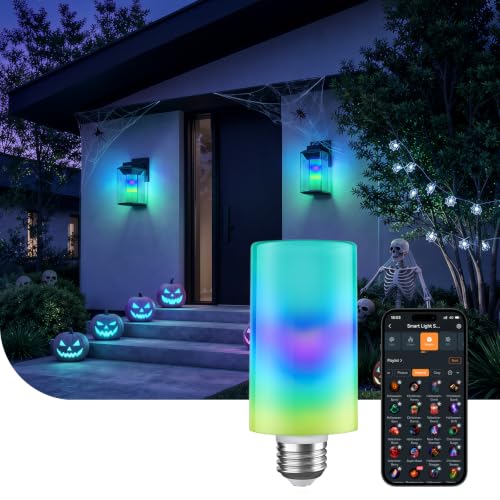
Linkind Smart Light Stick, Color and White, 850lm
Philips Hue Smart 40W B39 Candle-Shaped LED Bulb, E12

Philips Hue A19 LED Smart Light Bulb 3-Pack

Linkind Smart Light Bulbs, Work with Alexa, Google Home, AiDot
The Strengths Of Each Pick
Two A19 color bulbs in the most common residential shape, the E26 base, with full white ambiance range. You can start with Bluetooth for a single room, then add a Hue Bridge later if you want automations or remote control. Setup is genuinely quick, and the 800-lumen output is enough for a medium living room or a primary bedroom without needing extra lamps.
Compared to the Linkind sticks reviewed later, these read more like traditional bulbs, which means they fit in fixtures where a stick shape would look awkward. The 60W-equivalent output handles everyday tasks well, and color saturation stays consistent room to room. Most folks dipping into smart lighting for the first time land here, and the two-pack covers a typical small-room rollout.
The Upside
- Bluetooth works without a hub for up to 10 bulbs in one room, lowering the entry cost.
- Compatible with Alexa, Google Assistant, and Apple HomeKit through the Hue ecosystem.
- A19 shape fits standard table lamps and ceiling fixtures without modification.
- Two-bundle pack covers a small room at once and reduces per-bulge cost.
Things To Consider
- Full remote and automation features require the separate Hue Bridge purchase.
- Lacks the wider daylight spectrum that the premium A19 below covers.
Feature Snapshot
Who It Suits Best
First-time smart lighting shoppers in apartments or small homes who want reliable color control without committing to a hub on day one.
Look Elsewhere When
The Aputure Accent B7C suits filmmakers and content creators more, thanks to its broadcast-grade color rendering accuracy.
This is the hub-required Hue kit aimed at households already running the Bridge. The 16-million-color range covers everything from warm amber to cool cyan, and Bridge connectivity lets you automate routines, sync with movies or music, and control bulbs from anywhere. For larger homes where multiple rooms need coordinated color scenes, the bridge-based architecture keeps latency low.
The two-pack form works best as an add-on to an existing Hue setup, not a standalone starter. Owners commonly run these alongside the first pick in this list to expand into dining rooms or hallways. You get access to Matter bridging through the Hue ecosystem, which future-proofs the install against upcoming smart home standards.
The Good Stuff
- Full 16-million-color spectrum with smooth transitions during fades and scenes.
- Bridge unlocks remote control, geofencing, and stable multi-room automations.
- Voice compatibility across Alexa, Google Assistant, and Apple HomeKit.
- Matter support through the Hue Bridge keeps your setup current.
Points To Note
- Requires an existing Hue Bridge, adding to the upfront cost.
- Higher per-bulb price than the Bluetooth-friendly starter above.
- Not useful for households without an established Hue install.
Right Fit For
Homeowners building a multi-room Hue ecosystem who want reliable automation and remote access across a wider property.
A Better Fit Elsewhere
The Linkind Smart Light Bulbs work better for renters who cannot commit to a hub-based ecosystem long term.
This single-bulb A19 is built for color accuracy, not just variety. Its CCT range stretches below 2700K for cozy evening tones and up to 12000K for blue-sky alertness, so the same bulb can pull double duty as a focus light and a relaxation light. Ultra-low dimming down to 0.2% matters for movie scenes, where standard bulbs often bottom out too bright.
ChromaSync technology keeps color matched across bulbs, which solves a common complaint with cheaper RGB bulbs that drift toward purple or green at lower brightness. Owners planning a coordinated setup, where multiple bulbs must read as the same shade, benefit most from this consistency.
Practical Pluses
- CCT range below 2700K up to 12000K covers every daylight scenario from rest to focus.
- Dimming to 0.2% gives true blackout-level fades for cinema viewing.
- ChromaSync keeps multiple bulbs color-matched in sync scenes.
- 25,000-hour rated lifespan reduces replacement frequency.
Small Caveats
- Single-pack format makes whole-room rollouts more expensive per bulb.
- Premium positioning means it costs more than most A19 alternatives reviewed here.
Key Product Details
Best Suited To
Homeowners and content creators who care about precise color rendering and need multiple bulbs that match reliably across rooms.
Skip It When
The Linkind Smart Light Stick fits better for accent lighting behind shelves or TVs where a stick form is actually preferred.
Aputure designs for film sets, and the B7C carries that pedigree into a screw-in form. CRI (Color Rendering Index) above 95 means skin tones and product colors read true under this bulb, which matters for YouTubers, photographers, and anyone shooting video at home. The CCT range of 2000K to 10000K covers practical daylight-to-tungsten balancing.
Unlike the Hue picks above, this is app-controlled and tuned for production work, not whole-home voice automation. It includes nine built-in FX modes for things like paparazzi flashes or candlelight flicker, which add creative options without needing a console. The 7W draw is modest, but the output is calibrated for accuracy rather than raw brightness.
Reasons It Performs
- CRI 95+ ensures colors appear natural on camera and in person.
- RGBWW (red, green, blue plus warm and cool white) expands usable color tones.
- CCT range from 2000K to 10000K matches typical film lighting needs.
- Built-in FX modes simulate paparazzi, lightning, and candle flicker.
Room For Improvement
- App-driven control lacks the polished smart-home integration Hue offers.
- Priced higher than general-purpose color bulbs with similar wattage.
- Not optimized for whole-home lighting setups or voice-first households.
Whose Shelf It Belongs On
Content creators, indie filmmakers, and photographers who need broadcast-quality color in a portable bulb form factor.
Reach For A Different Pick When
The Philips Hue Premium Smart Bulbs suit general home lighting better, especially for households already invested in Alexa or HomeKit routines.
The Linkind stick is shaped like a small fluorescent tube, which makes it ideal for fixtures where light needs to spread evenly in a narrow space. Think behind a TV, under kitchen cabinets, or inside a display case. The 850-lumen output is brighter than the standard A19 Hue starter, so it covers a longer accent run without dim spots.
Setup needs 2.4GHz Wi-Fi only, no hub required, and the T19 form factor with E26 base fits most common sockets. Common owner feedback mentions using these for accent walls and gaming setups, where the elongated shape creates a clean wash of color rather than a single bright point.
What Stands Out
- Stick form spreads light evenly across accent zones without hotspots.
- 850-lumen output handles longer accent runs.
- Hub-free Wi-Fi setup keeps installation simple.
- Standard E26 base fits common table lamps and ceiling fixtures.
Honest Caveats
- 2.4GHz Wi-Fi only, so dual-band routers need the right band enabled.
- Stick shape looks awkward in traditional lampshade fixtures.
- Not compatible with Tuya or Smart Life ecosystems.
Made For
DIY accent lighting enthusiasts and gamers who want wash-style color effects behind monitors, TVs, or shelving.
Consider Something Else When
The Philips Hue B39 Candle fits chandeliers and decorative fixtures more naturally, where a stick shape would not blend in.
The B39 candle shape with E12 candelabra base is purpose-built for chandeliers, sconces, and decorative fixtures where a standard A19 would look out of place. Output sits at 450 lumens, which is enough for ambient mood lighting rather than primary illumination. Pairing several of these in a dining room chandelier creates a coordinated color scene that standard bulbs cannot match.
Like the other Hue picks, Bluetooth control works out of the box and the Hue Bridge unlocks automations and Matter bridging. The single-pack format makes sense given chandeliers and sconces rarely need matching quantities.
A Few Highlights
- Candle form factor suits chandeliers and decorative fixtures.
- E12 candelabra base fits standard sconce and pendant wiring.
- Bluetooth support requires no hub for casual use.
- Color consistency matches other Hue White and Color Ambiance bulbs.
Possible Compromises
- 450-lumen output limits use to accent and mood roles only.
- Single-bulb pack increases cost for multi-fixture rooms.
Quick Facts
Who Should Grab It
Homeowners with chandeliers, wall sconces, or candelabra fixtures who want color control without breaking the room’s design.
Where Another Pick Suits Better
The Linkind Smart Light Stick works better in narrow accent runs behind TVs or under cabinets where the candle shape would not fit.
Three A19 color bulbs in a single bundle, aimed at households that want to cover a main living space without mixing and matching packs. The 60W-equivalent output works for kitchens, dining rooms, and larger bedrooms where a single bulb would leave dark corners. The same Bluetooth-to-Bridge path applies, so you can grow into the full Hue ecosystem at your own pace.
Compared to the two-pack reviewed earlier, this format lowers the per-bulb cost while still landing in standard E26 sockets. Families who want synchronized color scenes across a whole room benefit from this approach over piecemeal expansion.
Everyday Wins
- Three-bulb bundle covers a full room at a lower per-bulb cost.
- A19 E26 base fits common lamps and ceiling fixtures across most homes.
- Bluetooth works immediately with the Hue app.
- Bridge compatibility unlocks Matter and remote access when added.
Worth Bearing In Mind
- Buying three at once raises the upfront commitment versus single or two-packs.
- Same brightness range as the smaller packs, not brighter per bulb.
The Main Details
Perfect Match For
Families and open-plan households that want coordinated color lighting across a primary living space without buying singles over time.
Swap It Out When
The Aputure Accent B7C suits a single recording or photography setup more, where broadcast-grade color rendering matters over room coverage.
The Linkind A19 runs on the AiDot app rather than a hub, which is the simplest entry point for renters and first-time smart home users. Setup involves three steps: download the app, link it to Alexa or Google Home, then pair the bulb. Voice control works once the link is complete, and you can adjust brightness or color without touching a phone.
For households not ready to commit to a Hue Bridge or Matter ecosystem, this delivers core color and white features at a lower upfront cost. The trade-off shows up in advanced routines and cross-platform sync, which lean on the broader Hue infrastructure covered earlier.
Useful Touches
- Hub-free setup lowers the barrier for renters and beginners.
- Voice control through both Alexa and Google Home works without extra hardware.
- App-based color scenes and scheduling cover most everyday needs.
Trade-Offs To Consider
- AiDot ecosystem is smaller than Hue, limiting third-party integrations.
- Advanced automation features lag behind hub-based systems.
- Color accuracy is solid but not tuned for professional filming.
Who Will Love This
Renters and beginners testing smart lighting for the first time who want voice control without committing to a hub or full ecosystem.
Not Your Match When
The Philips Hue Premium Smart Bulbs suit whole-home automation better, especially when routines and cross-platform control are priorities.
What To Weigh Before Buying Smart Color Bulbs
Color bulbs look similar on the surface, but the practical differences show up quickly once they are installed. The right pick depends on your fixture types, voice assistant, and how much automation you actually want. Three things matter most: compatibility with your existing smart home setup, the form factor matching your fixtures, and whether you prefer hub-based reliability or hub-free simplicity.
Hub Or Hub-Free
Hub-based systems like the Philips Hue lineup tend to handle many bulbs across a larger home with less strain on your Wi-Fi. Hub-free bulbs connect directly to your router, which keeps installation simple but can create congestion on busy networks. Households running ten or more color bulbs often find the hub approach more stable over time.
Form Factor And Fixture Fit
Standard A19 bulbs handle table lamps and ceiling fixtures. Candelabra E12 fits chandeliers and sconces. Stick shapes spread light better in accent runs but look awkward in lampshades. Matching the bulb shape to the fixture keeps both the lighting effect and the visual design working together.
Voice Assistant Alignment
Alexa, Google Assistant, and Apple HomeKit each handle smart bulbs slightly differently. Checking that the bulb plays well with your primary assistant avoids frustration later, especially when routines or grouped controls come into play.
Color Range And Dimming
Cheaper bulbs sometimes bottom out at 10% or 20% brightness, which limits movie-night ambience. Wider CCT (correlated color temperature) ranges give you both warm candle tones and blue-sky daylight in one bulb. CRI ratings above 90 matter for content creators who need true color rendering on camera.
Key Considerations Across These Picks
Common Shopping Slip Ups
First-time buyers often grab whatever bulb fits the socket without checking Wi-Fi band requirements. Dual-band routers broadcasting both 2.4GHz and 5GHz cause pairing issues with bulbs that only accept one. Another mistake is buying one bulb to “test” smart lighting, then discovering the app ecosystem does not match what the rest of the home runs. Standardize on one platform before the second purchase.
Where The Extra Money Goes
Premium Hue picks cost more because of ecosystem depth, not raw brightness. You are paying for Matter bridging, smoother multi-room sync, and longer firmware support windows. Budget picks cover basics well but may skip ultra-low dimming, wider CCT, or accurate color matching across multiple bulbs. The upgrade pays off in households planning ten or more coordinated lights, not in single-bulb setups.
