

Smart color light bulbs do more than replace a switch on the wall. They shift a living room from movie-night amber to morning white, sync with music for parties, and turn on slowly before an alarm goes off. The eight options below cover the common scenarios people hit when they finally upgrade from basic LEDs: a starter pack for a one-room test drive, candelabra shapes for chandeliers, stick form factors for tight fixtures, puck replacements for garage and basement GU24 sockets, and multi-room bundles for whole-home rollout.
The Main Contenders
The Main Contenders

Philips Hue A19 Color Ambiance Smart Bulb 2-Pack (800LM)
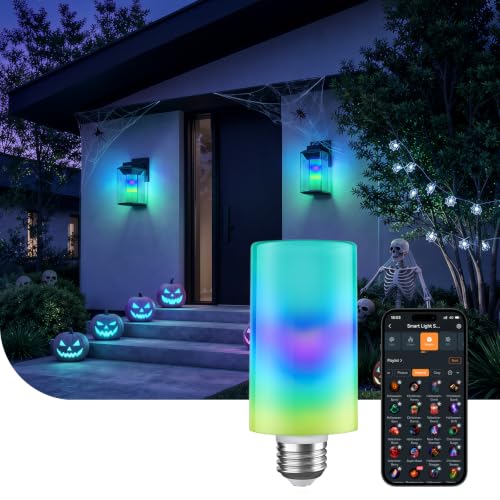
Linkind Smart Light Stick T19 E26 Bulb (850LM)
Philips Hue B39 Candle E12 Smart Bulb (450LM)

Legental GU24 LED Puck Light Bulb 10W 2-Pack

Tapo L535E Multicolor Smart Bulb A19 2-Pack (1100LM)

Tapo L535E Multicolor Smart Bulb A19 4-Pack (1100LM)

Linkind Smart Bulbs Compatible with Alexa and Google Home

Tapo L530E Smart RGBW Bulb A19 4-Pack (800LM)
The Picks, Examined More Closely
The Philips Hue A19 color bulb is the bulb most reviewers reach for when recommending a first smart lighting setup. It uses a standard E26 screw base, drops into any table lamp or ceiling fixture, and pairs over Bluetooth right out of the box. The free Hue app handles the basics without extra hardware, and adding a Hue Bridge later unlocks automations, remote control, and deeper integrations.
For a single-room test drive in a bedroom or living room, the 2-pack offers enough hardware to see how the ecosystem behaves before committing to a full home rollout. You may find the setup easiest when both bulbs live in the same room, since the Bluetooth path controls up to ten lights in one space.
Why It Works Well
- Mature ecosystem with wide third-party support across Alexa, Google Assistant, and Apple HomeKit
- Bluetooth path needs no hub, so you can test the platform before buying a bridge
- 800 lumen output is plenty for a table lamp or medium-sized room fixture
- Adding a Hue Bridge later opens Matter compatibility and out-of-home control
- Color tuning and scene library are the most refined in the category
Worth Noting
- Premium pricing means the 2-pack costs more than most budget alternatives per bulb
- Full feature set depends on the Hue Bridge, which is sold separately
- Voice assistant routines occasionally drop commands on crowded 2.4GHz networks
Quick Facts
Built With In Mind
Shoppers stepping into smart lighting for the first time and willing to pay a bit more for a refined app experience.
Reach For A Different Pick When
The Tapo L535E 4-Pack suits you better if you want to fill multiple rooms on a tighter budget.
Most color bulbs share the same round A19 silhouette, but Linkind’s light stick takes a different approach. The narrow T19 form factor, roughly 57mm wide and 131mm tall, slips into fixtures where a standard bulb would stick out or look out of place. Think ceiling fans with shallow glass, pendant shades, and desk lamps where the shade sits close to the bulb.
The 850 lumen output edges past the Philips Hue A19 we just looked at, so the stick shape does not cost you brightness. You get the same color and tunable white range in a slimmer package, and the E26 base means no rewiring. In our view, this is the bulb to grab for tight fixtures where traditional A19 bulbs feel oversized.
Reasons It Performs
- Slim T19 stick shape fits shallow ceiling fans and tight lamp shades
- 850 lumens give slightly more output than typical 800 lumen color bulbs
- Tunable white plus RGB color in one fixture-friendly housing
- Standard E26 base installs like a regular bulb
Trade Offs
- Wi-Fi is 2.4GHz only, so a dual-band router needs the older band enabled
- Not compatible with traditional dimmer wall switches, which can cause flicker
- Does not support Tuya, Smart Life, or Thread, limiting some cross-platform routines
Whose Shelf It Belongs On
Anyone with tight ceiling fan bowls, small pendant shades, or desk lamps where an A19 bulb will not fit cleanly.
A Better Fit Elsewhere
The Philips Hue B39 candle bulb suits you better when the fixture in question is an E12 candelabra socket rather than an E26.
Chandeliers and decorative sconces almost always use the smaller E12 candelabra base, not the E26 standard bulb. That makes most color smart bulbs physically incompatible with the fixtures homeowners actually want to upgrade. The Philips Hue B39 candle addresses this directly. It carries the full white-and-color feature set from the A19 sibling we covered first, just shaped for narrow sockets.
The 450 lumen rating sits lower than the A19’s 800, but candelabra fixtures typically use multiple bulbs, so the cumulative output adds nicely across a chandelier arm. Bluetooth works for one-room control out of the box, and a Hue Bridge adds the same Matter, automations, and remote control the platform is known for.
Useful Highlights
- E12 candelabra base fits chandeliers, wall sconces, and ceiling fan light kits
- Full tunable white and RGB color range matches the rest of the Hue family
- Bluetooth pairing covers up to ten bulbs in one room without extra hardware
- 9W draw replaces a 40W incandescent decorative bulb
Practical Considerations
- Single-pack only, so a six-arm chandelier means buying six units
- Lower 450 lumen output per bulb compared to standard A19 alternatives
- Bridge is sold separately for full Hue ecosystem features
Spec Overview
Perfect Match For
Homeowners with chandeliers or candelabra-base sconces who want full color smart control in those fixtures specifically.
Skip It When
The Tapo L535E 2-Pack is a stronger pick for standard lamp and ceiling fixtures where E26 bulbs fit.
The Legental GU24 puck sits in a different category than the color bulbs above. It is a utility replacement for twist-and-lock GU24 fixtures, the kind you find in garage ceiling boxes, basement ceiling mounts, and some older apartment kitchen lights. The output is fixed at 5000K cool white, with no color tuning and no app control. That tradeoff buys you a quick CFL swap-out for roughly 45% less energy.
The 1000 lumen rating matches the Tapo L535E color bulb we cover later, and the universal 120 to 277V compatibility means it works on both standard household circuits and commercial wiring. For workshops and utility rooms where color temperature control does not matter, the Legental puck does the job and runs cool.
A Favorable Mix
- 1000 lumen output replaces older 18W CFL pucks with noticeable energy savings
- 120 to 277V compatibility handles residential and light commercial circuits
- Instant-on, flicker-free startup compared to older CFL pucks
- Long rated lifespan reduces replacement trips in hard-to-reach fixtures
Less Ideal Details
- Fixed 5000K cool white with no color or tunable white options
- No smart features, voice control, or app integration
- GU24 base only, so it will not fit standard E26 lamp sockets
Key Product Details
Who Should Grab It
Homeowners with GU24 puck fixtures in garages, basements, or laundry rooms who need a brighter, longer-lasting CFL replacement.
Look Elsewhere When
The Linkind AiDot-compatible smart bulb is a stronger pick when color tuning and voice control matter more than GU24 compatibility.
The Tapo L535E pushes the lumen count past the typical 800 lumen smart color bulb, which makes a real difference in rooms that fight for light. Open-concept living areas, kitchens with high ceilings, and home offices all benefit from the extra brightness. The standard A19 shape and E26 base mean it drops into any lamp socket the Philips Hue A19 we started with fits.
Matter certification broadens the compatibility story across Apple Home, Alexa, Google Home, and SmartThings. The Tapo ecosystem covers voice control, remote access, and color tuning without a separate hub. If you need one bright starter pair to test whether smart color lighting fits your routine, this 2-pack is a strong entry point.
Standout Benefits
- 1100 lumen output fills larger rooms where 800 lumen bulbs feel underpowered
- Matter support streamlines setup across Apple Home, Alexa, and Google Home
- Tunable white plus RGB color in a single bulb
- No hub required, so the total cost stays close to the bulb price
Points To Note
- 2.4GHz Wi-Fi only, so dual-band routers need the legacy band active
- Tapo app ecosystem is newer than Hue, with smaller third-party scene libraries
- Not for use with traditional dimmer wall switches, which can cause flicker
Made For
Homeowners outfitting a bright open-concept room who want Matter support without committing to a hub.
Where Another Pick Suits Better
The Tapo L530E 4-Pack makes more sense when you are filling several smaller rooms rather than one large one.
This is the same Tapo L535E bulb we just covered in a 2-pack, so the underlying hardware is identical: 1100 lumens, Matter support, A19 shape, E26 base. The difference is scale. Four bulbs in one box give you enough hardware to outfit a living room, bedroom, and hallway in a single afternoon without ordering more.
You may find the 4-pack pricing easier to swallow than buying four separate 2-packs, and you end up with consistent brightness and color behavior across the whole rollout. For apartments and small homes, this is often the entire install.
The Upside
- Four matching bulbs keep brightness and color behavior consistent room to room
- Higher lumen output suits living rooms and primary bedrooms in one go
- Matter certification works across Apple Home, Alexa, Google Home, and SmartThings
- No hub required, simplifying the install
Where It May Fall Short
- Same 2.4GHz Wi-Fi limitation as the 2-pack sibling
- No dimmer wall switch compatibility out of the box
Feature Snapshot
Best Suited To
Shoppers outfitting multiple rooms at once and wanting matched bulbs across the home.
Consider Something Else When
The Tapo L530E 4-Pack is a tighter fit when standard 800 lumen output is enough and budget matters more.
The Linkind smart bulb uses the AiDot app for setup and routine control, then bridges out to Alexa and Google Home for voice commands. Voice control covers the basics: turn on, turn off, dim up or down, and switch color. No separate hub is needed, so the install path is the same three-step flow common across budget-friendly smart bulbs.
AiDot also manages Linkind’s other smart home products, which makes this bulb a sensible building block if you plan to grow into smart plugs, strip lights, or sensors later. In our view, it works best for renters and casual users who want color and voice control without committing to a Hue or Tapo account system.
Strengths Worth Knowing
- Three-step setup pairs the bulb, then links Alexa or Google in minutes
- AiDot app expands to other Linkind products for unified control
- Tunable white plus RGB color in a standard A19 form factor
- Voice commands cover on, off, brightness, and color changes
Honest Caveats
- 2.4GHz Wi-Fi only, same constraint as the Tapo options above
- Not compatible with traditional dimmer switches
- AiDot is a smaller ecosystem than Hue or Tapo, with fewer third-party integrations
Right Fit For
Renters and casual smart home starters who want color and voice control without tying themselves to a specific hub platform.
Swap It Out When
The Tapo L535E 2-Pack fits better when Matter support and Apple Home compatibility matter to your setup.
The Tapo L530E sits one rung below the L535E we covered at picks five and six. It shares the same A19 shape and E26 base, the same Tapo app ecosystem, and the same hub-free path, but the lumen count lands at the standard 800 figure rather than 1100. The color rendering index (CRI) above 90 is the meaningful upgrade over typical budget color bulbs. CRI measures how accurately a light source renders object colors compared to natural daylight, so a higher CRI rating means skin tones, wood grains, and fabrics look closer to how they appear in sunlight.
For most living spaces, 800 lumens is enough, and the four-pack form factor makes the L530E the budget-friendly choice for outfitting several rooms. Color accuracy makes it a comfortable pick for dining rooms, makeup vanities, and anywhere color fidelity matters more than raw brightness.
Useful Touches
- CRI above 90 keeps fabric, wood, and skin tones closer to natural daylight
- Four bulbs cover multiple rooms at once on a tighter budget
- Works with Alexa and Google Home without a separate hub
- Rated for tens of millions of color steps, fine-grained color tuning
Smaller Limitations
- 800 lumen output is lower than the L535E siblings above
- 2.4GHz Wi-Fi only and not compatible with traditional dimmer switches
- No Matter support, unlike the newer L535E line
Who Will Love This
Homeowners outfitting multiple smaller rooms where color accuracy matters more than raw lumen output.
Not Your Match When
The Tapo L535E 4-Pack is the stronger pick when higher brightness or Matter support matter to your setup.
What Matters Most Before Choosing Smart Color Light Bulbs
Smart color bulbs differ on a handful of attributes that decide how well they fit a specific home. The right choice depends on the fixtures you have, the voice assistant you already use, and how bright the room needs to be.
Brightness and Room Size
Lumen output, the unit that measures visible light output, decides whether a bulb fills a room or leaves it dim. The picks here range from 450 lumens in the Philips Hue B39 candle to 1100 lumens in the Tapo L535E line. For table lamps and bedrooms, 800 lumens per bulb is usually plenty. For open living areas, kitchens, and home offices, look toward 1100 lumens.
Base Type and Fixture Fit
E26 is the standard US screw base, used in most lamps and ceiling fixtures. E12 is the smaller candelabra base used in chandeliers and decorative sconces. GU24 is the twist-and-lock base found in some older puck fixtures, especially in garages and apartments. Match the bulb base to the fixture, since adapters are rare and unreliable.
Ecosystem and Voice Assistant Fit
Hue, Tapo, and Linkind each use their own app, and each bridges to voice assistants with different depth. Hue offers the deepest Alexa, Google, and Apple Home integration, plus Matter with a bridge. Tapo leans on Matter for cross-platform support. Linkind routes through the AiDot app. Pick the ecosystem that matches the voice assistant you already trust.
What Trips Shoppers Up
Common Shopping Slip Ups
Buying a bulb with the wrong base is the single most common mistake. Smart color bulbs do not adapt E26 to E12 with simple hardware, so measure the fixture before you order. Another frequent miss is grabbing a 2.4GHz-only bulb on a 5GHz-only Wi-Fi network, which leads to mysterious pairing failures that look like a defective bulb. Finally, mixing two ecosystems in the same room creates two apps and two voice command paths, which usually feels more complicated than picking one platform and staying there.
When Paying More Pays Off
The premium tier buys ecosystem depth and app polish. Hue’s scene library, third-party integration count, and stability under heavy use cost more than budget alternatives, and the gap shows in daily routines. For a single-room trial, budget bulbs deliver plenty. For whole-home rollout where every light needs to behave the same way, the upgrade pays off in fewer headaches and more reliable automations.
Frequently Asked Questions
Do smart color bulbs need a hub?
Some do, some do not. The Philips Hue bulbs work over Bluetooth without a hub but gain remote control and Matter when a Hue Bridge is added. The Tapo and Linkind options in this list work without any hub at all, using Wi-Fi directly.
Can I use smart color bulbs with a traditional dimmer switch?
The manufacturer guidance for most smart color bulbs, including the Tapo and Linkind options in this roundup, warns against pairing them with traditional wall dimmers. The dimmer can cause flicker, buzzing, or damage. Use the app or voice control for dimming instead.
Will these bulbs work with Apple Home?
The Matter-certified Tapo L535E bulbs work with Apple Home out of the box. Philips Hue bulbs work with Apple Home when paired through a Hue Bridge. The Linkind AiDot bulbs route through Alexa and Google Home rather than Apple Home.
How long do smart color bulbs last?
Rated lifespans vary by brand and series, but most LED smart color bulbs in this category are rated for tens of thousands of hours. Lifespan depends on usage patterns, fixture ventilation, and how often the bulbs are power-cycled.
Can I group bulbs across rooms?
Yes. Every ecosystem in this list supports rooms and zones in its app, and voice assistants can control named groups once you set them up. Grouping is usually a one-time setup step that pays off in daily routines.
Bottom Line
The right pick depends on what your home actually needs. A first-time smart lighting shopper gets a smooth start with the Philips Hue A19 2-pack. A chandelier full of candelabra sockets needs the Hue B39. Tight ceiling fans call for the Linkind stick shape. GU24 utility fixtures want the Legental puck. Larger rooms and whole-home rollouts run well on the Tapo L535E 2-pack or 4-pack, while color-accuracy-conscious spaces land on the Tapo L530E 4-Pack. Pick the bulb that fits the fixture and the room, then let one ecosystem do the rest.
