

Smart lighting shouldnt a chore. Whether youre building a Google Home setup from scratch or expanding the one you already own, the right bulb turns a routine command into something that just works. These picks span different room sizes, brightness levels, and ecosystem needs, so you can match the bulb to the lamp, not the other way around. Below are nine solid options worth a closer look.
A Quick View Of The Lineup

Philips Hue Smart 60W A19 LED Bulb 2-Pack
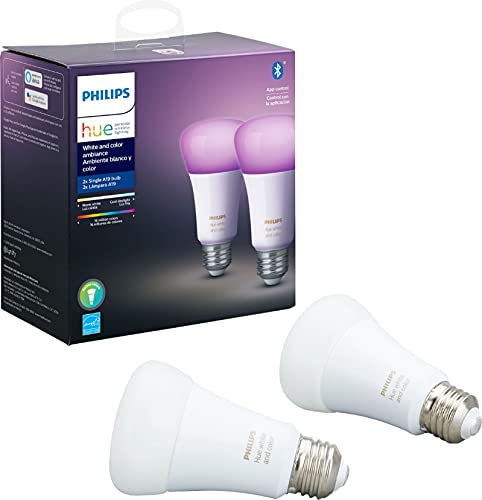
Philips Hue Premium Smart Bulbs 2-Pack

Philips Hue Smart LED A19 Bulb 7.2W

Philips Hue White and Color Ambiance A19 Bulb
Philips Hue Smart B39 Candle Bulb E12

Philips Hue A19 LED Smart Bulb 3-Pack

Tapo Multicolor Smart Light Bulb L535E 2-Pack

Tapo Multicolor Smart Light Bulb L535E 4-Pack

Tapo TP-Link L530E Smart Bulb 4-Pack
What Each Pick Brings To The Table
Two standard A19 bulbs that cover the bases most people need: full color, dimmable whites, and Google Assistant control without forcing a hub purchase right away. Bluetooth is the entry point, so you can screw these in and run them from the Hue app on a single phone, then graduate to a Hue Bridge later for automations, away-from-home control, and the wider Hue ecosystem. Output sits at 800 lumens per bulb, which is the comfortable baseline for table lamps and ceiling fixtures in living spaces.
Compared with the single-bulb Hue value option coming up later, this two-pack gives you room-by-room expansion on day one. E26 base compatibility means they drop into the sockets you already own, no rewiring required.
The Upside
- Bluetooth pairing lets you skip the hub initially
- Full color plus tunable whites for both mood and task lighting
- Google Assistant voice commands work out of the box
- 800 lumen output handles typical lamp and ceiling use
Things To Consider
- Bridge required for remote access and full automations
- Bluetooth control tops out around 10 bulbs in one room
Key Specs
Made For
Newcomers to smart lighting who want a brand they can grow into.
Where Another Pick Suits Better
Shoppers on a tighter budget who want no-hub color out of the box should look at the Tapo TP-Link L530E 4-Pack instead.
This is the bulb pack for people who already own a Hue Bridge, or plan to. The 16 million color range covers the full Hue White and Color Ambiance experience, and because the hub handles the heavy lifting, response times stay snappy even when you stack dozens of bulbs across a home. The standard A19 form factor fits both table lamps and overhead fixtures, so you wont need different bulb types to cover a mixed lighting setup.
Unlike the Bluetooth-first 2-pack above, this one leans into the ecosystem play, meaning you give up the phone-only shortcut in exchange for stable routines, third-party integrations, and Matter bridging once you add a Hue Bridge.
What Stands Out
- Full 16 million color range for serious mood lighting
- Hub-based control keeps automations fast and reliable
- Compatible with Alexa, Google Assistant, and Apple HomeKit
- Suitable for most lamps and overhead fixtures
Points To Keep In Mind
- Hub purchase adds to the total cost of entry
- Setup is less forgiving for households without existing Hue hardware
Best Suited To
Dedicated Hue households running a Bridge who want premium color quality.
Swap It Out When
Beginners who want easy Bluetooth control without a Bridge should consider the Philips Hue Smart 60W A19 LED Bulb 2-Pack instead.
Where most smart bulbs give you a slice of the color temperature spectrum, this Hue pushes well past the typical ceiling. Correlated color temperature (CCT), the Kelvin rating that determines whether light feels warm or cool, runs from below 2700K for cozy evenings up to 12,000K for daylight-bright focus work. The ultra-low dimming also stands out, dropping to 0.2 percent brightness for movie nights or pre-sleep wind-down without flicker issues. Chromasync technology keeps color consistent across multiple bulbs in the same room.
For Google Home users who treat lighting like a tool, not just ambiance, the wider spectrum and finer dimming make this single bulb a meaningful upgrade over the standard Hue A19 above.
A Few Strong Suits
- Extended CCT range from below 2700K to 12,000K
- Ultra-low dimming down to 0.2 percent for late-night use
- Chromasync keeps multi-bulb colors matched
- 25,000 hour rated life for long-term ownership
Minor Gripes
- Single-bulb packaging limits whole-room setups
- Premium positioning means higher per-bulb cost
Quick Facts
Perfect Match For
Lighting enthusiasts who want finer control over color temperature and dimming depth.
Skip It When
Anyone outfitting multiple lamps at once should consider the Philips Hue A19 LED Smart Bulb 3-Pack for better room coverage.
A single-bulb option that pulls the full Hue color and voice-control feature set into a low-commitment starting point. You get Alexa, Apple HomeKit, and Google Assistant compatibility, plus the ability to integrate with Nest and SmartThings setups if your smart home runs beyond lighting. Sixteen million colors covers the entertainment side, while tunable whites handle the everyday side.
Compare this to the 2-pack earlier: same family of bulbs, but this version gives you a single unit to test before committing to a room-wide rollout. The catch is the Hue hub requirement, which is essentially mandatory for the full experience.
A Few Highlights
- 16 million color options in a single bulb
- Works across Alexa, Google Assistant, and Apple HomeKit
- Integrates with Nest and SmartThings ecosystems
- 60W equivalent output in a standard A19 form factor
Honest Caveats
- Hue hub sold separately adds to entry cost
- Single-bulb pack less cost-effective per unit
Right Fit For
Shoppers testing one Hue bulb before expanding across a household.
Look Elsewhere When
Homeowners wanting to skip the hub should consider the Tapo TP-Link L530E 4-Pack, which runs directly over Wi-Fi.
A candelabra-form bulb that solves a problem most A19 options cant: chandeliers, wall sconces, and decorative fixtures with E12 sockets. The B39 shape mimics a flame, so it disappears into the fixture visually while delivering 450 lumens and the full color Ambiance range. Bluetooth gives you starter-level control, and adding a Hue Bridge unlocks Matter compatibility for broader smart-home bridging.
Where the earlier Hue A19 bulbs handle ambient and task lighting, this one targets the fixtures you cant swap a standard bulb into. If your dining room has a chandelier with five or six candelabra sockets, this is the bulb that lets Google Home run the whole fixture.
Points In Its Favor
- E12 candelabra base fits chandeliers and sconces
- Full White and Color Ambiance spectrum
- Matter support via Hue Bridge for cross-ecosystem linking
- Bluetooth control for hub-free starter use
Practical Considerations
- 450 lumen output is modest for primary room lighting
- Per-bulb cost adds up across multi-socket fixtures
Whose Shelf It Belongs On
Anyone with chandeliers or decorative sconces who wants color and voice control in those fixtures.
A Better Fit Elsewhere
Shoppers outfitting standard table lamps and ceiling fixtures will get more value from the Philips Hue Smart 60W A19 LED Bulb 2-Pack.
Three White and Color Ambiance bulbs in a single bundle, sized for a small apartment or a single floor of a larger home. 60W equivalent output per bulb covers the everyday lighting load: living room, kitchen, bedroom. Bluetooth keeps the initial setup simple, and the Hue app handles room grouping so a single command like “dim the living room” hits all the right fixtures at once.
Versus the 2-pack earlier, this one nudges you toward whole-room thinking. Its also a natural stepping stone before committing to a hub, since Bluetooth control tops out at around 10 bulbs per room.
What Earns Its Place
- Three-bulb bundle covers a typical room or apartment
- White and Color Ambiance for full creative range
- Bluetooth starter mode with hub upgrade path
- Google Assistant, Alexa, and Apple HomeKit compatible
A Few Limitations
- Single-room Bluetooth cap limits expansion without a hub
- Per-bulb cost slightly higher than the 2-pack format
Feature Snapshot
Who Will Love This
Apartment dwellers outfitting multiple rooms without investing in a hub yet.
Reach For A Different Pick When
Larger households wanting more bulbs per pack should consider the Tapo Multicolor Smart Light Bulb L535E 4-Pack for higher lumen output.
Tapos L535E is the first bulb on this list to cross the 1000-lumen mark, putting out 1100 lumens per bulb, which is a noticeable step up from the 800-lumen Hue options above. Matter certification means it plays nicely with Apple Home, Alexa, Google Home, and SmartThings through a unified standard rather than separate integrations. Color rendering index (CRI) measures how accurately a bulb shows object colors compared to natural light; this Tapo sits at a strong CRI level for its class.
For households running a mixed ecosystem, Matter support removes the headaches of bridging multiple platforms. Google Home still runs the show, but other platforms can join the conversation without dropping bulbs.
Useful Touches
- 1100 lumen output outshines standard 800-lumen bulbs
- Matter certification for unified cross-platform control
- Millions of RGBW colors with adjustable vibrance
- Compatible with Google Home, Alexa, Apple Home, and SmartThings
Trade Offs
- 2.4GHz Wi-Fi only, may struggle on congested networks
- Higher brightness comes with slightly larger physical bulb size
Built With In Mind
Multi-ecosystem households needing Matter-certified color lighting above 1000 lumens.
Consider Something Else When
Pure Hue loyalists wanting ecosystem cohesion should look at the Philips Hue Premium Smart Bulbs 2-Pack instead.
Same L535E bulb as the 2-pack above, just doubled for whole-home rollouts. Four units at 1100 lumens each is enough to handle a full floor of fixtures without leaving dark spots or relying on Hue for the heavy lifting. Matter support and Google Home compatibility stay identical to the smaller pack, so theres no feature trade when you scale up.
Compared to the Philips Hue 3-Pack earlier, this Tapo offering wins on raw brightness per bulb, though it gives up the Hue app polish and wider third-party accessory ecosystem. If brightness and coverage matter more than brand allegiance, this pack pulls ahead.
Strengths Worth Knowing
- Four-bulb bundle covers a full floor of lighting
- 1100 lumens per bulb for higher-output fixtures
- Matter-certified for cross-platform voice control
- No hub required for full functionality
Worth Noting
- Upfront cost is higher than the 2-pack version
- Wi-Fi dependent, so router placement affects reliability
Right Fit For
Homeowners outfitting a full floor or multi-room setup in one purchase.
Where A Sibling Pick Shines
Shoppers needing only two bulbs should grab the Tapo Multicolor Smart Light Bulb L535E 2-Pack for a lighter entry.
The L530E strips smart lighting down to the essentials: 16 million RGBW colors, 800 lumens per bulb, Alexa and Google Home compatibility, and no hub required. CRI above 90 means colors render with reasonable accuracy, important if youre picking lighting for a kitchen or a creative workspace where color matters. The 2.4GHz Wi-Fi only specification rules out mesh networks using 5GHz-only bands, but most home routers handle this fine.
Versus the brighter L535E 4-Pack above, this one gives up some lumen output for a lower per-bulb cost, making it the friendlier entry point for first-time smart lighting setups.
Where It Helps
- No hub required, runs directly over Wi-Fi
- CRI above 90 for accurate color rendering
- Four-bulb starter bundle for whole-room coverage
- Compatible with Alexa and Google Home out of the box
Factors To Consider
- 2.4GHz Wi-Fi only limits placement options
- 800 lumen output is moderate for larger rooms
Key Attributes
The Right Fit
First-time smart-home shoppers who want a no-hub starter bundle across multiple rooms.
Not Your Match When
Anyone wanting brighter output for larger living areas should consider the Tapo Multicolor Smart Light Bulb L535E 4-Pack.
What Matters Most Before Choosing Smart Bulbs For Google Home
Brightness And Color Range
Lumen output determines how well a bulb fills a room. Standard 60W replacements hover around 800 lumens, which handles most lamps and smaller fixtures. Larger living rooms, kitchens, or workspaces benefit from bulbs in the 1100-lumen range, like the Tapo L535E options on this list. Color range matters too: RGBW (red, green, blue plus dedicated white) bulbs produce richer whites than basic RGB versions.
Hub Versus Hub-Free Setups
Hub-required systems like the Philips Hue Premium Smart Bulbs run faster and handle larger bulb counts without straining Wi-Fi, but the upfront Bridge cost adds up. Hub-free bulbs like the Tapo options connect straight to your router, making them friendlier for renters or first-time setups. Both approaches work with Google Home once linked through the Google Home app.
Ecosystem And Voice Compatibility
Most modern smart bulbs work with Google Assistant out of the box, but the quality of that integration varies. Matter-certified bulbs like the Tapo L535E offer the most consistent cross-platform behavior, while older integrations sometimes require specific phrasing or app configurations. Double-check that any bulb you pick works with the exact Google Home app version running on your devices.
Form Factor And Socket Type
A19 bulbs fit standard US lamp and ceiling sockets (E26 base), which covers most household lighting. Decorative fixtures like chandeliers and wall sconces often use E12 candelabra sockets, requiring the smaller B39 form factor like the Philips Hue candle bulb. Match the bulb shape to the fixture before buying to avoid returns and extra trips to the mailbox.
Key Considerations Across These Picks
Pitfalls Shoppers Hit
The most common mistake is buying a hub-required bulb without checking for the Bridge, then wondering why automations wont run from outside the home. Always confirm whether your chosen bulb needs extra hardware. Another misstep is overlooking Wi-Fi band requirements: a bulb locked to 2.4GHz wont work cleanly on a 5GHz-only mesh network, leaving the bulb stranded during setup.
When Paying More Pays Off
Premium bulbs like the Philips Hue Smart LED A19 Bulb 7.2W justify their price with wider color temperature ranges, finer dimming control, and tighter color consistency across multiple units. For casual users running two or three bulbs, the jump isnt necessary. For lighting enthusiasts building whole-home scenes, the upgrade translates to noticeably better real-world performance.
Frequently Asked Questions
Do all smart bulbs work with Google Home?
Most modern smart bulbs support Google Assistant voice commands, though some require linking through the bulb makers app first. Matter-certified bulbs offer the smoothest experience across ecosystems.
Can I use smart bulbs without a hub?
Yes, many bulbs connect directly to your Wi-Fi network. Tapo options on this list run hub-free, while Philips Hue bulbs can use Bluetooth for basic control without a Bridge.
How long do smart bulbs typically last?
Rated lifespans for LED smart bulbs usually fall between 15,000 and 25,000 hours. At typical residential use, thats roughly a decade before noticeable dimming or failure.
Will smart bulbs work if Wi-Fi goes out?
Local physical control via the wall switch keeps lights turning on and off, but voice commands and app control require an active network connection to function.
Are smart bulbs dimmable without a dimmer switch?
Yes, most smart bulbs dim through their app or voice assistant rather than a wall dimmer. Pairing them with a traditional dimmer switch can cause flicker and reduce bulb lifespan.
Closing Remarks
Smart lighting is one of the more forgiving smart-home upgrades, and Google Home makes it easier than ever to tie those bulbs into routines, scenes, and morning commands. Start with the bulbs that match your fixtures and your brightness expectations, then layer in extras like hubs or Matter bridges as your setup grows. Your voice is the remote now, and these picks are ready to listen.
