

A septic system is one of those home features you only think about when something goes wrong, and by then a repair bill can sting. The right treatment helps your drain field keep processing waste, cuts down on odors, and stretches the time between pump-outs. This roundup focuses on products that support bacteria and enzyme activity in the tank and leach field, from simple monthly packets to heavier shock treatments for sluggish systems.
The Lineup, Simplified

Doctor Drain Monthly Septic Tank Treatment Packets (6)

Rid-X Septic Tank Treatment, 3.2 Ounce

Rid-X 1920094143 Septic Treatment, 9.8 Ounce

NAODIFU Bio-Tab for Septic Systems 14 Tablets

Cabin Obsession Septic Tank Treatment 12 Packets

Septic-Flow Enzyme Pods 1 Year Supply
Cabin Obsession 52 Weekly Septic Fizz Tablets

Cabin Obsession Drain Field Cleaner 32 oz
Septic-Flow Shock Drain Field Cleaner 1 Gallon
A Deeper Look At The Lineup
Doctor Drain takes a different approach from the powders and tablets you’ll see elsewhere. Each box ships with six single-flush packets of an 8 oz concentrate, enough to cover half a year for the average home. The formula leans on natural bacteria and enzymes rather than harsh chemicals, which is helpful in households that want a gentler option for pipes and plumbing fixtures.
What separates this pick from the smaller Rid-X pack below is the tank size rating. Doctor Drain is engineered for systems up to 1500 gallons, putting it in range for larger rural homes and small properties. The single-flush format also removes the guesswork around measuring, since you drop a packet, let it dissolve, and walk away.
What Helps Most
- Single-flush packets remove any measuring step
- Engineered for tanks up to 1500 gallons, fitting larger rural homes
- Enzyme blend targets proteins, oils, grease, and paper that commonly slow a field
- Non-corrosive formula protects older PVC and cast iron plumbing
- Six-month supply keeps the routine simple and infrequent
Things To Consider
- Half-year supply means reordering twice a year for continuous use
- Powder packets need a dry storage spot in a utility room or under-sink cabinet
- Smaller households below 1000 gallons may find the dosing heavier than necessary
Quick Facts
Best Suited To
Homeowners with mid-to-large septic tanks who want a once-a-month flush-and-forget routine without measuring or scooping.
Consider Something Else When
The Rid-X 9.8 Ounce canister below is a smarter pick for shoppers who prefer pouring a familiar powder over flushing individual packets each month.
Rid-X is the brand many people grew up seeing on store shelves, and the 3.2 oz box is its smallest entry point. It’s a powder you pour down the drain, so there’s no tablet to wait on and no measuring beyond a quick scoop. For new septic owners, that low learning curve is often the deciding factor.
At this size, the box covers roughly a month of treatment, which makes it a useful trial run before committing to a larger canister. It’s also a sensible pick for an apartment, a guest cabin, or any property with a smaller tank that doesn’t need a heavy dose each cycle.
A Strong Showing
- Brand recognition means finding refills at most hardware and grocery stores
- Powder form dissolves quickly without needing a flush cycle to kick in
- Compact box fits in a small cleaning supply caddy
Worth Noting
- Small 3.2 oz size runs out fast for households treating monthly
- Powder can clump in humid utility rooms if the lid isn’t sealed tight
- Less suitable for systems above 1000 gallons, where the per-dose impact drops
Who It Suits Best
First-time septic owners in a small-to-mid-sized home who want a familiar powder without buying a large canister upfront.
Not Your Match When
The NAODIFU Bio-Tabs further down work better for households that prefer dropping a tablet into the tank and skipping the measuring step entirely.
The 9.8 oz Rid-X canister is the same trusted powder as the smaller box, just stretched out for a longer run between restocks. Where the 3.2 oz version feels like a sampler, this one is the workhorse. It’s marketed as a professional-grade powder with natural bacteria, and the larger container cuts down on packaging over time.
For families that have already settled on Rid-X and don’t want to keep reordering, the bigger canister hits a sweet spot. You measure roughly the same scoop each month, but the box lasts through several doses rather than a single one.
Notable Gains
- Three times the powder of the 3.2 oz box, so fewer restocks
- Powder format suits homeowners used to traditional septic routines
- Sturdy canister with a resealable lid for humid basements
Trade Offs
- No single-flush packets, so dosing still requires a measuring scoop
- Canister takes up more shelf space than tablets or pods
- Same per-dose output as the small box, just spread over more months
Made For
Established Rid-X users in standard 1000-gallon residential systems who want to stock up and measure doses themselves.
Look Elsewhere When
The Cabin Obsession 12-count packets offer a similar monthly routine but skip the scoop and measuring step for anyone who wants a cleaner pour.
NAODIFU takes a different shape. Instead of powder or flush packets, you get 14 tablets in an 8 oz jar, designed to sink to the bottom of the tank and dissolve slowly. That slow release matters because the bacteria and enzymes end up working where solids collect, rather than washing through too quickly to make a difference.
The dual-action claim is worth noting. The formula targets the tank itself and the drain field lines beyond it, where most backups actually start. For homeowners who want a less hands-on approach than measuring powder each month, a tablet that you drop in and forget is hard to beat.
What Works In Its Favor
- Slow-dissolving tablets target the sludge layer where solids settle
- Tablet format is cleaner to handle than powder or liquid concentrates
- Formulated to maintain drain field health, not just the tank
- Fourteen tablets cover more than a year of monthly treatment
Honest Caveats
- Tablets need a working toilet and adequate water flow to reach the tank
- Slow-dissolve design means results take longer than fast-acting powders
- Jar storage in a damp bathroom can shorten shelf life if not sealed
Right Fit For
Homeowners who want a clean, drop-in tablet routine and aren’t in a rush to see overnight changes in tank performance.
A Better Fit Elsewhere
The Septic-Flow Shock Drain Field Cleaner below is the right call when a drain field is already slow and you need a concentrated liquid dose to break things loose.
Cabin Obsession’s 12-packet box is built around a year of maintenance in one purchase. Each packet is water-soluble and drops into the toilet for a single monthly flush, with live bacteria cultures doing the heavy lifting inside the tank. The brand leans into the vacation-home angle, but the routine works just as well for primary residences.
What stands out here is the upfront convenience. You buy once, set a calendar reminder, and the routine takes about ten seconds per month. For households that want to stop thinking about septic care, the full-year format removes the “did I order more?” question entirely.
The Practical Payoff
- Twelve packets equal a full year of monthly treatment
- Single-flush format removes any measuring or scooping
- Live bacteria cultures suited to standard residential systems
- Compact box stores easily in a bathroom closet
Points To Note
- No extra doses included for high-occupancy homes that may need more frequent treatment
- Packets can stick together in humid storage if the resealable bag isn’t closed
Who Will Love This
Homeowners who want a full year of septic maintenance handled in one purchase and don’t want to think about reordering partway through.
Skip It When
Households with frequent guests or large families should consider the Cabin Obsession 52-week tablets further down, which add weekly dosing for higher waste loads.
Septic-Flow’s pod system focuses on what the source describes as a bacteria-and-enzyme combo that targets waste, paper, and the byproducts of soaps and detergents. The pods are dissolvable, so the dosing is the same as flushing a single packet each month. The 12-count format covers a year at standard cadence.
For shoppers who care about where a product comes from, this is a domestic option that ships with a year of maintenance in one box. It’s positioned for primary residences and vacation properties alike, and the routine fits a calendar reminder rather than a maintenance habit.
Standout Benefits
- Twelve-month supply in a single purchase
- Dissolvable pods eliminate measuring and powder mess
- Enzyme blend designed to address detergent and soap residue in addition to waste
Room For Improvement
- Monthly dosing may fall short for households with high daily water usage
- Pods require dry storage to prevent premature activation
Perfect Match For
Shoppers who prioritize domestic manufacturing and want a one-and-done annual septic care purchase for a standard residential system.
Another Choice May Suit
The Septic-Flow Shock Drain Field Cleaner is the better fit when a tank needs a more aggressive dose than monthly maintenance provides.
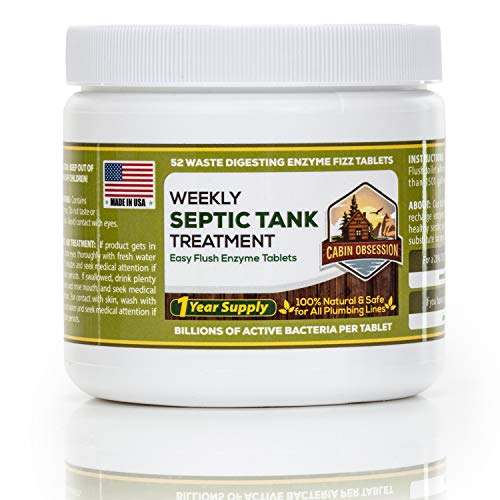
Where most products on this list use monthly dosing, the Cabin Obsession weekly tablets flip the script. You get 52 fizz tablets for once-a-week flushing, and each one carries billions of active bacteria cultures. The argument is that weekly maintenance keeps bacteria counts more stable than a single monthly dump.
This format is best for households with steady, higher-than-average waste loads. Frequent laundry, big families, or homes with a garbage disposal put more strain on a tank, and weekly bacteria replenishment can keep pace with that demand better than a once-a-month dose.
Real-World Strengths
- Fifty-two tablets match a full calendar year with no gaps
- Weekly dosing keeps bacteria levels more consistent than monthly dumps
- Fizz format dissolves quickly in the toilet bowl
- Targets sludge, scum layers, and the leach field simultaneously
Soft Spots
- Weekly routine takes more consistency than a monthly packet
- Larger count means more packaging to store in a small bathroom
Built With In Mind
Large families and high-occupancy homes that put steady strain on the tank and want a more frequent bacteria top-up.
Reach For A Different Pick When
Single-occupant homes or vacation cabins with light weekend use are better served by the monthly 12-count packets earlier in this list, since weekly dosing adds little benefit at low waste volumes.
When a drain field is sluggish and water is starting to back up, monthly maintenance packets won’t move the needle fast enough. The 32 oz Cabin Obsession bottle is a concentrated shock treatment built for that situation. You pour the liquid in once, let the bacteria and enzymes break down organic buildup, and the field typically responds within a few days.
The brand suggests an annual shock dose even on healthy systems, but the real value shows up when something has already gone wrong. Compared to a service call, a 32 oz bottle of liquid treatment is a low-cost first move before calling a pumper.
The Upside
- Concentrated liquid works faster than powders or tablets in a slow field
- Targets grease, starch, paper, and protein that block leach lines
- Single 32 oz bottle is enough for one annual shock treatment
- Useful as a first step before scheduling a professional tank service
Points To Keep In Mind
- Liquid format requires careful measuring for accurate dosing
- Not a substitute for routine maintenance; works best as an annual supplement
- Bottle is heavier to ship and store than a packet box
Quick Facts
Whose Shelf It Belongs On
Homeowners with a slow drain field, soggy lawn above the leach lines, or recurring odors who want a strong liquid dose before calling a service tech.
Swap It Out When
Cabin Obsession’s monthly 12-count packets are the right routine for healthy systems that just need steady bacteria support rather than a heavy shock dose.
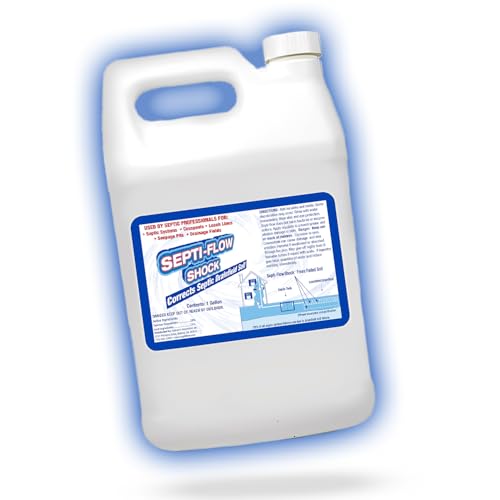
Septic-Flow’s 1-gallon shock treatment is the heavyweight of the list. It’s designed to clear leach field lines of the soap, detergent, sodium, and sulfate buildup that accumulates over years of normal household use. For systems that are already showing signs of slow drainage, this is the strongest liquid dose on the list short of calling a pumper.
The one-gallon size is overkill for an annual maintenance dose on a healthy system, which is why most shoppers reach for it only when a problem shows up. It’s a useful problem-solver to keep on the shelf, especially for older properties with mature fields that need occasional clearing.
Everyday Advantages
- One-gallon size handles a single major shock treatment for large systems
- Targets the chemical residue, sodium, and sulfate buildup that other formulas miss
- Liquid format reaches deep into leach lines for thorough coverage
Less Ideal Details
- One gallon is more volume than most homes need in a single treatment
- Heavy jug is harder to handle and store than smaller liquid bottles
- Best used as a corrective dose, not a monthly routine
The Right Fit
Owners of older homes with mature leach fields that need a periodic deep clean to restore drainage flow.
Where A Sibling Pick Shines
The Cabin Obsession 32 oz drain field cleaner is a better match for a routine annual shock dose, since the smaller bottle is easier to measure and store.
Picking The Right Septic Treatment For Your System
A septic system doesn’t need much, but it does need consistency. The biggest decision is between steady maintenance products (packets, tablets, powders you dose monthly or weekly) and shock treatments (concentrated liquids you pour in once a year or when something goes wrong). Most homes benefit from both approaches layered together.
Match The Format To Your Routine
Powders, pods, tablets, and liquids all do similar work, but the format changes the habit. Single-flush packets are the easiest to stick with because there’s no measuring and no cleanup. Tablets work well for slow-release action at the bottom of the tank. Powders in a canister are the most economical per dose but require a scoop. Liquids are reserved for shock treatments, not routine care.
Size The Dose To Your Tank
Tank size matters more than people think. The Doctor Drain formula is rated for tanks up to 1500 gallons, while the smaller Rid-X box is best for modest systems. If you have a larger home with a higher-gallon tank, lighter products may simply not provide enough bacteria to keep up with the waste load.
Plan For Periodic Shock Treatments
Even with steady maintenance, drain field lines accumulate residue from soaps, detergents, and organic matter. An annual or biannual shock dose from a concentrated liquid product helps clear that buildup before it becomes a backup. The Cabin Obsession 32 oz and Septic-Flow 1-gallon options exist for exactly this purpose.
Key Considerations Across These Picks
Common Buying Slip Ups
The most common mistake is choosing a product format that doesn’t fit your habits. A monthly packet box is wasted on someone who forgets to flush it, while a weekly tablet routine is overkill for a single-occupant cabin. Match the cadence to your real life, not the marketing copy. Another trap is buying a small starter size for a tank that needs a heavier dose, then wondering why nothing changes after a few months.
When Paying More Pays Off
Higher-tier treatments earn their keep in two situations: bigger tanks that need more bacteria per dose, and older systems that have accumulated residue. A heavy-duty shock product like the Septic-Flow 1-gallon jug costs more upfront, but it can postpone a service call that would cost several times more. The same logic applies to year-long supply boxes, which trade a higher single purchase for fewer reorders and a lower chance of running out mid-cycle.
Frequently Asked Questions
How often should septic treatments be applied?
Most homes do well with monthly dosing for routine maintenance, paired with a heavier shock treatment once or twice a year. Larger households or homes with heavy water usage may benefit from weekly dosing instead.
Are septic treatments safe for all plumbing?
The products on this list are formulated to be non-corrosive and safe for standard PVC, cast iron, and older plumbing. Avoid pouring harsh chemical drain cleaners down the lines on the same day, since they can disrupt the bacteria the treatments are trying to support.
Can treatments replace a tank pumping?
No. Routine treatments help reduce solid buildup and keep bacteria active, but they don’t remove the inert solids that settle at the bottom of the tank. Most homes still need a professional pump-out every few years depending on tank size and household size.
What’s the difference between powders, tablets, and liquids?
Powders dissolve quickly and act fast. Tablets sink and release slowly, working where solids collect. Liquids are concentrated shock treatments meant for periodic deep cleaning of the drain field rather than monthly maintenance.
How long until a treatment shows results?
Odors often fade within a week of consistent monthly dosing. Drainage improvements in a slow field typically take one to three weeks after a shock treatment. A single missed dose is rarely a problem, but long gaps let bacteria counts drop.
Final Take
The right septic treatment comes down to matching a format to your routine and a dose to your tank size. For most homes, a monthly packet or tablet paired with an annual shock dose covers everything the bacteria need to keep working. Build the habit, check the calendar, and your drain field should keep doing its job quietly for years.




