
Recurring slow drains and gurgling toilets usually point to one stubborn culprit: tree roots creeping into sewer lines. The right root killer dissolves those intrusions before they snowball into a full blockage, and the ten options below cover everything from heavy-duty leach-line treatments to gentle monthly maintenance. Whether you manage a septic system, a sewer-tap home, or an older property with mature trees nearby, there is a formula here built for your situation.
The Main Contenders

Zep Root Kill – 2 lbs – ZROOT24 Drain Care

Zep Root Kill – 2 Lbs Case of 4

Roebic CLEANR DRAIN ROOT 2 lb

Drano Max Gel Drain Clog Remover 32oz
Rooto 1030 1 lb Drain Opener

RootX 4 lb Foaming Root Control

Roebic K-570-Q Leach & Drain Field Opener

Roebic FRK Foaming Tree Root Killer

Zep Drain Defense Pipe Build-Up Remover 64oz

Zep Drain Defense Enzymatic Powder 18oz
A Breakdown Of The Leading Choices
Zep’s granular Root Kill has earned a long track record among homeowners fighting root intrusion in residential sewer laterals (the pipe running from the house to the street or septic tank). The active ingredient is copper sulfate, which accumulates inside root tissue and gradually kills the invading growth without harming the parent tree above ground. Two pounds is enough for routine maintenance on a single home, and the crystals pour straight into the toilet bowl before flushing.
The formula targets the right use case: a sewer tap home with mature maples, oaks, or willows nearby. Results aren’t instant, which is worth understanding up front. Copper sulfate is a slow burn, not a fire, so most owners repeat applications on a six-month rhythm to keep regrowth in check.
Benefits That Matter
- Trusted by plumbers for decades, with copper sulfate as the active root-killing agent
- Safe for the surrounding tree while still eliminating invasive feeder roots inside the pipe
- Granular format pours easily into the toilet without special equipment
- Two-pound size fits a typical single-family maintenance schedule
- Works in residential sewer lines, septic tanks, and leach lines without damaging them
Things To Consider
- Not for sink or tub drains, since the formula can corrode metal plumbing fixtures
- Temporarily reduces bacterial activity in septic systems after dosing
- Full root die-off usually takes three to four weeks, so patience matters
Key Specs
Who It Suits Best
Homeowners with municipal sewer taps or septic systems and established trees within twenty feet of the lateral line.
Where Another Pick Suits Better
Shoppers who want a foam that hugs pipe walls should look at RootX 4 lb Foaming Root Control instead, since that format coats the entire pipe interior.
For homeowners committed to a multi-year maintenance schedule, this four-pack of the same ZROOT24 formula stretches inventory across multiple treatment cycles. The chemistry is identical to the single 2-pound jug above, so anyone already comfortable with that product can scale up without learning a new routine. Storage stays simple: keep the unopened containers in a dry utility shelf until the next application window.
Compared to the single-bottle entry, this case format fits homeowners managing larger properties, rental portfolios, or rural lots with longer laterals. Each bottle still handles one residential application, so the math depends entirely on how often you treat.
Strengths Worth Knowing
- Four 2-pound jars stretch a maintenance routine across roughly two years of biannual dosing
- Same copper sulfate formula as the standalone ZROOT24, so behavior is predictable
- Useful for property managers handling multiple units on the same lot
Honest Caveats
- Total upfront volume is heavier, which may matter for apartment dwellers with limited storage
- Still restricted from sink and tub drains due to metal corrosion concerns
- Not a faster-acting formula, so don’t expect different timeline results from the single bottle
Made For
Owners who plan biannual treatments over several years and want to lock in supply without reordering.
Skip It When
Renters or first-timers unsure whether the chemistry fits their system should grab the single Zep Root Kill 2-pound container instead.
Roebic’s Cleanr Drain Root rounds out the granular copper-sulfate category with a smaller-batch option aimed at homeowners managing a single trouble spot. The 2-pound format matches the scale of a one-off treatment rather than a scheduled regimen, so it fits situations where you suspect root intrusion but haven’t committed to long-term prevention yet. Pour, flush, and observe: that is the workflow.
Roebic has deep roots (no pun intended) in the septic-treatment market, so their drain-field expertise informs this product’s compatibility profile. If you run a small residential septic tank with a short lateral, this can be a less expensive starting point than the Zep jug, especially for first-timers testing whether chemical root control suits their situation.
Practical Pluses
- Two-pound size suits one-off diagnostic treatments before committing to a maintenance cycle
- From Roebic, a brand with a long track record in septic chemistry
- Granular format keeps dosing simple with no measuring cups required
- Compatible with residential sewer and septic systems
Points To Keep In Mind
- Smaller supply means reordering more frequently for ongoing maintenance
- Same copper-sulfate limitations as similar products, including corrosion risk on metal drains
Right Fit For
Homeowners diagnosing a root problem for the first time who want a small, lower-upfront commitment before scaling up.
Look Elsewhere When
Shoppers ready to commit to biannual treatments will save effort with the Zep Root Kill 2-pound case-of-four option.
Drano Max Gel is a household name for a reason, and its 32-ounce bottle covers most indoor clog emergencies. The thick gel is heavier than water, so it sinks through standing water to reach the blockage directly, which matters when a sink or tub won’t drain at all. It is pipe-safe across PVC, metal, and septic plumbing, making it a versatile cabinet staple.
Important distinction: this product clears general clogs from hair, soap scum, and grease, but it is not formulated to kill tree roots in sewer laterals. It belongs on the shelf for everyday maintenance, not as a substitute for a granular root-control treatment like Zep or Rooto when invasive roots are the actual problem.
Positive Takeaways
- Gel density pushes through standing water to attack clogs sitting at the bottom of the trap
- Safe for PVC, copper, and septic plumbing per the manufacturer
- 32-ounce size handles two to three typical sink or tub treatments
- Widely available and familiar, so first-time users face no learning curve
Trade Offs
- Not designed to address tree roots in sewer laterals, so it can’t replace a root-specific product
- Caustic chemistry means wearing gloves and ventilating the room is wise
Quick Facts
Best Suited To
Apartment dwellers and homeowners dealing with routine bathroom and kitchen clogs rather than outdoor root intrusion.
Another Choice May Suit
Homeowners facing actual tree-root infiltration in the main sewer lateral need Zep Root Kill 2-pound granular formula instead.
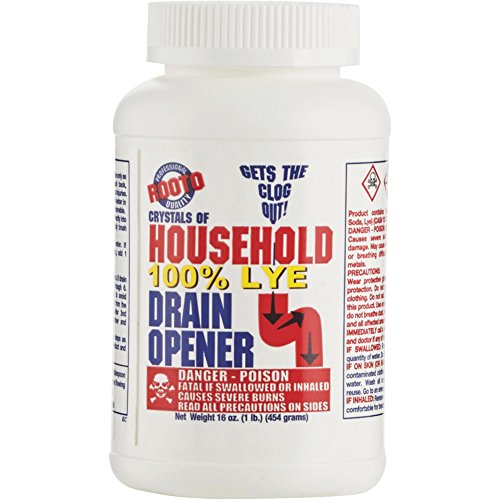
Rooto’s 1030 Drain Opener is a lye-based, no-frills clog cutter built for rough plumbing jobs. Sodium hydroxide (commonly called lye) generates heat as it reacts with water, and that thermal action helps break down stubborn organic blockages. The 1-pound format is small enough to store under a utility sink but powerful enough for serious mainline work.
This is a heritage product used by plumbers and homeowners comfortable handling caustic chemistry. It belongs on the shelf of anyone managing older homes with cast-iron stacks or frequent grease buildup. That said, it is not a tree-root killer, so pairing it with a granular root treatment gives the most complete toolkit.
Useful Strengths
- Lye-based formula generates heat that dissolves grease, hair, and organic matter quickly
- Compact 1-pound size fits easily in a utility cabinet or truck
- Long-standing reputation among professional plumbers for tough jobs
- Useful across rough plumbing and drain opener applications
Worth Noting
- Caustic chemistry requires gloves, eye protection, and good ventilation during use
- Not formulated to kill invasive tree roots in sewer laterals
- Aluminum fixtures and certain plastics can react poorly, so check pipe material first
At A Glance
Who Should Grab It
Experienced DIYers and tradespeople comfortable with caustic chemistry who need a reliable heavy-duty drain opener for organic clogs.
Swap It Out When
Shoppers facing true root infiltration should reach for RootX 4 lb Foaming Root Control, since lye won’t penetrate living root tissue.
RootX uses a different delivery system than the copper-sulfate granulars: a foaming action that expands to fill the entire pipe diameter and coat the upper portion where roots typically enter. The included funnel/applicator makes dosing straightforward, and one 4-pound jar covers up to 100 feet of 4-inch pipe or 75 feet of 6-inch pipe. For longer laterals, this single jar handles what two or three granular treatments might not reach as thoroughly.
The foam’s ability to cling to pipe walls above the waterline is the real selling point, since that’s where most root intrusions begin. Compared to Zep and Roebic’s copper-sulfate options, RootX trades a longer contact time for more complete coverage, which can matter on properties with extensive tree coverage.
Real-World Strengths
- Foaming action fills pipe diameter and clings to walls above the waterline
- One jar treats up to 100 feet of 4-inch pipe in a single application
- Applicator funnel included for cleaner dosing
- Suitable for both sewer lines and septic systems
A Few Limitations
- Do not flush the entire 4-pound jar through a toilet at once, since the bulk volume can overwhelm the trap
- Not designed for routine monthly maintenance, so it pairs with an enzymatic product for prevention
Feature Snapshot
Perfect Match For
Homeowners with longer sewer laterals, dense tree coverage, or recurring root problems that granular copper sulfate hasn’t fully resolved.
Reach For A Different Pick When
Budget-focused shoppers with shorter laterals can get adequate coverage from the single 2-pound Zep Root Kill bottle at lower upfront cost.
Roebic’s K-570-Q takes a different angle from the rest of this list. Rather than attacking roots or blasting clogs with caustic chemistry, it uses aerobic spore-bearing bacteria (beneficial microorganisms that thrive on oxygen) to break down organic buildup in leach fields and drain fields. The 32-ounce concentrate is a liquid that pours into the plumbing system and travels out to the soil absorption area, where bacterial colonies restore drainage.
The target use case is a sluggish septic drain field rather than a tree-root intrusion in the main lateral. If your toilets gurgle and your yard smells soggy above the leach area, that points to a different failure mode than root invasion, and this bacterial treatment is the right category.
Noteworthy Benefits
- Bacterial approach avoids harsh chemicals that could disrupt septic biology
- Specifically formulated to restore flow in sluggish drain fields
- Roebic has a deep reputation in the septic-treatment category
- 32-ounce concentrate covers multiple treatments per bottle
Room For Improvement
- Not a root killer, so it won’t help with tree-root intrusions in the main lateral
- Bacterial action is slower than chemical alternatives, requiring patience across multiple doses
Built With In Mind
Homeowners with septic systems showing signs of drain-field failure, soggy soil, or slow absorption rather than mainline root clogs.
Consider Something Else When
Properties with confirmed tree roots in the main lateral should reach for RootX 4 lb Foaming Root Control or Zep Root Kill instead.
Roebic’s FRK (Foaming Root Killer) is the granular cousin to the bacterial K-570-Q, designed specifically to combat root intrusion in sewer lines. The active agent is dichlobenil (a herbicide that inhibits new root growth), and the formula foams on contact with water to fill the entire pipe line. This 3-pack of 1-pound jars gives homeowners enough supply for multiple treatment cycles without reordering.
The dichlobenil component is the differentiator from copper-sulfate products like Zep. It both kills existing root intrusion and helps inhibit regrowth, which can lengthen the interval between treatments. For severe recurring root problems, that long-term suppression is often worth the higher upfront investment.
Key Advantages
- Dichlobenil formula actively inhibits new root growth, not just kills existing roots
- Foaming action expands to coat the entire pipe interior
- Three-pack format supports a multi-treatment maintenance schedule
- Safe for bathroom toilet application per manufacturer guidance
Some Limits To Know
- Higher upfront cost than single-jug copper-sulfate options
- Requires repeat dosing on a maintenance schedule to realize the regrowth-inhibition benefit
Whose Shelf It Belongs On
Homeowners with chronic root intrusion who want both immediate clearing and longer-term regrowth suppression in one product.
Where A Sibling Pick Shines
Shoppers who prefer a copper-sulfate-only approach can save with the Zep Root Kill 2-pound single bottle, though it lacks the regrowth inhibitor.
Zep Drain Defense is the maintenance-oriented counterpart to the company’s Root Kill, and it operates in a completely different way. The enzyme-based formula digests organic buildup inside pipes gradually, breaking it down into CO2, minerals, and water. A monthly dose keeps drains flowing freely and helps prevent the accumulation that eventually attracts root intrusion at vulnerable joints.
The 64-ounce jug is sized for ongoing maintenance across multiple fixtures, including sinks, garbage disposals, tubs, and showers. It also works in RVs and grease traps, which broadens its usefulness beyond the standard residential kitchen and bath. For PVC and most septic systems, the manufacturer rates it as safe.
Where It Helps
- Enzyme formula breaks down organic buildup without caustic chemistry
- 64-ounce size supports monthly dosing across multiple fixtures
- Safe for PVC, most septic systems, and RV plumbing
- Provides up to 21 months of drain protection per bottle with consistent use
Practical Considerations
- Slow-acting by design, so it won’t clear an active clog on its own
- Not formulated to kill invasive tree roots in main sewer laterals
Who Will Love This
Homeowners who want a low-fuss monthly maintenance routine to keep kitchen and bath drains clear and reduce future buildup.
Not Your Match When
Shoppers needing immediate root clearance should pick up Zep Root Kill 2-pound granular formula, which targets actual intrusion.
The powdered version of Zep Drain Defense trades the liquid jug for a concentrate that measures out by the spoonful. An 18-ounce container provides up to 40 treatments, which makes it the most cost-efficient option per dose on this entire list. The same enzyme approach applies: digest organic buildup gradually rather than burning through clogs.
Powdered format matters for shoppers who prefer a small, shelf-stable container over a bulky jug, and for anyone storing treatment in a humid garage where liquid containers can degrade over time. It is safe across all standard plumbing and septic systems per the manufacturer.
A Strong Showing
- Up to 40 treatments per 18-ounce container, the highest dose count on the list
- Powdered format stays stable in humid storage conditions
- Safe for all standard plumbing and septic systems
- Lower per-dose cost than liquid alternatives
Less-Strong Areas
- Not effective on inorganic buildup or hair-clogged drains, so it’s strictly a maintenance product
- Slower-acting than liquid or gel alternatives for active clogs
Whose Shelf It Belongs On
Budget-conscious homeowners committed to a long-term maintenance schedule who want the lowest per-dose cost in the category.
A Better Fit Elsewhere
Shoppers needing bulk volume for larger households should consider the Zep Drain Defense 64-ounce liquid jug, which offers easier dosing for high-traffic homes.
What To Weigh Before Choosing A Drain Root Killer
The first decision is matching the product to the actual problem. Tree roots invading a sewer lateral require granular copper sulfate or a foaming herbicide like RootX, while routine organic buildup in kitchen and bath drains responds to enzyme-based maintenance products. Bacterial treatments belong in drain fields, not mainlines. Mixing those use cases leads to disappointment, so start by identifying where the symptoms appear: gurgling toilets point to the lateral, slow kitchen sinks point to household plumbing, and soggy yard areas point to the leach field.
The second factor is pipe material and septic compatibility. Older homes may have cast-iron stacks or Orangeburg pipe (a bituminized fiber pipe used mid-century) that react poorly to harsh chemicals, while PVC and copper handle most treatments without issue. Septic systems add another layer: copper sulfate temporarily reduces bacterial activity, so heavy doses can disrupt the biology that keeps the system functioning. Enzyme and bacterial products are gentler on septic balance.
Third, weigh format against frequency. Granular copper sulfate works for biannual or quarterly root maintenance. Foaming products coat pipe walls more thoroughly but typically require more involved application. Liquid and powder enzyme products fit monthly routines with minimal effort. For homeowners who want to set-and-forget, the enzyme approach with a low per-dose cost delivers the least hassle over years of use.
Finally, consider tree proximity. Properties with mature trees within twenty feet of the lateral line face recurring root pressure regardless of treatment, and that may call for a stronger regimen than occasional use. Conversely, homes with newer landscaping and no nearby trees may only need maintenance products to handle organic buildup, never root intrusion.
Key Considerations Across These Picks
Common Shopping Slip Ups
The most frequent mistake is treating a root problem with a general drain cleaner. Drano Max Gel and similar products clear hair, soap, and grease, but they cannot penetrate living root tissue. Wasting months on the wrong product delays the real fix and can let the intrusion worsen. Identify the actual failure mode first, then match the formula to it.
Another trap is applying granular copper sulfate through sink or tub drains, which can corrode metal plumbing. These products belong in toilets, where they flow directly to the main lateral. Skipping that detail voids the treatment and risks damage to fixtures.
Where The Extra Money Goes
Higher-tier picks like RootX and Roebic FRK command more upfront cost because they deliver active root suppression rather than passive killing. The dichlobenil in Roebic FRK inhibits regrowth, which can extend treatment intervals from every few months to once or twice a year for the same result. Foam-coverage products reach the upper pipe walls where roots enter, while granular products only treat the flow path.
For properties with severe or recurring root intrusion, the upgrade pays off through fewer repeat applications and lower cumulative chemical exposure. For lighter maintenance scenarios, a basic granular product at lower cost delivers adequate results without the premium.
Frequently Asked Questions
How long does it take for root killer to work?
Granular copper sulfate products typically need three to four weeks to fully kill root tissue, while foaming herbicides can begin clearing blockages within hours. Enzyme products are slower still, since they work through ongoing digestion rather than direct contact.
Can I use root killer in a septic system?
Most granular and foaming root killers are septic-safe when used as directed, though copper sulfate temporarily reduces bacterial activity. Enzyme and bacterial treatments are gentler on septic biology and better suited to routine use in those systems.
Will root killer harm my trees?
Properly applied granular root killers target only the roots inside the pipe and do not damage the parent tree above ground. Over-application or misuse can spread the chemical through the root system, so following label directions matters.
How often should I treat my sewer line?
For homes with active root intrusion, biannual treatments are typical. Maintenance-focused enzyme products work well on monthly schedules for general buildup prevention. The right rhythm depends on tree proximity and prior history of root problems.
Is foaming root killer better than granular?
Foaming products coat the entire pipe diameter, including the upper walls where roots typically enter. Granular products only treat the flow path along the bottom. For severe root intrusion, foam delivers more thorough coverage; for routine maintenance, granular is often sufficient.
The Takeaway
The right drain root killer depends on where the problem lives: mainline laterals call for granular or foaming root control, household drains benefit from enzyme maintenance, and leach fields need bacterial restoration. Matching the formula to the failure mode saves time and avoids wasted product. Start with a clear diagnosis, then pick the product built for that specific job.