Cleaner tap water used to mean a clunky white jug on the counter or a flimsy pitcher you forgot to refill. Under-sink reverse osmosis has quietly matured into a smarter, tidier category, and the current crop of models handles everything from low household pressure to alkaline remineralization without dominating cabinet space. Whether you cook daily, want great-tasting coffee, or simply want one filter to handle a busy household, the right RO setup turns a chore into a background process. This list walks through ten solid systems across budget, feature, and use case so you can match the right hardware to your kitchen.
The Essentials At A Glance

iSpring RCC7P-BLK 5-Stage RO System with Booster Pump

iSpring RCC7P-AK 6-Stage Alkaline RO with Pump

Waterdrop 10UB Under Sink Filter with Faucet

iSpring US31-NC 3-Stage Under Sink Filter
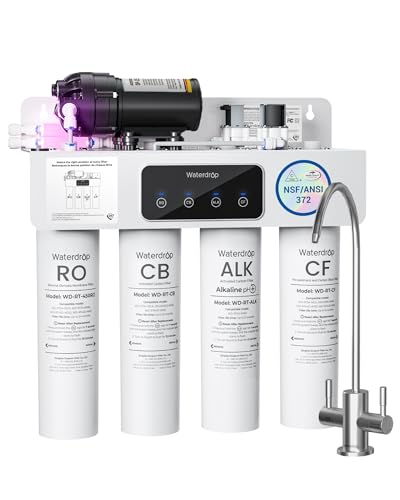
Waterdrop T4-A Alkaline Tankless RO Dual Flow

Pureal Puri-3 UF 3-Stage Under Sink Filter

A. O. Smith Tankless RO 800 GPD System

Waterdrop T3-T Remineralizing RO 220 GPD

Waterdrop T3-C RO Filtration 450 GPD
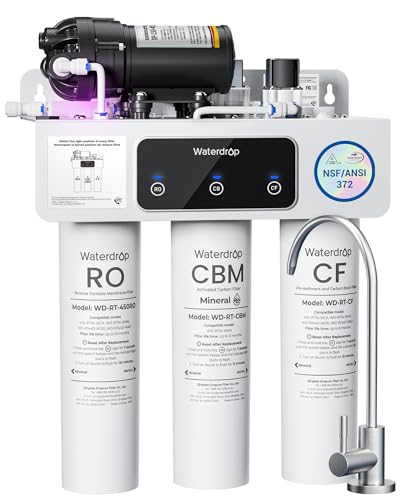
Waterdrop T3-M Remineralization RO 450 GPD
Taking A Closer Look At The Options
Low household water pressure is the silent killer of under-sink RO performance, and the iSpring RCC7P-BLK addresses that head-on with an integrated electric booster pump. Pressure below around 40 psi tends to leave standard RO tanks slow to refill and produces more wastewater per gallon, so the pump quietly keeps the system in its comfort zone. The unit’s five-stage filtration (sediment, carbon, carbon, RO membrane, and polishing carbon) handles sediment, chlorine, and dissolved solids, while the included sleek black 304 stainless steel faucet adds a modern focal point at the sink.
For households that want strong contaminant reduction and a top-mounted faucet design that speeds up the under-sink hookup, this is a confident fit. The threaded tank connection and color-coded tubing keep install friendly for anyone with basic plumbing comfort. You may find the dedicated storage tank takes up meaningful cabinet space, especially in shallow galley kitchens, but most owners report the trade-off pays off in steady flow at the tap.
Where It Helps
- Booster pump keeps filtration efficient in low-pressure homes
- Five stages of sediment and carbon polishing before and after the membrane
- Modern black 304 stainless steel faucet for kitchen aesthetics
- Color-coded tubing and top-mounted faucet shorten install time
Things To Consider
- Storage tank consumes a notable slice of under-sink cabinet volume
- Booster pump requires a dedicated electrical outlet under the sink
Feature Snapshot
Made For
Owners in older homes with low water pressure who want a reliable RO system without sacrificing cabinet aesthetics.
Look Elsewhere When
The Waterdrop T3-C RO Water Filtration System is a better fit if you prefer a tankless build that frees up cabinet space.
The RCC7P-AK is the alkaline-focused sibling to the RCC7P-BLK, layering a sixth stage that reintroduces calcium and magnesium after the membrane strips them out. RO water is famously “flat” tasting, and the remineralization stage smooths that out for anyone who finds standard RO too neutral. The included booster pump delivers the same pressure-independent performance as the previous pick, so you get consistent flow even in older homes.
For shoppers who want RO purity without the stripped-down mouthfeel, this is a sensible upgrade. You may find the filter count climbs to six cartridges, which means slightly more maintenance over the year, but the result is water that tastes closer to natural spring sources. Compared with the Waterdrop T3-M Remineralization RO 450 GPD, this unit uses a traditional tank rather than a tankless flow path, so it suits people who prefer on-demand stored water.
Why It Works Well
- Six-stage path with alkaline remineralization for improved taste
- Booster pump sustains performance under low inlet pressure
- High-capacity contaminant reduction including lead, chlorine, and PFAS
- Top-mounted faucet design simplifies under-sink plumbing
Worth Noting
- Six cartridges mean a more involved filter rotation schedule
- Storage tank still takes meaningful under-sink real estate
Right Fit For
Households that prefer mineral-balanced drinking water and want the steady flow of a tank-fed system with pump support.
Consider Something Else When
The Waterdrop T4-A Alkaline Mineral Tankless Reverse Osmosis System suits you better if you want alkaline water in a tankless footprint.
The 10UB is Waterdrop’s budget-friendly entry into under-sink filtration, aimed squarely at shoppers who want a dedicated faucet and a small footprint without stepping up to full reverse osmosis. It uses a multi-stage carbon-and-KDF style filter cartridge to address chlorine, sediment, and certain heavy metals, and replacement filters tend to run noticeably cheaper than RO membranes. Installation typically lands in the 30-minute range thanks to the included quick-connect fittings and dedicated drinking-water faucet.
For first-time filter shoppers who care about taste and odor improvement but don’t necessarily need the dissolved-solid stripping of true RO, the 10UB is a sensible middle ground. It does not reduce total dissolved solids (TDS), so shoppers chasing lower mineral content should look at the iSpring RCC7P-BLK. For a no-fuss first step in a small apartment kitchen, the 10UB tends to feel like a tidy, low-maintenance pick.
The Practical Payoff
- Lower replacement-filter cost than true RO systems
- Quick-connect fittings trim install time for first-timers
- Compact housing frees up under-sink storage space
Points To Note
- Does not lower TDS the way true RO systems do
- Designed for municipal cold water, not well or hot supply
Who It Suits Best
First-time under-sink filter shoppers on city water who want cleaner taste without committing to a full reverse osmosis system.
Not Your Match When
The iSpring RCC7P-BLK suits you better if you specifically want to reduce total dissolved solids and dissolved contaminants.
The US31-NC is built for shoppers who want a step up from a basic carbon filter but don’t need the complexity of an RO membrane and tank. Its two-cartridge, three-stage path uses a sediment pre-filter, a catalytic carbon block, and a polishing carbon, with the catalytic media addressing chloramine alongside standard chlorine. For apartments and small kitchens where under-sink space is at a premium, the slim housing slips into cabinets where an RO tank would never fit.
Homeowners in cities with chloramine-treated water will appreciate the dedicated chloramine media, since standard carbon often falls short on that compound. You may find the system does not lower TDS, similar to the Waterdrop 10UB, so for true mineral reduction, the iSpring RCC7P-BLK is the better fit. As a quiet, low-maintenance upgrade from a basic pitcher, the US31-NC earns its place.
Real Benefits
- Catalytic carbon targets chloramine alongside chlorine
- Compact three-stage housing fits shallow cabinets
- Replacement cartridges stay budget-friendly over time
Trade Offs
- Does not reduce total dissolved solids like true RO
- Flow rate is lower than tankless RO units like the Waterdrop T3-C
Feature Snapshot
Best Suited To
Renters and small-space homeowners on chloramine-treated city water who want a meaningful upgrade from a basic filter.
Swap It Out When
The iSpring RCC7P-BLK is a stronger match for households that want to reduce total dissolved solids and need a booster pump.
The T4-A takes the tankless RO concept one step further by giving you two purified streams from a single faucet: a standard RO-purified flow and a mineral-enhanced alkaline flow. The alkaline path reintroduces beneficial minerals after the membrane, so anyone who likes the body of mineral water gets it on demand. A 10-stage filter path and a 2:1 pure-to-drain ratio keep the wastewater story reasonable compared with older RO designs.
For households where some members prefer pure RO water for coffee and others want alkaline water for daily drinking, the dual-flow design solves a real friction point. A 450 GPD flow rate handles most family-sized daily needs without the lag of a slow tank refill. You may find the faucet install requires drilling a hole in the countertop, so renters should check their lease before committing. The T4-A earns its spot for shoppers who want tankless freedom and the option of alkaline taste in one unit.
A Few Highlights
- Dual-flow faucet offers both RO and alkaline streams
- 10-stage filtration with 2:1 pure-to-drain efficiency
- NSF/ANSI 372 certified for lead-free materials
- Tankless footprint saves under-sink space
Softer Spots
- Requires drilling a faucet hole, less friendly for renters
- Plug-in power needed under the sink for the booster and display
Feature Snapshot
Who Should Grab It
Multi-user households where some members want pure RO and others want mineral-enhanced alkaline water from the same tap.
Reach For A Different Pick When
The iSpring RCC7P-AK is a better match if you prefer a traditional tank-fed system with a pump and don’t need a tankless footprint.
The Pureal Puri-3 stands out by skipping RO altogether in favor of ultrafiltration (UF), a 0.01-micron membrane path that catches cysts, rust, and larger contaminants while letting water flow through without a tank. UF produces no wastewater stream, which is a meaningful plus for anyone frustrated by RO’s drain ratio or living in areas with water-use restrictions. The three-stage, five-layer cartridge set pairs the UF membrane with carbon media for taste and odor polishing, plus a stainless steel dedicated faucet for a clean under-sink look.
For renters or homeowners who want better-than-pitcher water without drilling a drain saddle for RO waste, the Puri-3 keeps install simple. The trade-off is that UF does not strip dissolved solids, so anyone chasing lower TDS will need to step up to a true RO like the Waterdrop T3-C. For a no-tank, no-waste, no-electricity setup, this one quietly handles the basics well.
The Upside
- No wastewater stream, unlike traditional RO systems
- 0.01-micron UF membrane targets cysts and sediment
- Stainless steel dedicated faucet resists corrosion
- No electricity or tank required for operation
Points To Keep In Mind
- Does not reduce total dissolved solids like RO systems
- Carbon layer is media-certified, not full NSF/ANSI 53 reduction
Feature Snapshot
Perfect Match For
Renters and eco-conscious households who want better-tasting water without the wastewater stream of a traditional RO system.
A Better Fit Elsewhere
The iSpring RCC7P-BLK is a better choice if you specifically want to lower TDS and strip dissolved contaminants from your tap water.
A. O. Smith brings its plumbing pedigree to the tankless RO category with an 800 GPD direct-flow system that pours purified water on demand without a bulky storage tank. The 17.3 by 5.1 by 15.5-inch footprint lands a slim profile that fits neatly under most standard sinks, freeing up cabinet space for cleaning supplies and bins. For large families or households that cook a lot, that throughput means filling a stockpot or several water bottles happens in minutes rather than the slow trickle of older tank-based units.
For shoppers who want brand-name reliability and the highest output in this roundup, the A. O. Smith earns its place. The direct-flow design pairs well with multi-bottle routines, coffee station setups, and households that run multiple drinking glasses per hour. You may find the price sits above most competitors, and the unit requires a dedicated electrical outlet under the sink for the booster and smart monitoring. For pure throughput in a tankless package, this one delivers.
The Value In It
- 800 GPD output leads this roundup for high-demand use
- Tankless slim profile saves cabinet space
- Direct flow on demand, no waiting for a tank to refill
Honest Caveats
- Premium price tier over most competitors in this list
- Requires a dedicated under-sink electrical outlet
Built With In Mind
Large families and high-use households that need top-tier daily output without the bulk of a storage tank.
Where Another Pick Suits Better
The Waterdrop T3-C RO Water Filtration System is a more budget-friendly tankless choice for households with moderate daily demand.
The T3-T hits a useful middle ground for couples and small families who want true reverse osmosis with mineral rebalancing but don’t need the full 450 GPD throughput. The 220 GPD rate runs about three times what a traditional 75 GPD system produces, so refills during cooking sessions happen noticeably faster. Its simplified filter swap design aims to take the mess and confusion out of the annual cartridge change, a common sore point with multi-stage RO systems.
Compared with the iSpring RCC7P-AK, the T3-T trades a traditional tank for a tankless direct-flow path, which means less cabinet clutter and a fresher glass every pour. You may find the 220 GPD ceiling feels tight for a four-person household running back-to-back cooking sessions, in which case the Waterdrop T3-C at 450 GPD is the better step up. For everyday use in a two-to-three person home, the T3-T quietly handles the work without overbuilding capacity you don’t need.
Useful Strengths
- 220 GPD output outpaces traditional 75 GPD systems
- Remineralization stage smooths out flat RO taste
- Simplified filter swap design trims annual maintenance
Small Caveats
- Lower output than 450 GPD siblings like the T3-C
- Plug-in power needed under the sink for the unit’s electronics
The Right Fit
Couples and small families who want balanced RO performance and mineral rebalancing without overpaying for top-tier output.
Another Choice May Suit
The Waterdrop T3-M Remineralization RO 450 GPD is a better match if you want a higher flow rate with similar taste-focused remineralization.
The T3-C is the streamlined tankless pick in the Waterdrop T3 family, focusing on a fast 450 GPD flow and an 8-stage filtration path that targets heavy metals, chlorine, and PFAS. A 0.0001-micron RO membrane handles the heavy lifting, while smart alert functions keep tabs on filter life so you don’t have to track the calendar manually. The tankless build means cabinet space stays open for cleaning supplies and small appliances.
For weekday-heavy households that need quick refills for water bottles, cooking, and coffee, the 450 GPD ceiling handles it all in stride. The unit needs a plug-in outlet under the sink, so plan outlet placement before install. You may find the standard RO water tastes flat compared with the alkaline T4-A, but for shoppers who want speed, simplicity, and a clean under-sink footprint, the T3-C is a tidy choice.
The Case For It
- 450 GPD flow supports fast refills for cooking and bottles
- 8-stage path with 0.0001-micron RO membrane for fine filtration
- Smart filter-life alerts reduce manual tracking
- Tankless design keeps cabinet space open
Practical Considerations
- Requires a dedicated under-sink electrical outlet
- Does not include a remineralization stage for taste balance
Feature Snapshot
Whose Shelf It Belongs On
Busy weekday households that prioritize fast refills and low-maintenance cartridge swaps over mineral rebalancing.
Skip It When
The Waterdrop T3-M Remineralization RO 450 GPD is a stronger fit if you want the same flow rate with mineral rebalancing for taste.
The T3-M rounds out the Waterdrop T3 family by adding a 9-stage filtration path with a remineralization layer that puts calcium and magnesium back into the water after the membrane strips them out. The 450 GPD flow rate matches the T3-C, so households that prioritize taste without sacrificing throughput get the best of both worlds. The added mineral stage gives the water a rounder mouthfeel that tends to play well with coffee, tea, and people who find straight RO too neutral.
For daily drinkers who want a single unit that handles both speed and taste, the T3-M is a confident pick. You may find the 9-stage path adds a small premium over the 8-stage T3-C, so the value calculus depends on how much the taste difference matters to your household. For a taste-focused 450 GPD option, the T3-M is the most balanced of the T3 siblings.
Good Reasons To Consider
- 9-stage path with calcium and magnesium remineralization
- 450 GPD flow handles family-sized daily use
- 0.0001-micron RO membrane targets heavy metals and PFAS
- Tankless build saves under-sink cabinet space
Where It May Fall Short
- Sits above the 8-stage T3-C in upfront cost
- Requires a dedicated under-sink electrical outlet
Made For
Taste-focused daily drinkers who want high flow and remineralized water in a single tankless unit.
Not Your Match When
The Waterdrop T3-T Remineralizing RO 220 GPD is a more budget-friendly alternative if 220 GPD is enough for your household.
What To Weigh Before Choosing A Reverse Osmosis System
The first real question is whether you want true reverse osmosis or a simpler under-sink carbon filter. True RO strips dissolved solids, lead, and PFAS through a semipermeable membrane, which costs more and produces some wastewater, but delivers the deepest reduction. Carbon and ultrafiltration systems address taste, chlorine, and certain contaminants faster and with simpler install, making them a sensible fit for renters and small apartments.
Daily throughput matters more than people expect. A 75 GPD tank-based unit feels glacial for a family of four, while 220 to 450 GPD tankless systems pour on demand. Pressure is the next gate: homes below 40 psi benefit from a booster pump, since the membrane’s efficiency drops fast without adequate line pressure. Finally, think about taste. RO water tastes flat to many people, which is why alkaline and remineralization stages exist, smoothing the mouthfeel and putting beneficial minerals back in.
Key Considerations Across These Picks
Common Shopping Slip Ups
The most common mistake is choosing a 75 GPD system for a busy household and then wondering why the tank never refills fast enough. Another is overlooking water pressure; without adequate pressure, even premium RO systems produce excessive wastewater and slow flow. Shoppers also tend to ignore the drain saddle installation, which requires drilling a small hole in the drainpipe, an easy step but one to plan for before install day.
Where The Extra Money Goes
Higher-tier models typically fund faster flow rates, tankless footprints, remineralization stages, and integrated booster pumps. The premium also covers longer-lasting filter cartridges and smart alert features that track filter life automatically. The upgrade pays off most in large households, low-pressure homes, and anyone who values cabinet space and on-demand flow over upfront savings.