

Whether you’re fixing a stubborn drain under the sink, repairing an irrigation line in the yard, or tackling a full plumbing rough-in, the right PVC glue makes the difference between a joint that lasts decades and one that leaks the moment pressure hits. This roundup covers ten workhorse adhesives, primers, and specialty tapes that handle the most common residential and light commercial pipe-welding scenarios.
The Choices Worth Comparing
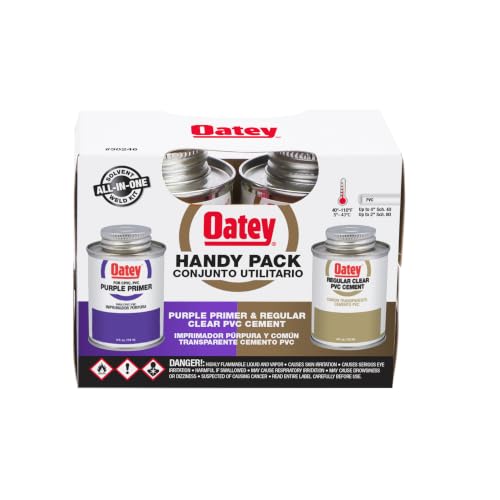
Oatey 30246 PVC Regular Clear Cement & Purple Primer Handy Pack

Harvey’s 19530 Primer/Cement Twin Pack, 4 oz.

Gasoila Nickel PTFE Thread Seal Tape, 1″ x 520″

Oatey 30925 Medium Bodied Transition Cement, 16 oz., Green

Orbit 53552 2″ x 100′ 10 Mil Pipe Wrap Tape, Black

Oatey 4 oz. Regular Bodied Clear PVC Cement

Weld-On 15900 Twin Pack PVC Cement & Primer

Weld-On 10129 713 CPVC Cement, Orange, 1/4 Pint

ADHES Corrosion Protection Pipe Tape, 2″ x 36 yds

Weld-On 10097 705 Industrial PVC Cement, Clear, 1/2 Pint
A Breakdown Of The Leading Choices
The Oatey Handy Pack is the closest thing to a universal starter kit for residential PVC work. You get a 4 oz. can of clear all-purpose cement paired with a 4 oz. can of purple primer, the same two-step combo that plumbing codes call for on pressurized PVC joints. The clear cement flows easily and grabs fast at the 40 to 110°F application range, which covers most basement, attic, and outdoor conditions.
For homeowners tackling a sink trap replacement, a hose bibb repair, or a small DWV (drain, waste, vent) patch, this pack removes the guesswork of matching primer to cement. Purple-tinted primer also leaves a visual marker inspectors look for on potable water lines, so the joint reads as code-compliant at a glance. The 4 oz. size is sized for one or two weekend projects before the cans start to skin over.
Real Benefits
- Cement and primer sold together, no separate shopping trip
- Clear cement suits visible pipe runs where appearance matters
- Purple primer doubles as an inspection-visible application mark
- Recommended for potable water, pressure pipe, conduit, and DWV
- Sets quickly across the typical residential temperature window
Points To Keep In Mind
- 4 oz. cans dry out within a season if you only do occasional repairs
- Not formulated for ABS to PVC transitions (see pick 4 for that)
- Brush sits inside the lid, which owners commonly report can deform over time
Feature Snapshot
Right Fit For
Homeowners and first-time DIYers handling small potable water, drain, or conduit repairs around the house.
A Better Fit Elsewhere
Plumbers working on mixed ABS and PVC drain lines should reach for the Oatey 30925 transition cement instead.
Harvey’s twin pack is the budget alternative for anyone who needs primer and cement in the same box without paying for a brand premium. The two 4 oz. cans arrive ready to use on standard PVC pipe and fittings, making it a sensible grab for property managers stocking a maintenance closet. The brand has a long history in plumbing supplies, and the cans tend to pour smoothly for tight joints.
For one-off fixes like a cracked PVC trap, a leaking sprinkler lateral, or a cracked vent stack, this pack is sized right. The purple primer leaves a visible mark on the pipe, which is helpful when you want to confirm full coverage before the cement goes on. As with most 4 oz. cement cans, expect to use it within a few months once opened.
Noteworthy Benefits
- Lower-cost alternative to comparable Handy Packs
- Twin-pack format keeps primer and cement together on the shelf
- Suitable for general PVC pipe and fitting work
- Made in the United States
Trade-Offs To Consider
- Limited documentation on temperature range or pressure ratings
- Not the right pick for hot-water CPVC lines
- Brush quality inside the can is generally thinner than premium brands
Whose Shelf It Belongs On
Rental property owners and light DIYers who want a no-frills PVC repair pack on hand without overspending.
Swap It Out When
Anyone running a full plumbing repair day with multiple joints should consider the Weld-On 15900 twin pack for larger volumes.
Gasoila’s Nickel PTFE tape isn’t a solvent cement, it’s the thread sealant you reach for after the glue has cured. PTFE (polytetrafluoroethylene) tape wraps around threaded pipe joints, fills micro-gaps in the threads, and helps prevent slow leaks at fittings, valves, and hose connections. The high-density formulation is thicker than standard white tape, which matters on stainless and galvanized lines where threads can gall.
This roll suits plumbing, HVAC, and gas-line assembly work where a thicker seal helps on metal-to-metal connections. At 1 inch wide and 520 inches long, the roll covers many small to mid-sized jobs before it runs out. In most home workshops it lasts through several repair seasons.
Well-Handled Touches
- High-density PTFE build suited to stainless and galvanized threads
- Generous 520-inch roll for repeat use
- Works on water, air, and gas line connections
- Non-toxic composition
Softer Spots
- Overwrap on fine threads can crack fittings, technique matters
- Not a substitute for solvent cement on PVC slip joints
- Roll is thicker than standard white tape, which can feel stiff on small fittings
Perfect Match For
Anyone assembling threaded stainless, brass, or black iron connections in a home workshop or utility room.
Consider Something Else When
Solvent-welded PVC drain work calls for the Oatey 30246 cement and primer combo, not thread tape.
This green cement solves a specific frustration: joining ABS to PVC in the same drain line. Most all-purpose PVC cements aren’t formulated for that transition, which is where the Oatey 30925 earns its keep. The medium-bodied green formula handles non-pressure transition joints up to 6 inches in diameter, covering everything from a basement bathroom remodel to a garage sink tie-in.
The 16 oz. can is sized for multiple joints, which is helpful if you’re reworking a long drain run rather than patching a single fitting. A low-VOC formula also keeps solvent fumes more manageable in enclosed mechanical rooms. It works across the same 40 to 110°F application range as the standard Oatey line.
The Upside
- Specifically engineered for ABS-to-PVC transitions
- 16 oz. can supports larger drain rework projects
- Low-VOC formula reduces harsh fumes indoors
- Covers transition joints up to 6 inches in diameter
Less Ideal Details
- Limited to non-pressure applications, not for supply lines
- Green color shows visibly if you accidentally use it on exposed white PVC
- Larger can is overkill for a single small joint
Technical Reference
Best Suited To
Plumbers and remodelers tying new PVC into existing ABS drain, waste, or vent lines.
Look Elsewhere When
General-purpose potable water repairs are still easier with the Oatey 30246 Handy Pack.
The Orbit pipe wrap tape isn’t a glue, it’s the protective sleeve you apply once joints are welded. The 10 mil PVC construction wraps metal pipe below or above ground to shield it from corrosion, electrolysis, and weathering. At 2 inches wide and 100 feet long, the roll covers long irrigation, gas, or water service runs without running out mid-project.
The flexibility of the 10 mil film matters more than it sounds. Tight elbows and curve fittings stay wrapped without bunching, which is the difference between a long-lasting barrier and a gap that lets moisture in. Black PVC also resists alkalis, salts, and oils, so it holds up in acidic soil and around chemical fertilizer lines.
Where It Excels
- Flexible enough for elbows and tight bends
- Resists humidity, alkalis, oils, and common chemicals
- 100-foot roll covers full residential service runs
- Works above and below grade
Things To Weigh Up
- Not a substitute for solvent cement, used after welding
- 2-inch width requires overlap wrapping on larger pipe diameters
- Black color absorbs heat in direct summer sun
Made For
Property owners wrapping steel, galvanized, or iron pipe runs that sit exposed or buried in aggressive soil.
Reach For A Different Pick When
You need a corrosion wrap with longer footage for big commercial-style runs; the ADHES 36-yard roll is a better match.
This is the bare-bones version of the Oatey cement line: a single 4 oz. can of regular-bodied clear cement, nothing else in the box. It suits quick repairs where primer has already been used or where the joint doesn’t strictly require a separate priming step under local code. The clear finish also disappears into white PVC pipe, so the repair is invisible on exposed runs.
For small visible jobs like a cracked cleanout cap or a short decorative PVC repair, the smaller footprint of a single can is appealing. It carries the same Made-in-USA build quality as the rest of the Oatey line. One thing worth considering is that this product is restricted in California, so check local regulations if you live there.
Key Advantages
- Clear formula disappears into white PVC pipe
- Compact 4 oz. can fits in a kitchen drawer or small toolbox
- Made in the United States
- Useful for repairs that don’t require a fresh primer coat
A Few Limitations
- Not legal for sale in California
- No primer included, so it’s a one-step option rather than a complete kit
- Smaller can size dries out fast once opened
Who Should Grab It
Homeowners outside California who want a single can of clear cement for occasional visible repairs on white PVC.
Where Another Pick Suits Better
For a complete cement and primer kit in one package, the Oatey 30246 Handy Pack is the more convenient option.
The Weld-On 15900 twin pack steps up to a half-pint of cement and a pint of primer, which is the right scale for a serious plumbing day. The 780 series regular-bodied clear cement applies smoothly and grabs quickly on standard PVC pipe and fittings up to 4 inches in diameter. The accompanying primer pre-softens the pipe surface, which is the chemical step that turns a loose-fitting joint into a welded one.
Weld-On’s low-VOC formula is a notable point if you work in tight bathrooms or basements where solvent smell builds up fast. Compared to the smaller Oatey Handy Pack, this kit offers much more volume for fewer reorders. Depending on the size of your project, you may find this much cement overkill for a single repair.
Useful Strengths
- Half-pint cement and pint primer handle a full project without refills
- Compatible with PVC pipe and fittings up to 4 inches
- Low-VOC formula reduces solvent odor in enclosed rooms
- Regular-bodied cement applies smoothly for tight joints
Practical Considerations
- Larger cans are wasted on one-off small repairs
- Clear cement doesn’t leave an inspector-visible primer mark
- Pint-sized primer dries out within months once opened
Feature Card
Who It Suits Best
DIYers and small-shop plumbers tackling multi-step repairs, remodels, or fixture swaps in a single weekend.
Skip It When
You only need to fix one small joint, the Harvey’s twin pack saves shelf space and money.
CPVC pipe handles hot water, which is why a regular PVC cement will fail there. The Weld-On 713 in orange is formulated specifically for CPVC, copper-tube-size, and Schedule 40 hot-water lines up to 2 inches in diameter. The orange color makes the joint instantly recognizable on inspection, which is helpful in mixed plumbing basements.
The 1/4 pint can is small enough to keep in a service van without rattling around, and the high-strength formula works on residential plumbing, mobile home potable lines, and RV water systems. Depending on your hot-water system layout, you may find one can covers a couple of repair seasons before it goes off.
Practical Pluses
- Engineered for CPVC hot water lines, not generic PVC
- Orange color provides visual confirmation of CPVC-compatible cement
- Compatible with copper-tube-size and Schedule 40 CPVC
- Low-VOC formula for indoor residential work
Honest Caveats
- Not interchangeable with standard PVC cement
- Limited to 2-inch pipe diameter
- 1/4 pint size runs out fast on whole-house re-pipe jobs
Right Fit For
Homeowners and RV owners who need a reliable cement for CPVC hot water repairs specifically.
Another Choice May Suit
For general cold-water PVC supply lines, the Weld-On 10097 industrial cement is the more versatile alternative.
The ADHES corrosion wrap is the long-haul option in this lineup. At 2 inches wide and a full 108 feet per roll, it covers extended outdoor runs, deep irrigation laterals, or entire exposed service lines without mid-project roll changes. The 6 mil PVC film pairs with a rubber-based pressure-sensitive adhesive that grips the pipe and stays put through seasonal swings.
It’s designed to resist salt water, alkalis, and salts, which matters in coastal yards, fertilizer-heavy gardens, and anywhere the soil chemistry eats at metal. The adhesive is also thick enough to bridge small surface imperfections on older pipe. For most residential projects, a single roll covers the whole system with room to spare.
Reasons It Performs
- 108-foot roll covers extended residential pipe runs
- Resists salt water, alkalis, and salts in aggressive soil
- Rubber adhesive grips irregular pipe surfaces
- Suitable for buried and exposed pipe protection
Worth Bearing In Mind
- Adhesive can be tricky to reposition once it contacts the pipe
- 2-inch width requires overlap on pipe larger than 1-1/2 inches
- Stickers on roll sometimes leave residue if left in the sun
Built With In Mind
Property owners wrapping long irrigation, well, or service lines where one continuous barrier matters more than a quick patch.
Where A Sibling Pick Shines
For tighter elbows and shorter runs, the Orbit 53552 wrap tape is more flexible on curves.
The Weld-On 705 sits at the industrial end of the residential-friendly scale. Its medium-bodied, high-strength clear formula covers all rigid PVC pipe and fittings up to 6 inches, plus Schedule 80 PVC up to 4 inches, which is well beyond a typical weekend repair. Irrigation systems, DWV stacks, PVC foam core, and electrical conduit all fall inside its use list.
The low-VOC formula and half-pint can make it approachable for homeowners, but the spec sheet clearly aims at contractors. Compared to the smaller Weld-On 15900 twin pack, you trade the included primer for stronger cement chemistry. In most residential situations, the cement-only format is fine when you already keep primer on the shelf.
Positive Takeaways
- Industrial-grade strength for irrigation, conduit, and DWV
- Handles rigid PVC up to 6 inches and Schedule 80 up to 4 inches
- Medium body fills small gaps on weathered fittings
- Low-VOC formula for indoor use
Where It Is Less Suited
- Cement only, no primer in the can
- Overkill for a single trap or sink repair
- Clear formula leaves no inspector-visible color trace
Quick Facts
Who Will Love This
Tradespeople and serious DIYers running irrigation, electrical conduit, or larger drain lines around a property.
Not Your Match When
You need a one-stop cement and primer combo for a quick home fix, the Weld-On 15900 twin pack is more convenient.
What Matters Most Before Choosing Pvc Pipe Glues
Match The Cement To The Pipe
PVC and CPVC look similar but behave differently under heat and pressure. PVC cement (clear or gray) is for cold-water supply, drain lines, irrigation, and conduit. CPVC cement (orange) is engineered for hot-water lines up to about 200°F. Using PVC cement on CPVC, or vice versa, is the single most common cause of hot-water joint failures. ABS-to-PVC transitions require a special green or transition cement; standard clear PVC cement is not rated for that joint.
Body Type Changes How The Cement Behaves
Regular-bodied cement is thin, pours easily, and suits tight-tolerance small-diameter pipe. Medium-bodied cement is thicker, fills slight gaps, and is the workhorse choice for residential repairs up to 6 inches. Heavy-bodied cement is for large-diameter industrial pipe and is overkill for most homes. Choosing the right body avoids both starved joints and sloppy over-thick application.
Primer Is Not Optional On Pressure Lines
For pressurized potable water and many code jurisdictions, purple primer is required before cement goes on. Primer softens the pipe surface so the cement can fuse PVC at the molecular level rather than just glue it. Skipping primer on a non-pressure drain line might appear to work for a while, but pressurized systems will eventually leak at unprimed joints.
Storage And Shelf Life Matter
Solvent cement starts to thicken as the can sits, even unopened. A 4 oz. can used within a season stays fluid; a half-full pint left for two years turns to gel. Buying a smaller can sized to your project reduces waste. Always recap tightly, store cans upright at moderate temperature, and expect a working can to last 12 to 24 months once opened.
Key Considerations Across These Picks
Where Shoppers Go Wrong
Many first-time shoppers grab the first “PVC cement” can they see without checking whether the pipe is PVC, CPVC, or ABS. That single mismatch voids the joint for its intended use. Others skip primer on pressure lines because the joint “looks fine” right after assembly, only to find seepage months later. Buying a too-large size for a small repair also costs money, since cans skin over and go to waste before the next project.
What The Higher Tier Buys
Industrial-grade cements cost more per ounce because they cover wider pipe diameters, thicker walls, and more demanding environments like chemical drain lines or pressurized irrigation. The extra money buys a low-VOC formula, better gap-filling medium body, and approvals for larger Schedule 80 pipe. For a single household trap repair, the upgrade is hard to justify. For a re-pipe, irrigation overhaul, or any job with 2-inch-plus pipe, the higher tier earns its keep through fewer callbacks and stronger welds.
Frequently Asked Questions
Do I really need primer if I’m gluing PVC?
For non-pressure drain lines, primer is often skipped in casual repairs, but it is required by code on pressurized potable water systems. Primer chemically softens the pipe so the cement fuses both surfaces into one piece rather than just bonding them. Skipping it on pressure lines is the most common cause of slow leaks.
Can I use PVC cement on CPVC pipe?
No. CPVC pipe carries hot water and needs a CPVC-rated cement, usually orange, like the Weld-On 713 in this roundup. PVC cement on CPVC will appear to set, but the joint will soften under hot water and eventually fail. Always match the cement color and label to the pipe type.
How long does PVC cement take to cure?
Most residential PVC joints handle careful water pressure after about 15 to 30 minutes, but full chemical cure takes 24 hours. Holding off on pressurizing a new line for a day is the safest practice, especially on larger diameter pipe. Cool weather extends cure time, warm weather shortens it.
What’s the difference between cement and primer?
Primer is a cleaner and softener, applied first to prep the pipe surface. Cement is the actual welding solvent that fuses the pipe and fitting together. They come in separate cans for a reason: using cement without primer on a pressure line is a code violation in most jurisdictions.
How should I store open cans of cement and primer?
Keep cans upright, tightly capped, and at room temperature out of direct sunlight. A can stored well stays usable for 12 to 24 months; a can stored in a hot garage or left uncapped turns to gel in weeks. If cement thickens like honey or primer goes stringy, it’s past its useful life.
Bottom Line
The right PVC glue depends almost entirely on the pipe in front of you. For general residential repairs, the Oatey 30246 Handy Pack covers most scenarios with one purchase. For hot-water CPVC, transition joints, or industrial-diameter pipe, the specialty picks in this roundup step in cleanly. Match the cement to the pipe, use primer on pressure lines, and the joint will outlast the fitting it’s welded to.




