

A sump pump is the quiet insurance policy under your basement floor, and you only notice it when it fails during a storm surge. Homeowners dealing with high water tables, finished basements, or rural sump pits tend to want a pump that simply runs when asked, year after year, with no drama. This lineup covers residential duty, jobsite-grade dewatering, and portable utility options, so you can match capacity to the pit depth, debris load, and how often groundwater actually rises where you live.
An Overview Of The Picks

WAYNE CDU800 1/2 HP Submersible Sump Pump (Cast Iron)
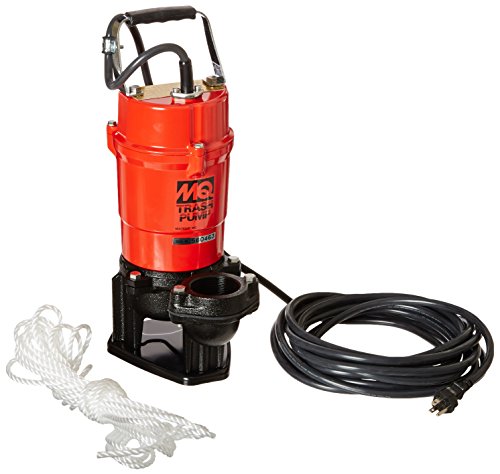
Multiquip ST2040T Electric Submersible Trash Pump

Tsurumi LB-480 Submersible Dewatering Pump (2/3 HP)

Prostormer 1 HP 3500 GPH Submersible Sump Pump

AQUASTRONG 1 HP Sump Pump 4500 GPH

Aquastrong 1/2 HP Thermoplastic Utility Pump 3159 GPH
Aquastrong 1/2 HP Utility Pump 3159 GPH with Float Switch

Aquastrong 1/2 HP Automatic Sump Pump 3159 GPH

Prostormer 1/2 HP 2110 GPH Submersible Sump Pump
The Strengths Of Each Pick
The CDU800 is the kind of pump you can install and largely forget about, which is exactly what a primary residential sump demands. The cast iron body paired with a corrosion-resistant steel shell gives the unit a reassuring heft, and in cold basements or damp crawl spaces that mass helps dampen vibration noise during long pump cycles. Owners with finished basements tend to appreciate that the top-suction design pulls water in from above the inlet, helping reduce the air-lock headaches you sometimes see on cheaper units.
A vertical float switch, rated for roughly a million cycles, sits protected inside the housing, so a stray bucket or toy in the pit is less likely to snag it. This is a far cry from the tethered-float designs you’ll see later in the list, which need clear horizontal space above the pump.
What Stands Out
- 5,100 GPH peak flow handles most residential pit volumes after heavy rain or rapid snowmelt
- Cast iron and stainless steel construction resists corrosion in perpetually wet sump environments
- Vertical float switch is tested to roughly a million cycles for years of automatic on/off use
- Top-suction intake design helps minimize clogging from sediment and air pockets
- Manufacturer covers the pump with a three-year warranty for added peace of mind
Points To Keep In Mind
- Heavier than plastic-bodied pumps, so carrying it down basement stairs is a real workout
- Cast iron can develop surface rust on the exterior over years of humid storage
- No integrated backup or dual-pump capability, so a second unit is wise in high-risk basements
Who It Suits Best
Homeowners with a dedicated sump pit, moderate inflow, and a standard 115V outlet who want a long-term primary pump.
Where Another Pick Suits Better
Contractors pulling muddy water from trenches should consider the Multiquip ST2040T for its trash-tolerant impeller and cast iron abrasion resistance.
Step into a muddy jobsite trench or a flooded basement full of silt and debris, and the ST2040T starts to make more sense than a typical residential pump. It’s built around an industrial cast iron housing and a cast iron impeller with a neoprene rubber overlay, a combination that shrugs off the gravel, sand, and small solids that would chew up a standard plastic impeller. Where the WAYNE CDU800 above is a refined homeowner unit, this is a workhorse designed for daily contractor abuse.
The 1 HP single-phase motor delivers up to 79 GPM through a 2-inch discharge port, which moves a surprising amount of dirty water quickly. Internal thermal overload protection and dual shaft seals help the pump survive dry spells and gritty conditions that would otherwise shorten its life.
What Helps Most
- Cast iron impeller with neoprene overlay handles abrasive solids up to about 1 inch in diameter
- 2-inch suction and discharge ports speed up dewatering on jobsites and large flooded areas
- Integrated carrying handle simplifies transport between trucks and work zones
- Internal thermal overload protection reduces the risk of burnout during heavy cycles
Things To Consider
- No automatic float switch, so the pump relies on manual on/off control
- Heavier and bulkier than residential sump units, making permanent installation awkward
- Not designed as a quiet primary basement pump in finished living spaces
Best Suited To
Contractors, tradespeople, and homeowners handling emergency flood cleanup with gritty or debris-laden water.
Skip It When
Your priority is a hands-off residential sump, in which case the Tsurumi LB-480 or WAYNE CDU800 deliver automatic operation.
Tsurumi’s LB-480 earns its reputation among contractors who rely on it day after day on jobsites. The slimline body is engineered to slip into an 8-inch caisson, which is unusually compact for a 2/3 HP dewatering pump. Where many residential units like the WAYNE CDU800 require a generously sized pit, this one fits where others can’t.
With up to 63 GPM output, a urethane impeller with reinforced wear plates, and a generous 32-foot cord, the LB-480 covers a lot of ground without needing constant repositioning. It runs on standard 115V outlets, so you can drop it into a residential sump in a pinch, though it’s truly at home on a construction site.
Good Reasons To Consider
- Slimline profile fits into tight 8-inch caissons where standard pumps cannot operate
- Urethane impeller and wear plates resist abrasive wear from sandy or gritty water
- 32-foot power cord provides flexibility for distant outlet placement on jobsites
- 63 GPM flow rate covers mid-sized dewatering jobs in a reasonable timeframe
Trade Offs
- Manual operation only, no integrated automatic float for unattended residential use
- Higher price tier than basic residential sump pumps for comparable flow rates
- Specialty design may be overkill for simple basement drainage
Right Fit For
Tradespeople and homeowners with narrow caissons, construction pits, or tight basements where a standard pump will not fit.
Look Elsewhere When
You need a fully automatic residential sump, in which case the WAYNE CDU800 offers simpler plug-and-forget operation.
For shoppers who want serious flow without paying for a premium residential nameplate, this Prostormer 1 HP unit punches above its tier. It moves up to 3,500 GPH, putting it in the same neighborhood as the AQUASTRONG 1 HP reviewed further down, but typically lands at a lower price point. A built-in float switch handles automatic on/off duty, which is a feature you’d otherwise expect on a higher-tier pump.
The thermoplastic body keeps the unit light enough to haul to a crawl space or upper-floor flooding job, which sets it apart from the cast iron heft of the WAYNE CDU800. Startup requires submerging the pump at a slight angle to bleed trapped air, a small step that’s worth doing carefully the first time you use it.
Everyday Wins
- 3,500 GPH output rivals more expensive 1 HP pumps on the market
- Integrated float switch removes the need to manually start and stop the unit
- Lightweight thermoplastic construction simplifies carrying and repositioning
- Useful as either a primary or backup sump pump in basements with moderate inflow
Small Caveats
- Not designed for continuous operation, so heavy water tables may shorten its service life
- Thermoplastic housing is less durable than cast iron over many years of submersion
- Air-trap at startup requires an extra few seconds of pre-soaking to prime
Made For
Budget-conscious homeowners with moderate basement seepage who want strong flow without overspending on cast iron construction.
Reach For A Different Pick When
You need long-term primary duty in a harsh sump, where the WAYNE CDU800’s cast iron body is a safer bet.
The AQUASTRONG 1 HP is the output champion of this roundup at 4,500 GPH, outpacing even the WAYNE CDU800’s 5,100 GPH peak on paper. In practice, the real advantage is its lift height: water up to 30 feet vertically, which is meaningful for deep basements or homes where the discharge line has to climb to daylight. The bottom-suction design filters debris and drains the basin down to roughly 1/5 inch from the surface.
It’s a plug-and-play unit without a tethered float, so you control on and off manually by plugging and unplugging the cord. That keeps the design simple and inexpensive, though it does mean this is a backup or active-attention pump more than a set-and-forget primary.
Notable Upsides
- 4,500 GPH flow rate clears flooded basements quickly during storms
- 30-foot maximum lift handles deep sump pits or high discharge lines
- Bottom-suction intake drains water down to about 1/5 inch from the floor
- Handles solids up to roughly 1/5 inch without choking
Honest Caveats
- No float switch means you must manually start and stop the pump
- Plastic body is lighter than cast iron but less durable for permanent submersion
- High flow may be overkill for shallow residential pits with low inflow
Quick Facts
Who Will Love This
Homeowners with deep sump pits, fast-rising water, or uphill discharge runs who want maximum gallons per hour.
A Better Fit Elsewhere
If automatic unattended operation matters more than raw flow, the Aquastrong 1/2 HP Automatic Sump Pump with its electronic sensor is a smarter match.
Not every water problem lives in a basement sump. The Aquastrong 1/2 HP utility pump earns its slot by covering the wider category of drain-down tasks: flooded hot tubs, garden ponds, window wells after heavy rain, and swimming pool cover water. The thermoplastic body is light enough to carry out to the yard with one hand, and the 10-foot power cord reaches most outdoor outlets without an extension.
Output lands at 3,159 GPH with up to 26 feet of vertical lift, which is more than enough for typical residential pool, pond, and window-well duty. The bottom-suction screen filters debris down to about 1/5 inch, and the unit drains water down to roughly 1/5 inch from the surface for nearly complete removal.
Why It Works Well
- Lightweight thermoplastic build makes transport between jobs effortless
- 3,159 GPH handles pools, ponds, and flooded window wells in minutes
- Bottom-suction filter keeps the pump from ingesting leaves and large debris
- 10-foot cord avoids extension cable use in most yard setups
Things To Weigh
- Manual plug-in control only, no automatic float switch
- Thermoplastic construction is less rugged for permanent submerged installation
- Not optimized for continuous duty as a primary residential sump
Whose Shelf It Belongs On
Pool owners, gardeners, and homeowners who need a grab-and-go pump for seasonal water removal tasks.
Swap It Out When
Your main need is unattended basement sump duty, in which case the WAYNE CDU800 or Aquastrong Automatic pump are better fits.
Where the previous Aquastrong utility pump asks you to plug and unplug manually, this sibling model adds the most-requested feature for unattended use: a tethered float switch. Plug it in, set the float tether length, and the pump starts and stops on its own as the water level rises and falls. That’s the same automatic behavior that makes the WAYNE CDU800 a set-and-forget primary, only with this Aquastrong’s lighter build.
Flow holds steady at 3,159 GPH with up to 26 feet of vertical lift, and the pump passes solids up to 1/5 inch. Owners who want a hybrid pump for basement backup duty plus pool and pond drain-downs tend to favor this combination over a dedicated residential-only unit.
The Practical Payoff
- Tethered float switch adds automatic on/off control at a modest price premium
- 3,159 GPH handles flood removal and seasonal drain-downs efficiently
- Adjustable tether lets you match activation depth to the pit or pool size
- Low-noise motor operation compared to higher-HP trash pumps
Potential Drawbacks
- Tethered float requires clearance above the pump, which may not fit in shallow basins
- Thermoplastic housing is lighter than cast iron residential pumps
- Float tether can tangle if the pump is moved between sites repeatedly
Built With In Mind
Homeowners who want one pump that handles automatic basement backup plus seasonal pool, pond, and hot tub draining.
Not Your Match When
Your sump pit is too narrow for a tethered float to swing freely, in which case the Aquastrong Automatic Sump Pump’s electronic sensor is the smarter pick.
The newest Aquastrong on the list tackles the most common sump pit limitation: space. Tethered floats need room to swing, and vertical floats need clear vertical travel, both of which can be awkward in narrow basins. This model swaps the mechanical float for a built-in electronic sensor that triggers at six adjustable water levels from 1 inch up to 5 inches, then shuts off at roughly 0.4 inch. You get automatic control without any moving float hardware to snag or tangle.
Output stays consistent with the other Aquastrong models at 3,159 GPH and 26 feet of lift, so performance isn’t sacrificed for the smart switch. The trade-off is a sealed electronic sensor that, while modern, is harder to service in the field than a replaceable tethered float.
Benefits That Matter
- Electronic water-level sensor with six activation points fits narrow sump basins
- No moving float to snag on basin walls or debris
- Shuts off at about 0.4 inch for nearly complete water removal
- Same 3,159 GPH and 26-foot lift as other 1/2 HP Aquastrong models
Points To Note
- Electronic sensor is more difficult to service than a mechanical float
- Slightly higher price than the manual or tethered-float siblings
- Plastic body is less rugged than the WAYNE CDU800’s cast iron housing
Feature Snapshot
Perfect Match For
Homeowners with narrow or shallow sump basins who want automatic operation without the geometry constraints of a tethered float.
Consider Something Else When
Your basement is a high-volume primary sump, in which case the WAYNE CDU800’s cast iron durability and proven track record are the better match.
The smaller sibling to the 1 HP Prostormer reviewed earlier, this 1/2 HP model trades peak flow for a lower price and a more modest fit. At 2,110 GPH, it sits well below the AQUASTRONG 1 HP and the WAYNE CDU800, which makes it a sensible choice as a backup pump alongside a primary unit, or for light-duty basements where heavy storms are rare. The built-in float switch handles automatic on/off, so it can serve unattended duty.
The trade-off, as with the larger Prostormer, is the same caveat: continuous operation isn’t recommended, so high-water-table basements will wear through it faster than cast iron alternatives. Startup still requires that pre-soak at a slight angle to bleed trapped air from the housing.
A Strong Showing
- Built-in float switch adds automatic on/off at a budget price
- 2,110 GPH suits light to moderate basement seepage
- Compact size fits smaller sump pits where bigger pumps will not
- Lower power draw than 1 HP residential units
Honest Caveats
- Lower flow rate means slower clearing during severe flooding
- Not rated for continuous duty, so heavy inflow shortens service life
- Thermoplastic construction is less durable than cast iron alternatives
Who Should Grab It
Homeowners seeking an inexpensive backup pump to pair with a primary unit, or those in low-inflow basements where modest capacity is enough.
A Better Fit Elsewhere
For storm-prone regions needing higher flow, the AQUASTRONG 1 HP or Prostormer 1 HP provide much faster clearing.
Matching A Sump Pump To Your Basement
Choosing the right sump pump starts with honestly sizing your water problem rather than chasing the biggest flow number. A basement that drips during spring thaws has very different needs than a pit that fills in minutes during a cloudburst.
Capacity and lift height. Flow ratings like 3,100 GPH or 5,100 GPH describe the pump’s peak output at zero lift, meaning when it’s pushing water level with the discharge. Real-world output drops as you add vertical lift and pipe friction, so a basement that needs to push water up a 10-foot discharge run sees significantly less than the headline number. Match the pump’s max lift to your total vertical rise plus pipe run.
Float switch style. Mechanical floats come in vertical and tethered (also called pendant) designs. Vertical floats stay close to the pump body, while tethered floats swing on a cord and need clearance above the pump. Electronic sensors, like the one in the Aquastrong Automatic model, work in tight basins where floats physically cannot travel.
Build material. Cast iron pumps like the WAYNE CDU800 are heavier, dissipate motor heat better, and resist corrosion over many years. Thermoplastic pumps are lighter, easier to carry, and cheaper, but typically wear out faster under continuous submerged duty.
Activation method. Automatic pumps with float switches run unattended and recover the basin whenever water rises. Manual pumps, sometimes called utility pumps, only run while plugged in, which makes them ideal for drain-down tasks but inconvenient as a primary residential sump.
Key Considerations Across These Picks
Pitfalls Shoppers Hit
The most common sump pump mistake is buying a pump that’s too small for the worst-case storm rather than the average rain. A pump that comfortably handles a 1-inch rain event can be overwhelmed by a 4-inch cloudburst, leaving you with a flooded basement and a working pump that simply cannot keep up. Match pump capacity to your worst recorded event, not your typical week.
Another trap is ignoring the discharge side. A pump with 5,000 GPH output still fails if the discharge line is undersized, has too many bends, or runs uphill past the pump’s lift capacity. Measure the vertical rise from the pump to daylight, then add roughly one foot of equivalent lift for every ten feet of horizontal pipe run.
Where The Extra Money Goes
Spending more on a sump pump typically buys three things: heavier construction, a longer or better warranty, and smarter switching. Cast iron bodies outlast thermoplastic ones in permanent submerged installations, which matters for primary residential duty where replacement is a hassle. Higher-tier pumps also tend to use more reliable float switches tested for hundreds of thousands of cycles, instead of basic tethered floats that can wear out or tangle.
The upgrade is worth it when your sump pit is your home’s primary flood defense, when the basement is finished, or when you live in a region with frequent power outages where pump reliability directly translates to avoided damage. For occasional drain-down tasks or seasonal yard work, a budget-friendly utility pump is usually enough.
Frequently Asked Questions
How long do sump pumps typically last? Most residential sump pumps run for about 7 to 10 years before the motor or switch wears out. Cast iron models like the WAYNE CDU800 tend to last longer than thermoplastic utility pumps, especially in continuously wet pits with frequent cycling.
Do I need a backup sump pump? A backup pump is wise in finished basements, high water table areas, or regions with frequent power outages. A small 1/2 HP unit like the Prostormer 1/2 HP or Aquastrong utility pump can pair with a primary pump for redundancy during storms.
Can one sump pump handle both basement and pool water? A utility pump with a float switch or manual plug-in design can drain both spaces, but it’s not ideal as a permanent residential sump. Pool water with chlorine can shorten seals and impeller life on a pump meant for groundwater.
What’s the difference between GPH and GPM? GPH (gallons per hour) and GPM (gallons per minute) measure the same thing at different time scales. Divide GPH by 60 to get GPM, so 3,000 GPH equals 50 GPM, a useful sanity check when comparing pump specs from different listings.
How often should I test my sump pump? Pouring a bucket of water into the pit every few months confirms the float switch triggers and the pump discharges. Annual inspection of the intake screen and check valve keeps the system reliable when storms arrive.
The Takeaway
The most reliable sump pump is the one that matches your pit, your inflow rate, and your willingness to check on it. Cast iron residential units like the WAYNE CDU800 anchor long-term basement duty, while the Aquastrong family covers portable, automatic, and high-flow niches at friendlier prices. Pick the design that fits your space, confirm the lift capacity covers your discharge run, and your basement will stay quietly dry for years to come.




