

Streaming a 4K movie while someone else games online shouldn’t feel like a tug of war over bandwidth, especially on a Spectrum 400 Mbps plan. The modem you pair with that plan quietly shapes how smoothly everything else works, from video calls to cloud backups.
Not every modem on the market plays nicely with Spectrum, and not every “fast” modem actually delivers the speed you’re paying for. This list focuses on modems that handle 400 Mbps comfortably today and leave a little room if you decide to upgrade your plan later. Pair them with a router that matches your space, and the rest of your network tends to fall into place.
A Closer Look At The Lineup
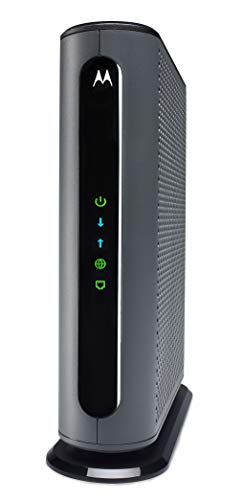
Motorola MB7621 Cable Modem (DOCSIS 3.0)

Tenda AC1200 WiFi Router, Dual Band (AC10)

Tenda AC1200 Gigabit WiFi Router (AC8)

Netgear CM600 (24×8) DOCSIS 3.0 Cable Modem

Motorola MB7420 16×4 Cable Modem (DOCSIS 3.0)
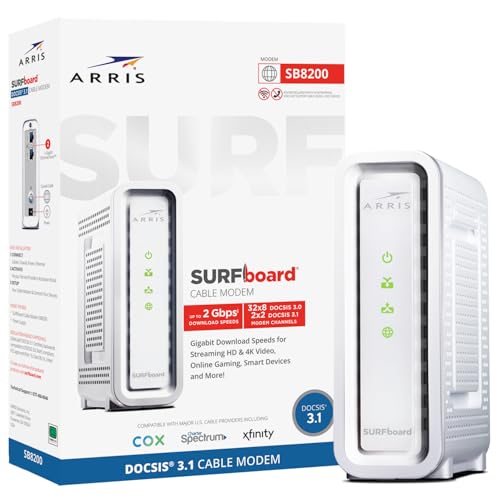
ARRIS SURFboard SB8200 DOCSIS 3.1 Cable Modem

Tenda WiFi 7 BE7200 Router (BE12Pro)
More On The Choices That Made The List
The Motorola MB7621 sits in a sweet spot for most Spectrum households running a 400 Mbps plan. DOCSIS 3.0 is the current cable internet standard, and the MB7621 is approved for use with major cable providers including Spectrum, which is the part that actually matters when you call to activate.
You pair it with a separate WiFi router, which is honestly the better way to run a network anyway. Swap in whatever router fits your space, and the modem just handles the conversation with your provider. For a typical three-bedroom home with mixed streaming, gaming, and work calls, the MB7621 has enough breathing room without overspending.
Useful Strengths
- Approved for Spectrum and other major cable providers, so activation is usually painless.
- DOCSIS 3.0 with a gigabit Ethernet port, which is the standard your Spectrum plan expects.
- Full-band capture digital tuner for steadier speeds, especially during peak evening hours.
- Plays nicely with any WiFi router, so you can upgrade one piece at a time down the road.
Things To Consider
- No built-in WiFi, so you still need a separate router to actually get a wireless signal in your home.
- DOCSIS 3.0 is the current standard, and a 3.1 modem makes more sense if you plan to upgrade past gigabit.
Who It Suits Best
Subscribers who want a no-fuss modem that handles 400 Mbps without overpaying for features they won’t use this year.
Look Elsewhere When
If you plan to bump up to a gigabit Spectrum tier soon, the ARRIS SURFboard SB8200 is a more future-proof choice with its DOCSIS 3.1 support.
The Tenda AC10 is a router, not a modem, but it earns its spot here because it pairs naturally with the Motorola MB7621 for a complete 400 Mbps setup. Dual-band means it broadcasts on both 2.4 GHz and 5 GHz frequencies, which helps when you have a mix of older and newer devices around the house.
Up to 1.2 Gbps combined throughput is well above what a 400 Mbps plan actually delivers, so the router becomes the bottleneck in theory but rarely in practice. Four gigabit Ethernet ports give you room for a smart TV, a game console, and a desktop without buying a switch. MU-MIMO (multi-user, multiple input, multiple output) and beamforming help direct the signal where you actually need it.
What Pays Off
- Four 6dBi high-gain antennas push signal through walls better than basic routers in the same range.
- MU-MIMO handles several devices at once without one device hogging the bandwidth.
- Parental controls and guest WiFi are baked in, which is rare at this price.
Points To Note
- AC1200 is a generation behind WiFi 6 and WiFi 7, so it will feel dated once newer devices dominate your network.
- You still need a modem, like the Motorola MB7621, before this router does anything useful.
Right Fit For
Shoppers building a budget-friendly Spectrum setup for a small to medium home with a handful of connected devices.
Skip It When
You want wireless headroom for years of new gear, in which case the Tenda WiFi 7 BE7200 is the smarter long-term bet.
The Tenda AC8 looks like a sibling to the AC10 but leans into wired use. Three gigabit ports, with one dedicated as a WAN port to connect to your modem, leave you two free for anything that benefits from a hard line, like a streaming box or a work-from-home PC.
Same AC1200 wireless ceiling as the AC10, which is fine for a 400 Mbps plan, and four 6dBi antennas handle the broadcast side. AP mode lets you repurpose the unit as a wireless access point later if you upgrade to a beefier main router. The compact footprint makes it easy to tuck behind a TV stand or on a bookshelf.
Why It Works Well
- Three gigabit ports total give you more wired flexibility than most budget routers.
- AP mode makes it useful as a secondary access point down the line.
- Small form factor fits where chunkier routers won’t.
Honest Caveats
- One fewer LAN port than the AC10, so count your wired devices before committing.
- Still AC1200, so don’t expect the multi-device performance of WiFi 6 or WiFi 7 hardware.
Best Suited To
Renters and apartment dwellers who want clean wired connections for two or three key devices without overspending.
Consider Something Else When
Your household has more than three wired gadgets to plug in, in which case the Tenda AC10 with its four LAN ports makes more sense.
The Netgear CM600 is a 24-channel downstream, 8-channel upstream DOCSIS 3.0 modem, which is a fancy way of saying it juggles more data at once than the MB7420 below. The “24×8” channel bonding matters when several people in your home are online simultaneously, each pulling a different stream.
Max download speeds of 960 Mbps make this modem comfortable for Spectrum plans up through the gigabit tier, so the headroom is real. It’s modem-only, so you’ll add a router separately, which is what most networking-savvy households prefer anyway. Build quality is solid and the unit tends to run cool even under sustained load.
What Makes Sense
- 24 downstream channels keep speeds steady when the whole household is online at once.
- DOCSIS 3.0 certified across Comcast, Cox, Charter, and other major providers.
- Plenty of room to grow if you upgrade to a faster Spectrum plan later.
Some Limits To Know
- DOCSIS 3.0 instead of 3.1, so the ARRIS SB8200 is the better pick for long-term gigabit use.
- No built-in WiFi, so you still need a router to broadcast a wireless signal.
Who Should Grab It
Multi-device households where four or five people stream, game, and work online at the same time on a 400 Mbps plan.
Another Choice May Suit
For a quieter two-person home, the Motorola MB7621 handles the same plan with fewer channels and a lower cost.
The Motorola MB7420 is a 16×4 DOCSIS 3.0 modem recommended for actual cable speeds up to 375 Mbps, which lines up almost exactly with a Spectrum 400 Mbps plan. It is approved for use with Spectrum, Comcast, Cox, and other major providers, so activation is straightforward.
Like the MB7621, it relies on a separate router for WiFi, which is the cleaner architecture for most homes. The full-band capture digital tuner helps lock onto the right frequencies for a steadier connection during peak hours. A single gigabit Ethernet port connects to your router of choice without bottlenecks.
Where It Helps
- Approved across Spectrum, Comcast, and other major cable providers, simplifying activation.
- Full-band capture digital tuner keeps speeds consistent during evening peak hours.
- Modem-only design avoids the firmware bloat that combo units tend to pick up over time.
Worth Bearing In Mind
- Recommended for up to 375 Mbps, so it sits at the edge of the 400 Mbps plan rather than comfortably above it.
- Still DOCSIS 3.0, so the long-term upgrade path points to a DOCSIS 3.1 modem.
Made For
Solo users, couples, and small households who want a basic, no-fuss modem that pairs cleanly with a 400 Mbps plan.
Reach For A Different Pick When
Your household runs more than a handful of devices simultaneously, in which case the Netgear CM600 with its 24×8 channel bonding is the better fit.
The ARRIS SURFboard SB8200 jumps to DOCSIS 3.1, the next-generation cable standard, which is the meaningful upgrade over the DOCSIS 3.0 modems elsewhere on this list. DOCSIS 3.1 uses more efficient data encoding, so it pulls more speed out of the same coax line and stays relevant for years.
It’s built for cable internet plans up to 2 Gbps, which is far more than a 400 Mbps plan delivers today, but the point is headroom. Two gigabit Ethernet ports let you aggregate them on supported routers for multi-gig wired connections. The tradeoff is cost, and you may find that paying for 3.1 feels excessive for a 400 Mbps plan if you never plan to upgrade.
The Case For It
- DOCSIS 3.1 support means the modem stays relevant even as Spectrum rolls out faster tiers.
- Two Ethernet ports allow link aggregation for multi-gig wired backbones on compatible routers.
- Sturdy build and a track record of stable firmware updates from ARRIS.
Trade-Offs To Consider
- Higher upfront cost than the Motorola or Netgear DOCSIS 3.0 options, which is hard to justify at exactly 400 Mbps.
- You still need a separate WiFi router, so the SB8200 is only half of a complete setup.
Who Will Love This
Subscribers who plan to step up to a gigabit or multi-gig Spectrum plan in the next year or two and want to skip the modem upgrade.
Swap It Out When
You only need 400 Mbps for the foreseeable future, in which case the Motorola MB7621 covers the same plan at a noticeably lower cost.
The Tenda BE12Pro brings WiFi 7 to a price point that, while still premium, doesn’t punish shoppers for wanting the latest standard. WiFi 7 introduces features like MLO, or Multi-Link Operation, which lets a device use two bands at the same time for lower latency and steadier throughput.
Two 2.5G ports handle the wired side without bottlenecking a fast cable plan, and a quad-core CPU keeps everything responsive when traffic spikes. A private IoT network keeps smart-home gear off your main WiFi, which is a small but real security win. The honest read is that a 400 Mbps plan won’t fully exercise this router today, but if you’re replacing old hardware anyway, the headroom pays off.
Good Reasons To Consider
- WiFi 7 with MLO for noticeably better performance on newer laptops and phones.
- Two 2.5G wired ports for future-proofing the connection to your modem and a desktop or NAS.
- OpenWRT support gives tinkerers real control over the firmware.
Potential Drawbacks
- Premium price compared to AC1200 options, which is hard to justify if your current devices don’t support WiFi 7.
- Real-world gains over a Tenda AC10 are subtle on a 400 Mbps plan, depending on how you use your network.
The Right Fit
Power users, gamers, and gadget early adopters who want their router to outlive two or three device upgrade cycles.
Where A Sibling Pick Shines
For a smaller home with mostly older devices, the Tenda AC1200 AC10 covers the same Spectrum plan at a fraction of the cost.
What To Weigh Before Picking A Modem For Your Spectrum Plan
DOCSIS version is the first fork in the road. DOCSIS 3.0 modems handle 400 Mbps comfortably today and are cheaper, while DOCSIS 3.1 modems cost more now but stay relevant as cable providers push faster tiers. If you see yourself upgrading plans in the next two years, the ARRIS SB8200’s 3.1 silicon is a sensible hedge. If 400 Mbps is your ceiling for the foreseeable future, the Motorola MB7621 or MB7420 will do the job without overspending.
Channel bonding matters more than raw modem speed. A 16×4 modem like the Motorola MB7420 uses 16 downstream channels, while a 24×8 modem like the Netgear CM600 uses 24. More channels mean the modem can pull data through several lanes at once, which keeps things smooth when multiple people stream, game, and download at the same time. For a one- or two-person household, 16×4 is plenty. For larger households, the difference shows up at dinner time.
Router pairing is the piece many people forget. Every modem on this list is modem-only, so you still need a WiFi router to broadcast a wireless signal. The Tenda AC10, AC8, and BE12Pro cover the budget, mid-range, and WiFi 7 ends of the router spectrum, and any of them will pair cleanly with a Motorola or Netgear modem on a Spectrum 400 Mbps plan.
ISP compatibility is non-negotiable. Spectrum maintains a list of approved modems, and every modem on this list (Motorola MB7621, Netgear CM600, Motorola MB7420, ARRIS SB8200) is approved for use on the Spectrum network. The Tenda items here are routers, not modems, so ISP compatibility doesn’t apply, but you still want to confirm any modem you buy before activation.
A Few Common Sense Checks Before You Click
Where Shoppers Go Wrong
The most common mistake is buying a modem rated far above your plan and assuming it’ll somehow feel faster. A DOCSIS 3.1 modem on a 400 Mbps plan runs at 400 Mbps, no more. Headroom only matters if you plan to upgrade your Spectrum plan within the modem’s lifetime. The other frequent slip is forgetting that every modem here needs a separate router, so budget for both pieces if you’re starting from scratch.
What The Higher Tier Buys
DOCSIS 3.1, more channel bonding, multi-gig Ethernet ports, and WiFi 7 all cost more because they extend the useful life of the hardware. If you keep modems and routers for five years or more, the ARRIS SB8200 or Tenda BE12Pro will outlast two or three cheaper cycles. If you upgrade gear more often or stick to your current plan, the value side of the lineup, like the Motorola MB7420, is the smarter spend.
Frequently Asked Questions
Do I Need A Modem And A Router For Spectrum 400 Mbps?
Yes. Every modem on this list handles the connection to Spectrum, but you still need a WiFi router, like the Tenda AC10, AC8, or BE12Pro, to broadcast a wireless signal around your home. Spectrum’s own gateway combines both, but buying them separately usually gives you better performance and lower rental fees over time.
Is DOCSIS 3.0 Enough For 400 Mbps?
For most households, yes. DOCSIS 3.0 modems like the Motorola MB7621 and MB7420 handle 400 Mbps with room to spare, and they remain the current standard for cable internet. DOCSIS 3.1 makes more sense if you plan to upgrade past gigabit in the next year or two, but it’s not required at 400 Mbps.
Will Any Of These Modems Work With My Existing Router?
Yes, with one important note. The Motorola MB7621, Netgear CM600, Motorola MB7420, and ARRIS SB8200 are modem-only, meaning they output a wired Ethernet signal that any WiFi router can use. As long as your router has a standard WAN port, you’ll be fine. If your current router is more than five years old, this is a good moment to upgrade to something like the Tenda AC10 or the WiFi 7 BE12Pro.
How Long Do Cable Modems Usually Last?
Most cable modems run reliably for four to six years before either failing or falling behind newer standards. DOCSIS 3.1 modems, like the ARRIS SB8200, tend to age better because the standard itself is newer. DOCSIS 3.0 modems still work fine on 400 Mbps plans, but Spectrum may eventually deprecate support for older DOCSIS versions, which is worth keeping in mind.
Do I Need To Pay Spectrum A Rental Fee For My Modem?
No, and that’s one of the main reasons to buy your own. Spectrum charges a monthly fee for their gateway, and owning your modem eliminates that line item entirely. Most shoppers recover the cost of a modem like the Motorola MB7621 within the first year, depending on Spectrum’s current fee structure.
Wrap Up
A 400 Mbps Spectrum plan gives you plenty of room to work with, and any modem on this list can carry that load without breaking a sweat. The MB7621 hits the sweet spot for most homes, the Netgear CM600 steps in for busier households, and the ARRIS SB8200 keeps the door open for future plan upgrades. Pair the modem that matches your home with a router that fits your space, and the rest of your network tends to take care of itself.




