
A slow-draining kitchen sink in an older home or a backed-up shower drain after a house full of guests is the kind of plumbing headache nobody enjoys. Main lines take the brunt of grease, soap residue, and tree-root intrusion, so the chemistry matters as much as the plumber’s snake. This roundup focuses on heavy-duty formulas designed to reach deep into long pipe runs where ordinary sink treatments stall out. Each pick below is matched to a real scenario, from rental-property maintenance to monthly septic-system upkeep.
A Fast Comparison Of The Options

Rooto Professional Drain Opener Deep Penetration

Talon Drain Opener 2 Pounds

Whitlam Talon Drain Opener 1 Pound

Zep Liquid Heat Hair and Grease Dissolver 64 oz

Rooto Drain Opener 16 oz Pack of 12

ComStar Pure Lye 99% Sodium Hydroxide 1 lb
Rooto 1030 1 lb Drain Opener
A Deeper Look At The Lineup
Rooto markets this formula specifically for facilities where multiple drain types meet, from restroom sinks to kitchen prep lines. The deep-penetration claim points at long horizontal runs and stacks rather than just a single sink trap, which sets it apart from the consumer-grade bottles on most store shelves.
For a maintenance tech covering a hospital floor or a restaurant prep area, having one product that handles toilets, floor drains, and grease-prone kitchen lines removes a lot of guesswork. The same logic applies to a homeowner with a basement bath, a garage drain, and a kitchen sink all sharing the same stack.
Useful Highlights
- Works across septic tanks, bathrooms, toilets, and kitchen pipes from a single container.
- Targets grease and residue buildup common in restaurants and office break rooms.
- Suited for homes, hospitals, offices, and restaurants without separate specialty products.
- Designed for deep penetration rather than surface-level clog clearing.
Things To Consider
- Larger facility use means storage space should factor into your purchase.
- Strong chemical formulas require careful handling, especially around porcelain fixtures.
Quick Facts
Built With In Mind
Facility maintenance crews and homeowners with multi-fixture plumbing layouts will appreciate the broad-use positioning.
Look Elsewhere When
Renters needing a quiet, single-sink treatment should consider the Whitlam Talon 1-pound formula instead.
The two-pound Talon container is aimed squarely at the worst main-line offenders: grease, hair, and root intrusion. Unlike acid-based openers, the dry-flake format avoids the harsh fumes and burn risks that send many homeowners looking for a safer alternative in the first place.
Compared with the Rooto Professional formula above, Talon’s strength leans toward root control and organic matter rather than broad facility use. That makes it the go-to for an older property with mature trees and a history of slow main lines.
Real-World Strengths
- Controls root growth inside the line, which ordinary degreasers cannot touch.
- Opens grease traps quickly without the burn hazards of acid products.
- Safe enough for monthly preventive maintenance schedules.
- The 2-pound size covers several treatment cycles for a typical main line.
Trade Offs
- Root control is gradual, so a single treatment rarely clears a fully blocked line.
- Container is stamped with a manufacture date, which some shoppers misread as an expiration warning.
Who Will Love This
Homeowners with mature landscaping and a history of root intrusion will get the most from this formula.
A Better Fit Elsewhere
Property managers handling multiple units without root issues should look at the Zep Liquid Heat gel for faster grease work.
This one-pound version of Talon keeps the same root-and-grease chemistry but in a smaller, easier-to-store container. The non-acidic and odor-free framing matters a lot for apartment dwellers who share walls and ventilation with neighbors.
The formula claims to be safe for chrome, polished brass, and plastic plumbing components, which widens the install base. Septic compatibility also opens it up to rural homes where a harsh opener can damage the bacteria balance in the tank.
The Case For It
- No harsh acid fumes, which keeps indoor air quality intact.
- Won’t harm chrome, polished brass, or plastic fittings during normal use.
- Safe for septic systems when used as a maintenance treatment.
- Smaller footprint fits under a sink or in a utility closet.
Worth Noting
- Smaller 1-pound volume means heavy users will repurchase often.
- Still a chemical product, so gloves and ventilation are recommended.
Spec Overview
The Right Fit
Apartment renters and septic-system homeowners will appreciate the gentler handling profile.
Consider Something Else When
Plumbers needing a bulk supply should consider the Rooto 16-ounce 12-pack for routine multi-job coverage.
Zep’s Liquid Heat arrives in a 64-ounce jug, which immediately signals commercial-scale use. The gel format clings to the pipe wall longer than thin liquids, giving it more working time on vertical drops and long horizontal main runs.
Where the Talon products focus on root control, Liquid Heat is built for hair and grease in high-traffic drains. That positioning fits salons, restaurant prep sinks, and apartment buildings where the same lines see heavy use every day.
What It Does Well
- Gel consistency clings to pipe walls for extended contact time.
- Large 64-ounce size suits property managers and frequent users.
- Targets the specific hair and grease combination common in food-service drains.
- Liquid format pours easily into main-line cleanouts.
Points To Note
- Bottle size requires a dedicated storage spot out of reach of children.
- Liquid gels can splash during pour, so eye protection is widely recommended.
Feature Snapshot
Best Suited To
Salon owners and restaurant managers dealing with daily grease and hair loads will benefit most.
Swap It Out When
Root intrusion is your real problem, in which case the Talon 2-pound formula is the stronger fit.
This twelve-pack of 16-ounce bottles is the format landlords and live-in homeowners gravitate toward. One bottle covers a single main-line treatment, so the case lasts through a full year of preventive maintenance without a reorder.
Stacked against the single-bottle options earlier in this lineup, the value story is volume. If your household runs monthly maintenance across a kitchen, two bathrooms, and a laundry standpipe, twelve bottles turn into a real operational stockpile.
What Stands Out
- Twelve-bottle case covers a year of monthly preventive treatments.
- Individual 16-ounce bottles are easy to store in multiple locations.
- Liquid format suits main-line cleanouts where powder would settle.
- Per-bottle cost drops noticeably versus single-purchase formats.
Minor Gripes
- Large case requires a cool, dry storage area.
- Single-bottle buyers may find the quantity more than they need.
Quick Technical Notes
Whose Shelf It Belongs On
Landlords and family-home owners running a monthly maintenance routine will see the best long-term value.
Reach For A Different Pick When
You want a single low-odor option for a studio apartment, where the Whitlam Talon 1-pound fits better.
ComStar’s pure lye occupies a dual-purpose niche. On one side, soap makers reach for the high-purity sodium hydroxide beads for cold-process recipes. On the other, homeowners with stubborn grease, hair, and root clogs use the same chemistry to attack main lines directly.
The bead shape dissolves quickly when met with water, which speeds up the reaction time in a slow drain. In our view, the dual-use positioning is what makes this pick interesting for a hobbyist who also handles their own plumbing maintenance.
Useful Strengths
- 99% pure sodium hydroxide handles severe organic clogs.
- Bead format dissolves rapidly for faster reaction in standing water.
- Pulls double duty as a soap-making ingredient.
- Industrial-strength formulation matches professional-grade expectations.
Honest Caveats
- Pure lye demands strict safety gear and clear labeling in shared homes.
- Not the right pick for households with curious children or pets.
Key Attributes
Who Should Grab It
DIY soap makers and homeowners comfortable with chemical handling will find the dual-purpose fit ideal.
Where Another Pick Suits Better
Anyone avoiding raw lye should consider the Zep Liquid Heat gel for a ready-to-pour alternative.
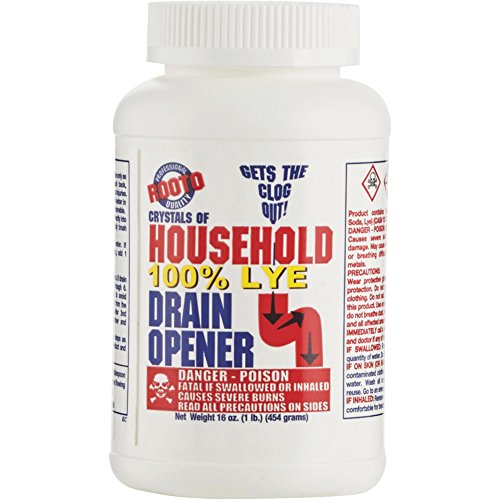
The Rooto 1030 is the classic lye-based drain cleaner that rough-plumbing professionals have relied on for decades. It carries no fancy branding, no added surfactants, and no gimmicks, just a straightforward one-pound container of drain-opening chemistry.
Versus the ComStar pure lye reviewed above, Rooto 1030 is positioned strictly for plumbing rather than dual soap-making use. That focused chemistry translates to a predictable reaction that experienced homeowners trust on recurring slow-drain issues.
Noteworthy Benefits
- Long-standing formula trusted in professional rough-plumbing work.
- Manufactured in the United States with a consistent supply chain.
- Single-pound size suits one-off treatment jobs.
- Compatible with a wide range of metal and plastic drain fittings.
Potential Drawbacks
- Lye-based chemistry demands gloves and ventilation during use.
- Single-can format means reordering for repeat maintenance jobs.
Perfect Match For
Plumbers and hands-on homeowners who want a traditional, no-frills lye cleaner will feel right at home with this pick.
Not Your Match When
Renters wanting a low-odor, low-fuss option should pivot back to the Whitlam Talon 1-pound formula.
What To Weigh Before Choosing Main Line Drain Openers
Main line clogs rarely look the same twice, so matching the chemistry to the cause matters more than brand loyalty. Below are the attributes that consistently separate a smart purchase from a wasted bottle.
Pipe Material And Septic Compatibility
Older copper, modern PVC, and chrome-trimmed fixtures all react differently to harsh chemicals. Pick a non-acidic formula, such as the Talon flake options, when you share plumbing with brass or chrome finishes. Homeowners on septic systems should confirm the product is septic-safe to avoid killing the beneficial bacteria that break down waste.
Clog Type: Grease, Hair, Or Roots
A gel-based degreaser like Zep Liquid Heat handles restaurant-style grease and shower hair. Root intrusion calls for a dry-flake formula that can sit in the line long enough to break down organic growth. Pour-and-go liquids rarely stay in contact long enough for root work.
Format: Liquid Gel, Dry Flake, Or Powder Beads
Liquid gels cling to vertical pipe walls and slow horizontal runs. Dry flakes travel further down the line and reach deep main-line sections. Bead-format products, like ComStar’s pure lye, dissolve on contact and react fast in standing water.
Volume And Storage Footprint
Bulk cases, like the Rooto twelve-pack, win on per-treatment cost but need a cool, dry storage spot. Single-pound containers tuck under a sink. Heavy users save more with bulk, while one-off shoppers benefit from smaller formats that don’t expire before the next clog.
Key Considerations Across These Picks
A few quick reflections before you finalize your choice can save you from a wasted bottle.
Wrong Turns To Avoid
Reaching for the strongest acid-based cleaner is rarely the right move for a household main line. Acids can damage chrome, polished brass, and porcelain over repeated use, and they pose real splash-back risks during pour. Match the product to the clog type first, and save the heavier chemistry for confirmed root or grease problems only. Skipping safety gear, particularly gloves and eye protection, is the most common error with the lye-based options in this list.
When Paying More Pays Off
The premium tier in this category earns its keep through concentrated chemistry and broader material compatibility. A high-purity sodium hydroxide product like ComStar dissolves clogs faster and doubles as a soap-making ingredient, justifying the higher price for crafters. Larger-volume formats reduce per-treatment cost for landlords and property managers running monthly maintenance across multiple units. The upgrade pays off when the formula saves a plumber visit, not just when the bottle costs more.
Frequently Asked Questions
How Often Should Main Line Drain Openers Be Used?
Most formulas in this roundup are designed for monthly preventive maintenance rather than daily treatment. Treat only when flow slows or as part of a recurring schedule that matches your household’s usage load.
Are These Drain Openers Safe For Septic Systems?
Several picks, including the Whitlam Talon 1-pound formula, are explicitly septic-safe. Always confirm the product label specifies septic compatibility before pouring it into a system that depends on bacteria balance.
Can Main Line Drain Openers Damage Old Pipes?
Repeated exposure to acid-based openers can pit metal pipes and weaken older seals. Non-acidic flake formulas are gentler on aging copper and galvanized lines, though no chemical opener replaces a mechanical snake for severe blockages.
Do I Need To Use A Plumber’s Snake Instead?
A drain opener works best on partial clogs and slow drains caused by grease, hair, or organic buildup. Fully blocked lines or root masses often require mechanical clearing before any chemical treatment can reach the problem area.
How Should Chemical Drain Openers Be Stored?
Store containers in a cool, dry location away from children and pets, with the original label intact. Lye-based products absorb moisture over time, so a sealed container in a stable environment keeps the chemistry active for the next use.
Wrap Up
A slow main line is one of those household problems that quietly worsens until it demands attention. The right drain opener depends on whether you are fighting grease, hair, or roots, and whether your plumbing is PVC, copper, or septic-fed. Match the formula to the clog, keep safety gear within reach, and treat monthly to stay ahead of the buildup. Any of the seven picks above will serve you well when used as intended.