
Smart bulbs stop being clever the moment you reach for a switch anyway. The whole point of going connected is walking into a room and saying “dim the kitchen,” and watching the light actually cooperate. Picking the right bulb for that routine means thinking beyond brightness and price, into how each option behaves once it’s actually wired into your routines.
The nine picks below cover the main shapes, sizes, and budgets people buy for Google Home setups. Some run on Bluetooth for fast setup, others need a hub for the full feature set, and a few skip both entirely and just talk straight to your Wi-Fi. Read through the reviews first, then jump to the buying guide if you’re still weighing socket size, color features, or how much automation you actually want.
The Lineup, Simplified

Philips Hue Smart 60W A19 LED Bulb, 2-Pack
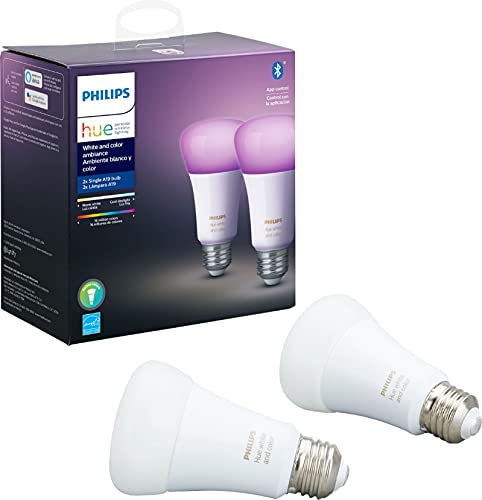
Philips Hue Premium Smart Bulbs, 2-Pack
Philips Hue Smart 40W B39 Candle LED Bulb

Tapo Multicolor Smart Light Bulbs L535E, 2-Pack

Tapo Multicolor Smart Light Bulbs L535E, 4-Pack

Lightinginside Smart Light Bulbs 100W, 4-Pack

Lightinginside Smart E12 LED Bulbs 60W, 4-Pack

Tapo TP-Link Smart Light Bulbs L530E, 4-Pack

Lightinginside Smart Light Bulbs, 6-Pack
Taking A Closer Look At The Options
The Philips Hue 60W A19 sits in that rare middle ground: it works right out of the box without forcing a hub decision. Bluetooth control covers roughly ten bulbs in one room, which is enough for a starter living room or bedroom, and the same bulb graduates to full hub features the moment you add the Hue Bridge later.
You get full white-and-color tuning, voice control through Google Assistant, and the kind of build quality Hue has built a reputation on. For most people testing the smart-light waters, this is the easiest entry point because it does not punish you for skipping the hub today.
A Few Strong Suits
- Flexible setup path: Bluetooth today, full hub features later without replacing bulbs
- Full color and tunable white range covers movie nights, focus work, and warm evenings
- Voice integration with Google Assistant, Alexa, and Apple HomeKit covers most households
- E26 base fits standard table lamps and ceiling fixtures, no rewiring needed
- Mature Hue ecosystem means routines and accessories play nicely down the road
Things To Consider
- The richest automations, remote access, and away-from-home control require the separate Hue Bridge
- 800 lumens feels modest in kitchens or rooms with very high ceilings
- Hue bulbs generally cost more than off-brand alternatives at the same brightness
Key Specs
Right Fit For
First-time smart lighting shoppers who want a familiar brand and room to grow into a larger system.
Swap It Out When
You need noticeably more brightness for an open-plan space, in which case the Tapo L535E 2-Pack delivers 1100 lumens at lower cost per bulb.
This is the Hue bulb designed for people who already know they want a real system rather than a one-room test. Sixteen million colors sounds like marketing fluff, but the practical payoff is that scenes, sunrise routines, and movie modes actually look like the screenshots.
Where this stands apart from the first pick is the hub requirement. That sounds like a downside until you realize the hub unlocks remote control, multi-room routines, and the kind of stable connection that survives Wi-Fi hiccups. You commit to the Hue ecosystem, and in return you get the deepest feature set of any bulb in this roundup.
A Favorable Mix
- Hub-based connection delivers more reliable automations than Wi-Fi-only bulbs
- Wide compatibility with Alexa, Google Assistant, and Apple HomeKit covers mixed households
- Suits most lamps and overhead fixtures, so it adapts to existing wiring
- Unlocks the full Hue accessory catalog: dimmer switches, motion sensors, outdoor fixtures
Trade-Offs To Consider
- Requires a separate Hue Bridge to function, raising the total spend before any light turns on
- Premium positioning means higher per-bulb cost than most Wi-Fi-only options on this list
Built With In Mind
Homeowners building a long-term smart lighting setup across multiple rooms and willing to invest in a hub-based foundation.
Consider Something Else When
You want a quick Wi-Fi-only setup with no extra hardware, in which case the Tapo TP-Link L530E 4-Pack runs straight off your router.
Most smart bulbs ignore the rooms where people actually want ambiance: the dining chandelier, the hallway sconces, the candelabra fixtures that have been there since before voice assistants existed. This candle-shaped Hue fills that gap with the same app and voice control as the standard A19, just in a smaller E12 package.
You give up some brightness, since 450 lumens is meant for decorative fixtures, not main lighting. In return, you get a bulb that looks like a candle flame and responds to the same routines as the rest of your Hue setup. Designers, and anyone restoring period fixtures, tend to find this one quietly indispensable.
Standout Benefits
- E12 candelabra base fits chandeliers and decorative sconces most smart bulbs cannot reach
- Full color and white ambiance range, identical to the standard Hue lineup
- Bluetooth control for quick room-level setup, with full hub features available later
- Works with Google Assistant for hands-free scene changes during dinner or entertaining
Honest Caveats
- 450 lumens reads dim compared to a 60W equivalent, which is fine in clusters but underwhelming solo
- Single-pack format means outfitting a multi-arm chandelier gets expensive quickly
- Matter support requires the Hue Bridge, so plan accordingly if you want broader smart-home bridging
Feature Snapshot
Best Suited To
Anyone decorating with chandeliers, sconces, or candelabra fixtures who wants voice and app control without sacrificing the look of the room.
Look Elsewhere When
You need a brighter E12 option for larger fixtures, where the Lightinginside Smart E12 LED Bulbs 60W 4-Pack delivers noticeably more light per bulb.
Where most Wi-Fi smart bulbs hover around 800 lumens, the Tapo L535E pushes to 1100, which is the difference between a cozy accent lamp and a room you can actually read in. The A19 shape and E26 base fit standard fixtures, so the upgrade comes without rewiring.
Matter certification matters more than it sounds. That single label means the bulb plays nicely with Apple Home, Google Home, SmartThings, and Alexa without needing a brand-specific hub. For renters or anyone avoiding extra boxes, that compatibility alone can decide the purchase.
Where It Delivers
- 1100-lumen output covers larger rooms and main living areas without feeling dim
- Matter support bridges Apple, Google, Alexa, and SmartThings ecosystems cleanly
- Tunable white plus RGB color covers both practical lighting and accent scenes
- No hub required, so the only hardware is the bulb and your existing Wi-Fi router
Worth Noting
- Wi-Fi-only setup means more strain on your router as you add more smart devices
- Higher brightness draws more power than dimmer options, a small consideration for always-on fixtures
Quick Facts
Who Will Love This
People outfitting larger rooms, open-plan living areas, or anywhere standard smart bulbs tend to feel underpowered.
A Better Fit Elsewhere
Philips Hue Smart 60W A19 LED Bulb owners who already run a Hue Bridge and want their new bulbs to live inside that same ecosystem.
Everything that made the 2-pack version appealing shows up here at a lower per-bulb cost. Four 1100-lumen Matter-ready bulbs at this price is the kind of math that converts “maybe later” smart-light projects into weekend installations.
The honest read is that this is the same bulb in different packaging, so your decision really comes down to how many rooms you want to cover at once. Kitchens, living rooms, hallways, and bedrooms tend to be the natural four, which is exactly the scope this pack targets.
What Stands Out
- Bulk pricing makes outfitting four rooms at once noticeably cheaper than four single bulbs
- 1100 lumens per bulb covers most rooms without needing multiple lamps
- Matter support keeps multi-platform households happy without extra hubs
Some Limits To Know
- Owners commonly report Wi-Fi-only smart bulbs slowing down routers already crowded with smart devices
- Four bulbs in one Wi-Fi segment can be a stretch on older routers
The Right Fit
Shoppers ready to convert a whole floor of the house to smart lighting in one purchase.
Another Choice May Suit
Tight-budget beginners who only need two bulbs to start can save a little with the Tapo L535E 2-Pack first.
The 1350-lumen output here steps into territory that most smart bulbs avoid. That is enough light for a workshop, a vaulted-ceiling living room, or a long kitchen where one bulb needs to do serious work. Compared to the Tapo L535E above, this trades a little polish for noticeable raw brightness.
The four-pack format works well for anyone replacing an entire room’s bulbs in one session, and the Alexa and Google Home support covers the common voice-assistant households. Just remember that dimming only works through the app or voice, not through a wall dimmer switch.
Positive Takeaways
- 1350 lumens covers bright workspaces and high-ceiling rooms that 800-lumen bulbs cannot reach
- Four-bulb pack suits whole-room retrofits in a single shopping trip
- RGBW color plus tunable white covers both practical and decorative lighting
- Voice integration with Google Assistant and Alexa covers mainstream smart-home setups
Factors To Consider
- Dimming must happen through the app or voice, not a physical dimmer switch
- Wi-Fi-only setup means the bulbs depend on a stable home network at all times
- High output produces more heat than dimmer smart bulbs, worth noting in enclosed fixtures
Perfect Match For
People lighting larger rooms, workshops, or kitchens where one bulb needs to fill a wide space without extra fixtures.
Not Your Match When
You want candelabra-base fixtures, in which case the Philips Hue Smart 40W B39 Candle LED Bulb fits standard E12 sockets.
The interesting twist on this E12 bulb is the BLE backup. When your Wi-Fi drops, owners commonly find these bulbs keep responding locally, so a router reboot does not have to mean sitting in the dark. For households with patchy Wi-Fi coverage, that resilience is more than a marketing bullet.
The SmartLife app pairs faster than older-generation smart bulbs, thanks to the dual-channel chip. Four bulbs in a pack means a multi-arm chandelier or several sconces get covered in one order, with voice control through Google Assistant for daily routines.
Key Advantages
- E12 candelabra base fits decorative fixtures that standard A19 bulbs cannot reach
- BLE local control keeps bulbs responding when Wi-Fi drops or routers reboot
- Four-pack suits chandeliers, sconces, and multi-bulb decorative fixtures
- Faster pairing through the second-generation dual-chip setup reduces setup friction
Less Ideal Details
- 60W equivalent brightness is decent but lower than the 100W Lightinginside option above
- SmartLife app experience varies depending on which ecosystem you already use
At A Glance
Whose Shelf It Belongs On
Anyone with chandeliers or candelabra sconces who also deals with the occasional Wi-Fi outage and wants local control to fall back on.
Reach For A Different Pick When
You want premium color rendering and Hue ecosystem depth, in which case the Philips Hue Premium Smart Bulbs pair deliver finer-tuned scenes.
TP-Link’s Tapo line has earned a quiet reputation for being one of the easiest Wi-Fi smart bulbs to set up and forget. The L530E leans into that simplicity: no hub, no bridge, just screw it in and add it through the Tapo app. For first-time smart lighting owners, that low friction matters more than peak specs.
Color rendering above 90 CRI (Color Rendering Index, a measure of how accurately a light shows true colors compared to natural daylight) means skin tones and food look more natural than typical budget bulbs, which is a small detail that shows up every time you sit down to dinner under these lights. The 2.4GHz-only Wi-Fi is the main constraint, but most home networks still broadcast that band without issue.
Useful Highlights
- No-hub setup means the only hardware you need is the bulb and your Wi-Fi router
- CRI above 90 produces more natural-looking colors than most budget smart bulbs
- Four-pack format keeps per-bulb cost reasonable for whole-room coverage
- Compatible with both Alexa and Google Assistant for mainstream voice control
Points To Keep In Mind
- 2.4GHz Wi-Fi only, so homes running 5GHz-only networks will need to enable the older band
- 800 lumens is the standard 60W equivalent, not the brighter output some larger rooms need
Who Should Grab It
Beginners who want the simplest possible setup with reliable voice control and do not want to research hubs or bridges.
Where Another Pick Suits Better
High-ceiling or large-room dwellers who want more output should consider the Lightinginside Smart Light Bulbs 100W 4-Pack instead.
Six bulbs in one pack is the kind of count that fits a small apartment or a single-floor retrofit. Owners commonly find the BLE-plus-Wi-Fi dual chip useful during initial setup, when the router may already be busy handling other devices.
The SmartLife app ties into both Alexa and Google Home, so voice routines work without swapping between apps. For shoppers trying to keep the smart-home rollout to one trip and one app, this six-pack is a sensible scope.
Real-World Strengths
- Six bulbs cover a small home or full single-floor installation in one order
- BLE fallback keeps bulbs controllable when Wi-Fi falters during setup or outages
- Compatible with Alexa, Google Assistant, and SmartLife for flexible routines
- Faster second-generation chip shortens the initial pairing time compared to older bulbs
Potential Drawbacks
- Six Wi-Fi bulbs on one router segment can strain older or budget home networks
- Lightinginside lacks the deeper ecosystem of Hue accessories and third-party integrations
Made For
Apartment dwellers and first-time smart lighting installers outfitting an entire space in a single shopping session.
Skip It When
You want premium color accuracy and ecosystem depth, where the Philips Hue Smart 60W A19 LED Bulb 2-Pack is a stronger long-term foundation.
What To Weigh Before Picking Smart Bulbs That Talk To Google Home
Socket shape decides more than people expect. Standard table lamps and ceiling fixtures use E26 (the screw base that fits most U.S. bulbs), while chandeliers and decorative sconces usually need E12 candelabra. Buying the wrong base means returns, so check the fixture before anything else.
Brightness needs to match the room. 800 lumens reads like a cozy 60W replacement, which works for bedrooms and living rooms. Kitchens, workspaces, and rooms with high ceilings usually want 1100 to 1350 lumens to feel properly lit rather than dim and moody. The Lightinginside 100W and Tapo L535E both push higher for that reason.
Hub versus hub-free matters for the long haul. Hub-based systems like the Philips Hue Premium Smart Bulbs cost more up front, but tend to deliver more reliable automations and deeper accessory ecosystems. Wi-Fi-only bulbs like the Tapo L530E and Lightinginside packs are easier to start with, though they lean harder on your router as the count grows.
Color features fall into three practical tiers. Tunable white covers warm-to-cool tones for daily routines. RGB color adds accent scenes for movie nights and holidays. Full white-and-color ambiance combines both, which is what most of the picks in this roundup offer. Decide how often you actually want a deep purple reading lamp before paying for the full color tier.
Voice integration should be tested, not assumed. Google Assistant compatibility is the headline feature on every box here, but the underlying app experience varies. Hue runs through the Hue app first, then Google Home. Tapo and Lightinginside route through their own apps with Google Home as a voice layer on top. For most households, either approach works fine, but the day-to-day app experience differs.
Smart Upgrades Worth Thinking Through
Where Shoppers Go Wrong
The most common mistake is treating all Wi-Fi bulbs as interchangeable. A bulb that struggles to stay connected when fifteen other smart devices share the same 2.4GHz band will feel broken long before its LEDs dim. Read the router guidance before assuming any bulb will just work.
Another pitfall is buying color bulbs for rooms where color is never going to be used. A home office, pantry, or garage often wants tunable white at a lower cost, with the color budget reserved for rooms where scenes actually get used.
Why Top Tier Costs More
The premium tier in this category earns its position through reliability, ecosystem depth, and accessory support. Philips Hue’s higher per-bulb cost reflects years of firmware refinement and a wide range of compatible switches, sensors, and outdoor fixtures that budget lines do not match.
For shoppers who only need basic on-off and dimming through Google Home, mid-tier picks like the Tapo and Lightinginside bulbs deliver most of the experience at a noticeably lower price. The upgrade to premium matters most when you plan to expand the system across many rooms over time.
Frequently Asked Questions
Do smart bulbs work without internet?
Most Wi-Fi bulbs lose remote and voice control when the internet drops, though some like the Lightinginside E12 LED Bulbs keep local BLE control as a fallback. Hub-based systems like Hue tend to keep routines running locally even when the cloud is unreachable.
Can I mix smart bulb brands in Google Home?
Yes. Google Home treats each bulb as a separate device regardless of brand, so Hue, Tapo, and Lightinginside bulbs can coexist in the same voice routines. The trick is that each brand still needs its own app for advanced features like scenes and automations.
How long do smart bulbs actually last?
Most LED smart bulbs are rated for around 15,000 to 25,000 hours of use, which translates to roughly a decade of typical household use. Heavy use in always-on fixtures shortens that, but the failure mode is usually dimming, not a sudden blackout.
Do smart bulbs use power when off?
Smart bulbs draw a small amount of standby power to maintain their wireless connection, typically well under one watt. The cost on an electricity bill is negligible, but it is the reason some people prefer to leave smart bulbs on smart switches rather than wall switches that cut all power.
Are smart bulbs safe in enclosed fixtures?
Most modern smart bulbs handle enclosed fixtures, but high-output models like the Lightinginside 100W run warmer and benefit from some airflow. Check the bulb’s guidance for enclosed use, especially in ceiling fixtures with limited ventilation.
Closing Thoughts
The right bulb depends on the room, the existing Wi-Fi, and how much automation you actually plan to use. For most people starting out, the Tapo L530E 4-Pack offers the simplest path to Google Home voice control without extra hardware. For longer-term systems, the Philips Hue lineup pays you back in ecosystem depth. Pick the bulb that fits the room and the routine, and the rest tends to fall into place.