

Smart lighting has quietly gone from a novelty to a practical upgrade for renters, homeowners, and renters-who-want-the-homeowner-feel alike. The right LED smart light bulbs shift from warm reading light to party colors in seconds, respond to voice commands when your hands are full, and tie into routines so your hallway lights ease you awake. This lineup mixes Bluetooth-friendly starters, hub-ready flagships, decorative candle shapes, Wi-Fi plugs, and outdoor string lights to match the way you actually live.
A Quick View Of The Lineup

Philips Hue Smart 60W A19 LED Bulb 2-Pack
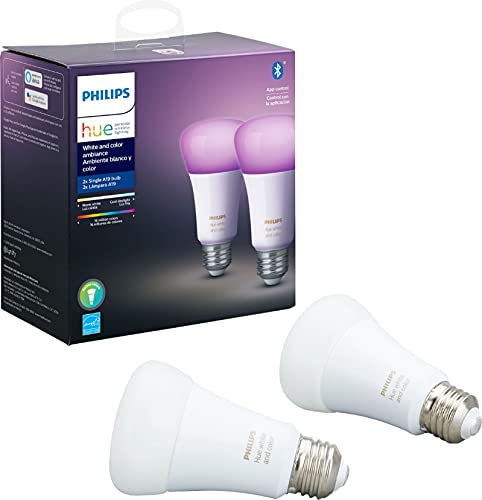
Philips Hue Premium Smart Bulbs 2-Pack
Philips Hue Smart 40W B39 Candle LED Bulb

Cync GE A19 LED Smart Light Bulbs 2-Pack

GE Cync Smart Plug WiFi Outlet

DAYBETTER A19 E26 Color Changing Bulbs

DAYBETTER A19 E26 Smart Light Bulbs

Cync GE Dynamic Effects Outdoor String Lights 48ft
The Picks, Examined More Closely
This pair of A19 color bulbs covers the most common living-room sockets with a standard E26 base (the everyday screw-in size used in most North American lamps). At 800 lumens, each bulb throws enough light for a dining area or kitchen, and the white-and-color output means you can move from a focused reading tone to a saturated accent without swapping hardware. The starter-friendly angle is Bluetooth control through the free Hue app, no extra hardware required for a single-room setup.
If you already use Echo or Google Nest speakers, voice commands fall into place without much fuss. Adding a Hue Bridge later unlocks automations, remote access, and Matter bridging, so the bulbs don’t lock you out of the deeper ecosystem. Compared with the entry-friendly DAYBETTER picks further down, you’re paying for color accuracy and a more mature app, not just more lumens.
Strengths Worth Knowing
- Bluetooth control works out of the box, so a single room can be live in minutes.
- Full white-and-color range in a familiar 60W-equivalent A19 shape that fits most lamps.
- Voice compatibility with Alexa and Google Assistant comes through the existing speakers you may already own.
- Bridge compatibility leaves the door open for automations and away-from-home control.
- The two-pack format suits a living-room overhaul without forcing a larger commitment up front.
Things To Consider
- The Hue app experience is deeper than entry-tier apps, which may feel like overkill for a single-room starter.
- You may find the full color and automation library gated behind a separate hub purchase.
Feature Snapshot
Right Fit For
First-time smart-light shoppers who want a polished, app-backed starter that can grow into a hub system later.
A Better Fit Elsewhere
Shoppers wanting color control without the app learning curve should look at the Cync GE A19 LED Smart Light Bulbs 2-Pack instead.
Step up from the Bluetooth-friendly starter and you land in the dedicated hub ecosystem. These premium Hue bulbs require a Hue Bridge, but that trade unlocks 16 million colors, remote control from anywhere, and the kind of stable connection that won’t drag down your home Wi-Fi. They sit comfortably in overhead cans and table lamps, the everyday sockets most people outfit first.
The case for these bulbs is whole-home ambition. If you’re already running an Echo or a Google display, the voice integration is seamless, and Apple HomeKit support rounds out the trio. The honest read is that you’re paying for ecosystem maturity and color depth, not raw brightness specs, so they shine brightest in homes where the Hue app is going to be the central dashboard for lighting routines.
Practical Pluses
- 16 million colors give you wide creative range for scenes, parties, and ambient accents.
- Hue Bridge unlocks automations and remote access that Bluetooth-only bulbs can’t reach.
- Compatible with Alexa, Apple HomeKit, and Google Assistant for flexible voice control.
- Suits most lamps and overhead fixtures, making whole-home rollouts simpler.
Worth Noting
- Requires a Hue Bridge to function, which is a separate purchase on top of the bulbs.
- Owners commonly report the setup feels heavier than no-hub alternatives from Cync or DAYBETTER.
Feature Snapshot
Built With In Mind
Homeowners building a unified Hue setup across multiple rooms who want full voice and app control from anywhere.
Swap It Out When
Casual shoppers who want simple color control without buying a hub should consider the Cync GE A19 LED Smart Light Bulbs 2-Pack.
Decorative fixtures with E12 candelabra sockets (the small screw base used in chandeliers and sconces) usually get ignored by smart-bulb makers, so this candle-shaped Hue stands out. The 450 lumen output fits a chandelier or wall sconce without overpowering the fixture, and the white-and-color range gives dining rooms and entryways the same scene flexibility as the standard A19s.
Like the rest of the Hue family, Bluetooth gets you started and a Hue Bridge takes you further. The candle format is the obvious differentiator: you control how exposed the bulb is, so it’s worth confirming your fixture takes a B39 shape. For an entryway chandelier or a pair of bedside sconces, this is one of the few smart-bulb options that doesn’t compromise on design.
Good Reasons To Consider
- E12 candle form fits chandeliers and wall sconces that standard A19 bulbs can’t.
- Full white-and-color output brings scenes to fixtures you couldn’t easily smarten before.
- Bluetooth control for single-room use, with a Bridge path for automations later.
- Works with Alexa, Google Assistant, and Apple HomeKit through the same Hue app.
Room For Improvement
- Single-pack only, so outfitting a full chandelier means buying several units.
- 450 lumens is moderate; in rooms where you may want brighter primary lighting, you’d layer it with another fixture.
Whose Shelf It Belongs On
Anyone with E12 decorative fixtures who wants scenes and voice control without sacrificing the fixture’s intended look.
Consider Something Else When
You mainly need standard lamp and overhead lighting; the Philips Hue Smart 60W A19 LED Bulb 2-Pack covers those sockets better.
The Cync GE approach skips the hub entirely. These A19 color bulbs pair over Bluetooth for the initial setup, then connect to your home Wi-Fi for out-of-home control. That direct route means no extra bridge box, which keeps the entry cost and the setup time lower for households that just want color and scheduling.
Beyond full color, the bulbs support a tunable white spectrum, useful for shifting from cool daylight to a warmer evening tone. Voice control works with Alexa and Google, so a casual user doesn’t have to commit to a proprietary app long-term. Compared to the Hue pair higher on this list, the trade-off is ecosystem maturity, but the no-hub angle is genuinely convenient.
Standout Benefits
- No hub required, so Wi-Fi control works directly through the Cync app.
- Tunable white spectrum supports sleep-to-wake routines beyond just color.
- Compatible with Alexa and Google Assistant for hands-free control.
- The two-pack format keeps the cost of a room-sized upgrade manageable.
Honest Caveats
- Owners commonly report the Cync app is more functional than polished compared to Hue.
- Wi-Fi-only bulbs can crowd a busy router; depending on your network, that may matter.
Best Suited To
Renters and casual smart-home users who want color control without buying a hub or committing to a specific ecosystem.
Not Your Match When
You’re already invested in the Hue ecosystem and want deeper automation; the Philips Hue Premium Smart Bulbs 2-Pack is the better match.
Not every fixture wants a smart bulb, and that’s where the Cync Wi-Fi plug earns its place. It turns any lamp or plug-in device into something voice- and app-controlled, perfect for fixtures with non-standard bulb shapes, vintage filaments, or built-in LEDs you can’t replace. Built-in Wi-Fi also adds an out-of-home control layer for traditional bulbs you don’t want to swap.
Matter support is the quiet headline here, making the plug friendlier to cross-ecosystem setups as your smart home grows. Scheduling and scene grouping work through the Cync app, so the plug behaves more like a hub accessory than a one-off gadget. The honest trade is that on/off is the core function; you won’t get color tuning from a smart plug.
The Value In It
- Brings smart control to lamps and fixtures where smart bulbs don’t fit or match.
- Matter compatibility future-proofs the plug for multi-ecosystem smart homes.
- Built-in Wi-Fi enables remote on/off control without an extra hub.
- Supports scheduling and scene grouping through the Cync app.
Trade Offs
- On/off only, so dimming and color require a separate smart bulb.
- Single-outlet design; multi-lamp setups need additional plugs or a power strip.
Who Should Grab It
Anyone outfitting a vintage lamp, a fixture with a tricky bulb shape, or a small appliance they want on a schedule.
Look Elsewhere When
You want color and dimming control per fixture; the DAYBETTER A19 E26 Color Changing Bulbs deliver that more directly.
For a wallet-friendly path into color smart lighting, these A19 bulbs pair directly to a 2.4GHz Wi-Fi network through the DAYBETTER app. The familiar E26 base fits the same lamps and overheads as any standard bulb, so you don’t have to think about socket compatibility. You get Alexa voice control and a preset scene library aimed at holidays, dinners, and casual mood lighting.
The real-world trade-off is the network band. Dual-band routers are common, and on most networks you can pick the 2.4GHz band during setup without much hassle, but a router that combines both bands under the same name can stall the pairing step. Owners commonly find that separating the bands makes the install smoother. Beyond setup, the app supports grouping and scheduling for routine automation.
Useful Highlights
- Preset scenes for holidays and dinners get you a festive look without manual color picking.
- Alexa compatibility covers the most common voice assistant in homes today.
- Scheduling and group control handle sunrise wake-ups and bedtime dimming through the app.
- A19 E26 form works in everyday lamps and overhead sockets.
Points To Note
- 2.4GHz Wi-Fi only, so mesh routers with shared SSIDs may need separate band names for pairing.
- Uses the DAYBETTER app specifically, so it’s not interchangeable with Tuya or Smartlife ecosystems.
Feature Snapshot
Made For
Households wanting affordable color scenes and scheduling in standard lamps, especially for seasonal decoration.
Another Choice May Suit
Shoppers with hub-leaning smart-home ambitions; the Philips Hue Premium Smart Bulbs 2-Pack is the broader ecosystem play.
The sibling to the previous DAYBETTER pick, but with wider voice compatibility. These A19 bulbs work with both Alexa and Google Home, covering the two assistants most households actually use. Scheduling and group control come through the DAYBETTER app, which lets you automate morning routines and bedtime dimming without thinking about each switch.
From a practical standpoint, you get the same 2.4GHz Wi-Fi requirement as the related model, so a router with combined bands can stall pairing. Once connected, the bulbs integrate into routines through your preferred voice platform without feeling like a separate smart-home island. The honest read is that this is the better pick over its sibling if you live in a Google Home household.
What Earns Its Place
- Works with both Alexa and Google Home, covering the most common voice ecosystems.
- Scheduling and group control through the DAYBETTER app support everyday routines.
- Preset scenes for holidays and dinners are included out of the box.
- A19 E26 form is the standard shape for most lamps and overhead fixtures.
Factors To Consider
- 2.4GHz Wi-Fi only, so routers with shared SSIDs can complicate initial setup.
- Uses the DAYBETTER app specifically, which is a separate ecosystem from Tuya or Smartlife.
Perfect Match For
Google Home households who want budget-friendly scheduling and color control across multiple rooms.
Reach For A Different Pick When
You’re already running Hue throughout the home; the Philips Hue Smart 60W A19 LED Bulb 2-Pack fits that ecosystem more cleanly.
Smart lighting shouldn’t stop at the back door. These 48-foot outdoor string lights from Cync bring Wi-Fi control, dynamic color effects, and voice compatibility to the patio. The string layout covers a typical deck or pergola without forcing you to chain multiple runs, and the color range supports everything from a soft warm glow to a saturated party scene.
Wi-Fi control means no hub, and Alexa or Google integration lines up with the same voice assistants you may already use indoors. Owners commonly mention the dynamic effects as the headline feature for entertaining, while everyday evenings lean on the warmer end of the white spectrum. The honest trade is that outdoor-rated hardware carries a premium over indoor-only bulbs, so the value case rests on how much patio time you’re actually planning.
Where It Delivers
- 48-foot coverage suits most patios and decks without adding extra runs.
- Wi-Fi control with no separate hub keeps installation straightforward.
- Dynamic color effects give you party scenes without manual color picking.
- Works with Alexa and Google Assistant through the Cync app.
Practical Considerations
- Outdoor-rated hardware costs more per foot than indoor-only bulbs.
- Replacement of an entire string is the failure mode; spare bulbs aren’t typically field-swappable.
Feature Snapshot
Who Will Love This
Households with a patio or deck who want app- and voice-controlled color lighting for everyday evenings and outdoor gatherings.
Skip It When
You mainly need indoor lighting; the Cync GE A19 LED Smart Light Bulbs 2-Pack is the more cost-effective indoor pick.
What To Weigh Before Buying Led Smart Light Bulbs
Hub or no hub matters more than color depth for first-time smart lighting shoppers. Bluetooth and Wi-Fi direct bulbs pair faster and cost less up front, but a hub-based system like Philips Hue gives you more stable control across many bulbs and unlocks automations that don’t tax your home Wi-Fi. Think about how many bulbs you’re planning to install before you commit.
Base type and brightness decide whether the bulb actually fits your fixture. Standard E26 sockets in lamps and overheads are the easy case, but chandeliers, sconces, and candelabra fixtures need E12 bulbs like the Philips Hue candle option. Lumens matter too: a 450-lumen candle bulb suits accent lighting, while an 800-lumen A19 covers general room use.
Voice ecosystem compatibility is where many setups stumble after install. Pick a bulb that works with whichever assistant you actually use day to day, whether that’s Alexa, Google Home, or Apple HomeKit. Some Wi-Fi bulbs only support one platform, while hub-based lines typically support all three. The DAYBETTER and Cync lines split across the assistant spectrum, so check the label before buying.
Outdoor-rated hardware is a category of its own. If your plan includes a patio or pergola, dedicated outdoor string lights or fixtures with proper weatherproofing handle the conditions that indoor bulbs simply won’t survive. The premium pricing reflects that build quality, and skipping it is a common mistake that leads to early failures.
Smart Lighting Slip Ups To Dodge
Pitfalls Shoppers Hit
Buying a Wi-Fi bulb that only supports the 2.4GHz band on a router with combined-band SSIDs is one of the most common setup headaches. Separating the 2.4GHz and 5GHz names in your router settings usually clears the pairing problem before it starts.
The other quiet trap is assuming any smart bulb fits any fixture. Chandelier and candelabra sockets look similar to standard lamp sockets at a glance, but they aren’t, and forcing the wrong base can crack the fixture or leave a bulb that won’t seat properly. Confirm the socket type before you order.
Where The Extra Money Goes
Higher-tier smart bulbs cost more for ecosystem maturity, color accuracy, and long-term app support, not just a brighter lumen count. A premium hub-based setup like Hue gives you stable multi-room control, deeper automations, and easier integration with future Matter devices. The upgrade is worth it when you plan to outfit more than a couple of rooms, while a Wi-Fi direct bulb is the smarter spend for a single room or seasonal accent.
Frequently Asked Questions
Do Led Smart Light Bulbs Work With Any Lamp?
Most A19 bulbs with an E26 base fit standard North American lamps and overhead fixtures, but chandeliers and candelabra fixtures need E12 candle-shaped bulbs. Confirm the socket type and wattage before ordering to avoid returns.
Can You Use Led Smart Light Bulbs Without A Hub?
Bluetooth and Wi-Fi direct bulbs pair to your phone without any extra hardware, which works well for single-room setups. Hub-based systems like Philips Hue require a bridge but support more bulbs, deeper automations, and remote control from anywhere.
Do Smart Light Bulbs Use More Electricity Than Regular Bulbs?
LED smart bulbs are typically more efficient than the incandescent bulbs they replace, so adding smart features usually doesn’t increase energy use. Dimming and scheduling can actually reduce consumption by keeping lights off when not needed.
Are Led Smart Light Bulbs Compatible With Voice Assistants?
Compatibility depends on the specific bulb line. Hue, Cync, and DAYBETTER each list the voice platforms they support on the packaging, so check for Alexa, Google Home, or Apple HomeKit before buying if voice control matters to you.
Can Smart Light Bulbs Be Used Outdoors?
Only bulbs and fixtures rated for outdoor use should be installed in exposed locations. Indoor bulbs in damp or cold conditions tend to fail early, so dedicated outdoor string lights like the Cync 48-foot model are the safer pick for patios and decks.
The Takeaway
Smart lighting pays off when it matches the way you actually use your home, not when it adds another app you have to remember. Start with the bulbs that fit your fixtures, confirm the voice platform, and only add a hub if you’re outfitting more than a couple of rooms. The right pick here makes daily routines easier, and the wrong one just sits on the shelf waiting to be set up.
