

Frozen hose bibs, sweating cold-water lines, and an AC unit losing efficiency in winter all trace back to the same issue: exposed plumbing and refrigerant lines losing heat (or cold) to the surrounding air. The right insulation wrap, foam tube, or elastomeric sleeve keeps water flowing in a January cold snap, slows condensation on cold lines, and protects copper tubing from UV damage on a sun-baked exterior wall. The nine picks below cover the most common scenarios homeowners and renters run into, from a single spigot to a full mini-split line set.
A Quick View Of The Lineup

Kanosan HVAC Copper Pipe Insulation Cover 72×10.2″
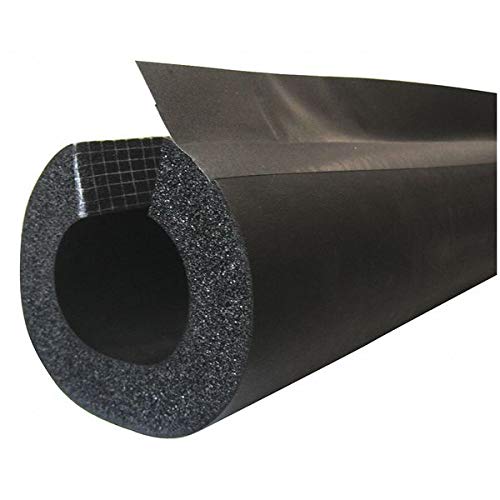
K-FLEX USA 3/4″ x 6 ft. Elastomeric Pipe Insulation

DEMEDO 2″ x 16.5 FT Self-Adhesive Pipe Insulation Tape

Srmayyi 12-Pack Pipe Insulation Foam Tube 1.3 ft
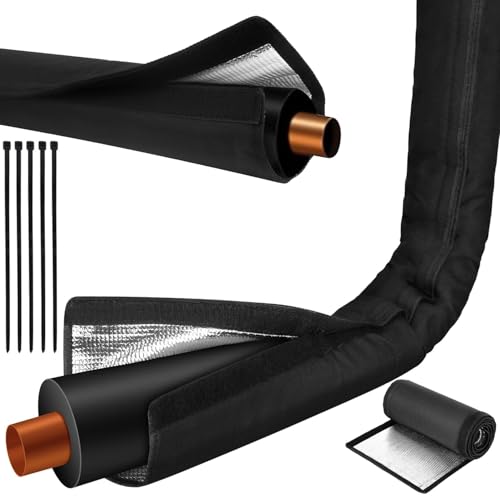
Kanosan HVAC Copper Pipe Insulation Cover 72×10.2″ Black

Kanosan HVAC Copper Pipe Insulation Cover 72×10.2″ Khaki

DEMEDO 3″ x 16.5 FT Self-Adhesive Pipe Insulation Tape
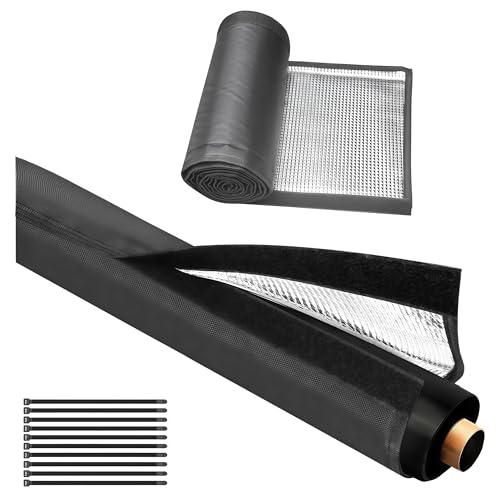
AXIFOUJ 5-Layer HVAC Line Insulation Wrap 78.7×10″
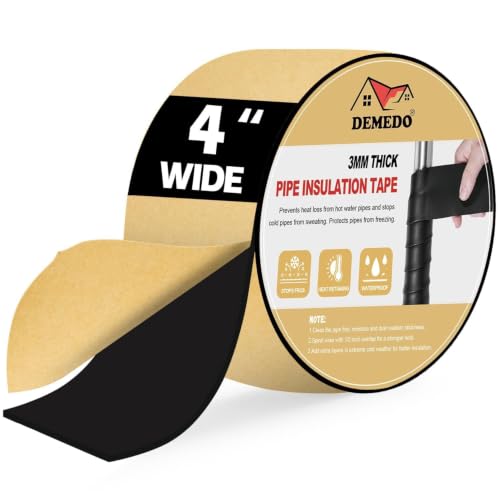
DEMEDO 4″ x 16.5 FT Self-Adhesive Pipe Insulation Tape
What Each Pick Brings To The Table
When an exterior AC line set runs along a sun-baked wall, the real enemy isn’t just cold air; it’s UV, rain, and the slow oxidation of copper. The Kanosan cover wraps that run in 600-denier Oxford fabric (a tightly woven, abrasion-resistant polyester) with a multi-layer build, giving the line both a thermal buffer and a physical shell.
At 72 inches long and roughly 10.2 inches wide, it stretches across the typical gap between an outdoor condenser and a wall penetration. The flexible construction makes it forgiving when lines aren’t perfectly straight. Compared with the K-FLEX elastomeric tube coming up next, this is a fabric-and-foam approach suited to outdoor runs, not indoor refrigerant chasing precise R-value targets.
A Few Highlights
- 600D Oxford shell resists tearing from ladder bumps and tree branches
- Multi-layer build adds a moisture barrier you won’t get from bare foam
- 72-inch length covers most single-run line sets without splicing
- Flexibility helps when bends and offsets are part of the install
Things To Consider
- Black color absorbs summer heat, which can matter on south-facing walls
- Fabric shell requires occasional cleaning to prevent mildew in shaded spots
Who It Suits Best
Homeowners with a mini-split or central AC whose outdoor line set is exposed to direct sun and winter wind, and who want a single-piece sleeve rather than taping foam around the line.
Where Another Pick Suits Better
The K-FLEX USA 3/4″ x 6 ft. Elastomeric Pipe Insulation is the better call for indoor HVAC or plumbing where a closed-cell foam (a dense foam that blocks both moisture and air movement) matters more than weather fabric.
Elastomeric insulation is the workhorse of professional HVAC and plumbing jobs: a rubber-based closed-cell foam that resists both moisture and air infiltration. K-FLEX is the brand most contractors reach for first, and this 3/4-inch wall, 6-foot tube shows why.
Slit lengthwise, the tube snaps over a copper or iron line and the inherent elasticity holds it in place. It targets a wide spread of residential and light-commercial pipework, including refrigerant lines, domestic hot water, and chilled water loops. If the Kanosan cover from item 1 is built for sun and weather, this K-FLEX tube is built for thermal performance and condensation control.
A Favorable Mix
- Closed-cell structure blocks both heat transfer and moisture migration in one material
- 3/4-inch wall thickness gives solid R-value per foot (a measure of insulating power; higher means better resistance to heat flow) without bloating tight chases
- Self-sealing slit simplifies installation in retrofits where you can’t slide over an end
- Compatible with HVAC, plumbing, and light-industrial piping
Honest Caveats
- UV-sensitive: outdoor runs need paint, jacketing, or a separate cover like the Kanosan sleeve
- Cutting to length takes a sharp utility knife; ragged cuts leave exposed joints that need tape
Feature Snapshot
Right Fit For
Anyone insulating indoor copper or iron lines who wants professional-grade closed-cell foam, especially in mechanical rooms, basements, or ceilings where condensation control matters.
Skip It When
For pure exterior line-set protection, the Kanosan HVAC Copper Pipe Insulation Cover handles UV and weather in a single step.
Some pipe runs don’t fit a rigid tube. Tight bends, valves, couplings, and T-joints all break the clean shape that pre-slit foam expects. DEMEDO’s insulation tape solves that with a soft rubber-foam strip that you wrap, overlap, and stick.
At 2 inches wide and 16.5 feet long, the roll covers oddly shaped sections without forcing you to buy full tubes. The self-adhesive backing grips the foam itself, so each wrap locks to the previous layer. Compared with the Srmayyi foam tubes in item 4, this trades pre-formed shape for total coverage on irregular plumbing.
What Stands Out
- 2-inch width wraps small-diameter copper and PEX neatly without bulky overlap
- Self-adhesive backing bonds each pass to the last, reducing unwrap over time
- Soft foam conforms to valves, elbows, and connection points that foam tubes can’t grip
- Scissors-cut sizing means no special tools for the install
Trade Offs
- Manual wrapping is slower than snapping a pre-slit tube over a straight run
- Adhesive can leave residue if you ever need to remove or reposition the wrap
Best Suited To
DIYers wrapping short, irregular runs of HVAC or water lines, especially around fittings where straight foam tubes leave gaps.
A Better Fit Elsewhere
For long, straight outdoor copper, the Kanosan HVAC Copper Pipe Insulation Cover from item 1 installs faster and adds a weatherproof shell.
Winter spigot protection tends to be a scattered job: one hose bib, one irrigation riser, one back-of-house copper stub. Srmayyi’s 12-pack breaks the work into 1.3-foot foam tubes you can stick and seal individually, instead of measuring and cutting one long piece.
Each tube is self-adhesive and roughly 0.8 inches across, sized for typical spigot and sprinkler risers. Aluminum foil seam tape and 50 zip ties ship in the box, which is rare at this end of the market. The bundle trades the all-in-one look of the Kanosan cover for flexibility across multiple short runs.
Useful Strengths
- Twelve tubes cover a yard’s worth of hose bibs and irrigation risers without leftovers
- Aluminum foil tape and zip ties ship in the box, sparing a second trip to the store
- Self-adhesive seam speeds up wrapping on short stubs
- Cuts easily for odd riser heights
Room For Improvement
- 0.8-inch diameter caps small residential lines, not larger water mains
- Light foam tears more easily than the elastomeric builds above if snagged on a tool
Made For
Homeowners prepping a yard for a cold snap with multiple hose bibs, sprinklers, and exposed short stubs to protect in one afternoon.
Consider Something Else When
For longer continuous runs, the DEMEDO 4″ x 16.5 FT Self-Adhesive Pipe Insulation Tape gives you unbroken coverage without twelve seam joins.
The black variant of Kanosan’s cover shares the same dimensions as the first item on this list but leans harder into cold-climate performance. The outer shell and inner insulation layers work together to keep refrigerant lines from losing efficiency in deep winter freezes.
For homeowners in northern zones where line sets regularly see sub-zero wind chills, the extra defense helps the system hold pressure and capacity on the coldest nights. If the khaki version (item 6) prioritizes looks, this black variant is the one for pure function.
Practical Advantages
- Multi-layer construction slows heat loss from refrigerant lines in deep cold
- 600D Oxford shell blocks wind-driven moisture that degrades bare copper
- Same 72 x 10.2-inch footprint as the line-set standard
- One-piece design means fewer gaps than tape-and-foam combos
Worth Noting
- Black color shows scuffs and dust more visibly than the khaki option
- Bulky cover may not fit tight line-set hangers rated for thinner foam
Quick Facts
Whose Shelf It Belongs On
Homeowners in zones with sustained winter freezes who want a single sleeve that does the job of foam plus a weather jacket in one step.
Look Elsewhere When
If appearance on a visible wall matters, the Kanosan HVAC Copper Pipe Insulation Cover in khaki (item 6) blends with most exterior siding.
Function aside, a black AC line cover on a tan stucco wall draws the eye for the wrong reasons. The khaki Kanosan trades the high-contrast look for one that fades into typical exterior siding and stucco palettes.
Performance is identical to the black variant: same 600D Oxford build, same multi-layer interior, same 72 x 10.2-inch dimensions. The change is purely visual, and for some homes that’s a real win. If the black model in item 5 is the no-fuss workhorse, this one is its dressed-up sibling.
Positive Takeaways
- Khaki color blends with stucco, beige siding, and stone veneer
- Multi-layer insulation matches the black variant’s thermal performance
- One-piece sleeve installs in minutes without taping foam sections
Points To Note
- Lighter color can show mildew in shaded, humid microclimates
- Same 72-inch length may fall short on homes with longer line-set runs
Who Will Love This
Homeowners who care about curb appeal, especially on visible side walls where an exposed black cover would stand out against light-colored siding.
Another Choice May Suit
For deeper cold-climate defense, the AXIFOUJ 5-Layer HVAC Line Insulation Wrap Cover (item 8) steps up with a more aggressive layered build.
The 2-inch tape (item 3) suits small copper and PEX, but mid-size water mains and 3/4-inch supply lines eat that width fast. The 3-inch DEMEDO rolls out at 16.5 feet and covers each pass with more material, meaning fewer wraps to hit the same insulation thickness.
Same self-adhesive rubber foam as the narrower sibling, just broader. The trade is a slightly higher material cost against faster install and a denser final jacket. For most homes, the 3-inch width is the sweet spot between the 2-inch detail roll and the 4-inch heavy-wall version coming up next.
Benefits That Matter
- 3-inch width covers 1/2-inch to 3/4-inch lines in fewer overlapping passes
- Self-adhesive backing eliminates the need for separate foil tape on most runs
- 16.5-foot length handles typical residential mains without splicing
- Foam conforms to valves and couplings that rigid tubes can’t seal
Practical Considerations
- Wider roll is harder to wrap tightly around small 1/4-inch tubing without buckling
- Adhesive may struggle to bond in cold installs below freezing, depending on surface prep
At A Glance
Who Should Grab It
DIYers wrapping mid-size water mains, irrigation supply lines, or HVAC refrigerant piping where the 2-inch tape is too narrow.
Swap It Out When
For larger-diameter trunk lines, the DEMEDO 4″ x 16.5 FT Self-Adhesive Pipe Insulation Tape in item 9 is the broader build to reach for.
Where most outdoor line-set covers stop at two or three layers, AXIFOUJ stacks five. The extra layers bring a dedicated moisture barrier and a denser thermal stack, which matters most in regions where summer heat and winter cold both push a system hard.
At 78.7 inches long, the AXIFOUJ gives about 6.5 extra inches of coverage over the 72-inch sleeves from items 1, 5, and 6, reducing the need to splice on longer runs. It also reads as the heaviest-duty option in this roundup, both in build depth and in targeted use case.
What Earns Its Place
- Five-layer build adds a moisture barrier absent in most 2-3 layer sleeves
- 78.7-inch length covers more run per sleeve, with fewer seam joins
- High-density structure helps retain heat in winter and cold in summer
- Outer shell protects against physical damage from tools or debris
Some Limits To Know
- Bulkier build may not fit standard line-set hangers without adjustment
- Premium layered construction tends to carry a higher cost than basic 2-layer sleeves
Feature Rundown
Perfect Match For
Homeowners in extreme climates with long outdoor runs who want the most robust single-piece cover on this list.
Reach For A Different Pick When
For milder climates or shorter runs, the Kanosan HVAC Copper Pipe Insulation Cover delivers the core job at a lower cost.
The widest of the three DEMEDO rolls handles the pipes the 2-inch and 3-inch versions leave struggling. Large-diameter water lines, hot-water heaters’ exposed runs, and 1-inch-plus copper all benefit from a 4-inch wrap that builds thickness in fewer passes.
You trade the fine detail control of the narrower tapes for raw coverage speed. For most homeowners, this is overkill on a 1/2-inch line but exactly right on a 1-inch main. It’s the broadest option in the DEMEDO line and rounds out the roundup as the heavy-tape answer.
Points In Its Favor
- 4-inch width covers large-diameter lines in fewer overlapping passes
- Self-adhesive backing holds long seams without constant re-pressing
- 16.5-foot length handles big residential runs without splicing
- Soft foam still bends around elbows and valves that rigid tubes can’t grip
Where It Is Less Suited
- Wide roll is awkward on small 1/4-inch to 3/8-inch tubing; wrinkles and lifts at the edges
- Higher material cost per foot than the 2-inch version, with leftover waste on narrow jobs
Built With In Mind
Homeowners insulating larger water mains, water-heater piping, or commercial-style supply lines where a wider single pass saves real install time.
Not Your Match When
For thin refrigerant or PEX lines, the DEMEDO 2″ tape from item 3 lays flatter and wastes less material.
What To Match Up Before You Pick
Pipe insulation looks like a one-size job until you start shopping. The right call comes down to where the line lives, what it carries, and how much weather it actually sees.
Pipe Location And Exposure
Start with where the pipe runs. Indoor lines in conditioned space face condensation and energy loss, not weather. Outdoor lines face UV, rain, ice, and physical contact. Foam tubes like the K-FLEX elastomeric are tuned for indoor thermal and condensation control. Fabric-and-foam covers like the Kanosan and AXIFOUJ sleeves add the weatherproof shell outdoor lines need. Tape products land in between: they work anywhere, but you’ll want a separate jacket for full outdoor duty.
Pipe Diameter And Length
The narrow detail in the source matters more than people expect. Measure the outer diameter of the pipe, then match the tube ID (inner diameter) or tape width to it. Tape rolls at 2, 3, and 4 inches cover a wide spread without forcing you to buy multiple boxes. Foam tubes typically come in 3/4-inch and 1-inch wall thicknesses; thicker walls mean more R-value per foot but more bulk in tight chases.
Material And Climate Fit
Closed-cell elastomeric foam resists both heat transfer and moisture migration in one material, which is why it’s the default in mechanical rooms. Open-cell foam insulates well but absorbs water, so it’s an indoor-only choice. Multi-layer outdoor covers stack a foam core with a weather shell for the harshest conditions. In extreme cold, a 5-layer build earns its keep; in mild zones, a 2-layer sleeve handles the job without the extra cost.
R-Value, Condensation, And Energy Goals
R-value tells you the insulating power per inch; higher numbers mean slower heat loss. For most residential hot-water lines, an R-3 to R-4 rating is a sensible target. Refrigerant lines often need more, especially when running through hot attics, since the goal shifts to keeping cold air cold and avoiding condensation dripping into ceilings.
Key Considerations Across These Picks
Common Shopping Slip Ups
The most common error is grabbing indoor foam for an outdoor run and watching UV turn it to crumbs within a season. Another is buying a tube sized to the pipe’s nominal size rather than its actual outer diameter, which leaves gaps that radiate heat right past the insulation. A third is treating tape and tube as interchangeable. They aren’t: tape shines on irregular fittings, tubes win on long, straight runs. Pick the format that matches the geometry, not the one that ships fastest.
Where The Extra Money Goes
Higher-tier picks like the AXIFOUJ 5-layer cover and the K-FLEX elastomeric tube earn their cost through build depth, not branding. Extra layers mean more moisture defense and better thermal retention per inch. The upgrade is worth it on long outdoor runs in extreme climates, on refrigeration lines where condensation is a real risk, and on any install where re-doing the work in three years would be a genuine headache. For a single indoor cold-water line in a basement, a basic foam tube does the same job without the spend.
Frequently Asked Questions
Do pipe insulation sleeves really prevent frozen pipes?
They slow heat loss enough that, in typical residential cold snaps, a properly wrapped line can hold above freezing even when the surrounding air drops well below 32°F. In extreme sustained cold, pairing insulation with a heat cable is the more reliable route.
Can I use indoor foam insulation on outdoor pipes?
It’s not recommended. Indoor foam degrades under UV exposure and absorbs moisture over time, so the protective jacket that should last decades can fail in a few seasons. Outdoor-rated covers with weather shells are built for that duty.
What’s the difference between closed-cell and open-cell foam?
Closed-cell foam has a dense structure that blocks both air and moisture migration, making it the default for HVAC and refrigeration lines. Open-cell foam insulates well but absorbs water, so it suits indoor applications where it stays dry.
How wide should insulation tape be for a 3/4-inch pipe?
For a 3/4-inch line, a 3-inch tape is the practical minimum. A 2-inch roll works, but the narrow width means more overlapping passes to reach a useful insulation thickness, and the seams can lift over time without careful wrapping.
Do I need to seal the seams on foam pipe tubes?
Yes, at the joints and any cuts. Unsealed seams let warm, moist air reach the cold pipe surface, which causes condensation right where you don’t want it. Foil tape, mastic (a thick adhesive sealant), or the adhesive strip on a self-sealing tube handles the gap.




