
Most homes treat water as an afterthought, then notice it again the moment the tap starts leaving spots on glassware, a faint metallic taste creeps into morning coffee, or the shower curtain builds a chalky ring within a week. A well-matched in home water purifier fixes those daily nuisances, and the right pick depends on whether your trouble is sediment, hardness, or broader water quality concerns. The nine options below cover whole-house filtration, under-sink refiners, and countertop units, each tuned to a different kind of household water.
An Overview Of The Picks

Express Water Essential Protection 3-Stage Whole Home Filter

Express Water Heavy Metal 3-Stage Whole House Filter

Express Water Iron & Manganese 3-Stage Whole House Filter

Express Water Ultimate Protection Pro 3-Stage Whole House Filter

Express Water Anti-Scale 3-Stage Whole House Filter

iSpring US31-NC 3-Stage Under Sink Filter with Faucet

PureSec 1/4 Quick Connect Flow Restrictor 550CC
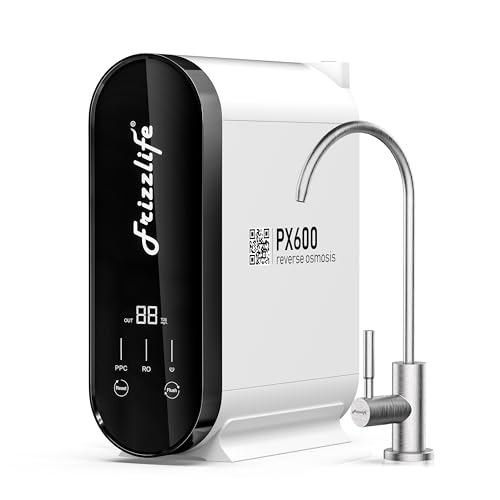
Frizzlife PX600 600GPD Tankless RO System

Ecoviva Mate 3 UV Countertop RO Purifier
Taking A Closer Look At The Options
The Essential Protection system sits at the entry point of the Express Water whole-house lineup, and that positioning shows in how approachable the design feels. Three canister stages sit on a single steel bracket, so the unit mounts in a basement or utility closet without demanding a lot of floor space.
For most households drawing from municipal supply, this kind of setup handles the common culprits: chlorine taste in tap water, sediment that settles in faucet aerators, and the light cloudiness you sometimes see after a water-main flush. The three-stage format also leaves room to add more stages later, which is handy if your water quality shifts down the road.
Where It Delivers
- Cuts chlorine taste and odor across every tap, so drinking and cooking water feel cleaner without a separate pitcher.
- Whole-house design means the shower, dishwasher, and laundry benefit, not just the kitchen sink.
- Modular bracket accepts additional stages, so you can scale up without replacing the whole rig.
- Sediment stage protects water-using appliances from grit that shortens valve and washer life.
Things To Consider
- Filter cartridges need periodic replacement, and missing a swap can let water quality drift back toward baseline.
- Whole-house systems require a nearby drain line for flushing, which rules out some closet installations.
Who It Suits Best
City-water households noticing chlorine taste, mild sediment, or basic water-quality gripes will get the most value from this straightforward three-stage setup.
Where Another Pick Suits Better
Households on well water with metal concerns should consider the Express Water Heavy Metal 3-Stage instead, since its KDF media targets contaminants this unit does not.
The Heavy Metal system looks nearly identical to the Essential model at first glance, but the middle stage tells the real story. Express Water swaps in KDF media, a copper-zinc formulation that targets dissolved metals through a redox (oxidation-reduction) reaction, which is the kind of treatment municipal treatment plants do not always finish off.
Older neighborhoods with original copper plumbing, or homes on private wells, tend to be the buyers who benefit most. The tradeoff is that KDF media costs a bit more to replace than standard carbon, so the long-run maintenance budget is higher than the Essential Protection model.
What Earns Its Place
- KDF media specifically targets heavy metals rather than relying on carbon alone.
- Whole-house format protects bathing, cooking, and laundry water, which matters because skin also absorbs some of what flows through shower lines.
- Same modular bracket as the Essential model, so adding stages later stays straightforward.
Worth Noting
- Replacement media costs more than standard carbon cartridges, so the long-run maintenance budget is higher.
- Best paired with a sediment pre-stage, which the buyer needs to confirm is included or added separately.
- Drain access is still required, so installation spots stay limited to utility areas.
Feature Snapshot
Made For
Households on well water or with older plumbing where metal contamination is a documented concern will get the most out of this configuration.
Look Elsewhere When
If your main complaint is hard-water scale on fixtures, the Express Water Anti-Scale 3-Stage tackles that problem with a more targeted media blend.
If your toilet tank has turned rusty orange, or your white laundry comes out with brownish streaks, the culprit is likely iron, sometimes with manganese tagging along. This Express Water configuration targets exactly that pair of metals with a dedicated oxidation stage.
The system uses the same modular three-stage frame as the other Express Water models, so swapping media is mostly a matter of selecting the right cartridge for your water test results. For homes that have already confirmed iron levels through a test kit, the targeted media avoids the trial-and-error of throwing general carbon at the problem.
Well-Handled Touches
- Specifically designed for iron and manganese reduction, two metals that standard carbon handles poorly.
- Helps protect porcelain fixtures, washing machines, and toilet tanks from persistent staining.
- Same Express Water bracket as the other whole-house models, keeping the install footprint consistent.
Points To Note
- Effectiveness depends on actual iron concentration, so testing water first is worth the effort before committing.
- Specialty media replacement runs higher than basic carbon cartridges.
Feature Card
Best Suited To
Homeowners with well water and visible staining in toilets, tubs, or laundry should look at this unit, ideally after confirming iron levels with a test.
Skip It When
If staining is not the main complaint and the issue is general water clarity or chlorine taste, the Essential Protection model is the more practical pick.
The Ultimate Protection Pro sits at the top of the Express Water stack, and the upgrade over the Essential model is the reusable spin-down pre-filter. That 50-micron stainless mesh catches large sediment before it reaches the specialty cartridges, which extends the life of the more expensive media downstream.
For homes pulling from a source with intermittent sediment, like a well that stirs up after heavy rain, this pre-stage keeps the rest of the system from clogging prematurely. You also save on replacement cartridges, since the spin-down filter rinses clean in place rather than getting thrown out.
Where It Excels
- Reusable 50-micron pre-filter extends the life of downstream specialty cartridges.
- Catches large particles that would otherwise reduce flow to the rest of the system.
- Specialty cartridges focus on harder-to-remove contaminants beyond chlorine and sediment.
- Rinse-clean pre-filter avoids repeated replacement costs over time.
Honest Caveats
- Higher upfront cost than the Essential or Heavy Metal models.
- Specialty cartridges run a premium price to replace, so the annual maintenance budget reflects that.
Feature Snapshot
Perfect Match For
Homeowners who want broader contaminant coverage and value the long-term savings of a reusable pre-filter get the most out of this configuration.
Not Your Match When
On-The-Go renters who cannot mount a whole-house system should look at the Ecoviva Mate 3 countertop unit instead, since it skips installation entirely.
Hard water leaves clues everywhere: cloudy spots on glasses, a chalky ring in the toilet, and faucets that crust over at the spout. The Anti-Scale configuration tackles that mineral load with a dedicated conditioning stage rather than relying on a full salt-based softener.
Compared to the Essential model, this system adds scale-fighting media that helps protect water heaters, dishwashers, and washing machine valves from buildup. It does not soften water the same way a brine tank does, but for many households it strikes a sensible balance between scale control and routine maintenance.
Strong Points
- Reduces scale buildup in water heaters and appliances, helping them run efficiently longer.
- Whole-house format means every showerhead and faucet benefits, not just the kitchen.
- Modular Express Water bracket leaves room to expand if water needs change.
Trade Offs
- Does not produce the silky feel of a true salt-based softener, so expectations matter.
- Anti-scale media has a finite life and the cartridge needs replacing on schedule.
Who Should Grab It
Homeowners in hard-water regions who want a low-maintenance approach to scale control without committing to a full softener will find this model fits the bill.
Another Choice May Suit
If your main concern is drinking-water taste rather than scale, the iSpring US31-NC under-sink system refines a single tap with chloramine-tuned carbon instead.
The iSpring US31-NC takes a different approach from the whole-house Express Water lineup. Instead of treating every tap, it focuses on the single tap that matters most for drinking and cooking, the kitchen sink, and runs three cartridges in series under the cabinet.
The “NC” in the name refers to a catalytic carbon media tuned for chloramine reduction, which is the disinfectant many municipalities have switched to instead of straight chlorine. For renters or smaller households who cannot modify plumbing beyond a single under-sink hole, this is a clean and contained solution that arrives with its own dedicated faucet.
What Makes Sense
- Catalytic carbon media targets chloramine, which standard carbon often misses.
- Comes with a dedicated drinking-water faucet, so filtered water does not have to share the main tap.
- Under-sink format keeps the countertop clear and works in apartments where whole-house installs are off the table.
- Three-stage design layers sediment, carbon, and polishing media in a compact package.
Some Limits To Know
- Only treats water at the dedicated faucet, so the shower and laundry still draw unfiltered water.
- Annual cartridge replacement is part of ownership and adds to long-term cost.
Key Product Details
Right Fit For
Apartment dwellers and renters who want better-tasting drinking water without committing to a whole-house install get the most from this under-sink approach.
Reach For A Different Pick When
Households that need every tap treated, including showers, should consider the Express Water Essential Protection 3-Stage whole-house system instead.
This pick is the odd one out, and that is the point. A flow restrictor is not a filter in the usual sense. It is a small inline component, sized at 550cc, that mounts on the drain line of a reverse osmosis (RO) or RODI (reverse osmosis deionization) system to set the back pressure that pushes water through the membrane.
The right restrictor keeps the membrane working efficiently without flooding the drain line with wasted water. The 1/4-inch quick-connect ends mean no special tools are needed, and the food-grade plastic construction keeps the part safe in contact with drinking water. It is a niche component, but a necessary one when building or repairing an RO setup.
Positive Takeaways
- Quick-connect ends mean no tools or clamps needed for install.
- Food-grade plastic construction keeps the part safe in drinking-water service.
- Sets proper back pressure on the RO drain line so the membrane runs efficiently.
Where It May Fall Short
- Strictly a component, not a complete filter, so it only makes sense for RO or RODI owners.
- The 550cc rating must match the membrane specification, otherwise system performance drifts off target.
Whose Shelf It Belongs On
DIYers and aquarium-grade RO owners who already have a multi-stage RO setup and need a replacement or upgrade restrictor will find this part useful.
Swap It Out When
If you are after a full drinking-water system rather than a single component, the Frizzlife PX600 tankless RO system arrives as a complete unit ready to install under a sink.
The Frizzlife PX600 represents a step up in filtration technology from the carbon-based systems earlier in this list. Reverse osmosis forces water through a semipermeable membrane, and the PX600 rates at 600 gallons per day, which is enough flow to keep up with a busy household without the long waits that older RO tanks produce.
The tankless design is the real convenience upgrade: instead of storing filtered water in a pressurized tank that takes up under-sink space, the system filters on demand. Frizzlife pairs the RO membrane with multiple polishing stages, which is why the listing references eleven stages of layered filtration.
Everyday Advantages
- 600 GPD flow keeps up with cooking-heavy households without long fill waits at the tap.
- Tankless layout frees up under-sink storage compared to traditional RO setups.
- Layered filtration approach addresses a wide spectrum of contaminants beyond chlorine.
- 2:1 pure-to-drain ratio keeps wastewater output more reasonable than older RO designs.
Possible Compromises
- RO systems produce some wastewater as part of the process, so drain line access is required.
- Membrane replacement is part of long-term ownership and runs higher than standard cartridge swaps.
The Right Fit
Larger families and home cooks who run the kitchen tap hard throughout the day will appreciate the high flow rate and on-demand filtration.
Consider Something Else When
Renters who cannot drill into the counter or route a drain line should look at the Ecoviva Mate 3 countertop RO unit, which skips installation entirely.
The Mate 3 from Ecoviva takes a different path through the in-home water purifier category entirely. It sits on the counter, plugs into a standard outlet, and pairs reverse osmosis with a UV stage that neutralizes microorganisms the membrane lets through. No drilling, no under-sink plumbing, no permanent modification.
That portability is the headline feature. Renters, RV owners, and office break rooms get filtered water without committing to an install. The compact 9-inch-square footprint is small enough for a galley kitchen counter, which is helpful in spaces where every inch of surface area is spoken for.
Useful Highlights
- No-install design means renters can take the unit with them when they move.
- UV stage adds microbial protection beyond what RO membranes handle alone.
- Compact footprint suits small kitchens, offices, and RV countertops.
- Simple plug-in operation avoids the need for a dedicated faucet or drain line.
Where It Is Less Suited
- Countertop footprint consumes prep space that some cooks would rather keep clear.
- Single-point use only, so the shower and laundry still draw unfiltered water.
Built With In Mind
On-The-Go renters, frequent movers, and small-space households who want better water without a permanent install will find this countertop format genuinely useful.
A Better Fit Elsewhere
For whole-house coverage that treats every tap, the Express Water Essential Protection 3-Stage system serves a much broader footprint from a single install.
What Matters Most Before Choosing In Home Water Purifier
Match The Filter To The Problem, Not The Other Way Around
Start by identifying the actual complaint, whether that is chlorine taste, iron staining, scale buildup, or general contaminant concerns. Carbon-based systems handle the first well, while metals, scale, and broader contaminant lists need specialty media like KDF (copper-zinc) or anti-scale cartridges. The Express Water lineup makes this kind of matching straightforward because each model targets a specific set of issues.
Whole-House Versus Point-Of-Use
Whole-house systems treat every tap, including the shower, which matters because skin and hair also react to chlorine and hard water. Point-of-use systems, like the iSpring under-sink model or the Ecoviva countertop unit, only treat one tap or dispense point, but they install with far less commitment. Renters and small households often find point-of-use easier to live with.
Maintenance And Cartridge Costs
Filtration media has a finite life, and missed replacements quietly let water quality drift back to baseline. Whole-house systems tend to need larger and pricier cartridges, while under-sink and countertop units use smaller ones. Building a realistic annual replacement budget before choosing prevents the system from getting neglected later.
Flow Rate And Daily Demand
A 600 GPD RO system handles a busy household, while a standard under-sink carbon filter suits lighter use. RO systems also produce some wastewater, so drain line access is part of the install equation. Countertop units sidestep drain issues but only serve one dispense point.
Key Considerations Across These Picks
Pitfalls Shoppers Hit
A common trap is choosing a filter by feature count rather than by the actual water problem. Carbon systems look similar to specialty systems on paper, but they handle very different contaminants. Another miss is forgetting the maintenance schedule: filters that never get swapped stop filtering. Finally, some shoppers overlook install requirements, like drain line access for whole-house or RO systems, and then struggle to place the unit.
When Paying More Pays Off
Higher-tier systems in this category earn their cost through media specialization and longer service life. The Ultimate Protection Pro, for example, includes a reusable pre-filter that extends the life of the more expensive specialty cartridges downstream. For homes with multiple water concerns, the upgrade often pays back in fewer cartridge swaps over time.
Frequently Asked Questions
What Is The Main Difference Between Whole-House And Under-Sink Filtration?
Whole-house systems treat water at the point where it enters the home, so every tap, shower, and appliance benefits. Under-sink systems only treat one dedicated tap, which keeps the install simpler but leaves bathroom and laundry water unfiltered.
How Often Do Filter Cartridges Need Replacing?
Most carbon cartridges last around six months, while specialty media like KDF or anti-scale media can stretch to twelve months depending on water usage and incoming water quality. RO membranes tend to last two to three years before performance drops.
Do Reverse Osmosis Systems Waste A Lot Of Water?
Traditional RO systems produce several gallons of wastewater per gallon of filtered water. Newer designs like the Frizzlife PX600 improve on that ratio, but RO will always produce some drain output by design.
Can A Water Filter Remove Iron From Well Water?
Standard carbon does a poor job with dissolved iron. Specialty media formulated for iron and manganese reduction, like the Express Water Iron & Manganese model, handles it more effectively when sized to the actual iron concentration in the water.
Are Countertop RO Units Worth It For Renters?
For renters who cannot drill into counters or modify plumbing, a countertop unit offers meaningful water quality improvement without permanent changes. The trade-off is countertop space and single-point use, so it works best when drinking water is the main goal.
Wrap Up
The right in home water purifier depends less on brand and more on matching the system to the water you actually have. Whole-house setups make sense for municipal water with broad quality concerns, while under-sink and countertop units fit renters and small households with focused goals. Test the water when you can, budget for cartridge replacement, and pick the system whose strengths line up with the problem you can see in your glass.