
Your tap water tells a story you can’t always see. Municipal treatment plants handle the big contaminants, but aging pipes, well-water conditions, and dissolved minerals still slip through. That’s where a dedicated in home water purification system earns its place, removing what treatment plants miss and turning the kitchen tap into your most reliable source of clean drinking water.
The category splits into two camps. Under-sink reverse osmosis (RO) units treat water right at the faucet, stripping out dissolved solids, chlorine byproducts, and trace contaminants at a molecular level. Countertop RO units skip the plumbing entirely and pour filtered water into a glass carafe. Whole-house systems tackle a different job, scrubbing sediment and chlorine from every drop that enters the plumbing, protecting showers, washing machines, and skin along with the kitchen tap. The ten options below cover both worlds, so you can match the format to your home rather than the other way around.
The Essentials At A Glance

Frizzlife PD1200 1200GPD Tankless RO System

Bluevua RO100ROPOT-Lite Countertop RO

Waterdrop X12-Plus Dual Flow RO System

PUREPLUS 2-Stage KDF & Coconut Carbon

Bluevua RO100ROPOT Countertop RO
Bluevua RO100ROPOT-Travel Countertop RO

PUREPLUS 2-Stage Grooved Sediment & KDF

PUREPLUS 2-Stage Clear Housing Iron/Manganese
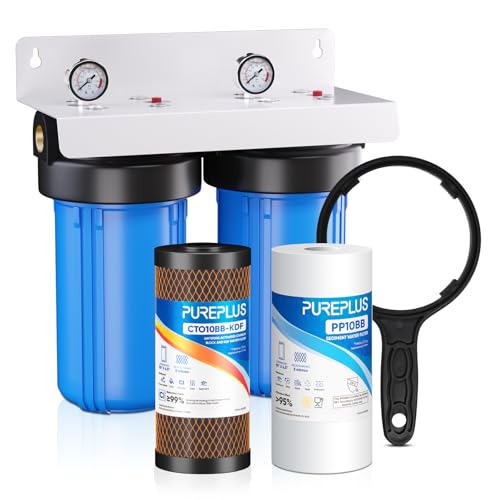
PUREPLUS 2-Stage PP Sediment & KDF Block

PUREPLUS 2-Stage Chlorine, Iron & Manganese
More Details On Our Top Picks
Big households run through drinking water faster than smaller ones, and waiting a slow trickle for a single glass gets old by day two. The Frizzlife PD1200 solves that pain point with a tankless design rated for 1200 gallons per day, which translates to roughly a cup in about five seconds at the tap.
Filtration runs through eleven stages inside a compact under-sink housing, and the system carries NSF/ANSI 42, 58, and 372 certifications, the trio you want for material safety, contaminant reduction, and lead-free construction. A 3:1 pure-to-drain ratio keeps waste water reasonable for an RO unit, and the smart faucet signals filter life and TDS (total dissolved solids) at a glance.
The Helpful Details
- 1200 GPD flow fills cookware and bottles in seconds rather than minutes.
- Eleven filtration stages handle sediment, chlorine, PFAS, and a long list of dissolved solids.
- Tankless footprint frees up the cabinet space a traditional RO storage tank usually claims.
- BPA-free construction with three NSF certifications gives peace of mind around material safety.
Things To Consider
- Under-sink installation requires drilling a small hole for the dedicated faucet, so renters should confirm approval first.
- As with any RO unit, replacement filters add to long-term cost, and the multi-stage design means more cartridges to track.
Who It Suits Best
Large families or anyone tired of waiting for a slow trickle will appreciate the flow rate the most.
Consider Something Else When
A renter who can’t modify the counter should reach for the Bluevua RO100ROPOT-Lite Countertop RO instead.
Apartment dwellers and short-stay renters usually can’t drill a hole or call a plumber. The Bluevua RO100ROPOT-Lite sidesteps all of that: it sits on the counter, plugs into a standard outlet, and needs nothing more than an occasional refill of its built-in tank.
Reverse osmosis technology (which forces water through a membrane with pores so small that most dissolved contaminants can’t pass) handles the serious work, while the included borosilicate glass carafe stores the finished water away from plastic. Compared with the larger Frizzlife PD1200 above, this unit trades flow rate and capacity for genuine plug-and-play simplicity.
Notable Upsides
- Zero plumbing means you can take it with you when the lease ends.
- Glass carafe keeps water tasting clean and avoids plastic contact during storage.
- Smart LED indicators surface filter life and tank status without guesswork.
Worth Noting
- Tank size is modest, so larger households refill more often than they would with an under-sink unit.
- Countertop footprint eats prep space, which may matter in galley kitchens.
Key Specs
Made For
Renters, dorm dwellers, and small-space cooks who want RO-grade water without modifying the sink.
Look Elsewhere When
Households that pour many liters per day should grab the Bluevua RO100ROPOT Countertop RO for its larger reservoir.
Some people want pure water and others want mineral-balanced water with a more lively taste. The Waterdrop X12-Plus answers both with a dual-outlet faucet, so you can pour ultra-pure RO water for the kettle or a mineral-rich alkaline stream for daily drinking.
Filtration is layered, with a 12-stage mineral line and a 10-stage RO line working in parallel under the sink. Alkaline remineralization (the process of adding back healthy minerals like calcium and magnesium that RO strips out) gives the second stream a noticeably smoother flavor, which tea drinkers tend to notice right away. Compare that to the Frizzlife’s single-outlet setup, and you see where the X12-Plus trades simplicity for versatility.
What Pays Off
- Dual-outlet faucet gives you a choice between pure and mineralized water on demand.
- Mineral stage restores flavor that RO alone can flatten out.
- Under-sink housing keeps the counter clear and uncluttered.
Trade Offs
- More filtration stages mean a more involved filter replacement routine down the road.
- Plumbing install is required, similar to the Frizzlife unit above.
Best Suited To
Households that split water duties between cooking, coffee, and straight-up drinking will get the most out of the dual-stream design.
A Better Fit Elsewhere
Anyone who only needs one type of filtered water will find the Frizzlife PD1200 1200GPD Tankless RO System simpler to live with.
Whole-house filtration steps in where point-of-use units leave off. The PUREPLUS 2-Stage KDF & Coconut Carbon unit mounts on the main water line and treats every drop that enters the plumbing, which means softer shower water, cleaner laundry, and longer-lasting appliances alongside the kitchen tap.
The first stage pairs KDF (a copper-zinc media that scrubs heavy metals) with activated carbon to address lead, mercury, arsenic, sediment, rust, and sand. The second stage uses coconut shell carbon certified to NSF/ANSI 42 for chlorine, taste, and odor reduction. Compared with the reverse osmosis systems above, this one focuses on improving water for the entire plumbing rather than producing ultra-pure drinking water at a single tap.
Everyday Perks
- Treats every tap, shower, and appliance in the home with one install.
- KDF media extends carbon life by reducing bacterial growth inside the filter.
- Coconut carbon polishes chlorine taste and odor from the entire supply.
Minor Gripes
- Does not reduce dissolved solids the way an RO membrane can, so drinking water still benefits from a secondary point-of-use filter.
- Annual cartridge swaps are a recurring cost that point-of-use filters don’t impose.
Who Will Love This
Homeowners with metallic-tasting or chlorinated municipal water who want a whole-home improvement rather than just a kitchen upgrade.
Skip It When
Apartment dwellers should stick with the Bluevua RO100ROPOT-Lite Countertop RO for a simpler, plumbing-free solution.
The original ROPOT built Bluevua’s reputation, and this updated version keeps the same countertop simplicity while pushing filtration further. No plumbing, no drilling, just a power outlet and a countertop surface.
Inside, multi-stage reverse osmosis filtration pulls out TDS, chlorine, lead, and other dissolved contaminants. The borosilicate glass carafe is the standout touch: it stores the finished water away from plastic and keeps flavors neutral over time. Compared to the Lite version reviewed above, this unit typically offers a larger reservoir for households that pour more glasses per day.
Notable Gains
- Glass carafe keeps stored water free of plastic taste over long sitting times.
- Countertop format makes it portable enough to move between properties.
- Multi-stage RO tackles a broader range of contaminants than a basic carbon pitcher.
Points To Note
- Fills and refills are manual, so heavy daily drinkers may find the rhythm tedious.
- Counter space matters, and this unit is taller than a standard electric kettle.
Perfect Match For
Plastic-averse households and short-stay renters who want a sturdier countertop RO than the Lite model offers.
Another Choice May Suit
Homeowners looking for whole-house coverage should consider the PUREPLUS 2-Stage KDF & Coconut Carbon unit instead.
Road trips, vacation rentals, and RVs don’t usually have RO systems built in. The Bluevua ROPOT-Travel slots into that gap with a compact, plug-in design that goes wherever there’s a power outlet and a source of tap water.
Filtration uses a 6-stage reverse osmosis setup paired with UV light, addressing TDS, PFOA, PFOS, chlorine, fluoride, arsenic, and lead with a pore size of 0.0001μm. SGS testing backs the contaminant claims. Compared to the standard ROPOT above, the Travel version adds the UV stage for extra confidence when the local water source is a question mark.
Where It Excels
- UV stage adds protection against microbial concerns in unfamiliar water sources.
- Compact size fits on small counters, nightstands, or RV galleys.
- Multi-stage RO with the tightest available pore size in this lineup.
Honest Caveats
- Production speed is slower than full-size under-sink units, so plan ahead before pouring a pitcher.
- Replacement filters and UV lamp service add to the long-term cost of ownership.
Quick Facts
Right Fit For
Frequent travelers, RV owners, and second-home residents who need reliable RO water away from their primary address.
Reach For A Different Pick When
Stationary households will get more capacity from the Bluevua RO100ROPOT Countertop RO or the Frizzlife PD1200.
Homes on well water or older municipal lines often deal with sediment that clogs faucet aerators and stains porcelain. The PUREPLUS 2-Stage Grooved Sediment & KDF unit addresses that head-on with a layered sediment filter built for high-load conditions.
The first stage uses a grooved PP filter with three density layers (5, 7, and 10 microns, where one micron equals one-millionth of a meter, a useful gauge of how fine the filtration is), capturing sand, rust, and silt before they reach the second filter. KDF and activated carbon then handle chlorine, odor, and heavy metals. Pressure gauges on the housings let you monitor filter load visually, a practical touch for households that want to know when to swap.
Practical Pluses
- Grooved sediment design holds more particulates before clogging than standard depth filters.
- Pressure gauges remove guesswork around cartridge replacement timing.
- 10-inch by 4.5-inch standard housings simplify future cartridge sourcing.
Points To Keep In Mind
- Whole-house install needs a clear spot near the main shutoff and a drain for pressure-relief purging.
- Gauges are useful but require an occasional glance to catch rising differential pressure.
Built With In Mind
Rural homeowners and well-water users dealing with muddy or rusty supply water will benefit the most from the sediment handling.
Where A Sibling Pick Shines
The PUREPLUS 2-Stage Clear Housing Iron & Manganese unit below offers better targeting when iron staining is the main complaint.
Iron and manganese are sneaky: they leave orange or black stains on fixtures, build up inside water heaters, and quietly shorten the life of plumbing parts. The PUREPLUS Clear Housing version tackles that directly with a filter stack engineered for mineral reduction.
The first stage combines multi-layer sediment and carbon filtration, certified to NSF/ANSI 42 by IAPMO R&T, capturing chlorine, sand, rust, and odor. The second stage targets iron and manganese reduction specifically. Clear sumps let you see the filter media at a glance, which makes routine checks easier than opaque housings. Compared to the PUREPLUS KDF & Coconut Carbon unit earlier, this one swaps general carbon polishing for targeted mineral reduction.
What Makes Sense
- Transparent housings make cartridge condition obvious without disassembly.
- Iron and manganese targeting addresses staining and metallic taste common in well water.
- IAPMO R&T certification to NSF/ANSI 42 confirms material safety claims.
Small Caveats
- Clear sumps show sediment buildup that some homeowners find visually distracting in utility spaces.
- Iron and manganese filters can clog faster in high-mineral wells, shortening service intervals.
Spec Overview
The Right Fit
Well-water households fighting orange staining and metallic flavor will see immediate improvement.
Not Your Match When
City water without iron concerns should look at the PUREPLUS 2-Stage PP Sediment & KDF Carbon Block option instead.
First-time whole-house buyers want simple, effective filtration without a complicated spec sheet to memorize. This PUREPLUS unit keeps the format straightforward: a 5-micron PP sediment filter (polypropylene, a food-grade plastic commonly used in filtration) up front, a KDF and activated carbon block behind it, and that’s the whole system.
The PP filter is certified by IAPMO R&T to NSF/ANSI 42 for material safety and captures rust, sand, and silt before they reach the carbon stage. KDF and carbon then address chlorine and certain heavy metals. Replacement cartridges are widely available and inexpensive, which keeps long-term cost down. Compared to the iron-targeting PUREPLUS above, this one covers general sediment and chemical reduction for a more accessible price.
Reasons It Performs
- Replacement cartridges are inexpensive and easy to source online.
- Two-stage design handles the most common whole-house complaints in one pass.
- Standard 10-inch housing format keeps future upgrades flexible.
A Few Limitations
- No pressure gauges, so replacement timing relies on calendar estimates.
- Less targeted than the iron-and-manganese unit for private-well households.
Whose Shelf It Belongs On
First-time whole-house shoppers who want a straightforward, affordable entry into the category.
Swap It Out When
Iron-stained fixtures mean the PUREPLUS 2-Stage Clear Housing Iron & Manganese model is the better match.
Rural homes on private wells often face three stubborn problems at once: chlorine smell from municipal-style treatment, iron staining, and manganese darkening. This PUREPLUS unit pairs a sediment-plus-carbon first stage with an iron-and-manganese reduction second stage, hitting all three in one install.
First-stage filtration is certified to NSF/ANSI 42 by IAPMO R&T and handles chlorine, taste, odor, sand, rust, and sediment. The second stage focuses on iron reduction. Replacement dual-cartridge refills are stocked on common marketplaces, so ongoing upkeep stays straightforward. Compared to the clear-housing version above, this configuration prioritizes filtration power over visual inspection.
What Helps Most
- Targets three of the most common well-water complaints in a single system.
- Certification to NSF/ANSI 42 confirms safe materials for whole-house drinking lines.
- Refill cartridges are affordable and widely available in standard sizes.
Factors To Consider
- Opaque housings make cartridge condition harder to monitor without disassembly.
- Iron-heavy wells may shorten cartridge life compared to milder municipal supplies.
Feature Snapshot
Who Should Grab It
Households on rural well water dealing with chlorine residual, iron staining, and manganese discoloration all at once.
Where Another Pick Suits Better
City dwellers without iron concerns will get more value from the PUREPLUS 2-Stage PP Sediment & KDF Carbon Block model.
What To Weigh Before Choosing An In Home Water Purification System
Match The Format To Your Home
The first fork in the road is point-of-use versus point-of-entry. Countertop and under-sink RO units polish drinking water at a single faucet, while whole-house filters treat every drop that enters the plumbing. Apartment dwellers usually lean toward countertop formats because no plumbing changes are required. Homeowners with larger budgets often pair an under-sink RO for drinking water with a whole-house unit for showers and appliances.
Contaminants Tell You What To Filter
Municipal water supplies differ, and well water differs even more. Iron staining points toward manganese-and-iron cartridges like the PUREPLUS Clear Housing unit. Metallic taste and aging pipes hint at the need for KDF media. Chlorine-heavy municipal systems usually respond well to carbon polishing. Knowing what’s actually in your water matters more than chasing the longest spec sheet.
Maintenance Realities
Every filter in this category requires cartridge replacement, and the cadence varies. RO membranes typically last longer than carbon cartridges, but they cost more when replacement day arrives. Whole-house filters with pressure gauges make upkeep easier to plan. Owners commonly report that calendar-based reminders help, especially when running multiple filtration stages at once.
Capacity And Flow
Large households need high GPD (gallons per day) ratings on RO units to keep up with simultaneous demand. The Frizzlife PD1200’s 1200 GPD output handles that without making anyone wait. Smaller households can save money with lower-output units, but watch out for refill friction during busy mornings.
Key Considerations Across These Picks
Pitfalls Shoppers Hit
A common trap is buying a whole-house filter and assuming drinking water is covered. Whole-house units scrub sediment and chlorine but typically don’t reduce dissolved solids the way RO does, so a dedicated drinking-water tap still earns its place. Another slip-up is ignoring filter replacement costs up front. A cheap system with expensive cartridges costs more over five years than a pricier system with affordable refills.
Where The Extra Money Goes
Higher-tier RO units invest in faster flow rates, larger filter stacks, and certifications against a wider range of contaminants. The Frizzlife PD1200’s 11-stage tankless design, for example, costs more because it eliminates a bulky storage tank while delivering gallon-per-minute flow. UV stages in units like the Bluevua ROPOT-Travel add microbial protection that basic carbon can’t match. For travelers or well-water homes, that upgrade often pays for itself in confidence and convenience. For a small apartment with already-clean municipal water, a simpler countertop unit is usually enough.
Frequently Asked Questions
What Is An In Home Water Purification System?
An in home water purification system is any filtration setup installed or used inside a residence to improve tap water quality. It can mean a countertop reverse osmosis unit, an under-sink RO system, or a whole-house filter mounted on the main supply line.
How Often Do Filters Need Replacing?
Carbon filters typically last six to twelve months depending on water usage and sediment load. RO membranes stretch out to two years or longer under typical household conditions. Always check the manufacturer’s recommended replacement interval for each cartridge.
Do Whole-House Filters Make Drinking Water Safe?
Whole-house filters reduce sediment, chlorine, and some heavy metals across every tap, but most don’t strip dissolved solids the way reverse osmosis does. Many households pair a whole-house unit with a dedicated drinking-water RO system for complete coverage.
Is Countertop RO As Effective As Under-Sink RO?
Countertop reverse osmosis uses the same membrane technology as under-sink units, so contaminant reduction is comparable. The differences show up in capacity, flow rate, and convenience rather than filtration quality itself.
Can These Systems Reduce PFAS?
Reverse osmosis systems with fine enough membranes are widely reported to reduce PFAS (per- and polyfluoroalkyl substances, often called “forever chemicals”) in drinking water. Carbon-only whole-house filters offer partial reduction but aren’t as thorough as RO for this group of contaminants.
Closing Remarks
The right in home water purification system comes down to your water source, household size, and willingness to commit to cartridge swaps. Match the format to your living situation, confirm the filter media addresses your specific contaminants, and plan for the long-term upkeep before you buy. With those three boxes checked, you’ll spend less time worrying about what’s in your glass and more time enjoying it.