Shopping for a new water heating setup can feel like a deep dive into plumbing jargon and confusing specs. Whether you need a full-house tankless upgrade, a small under-sink boost, or the maintenance gear to keep things running smoothly, the right match depends on your home’s layout and your household’s habits. This shortlist mixes whole-home heaters, compact point-of-use units, and the often-overlooked accessories that protect or maintain them. Each pick below comes with a clear sense of who it serves best and where it might fall short.
How The Shortlist Stacks Up

Eleventree 2 Pack RV Water Heater Anode Rods

Chromex NSF Certified Tankless Water Heater Descaling Solution 1 Gallon

Watts PLT-5 Potable Water Expansion Tank 2.1 Gallon
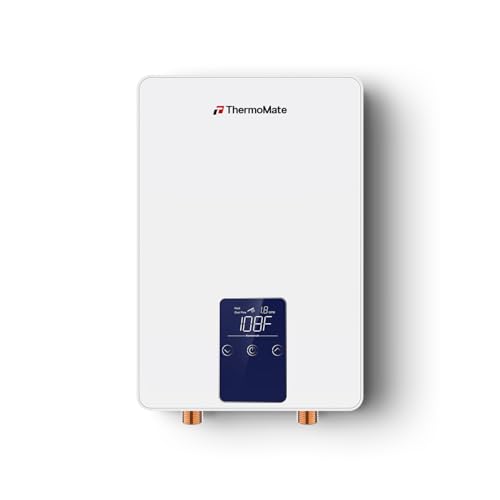
ThermoMate 6kW Tankless Water Heater Electric for Sink

Feelrogast Electric Tank Water Heater 8 Gallon Under Sink

Feelrogast Electric Mini Tank Water Heater 2.5 Gallon

FOGATTI Tankless Water Heater Gas Propane Indoor 7.5GPM

Feelrogast Electric Mini Tank Water Heater 4 Gallon Blue
What Each Pick Brings To The Table
Anode rods are the sacrificial heroes inside any tank-style water heater, and this two-pack from Eleventree targets a specific audience: RV owners running Suburban or Mor-Flo style tanks. Each rod measures roughly 9.25 inches and threads in at 3/4″ NPT, matching common RV water heater replacements. Magnesium construction attracts corrosive elements in the water, corroding in place of the tank itself, which buys you extra years before the steel shell starts to weaken.
For most people with a residential tank, this particular rod is too short and too specialized. But for a road traveler or seasonal camper, it fills a very real gap. The two-pack means you keep a spare on hand, since anode rods are consumable and need replacement every few years depending on water hardness and usage.
A Favorable Mix
- Magnesium material actively draws corrosion away from the tank walls.
- 3/4″ NPT thread matches common Suburban and Mor-Flo fittings.
- Two rods per pack means you always have a backup ready.
- Affordable insurance against premature tank failure in mobile setups.
Things To Consider
- 9.25-inch length suits RV tanks, not standard residential water heaters.
- Magnesium corrodes faster than aluminum-zinc alternatives in very hard water.
- Requires basic wrench work and tank draining to install.
Who It Suits Best
RVers and mobile-home owners with Suburban or Mor-Flo water heaters who want a straightforward replacement anode rod.
Where Another Pick Suits Better
Residential homeowners with full-size tank heaters should look at the Chromex descaling solution for general maintenance instead, since this rod is sized for smaller mobile tanks.
Tankless water heaters, like the ThermoMate and FOGATTI units further down this list, run clean until mineral scale starts choking the heat exchanger. The Chromex descaling solution is a food-grade liquid designed to dissolve that scale buildup and restore proper flow. At one gallon, the bottle covers multiple flushes depending on the size of your system. NSF certification matters here because the rinse water eventually returns to your home plumbing, and you want something tested for potable use.
The honest read is that descaling is one of those chores people skip until their unit starts acting up. Running this through your tankless heater once or twice a year, depending on your water hardness, keeps the heat transfer efficient and extends the unit’s life. In our view, anyone investing in a tankless system should keep a bottle of this on the shelf.
The Helpful Details
- NSF certified for potable water system use.
- One gallon provides enough volume for multiple descaling cycles.
- Liquid formula works faster than powder alternatives for many users.
- Biodegradable composition reduces environmental concern at disposal.
Worth Noting
- Not compatible with magnesium or aluminum components.
- Requires a separate pump or bucket-circulation setup to flush properly.
Feature Snapshot
Made For
Tankless water heater owners in hard-water regions who want to maintain flow and efficiency without calling a technician every year.
Consider Something Else When
If you own a traditional tank heater rather than a tankless unit, skip this and look at the Eleventree anode rods for corrosion protection instead.
When a water heater heats up, the water expands. In a closed plumbing system, that expansion has nowhere to go, which can trigger the pressure relief valve and shorten the life of the system. The Watts PLT-5 is a small pressurized tank that absorbs that extra volume, acting like a shock absorber for your pipes. With 2.1 gallons of capacity and a carbon steel body finished in epoxy, it handles residential and light commercial closed-loop setups.
For most homes with a backflow preventer or check valve on the main, adding an expansion tank is more or less required code in many jurisdictions. The 3/4″ male connection and stainless steel inlet make it a direct fit on standard supply piping. It can stand upright, hang, or sit on the pipe, depending on what your installation space allows.
Where It Delivers
- 2.1-gallon capacity suits typical residential closed-loop systems.
- Carbon steel with epoxy finish resists rust and corrosion.
- 3/4″ stainless steel inlet fits standard supply piping.
- Flexible mounting options work in tight mechanical room layouts.
Trade Offs
- Requires a pre-charge check with a tire inflator before installation.
- Not a substitute for a pressure relief valve on the water heater itself.
Key Specs
Best Suited To
Homeowners with closed-loop plumbing systems who need to manage thermal expansion and protect their water heater from pressure spikes.
Skip It When
You just need point-of-use hot water without modifying the main system; the Feelrogast 2.5-gallon mini tank handles that scenario more directly.
The ThermoMate 6kW is a compact electric unit that mounts under or over a single sink and delivers hot water on demand without a storage tank. At 240 volts and 25 amps, it produces roughly 1.0 gallon per minute at a 35°F temperature rise, which is enough for hand-washing, dish rinsing, or a single low-flow shower. The 85°F to 131°F adjustable range covers most household needs at a single outlet.
Compared to the Feelrogast mini tanks further down this list, the ThermoMate takes a different approach: no standby heat loss, no recovery time, just instant heat when you open the tap. You may find the flow rate limiting in cold winters, but for a single sink in a moderate climate, it’s a tidy, efficient solution. ETL listing adds a layer of confidence around electrical safety.
What Earns Its Place
- On-demand heating means no standby energy waste.
- Compact size fits inside most under-sink cabinets.
- Adjustable temperature range from 85°F to 131°F.
- 24-hour standby readiness for quick activation.
Room For Improvement
- Requires a dedicated 240V circuit and 25A breaker, which not all kitchens have.
- 1.0 GPM flow rate will feel slow for showers or simultaneous use.
At A Glance
Who Will Love This
Anyone wanting instant hot water at a single sink without the bulk of a storage tank and who already has a 240V circuit available.
Look Elsewhere When
Larger households running multiple fixtures at once should consider the FOGATTI 7.5 GPM whole-house unit instead.
At eight gallons, this Feelrogast unit sits in the middle of the mini-tank category, large enough to handle a quick shower or a string of hand-washes before recovery kicks in. The 316 stainless steel heating element pushes the unit toward durability, and the 120V, 1500W draw means it plugs into a standard household outlet without needing a special circuit. Wall or floor mounting gives flexibility for tight spaces under a sink or in a utility closet.
Where the smaller 2.5-gallon Feelrogast works for a single hand basin, this 8-gallon version adds meaningful reserve for a guest bathroom or a small office kitchen. In our view, it strikes a practical balance between the compact units and a full 40-gallon residential tank, especially for households that don’t want to rewire for 240V.
Useful Touches
- 8-gallon reserve covers short showers and back-to-back hand-washing.
- 120V standard outlet compatibility, no special wiring needed.
- 316 stainless steel heating element resists corrosion.
- Wall or floor mounting adapts to varied installation spots.
Points To Note
- Larger footprint than the 2.5- or 4-gallon siblings in the same line.
- Recovery time between uses means heavy demand can cool the reserve down.
The Right Fit
Homeowners adding a half-bath, guest suite, or detached office who need more hot water than a tiny mini-tank can supply without a full-size install.
Another Choice May Suit
Studio dwellers or single-sink users will find the Feelrogast 2.5-gallon mini tank more than enough and easier to tuck away.
The 2.5-gallon Feelrogast is the smallest unit in this lineup, designed to slip under a sink where space is at a premium. It runs on a standard 120V outlet at 1500W, so installation in an apartment or older home doesn’t require electrical upgrades. The 316 stainless steel heating element and adjustable temperature range from 86°F to 167°F give you reasonable control over output for a unit this size.
For most people in a studio or guest powder room, 2.5 gallons covers hand-washing and quick dish rinses comfortably. You may find it runs out during longer tasks like filling a large pot, but that is the trade-off for the compact footprint. It can sit on the floor or mount on the wall, which helps in tight vanities.
What Works In Its Favor
- Ultra-compact 2.5-gallon tank fits in tight under-sink cabinets.
- Standard 120V plug-in installation in any room with an outlet.
- 316 stainless steel element improves long-term corrosion resistance.
- Wide 86°F to 167°F temperature range for varied tasks.
Some Limits To Know
- Small reserve runs out during extended draws like bath fills.
- Not suited as a primary hot water source for a full household.
Quick Facts
Perfect Match For
Apartment dwellers, studio owners, or anyone adding a single hand sink who needs a hot water source without rewiring or remodeling.
Reach For A Different Pick When
You need a small reserve for a guest bathroom with shower use; the Feelrogast 8-gallon covers that scenario with more headroom.
The FOGATTI is the heavyweight in this roundup: a propane-powered indoor tankless unit rated at 170,000 BTU with a maximum flow of 7.5 gallons per minute. That capacity covers three to five outlet points running simultaneously, depending on incoming water temperature. CSA certification means it meets North American safety standards for indoor gas appliances. The digital display and water servo keep the output within roughly 1°F of the set temperature, which is genuinely useful during long showers when ground temperature fluctuates.
Unlike the smaller electric point-of-use units above, the FOGATTI requires a gas line, venting, and condensate drainage, so it is more of a whole-house replacement than a quick add-on. For larger households running multiple showers, dishwashers, and laundry at once, it eliminates the cold-water sandwich effect of smaller tankless units. In most homes of three to five people with propane already plumbed in, it pulls its weight well.
The Upside
- 7.5 GPM flow supports multiple fixtures at once for larger households.
- 170,000 BTU heating power recovers fast even in cold inlet conditions.
- Digital display with water servo holds temperature within roughly 1°F.
- Compact wall-hung design frees up floor space compared to tank units.
Worth Bearing In Mind
- Propane gas line, venting, and condensate routing raise install complexity.
- Annual descaling with the Chromex solution is recommended in hard-water regions.
- Not a direct swap for an existing electric tank heater.
Built With In Mind
Mid-to-large households with existing propane service who want whole-house on-demand hot water without the bulk of a storage tank.
Swap It Out When
Single-fixture users or renters should choose the ThermoMate 6kW electric unit for a much simpler plug-in installation.
The 4-gallon Feelrogast slots between the 2.5-gallon and 8-gallon siblings in the same line, hitting a middle ground that suits many home offices, basement bars, and detached garage sinks. The blue finish is a small touch but helps the unit stand out from white appliances in a utility room. Like the other Feelrogast models, it runs on 120V at 1500W and mounts on the wall or floor. The 316 stainless steel element and adjustable temperature range from 86°F to 167°F match the rest of the family.
For most homeowners adding a single secondary sink, 4 gallons is the sweet spot: small enough to install without rewiring, large enough that quick back-to-back washes don’t leave you in cold water. Compared to the 2.5-gallon unit, you get noticeably more headroom for the same footprint class.
Good Reasons To Consider
- 4-gallon capacity strikes a versatile balance for secondary sinks.
- 120V plug-in means no special wiring or breaker upgrades.
- 316 stainless steel element supports long service life.
- Blue exterior finish adds a small visual upgrade over white.
Possible Compromises
- Still too small for a shower or whole-house demand.
- Recovers slower than tankless options during sustained use.
Whose Shelf It Belongs On
Homeowners outfitting a wet bar, garage workshop, or basement utility sink who want a reliable plug-and-play hot water source without complexity.
A Better Fit Elsewhere
Anyone needing point-of-use heat for a kitchen prep sink with frequent use should look at the ThermoMate 6kW tankless instead for unlimited on-demand draw.
Choosing The Right Hot Water Tank Setup For Your Home
Match The Unit To Your Usage Pattern
Start with how you actually use hot water. A family of five running two showers, a dishwasher, and laundry at once needs a high-flow tankless unit like the FOGATTI or a large storage tank. A single sink in a home office only needs a 2.5- or 4-gallon mini tank. Demand pattern, not square footage alone, drives the right capacity.
Consider Your Existing Infrastructure
Voltage, gas lines, venting, and drain access all shape your options. The Feelrogast mini tanks plug into any 120V outlet. The ThermoMate needs a dedicated 240V circuit. The FOGATTI requires a gas line, vent termination, and condensate routing. Going with what your home already supports saves a lot of install cost.
Think About Maintenance Over The Long Haul
Anode rods, descaling solution, and expansion tanks all extend the life of your setup. If you go tankless, plan on a yearly flush with a product like the Chromex solution. For traditional tanks, an anode rod replacement every few years keeps corrosion in check. A small budget for maintenance now avoids a much larger replacement later.
Size And Placement Constraints
Under-sink cabinets limit height and depth, which is why mini tanks come in compact footprints. A wall-hung tankless unit saves floor space but needs clearance for venting and service access. Measure the spot before you commit, and leave room for plumbing connections on all sides.
Smart Considerations Before You Commit
Common Shopping Slip Ups
One of the most frequent mistakes is buying a tankless unit for low-flow fixtures, or a small mini tank for a household of four. Match the capacity to the actual demand. Another common trap is ignoring inlet water temperature, which drops much lower in northern winters and cuts the effective flow rate of any tankless heater. Always check the unit’s gallons-per-minute rating against your coldest-month groundwater temperature.
Where The Extra Money Goes
Higher-tier models in this category tend to add stainless internals, digital controls, and stronger flow rates. The FOGATTI’s water servo and 7.5 GPM output cost more than a basic electric mini tank, but for a large household, the extra capacity eliminates the cold-water shuffle and runs more efficiently over time. The upgrade makes sense when the cheaper option would force a compromise you live with every day.
Frequently Asked Questions
How long do electric mini tank water heaters last?
Most quality mini tanks run for around 6 to 10 years depending on water hardness and usage patterns. Flushing the tank annually and checking the anode rod in larger units can extend service life.
Do tankless water heaters really save energy?
Tankless units avoid standby heat loss, which is the main energy drain of a storage tank. In homes with modest hot water use, that adds up to noticeable savings. In homes with heavy simultaneous demand, the savings shrink because the unit works harder.
Can I install an expansion tank myself?
A handy homeowner with basic plumbing experience can install the Watts PLT-5 with a few common tools. You will need to check the pre-charge pressure with a tire gauge and adjust it to match your home’s static pressure before mounting.
What size mini tank do I need for a kitchen sink?
A 2.5- to 4-gallon mini tank handles hand-washing and quick dish rinses comfortably. For longer tasks like filling a large pot, you may find a 6- to 8-gallon reserve or a tankless point-of-use unit like the ThermoMate more practical.
How often should I descale a tankless water heater?
Most manufacturers recommend once a year in moderate water conditions, and twice a year in hard-water areas. The Chromex solution handles the job in about an hour of circulation time per session.
Wrap Up
The right hot water setup depends less on brand loyalty and more on how your household actually uses water each day. Mini tanks fill the gaps in small spaces, full-size tankless units serve larger families with on-demand demand, and accessories like anode rods and descaling solution keep everything running longer. Start with your usage pattern, match it to your home’s infrastructure, and you will land on a unit that earns its keep for years.