

Hard water isn’t just a nuisance; it’s a daily tax on skin, laundry, pipes, and appliances. Limescale builds up in water heaters, spots show up on glassware, and soap stops lathering the way it should. The right softener or filtration upgrade can quietly fix all of that without overhauling your plumbing. This roundup walks through ten solid options covering whole-home salt systems, salt-free conditioners, point-of-use gear, and the small replacement parts that keep everything running.
Your Options, Compared

Sea Salt Superstore Dishwasher Salt 30 oz
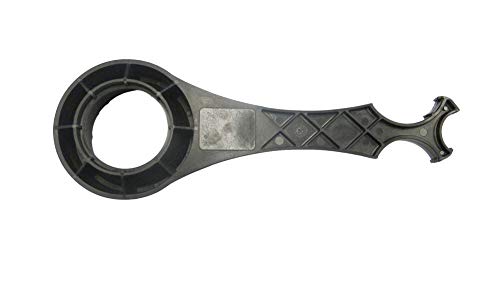
Clack Water Softener Repair Wrench V3193-02

5 Micron Water Filter 20″ x 2.5″ 6-Pack

Aquasana SimplySoft 60K Grain WH-SF60-BASE
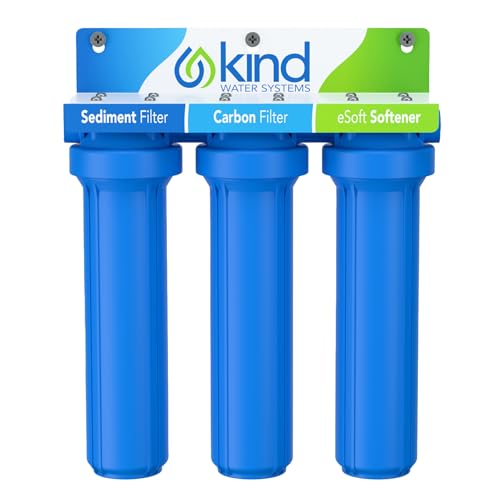
Kind E-3000 Salt-Free Softener for City Water

Kind E-3000UV Softener & UV Filter Combo

Addlux Titanium Shower Filter (Chrome)
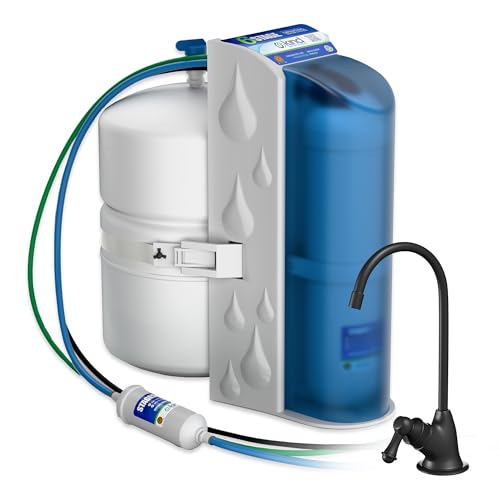
Kind 6-Stage RO System with Chrome Faucet

iSpring FWSP100SL 100-Micron Replacement Cartridge

7116713 Water Softener Bypass Clip
More On The Choices That Made The List
If your dishwasher is begging for help, this coarse salt is the simplest fix on the list. Dishwasher salt isn’t table salt with a marketing twist; it’s a granular, food-grade sodium chloride designed to recharge the built-in ion-exchange resin inside machines from Bosch, Miele, and similar brands. The 30 oz pouch is a reasonable size for renters or smaller households running loads every other day.
Unlike whole-home softeners further down the list, this one targets a single appliance. Drop it in the reservoir, run a hot cycle, and the resin inside the dishwasher pulls calcium and magnesium out of the water. You’ll see fewer white spots on glasses and noticeably cleaner internal components over time.
A Few Highlights
- Coarse grain dissolves slowly, reducing the risk of salt bridging inside the reservoir
- Pure formulation without anti-caking additives that can gum up internal valves
- Compact 30 oz bag stores easily under a sink or in a pantry
- Targets a single point of failure, so you skip the cost of whole-home plumbing work
Things To Consider
- Only works in dishwashers with a dedicated salt compartment, so confirm your model has one before ordering
- Won’t address shower scale or water heater buildup since it treats one appliance
- You’ll need to refill every few weeks depending on hardness and load frequency
Made For
Apartment dwellers or renters with a Bosch or Miele dishwasher who’s tired of cloudy glasses and wants the cheapest path to spot-free results.
Consider Something Else When
You’re scaling beyond the kitchen; the Kind Water Systems E-3000 makes more sense if the goal is whole-home conditioning without adding salt to a brine tank.
Specialty tools rarely make shopping lists, but this V3193-02 wrench earns its spot for a narrow audience. If your home runs on a Clack control valve, you’ve probably learned the hard way that a standard wrench just doesn’t fit the riser assembly properly. This upgraded tool is engineered specifically for Clack softeners and filter systems, making service work far less frustrating.
It pairs naturally with the bypass clip later in this list, since both are designed around the same valve family. Compared to other picks on this roundup, this is the only item that doesn’t soften water directly. It exists to keep your softener running, which makes it quietly essential for anyone comfortable doing their own maintenance.
Good Reasons To Consider
- Made to fit the precise geometry of Clack risers, so you’re not gouging plastic parts
- Newer design improves on older models, with thicker contact surfaces for torque
- One-time purchase that lasts decades if stored in a toolbox drawer
- Lets homeowners skip a service call for minor valve work, saving recurring fees
Room For Improvement
- Only useful if your system is a Clack; other brands require different keys
- Requires some basic plumbing confidence to use safely without stripping components
- Small enough to misplace in a crowded garage or basement workshop
Best Suited To
DIY-minded homeowners with a Clack softener who’d rather service the unit themselves than schedule a tech visit twice a year.
Skip It When
Your system uses a different brand; the Aquasana SimplySoft is a better route if you’re shopping for a fresh full-home setup rather than service gear.
Sediment cartridges aren’t glamorous, but they’re the unsung workhorses in any serious water setup. These 5 micron filters catch rust flakes, sand, and silt before they reach your softener, water heater, or appliance valves. A 20-inch x 2.5-inch size is the industry standard, so they slot into most whole-house filter housings without an adapter.
The 6-pack matters more than people realize. Running a single filter to exhaustion can let sediment breakthrough at the worst moment, while a six-pack gives you roughly a year of headroom. Compared to the more specialized products elsewhere on this list, this one’s appeal is straightforward: it does one job, it does it well, and it lasts.
The Upside
- Standard 20″ x 2.5″ footprint fits the most common whole-house housings
- 5 micron rating (a micron is one-millionth of a meter) catches visible sediment without choking flow
- 6-pack covers a full year for most households, reducing reordering hassle
- Multi-pack format usually beats per-cartridge cost on a per-unit basis
Honest Caveats
- Doesn’t soften water on its own; it only addresses sediment, not hardness minerals
- Needs replacement every few months in high-sediment wells, which adds ongoing cost
- Owners commonly report a small drop in flow rate as the cartridge loads up near end of life
Quick Facts
Who It Suits Best
Homeowners with well water or older municipal lines who want to extend the life of their softener and protect downstream appliances from sediment buildup.
Not Your Match When
You’re dealing with hardness alone; the Aquasana SimplySoft addresses that head-on rather than filtering grit.
The SimplySoft is the workhorse option on this list, built for households where hard water is more than a minor annoyance. A 60,000 grain capacity translates to heavy daily use, which Aquasana targets at homes with five or more people and four or more bathrooms. It uses traditional ion-exchange softening, swapping calcium and magnesium for sodium through a resin tank.
Unlike the salt-free units further down, this one actually removes hardness minerals rather than conditioning them. That matters if you’re tired of scale rings in tubs, stiff laundry, and water heaters losing efficiency. The base tank and cabinet format is also designed for easier installation in basements or utility rooms.
What Stands Out
- 60K grain capacity suits larger families with sustained daily demand
- Traditional salt-based ion exchange delivers true softening, not just conditioning
- Cabinet design keeps brine tank and mineral tank in a single footprint
- Suited to homes with four-plus bathrooms where flow demand is consistent
Worth Noting
- Requires ongoing salt purchases and periodic brine tank refills
- Needs a drain line and electricity for the control valve
- Larger footprint than the compact E-3000, so plan floor space carefully
Feature Snapshot
Right Fit For
Big families in regions with serious hardness levels who want a proven, full-capacity salt softener without jumping to a commercial system.
Look Elsewhere When
You’d rather skip the salt brine tank entirely; the Kind Water Systems E-3000 covers whole-home conditioning with zero salt handling.
The E-3000 is for anyone who’s heard the phrase “salt-free softener” and wondered whether it actually works. This system is built specifically for municipal water, where the contaminant profile is different from a private well. Instead of ion exchange, it uses a salt-free conditioning media to reduce scale adhesion in pipes and appliances.
The trade-off is worth knowing: salt-free units don’t strip calcium and magnesium the way the Aquasana does. They transform those minerals so they’re less likely to stick to surfaces, which is plenty for many households. With sediment and carbon filtration layered in, the E-3000 also pulls chlorine and a wide range of chemical contaminants.
The Practical Payoff
- No salt means no heavy bags, no brine discharge, and no regenerating cycles
- Multi-stage filtration targets chlorine, chloramine, and many VOCs (volatile organic compounds)
- Compact footprint works in tighter utility rooms than traditional softeners
- Designed for city water, where sediment and chemical profiles differ from wells
Trade-Offs To Consider
- Doesn’t actually remove hardness, so very hard municipal water may still feel hard on skin
- Cartridge changes are part of ownership, so set a calendar reminder
- Not the right tool for well water with high sediment load; a pre-filter is recommended
Feature Rundown
Who Will Love This
City homeowners who’d happily trade a small amount of true softening for a maintenance-free, no-salt system that also improves drinking water taste.
A Better Fit Elsewhere
Your hardness reading is extreme; the Aquasana SimplySoft is the better tool when you need actual mineral removal rather than conditioning.
The E-3000UV is the same platform as the previous pick, with one meaningful addition: a UV treatment stage. UV (ultraviolet) light disrupts the DNA of bacteria and certain viruses as water passes through the chamber, neutralizing them without chemicals. For households concerned about microbial safety beyond what municipal treatment guarantees, that extra step is meaningful.
Compare that to the E-3000 without UV; you get the same conditioning and carbon filtration, but skip the microbial layer. Whether the UV is worth the upgrade depends on your local water report and any history of boil-water notices. For most city users on a reliable municipal system, the base E-3000 is plenty.
The Helpful Details
- UV stage addresses microbial concerns that filtration alone can’t touch
- Retains salt-free conditioning, so no brine tank or heavy salt deliveries
- Combines sediment, carbon, and UV treatment in a single compact cabinet
- Ideal for households near agricultural runoff or aging municipal infrastructure
Points To Keep In Mind
- UV lamp needs periodic replacement, usually once a year, which adds to upkeep
- Higher upfront cost than the standard E-3000 for a stage that may be redundant in many homes
- Still doesn’t perform true ion-exchange softening on hard mineral content
Right Fit For
City homeowners with specific concerns about microbial quality who want a comprehensive, no-salt whole-home system in a single cabinet.
Where A Sibling Pick Shines
You’re focused on drinking-water purity at the tap; the Kind Water 6-Stage Reverse Osmosis system delivers finer filtration where you actually drink from.
Shower filters are a different beast from whole-home softeners, but they’re worth their place on this list. The Addlux model uses a titanium housing rather than a plastic core, which addresses the heat-distortion and pressure complaints common to cheaper filters. The cartridge pack also means you’ve got a backup ready when the first one gives out.
Where the Aquasana and Kind systems protect pipes and appliances, this one targets the place hard water actually touches your body. Dry, itchy skin and dull hair often improve noticeably within a few weeks of shower filtration. For renters or anyone not ready to plumb in a whole-home unit, it’s a sensible entry point.
The Value In It
- Titanium housing tolerates heat better than typical plastic-cored filters
- Includes an extra cartridge, so you’re covered when the first one wears out
- Targets chlorine and minerals at point of use, where skin and hair benefit most
- Installation is tool-free, swapping onto a standard shower arm in minutes
Small Caveats
- Doesn’t soften water at the source, so spots on glass shower doors may persist
- Cartridge lifespan varies with usage, and replacement cartridges are a recurring cost
- Higher-pressure showers can shorten filter life compared to low-flow heads
Who Should Grab It
Renters or homeowners who want fast relief from dry skin and chlorine smell without committing to a whole-home install.
Another Choice May Suit
You want comprehensive protection across every tap; the Kind E-3000 is the better whole-home pick if plumbing access isn’t a barrier.
Reverse osmosis (RO) is the gold standard for drinking-water purity, and this 6-stage Kind system packs the technology into an under-sink footprint. It combines a 4-stage pre-filter and membrane with a 2-stage post-filter in a single cartridge, cutting wastewater by roughly half compared to older 5-stage designs. The oil-rubbed bronze faucet gives it a finished look that fits modern kitchens.
Compared to the whole-home softeners earlier in this list, the scope here is narrow but deep. You’re not protecting the water heater; you’re purifying the specific tap you drink from. For households with strict taste or contaminant concerns, RO delivers a level of refinement that carbon filtration alone can’t match.
Why It Works Well
- 6-stage filtration refines drinking water beyond what carbon systems achieve
- Slim under-sink design frees up counter space for daily use
- Tool-free cartridge swaps simplify long-term maintenance
- Reduced wastewater ratio is friendlier on both the bill and the environment
Less Ideal Details
- Only treats one tap, so shower and laundry hardness remain untouched
- Storage tank adds a few inches of depth under the sink, so measure first
- Replacement cartridges are a recurring cost that adds up across years of use
Perfect Match For
Home cooks and beverage enthusiasts who care most about the glass they pour and want the cleanest drinking water possible at the kitchen tap.
Swap It Out When
You want every tap in the house treated, not just one; the Aquasana SimplySoft covers the whole plumbing system instead of a single faucet.
Spin-down sediment filters take the worst abuse in any whole-home setup, and that’s exactly what the iSpring WSP series handles. This 100-micron replacement cartridge fits the WSP line, catching large particles before they hit the more expensive filters downstream. Siliphos media inside also helps reduce scale in low-hardness applications.
Where the Vegebe 5-micron cartridges handle fine sediment, this one catches the bigger stuff first. A 100-micron rating (looser than 5-micron) means longer life and easier rinsing, which is why many owners use it as the first stage in a layered system. It’s a small part with an outsized protective role.
Well-Handled Touches
- 100-micron rating catches large sediment without frequent clogging
- Siliphos media adds mild scale-inhibiting properties to the pre-filter stage
- Reusable design often lets owners rinse and reinstall rather than replace
- Extends the life of downstream cartridges, lowering overall maintenance cost
Points To Note
- Only fits the iSpring WSP series; not a universal drop-in
- Too coarse alone for fine sediment, so pairing with a 5-micron stage is common
- Chrome finish can show water spots if installed in a visible utility spot
Spec Overview
Whose Shelf It Belongs On
Owners of iSpring WSP spin-down filters who want a backup cartridge on hand so a worn-out filter never catches them off guard.
Where A Sibling Pick Shines
You don’t yet own a pre-filter housing; the Vegebe 6-pack is a more universal entry into sediment filtration.
The bypass clip rounds out the list the way a spare key rounds out a junk drawer: you don’t need it until you really need it. This small plastic connector joins the control valve to the bypass assembly on standard 3/4-inch softener valves. It’s also used on the float assembly inside the brine tank, so it does double duty in many service scenarios.
Plastic clips in plumbing are usually a complaint, but this one’s job is to be the sacrificial link that lets you service the system without cutting pipes. Stock a couple, since they tend to disappear during disassembly. Like the Clack wrench earlier, this is a part for homeowners who service their own gear.
Positive Takeaways
- Cheap insurance against a mid-service shutdown when an old clip finally cracks
- Fits standard 3/4″ valves, which covers a wide share of residential softeners
- Useful on both the bypass assembly and the brine tank float
- Tiny footprint stores easily in a plumbing toolbox or utility drawer
Things To Weigh
- Will not fit larger 1″ control valves, which use a different clip design
- Plastic construction means it can fatigue over years of repeated removal
- You’ll want to relieve system pressure before popping it loose to avoid snapping it
Built With In Mind
Homeowners with a standard 3/4″ softener valve who handle their own annual maintenance and want a spare clip within arm’s reach.
Reach For A Different Pick When
Your softener uses a 1″ control valve; the iSpring FWSP100SL replacement cartridge may be the more relevant maintenance item for that larger system.
Picking The Right Water Softener Setup For Your Home
Start with the actual problem. If glasses come out of the dishwasher cloudy and everything else seems fine, a 30 oz bag of coarse salt may solve the entire complaint. If you spot scale on faucets, soap won’t lather, and laundry feels stiff, the issue is whole-home hardness, and the Aquasana SimplySoft or Kind E-3000 is the right scale of response.
For city water, a salt-free conditioner paired with carbon filtration often hits the sweet spot between cost and result. Well water tells a different story: sediment usually arrives first, so a spin-down pre-filter like the iSpring WSP plus a 5-micron cartridge like the Vegebe 6-pack lays the groundwork before any softener sees the water.
Household size matters more than people expect. A 60,000-grain system handles a family of five with room to spare, while smaller households can save money on a smaller capacity unit. For point-of-use concerns, a shower filter or under-sink RO system addresses skin, hair, and drinking-water quality without altering the rest of the plumbing.
What Most People Overlook Before Buying
Pitfalls Shoppers Hit
Skipping a water test is the most common miss. Without knowing your actual hardness level and contaminant profile, you’re guessing at the right system. Many municipal water reports are published online and free to access. Wells need a basic test kit, which costs less than a wasted softener purchase.
Another trap is underestimating installation requirements. Whole-home systems need a drain line for backwash, a nearby power outlet for the control valve, and enough clearance for service access. Measure the spot before you commit to a cabinet-style unit.
Where The Extra Money Goes
Higher-tier softeners earn their keep through capacity, control-valve sophistication, and warranty length. A 60K grain unit regenerates less often than a 30K unit, which means less salt, less water waste, and less wear on moving parts. Premium units also tend to use finer-grained media and smarter valves that adapt to actual usage rather than running on a fixed schedule.
For households with specific concerns like microbial safety, the upgrade to a UV-equipped system delivers something a basic filter genuinely cannot. Pay more when the feature addresses a real gap in your water profile; skip the upgrade when the extra stage duplicates what your municipal treatment already handles.
Frequently Asked Questions
Do home water softeners really make a difference?
Yes, especially in regions with hard water above 7 grains per gallon. Softer water reduces scale buildup in pipes and appliances, makes soap lather properly, and leaves skin and hair less dry after bathing.
What’s the difference between salt and salt-free systems?
Salt-based ion exchange removes calcium and magnesium and swaps them for sodium. Salt-free systems condition those minerals so they’re less likely to stick to surfaces, but the hardness stays in the water.
How often do cartridges need replacing?
Sediment pre-filters typically last 3 to 6 months. Carbon and specialty cartridges vary from 6 to 12 months depending on usage and water quality. Most manufacturers print a recommended lifespan on the cartridge itself.
Can I install a whole-home system myself?
Light plumbing and basic electrical skills cover many installations, especially cabinet-style units. If your home has older pipes or unusual plumbing layouts, a professional installer is worth the added cost to avoid leaks.
Is a shower filter enough without a softener?
For renters or anyone avoiding plumbing work, a quality shower filter meaningfully improves skin and hair feel. Whole-home hardness, however, still affects pipes, appliances, and laundry, which a shower filter can’t reach.
Wrap Up
The right pick depends on what your water is actually doing to your home. Hard-working salt softeners like the Aquasana SimplySoft solve whole-home scale, while salt-free options like the Kind E-3000 quietly improve daily water without any heavy lifting. Smaller items on this list fill in the gaps, from dishwasher salt to a spare bypass clip. Pick the level of intervention that matches your water problem, and the rest falls into place.




