Hard water leaves chalky spots on glassware, makes shampoo rinse poorly, and slowly clogs the plumbing you can’t see. Picking the right under-sink or whole-home setup cuts down on scale, improves taste, and protects every faucet and appliance downstream. The list below covers reverse osmosis units, ultra-filtration systems, and full-house softeners, so you can match equipment to your water source, family size, and tolerance for installation work.
An Overview Of The Picks

Frizzlife 1200GPD Reverse Osmosis Tankless Water Filter (PD1200)
Waterdrop TSU 0.01 Micron Ultra Filtration Under Sink Water Filter System

Frizzlife 600GPD Reverse Osmosis Tankless Water Filter (PX600)

Waterdrop TSA 8 Layer Under Sink Water Filter System

Waterdrop TSB 8 Layer Under Sink Water Filter System with Dedicated Faucet
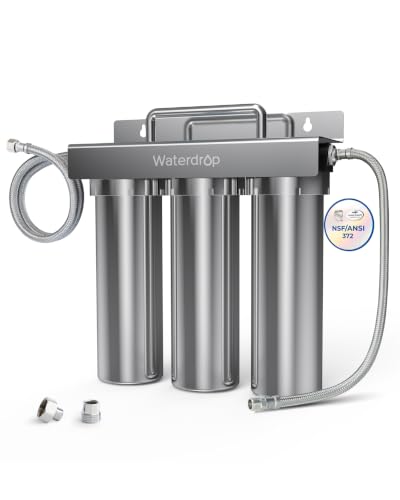
Waterdrop TST-UF 0.01μm Ultra-Filtration Stainless Steel Under Sink System
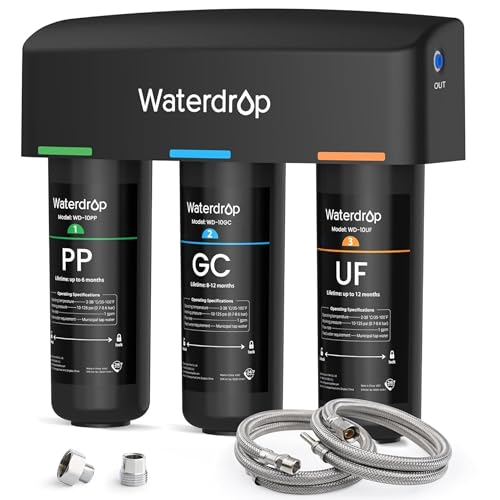
Waterdrop WD-TSA-UF 0.01 μm Ultra Filtration Under Sink Water Filter System

Aquasure Harmony Series 48,000 Grains Whole House Water Softener
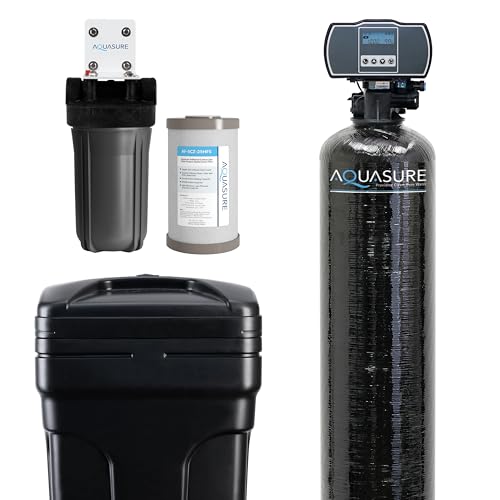
Aquasure Harmony Series 50,000 Grains Whole House Water Softener with Pre-Filter

Aquasure 32,000 Grains Whole House Softener with 75 GPD RO Drinking System
More Details On Our Top Picks
Speed defines the PD1200. Reverse osmosis (RO) systems push water through a semipermeable membrane to strip out dissolved solids, and this tankless unit runs at 1200 gallons per day, which fills a tumbler roughly every five seconds at full draw. The 11-stage cascade pairs sediment and carbon stages with the RO membrane, then routes output through a polishing stage before the dedicated smart faucet dispenses it. For families who cook, brew coffee, and refill bottles constantly, the flow rate removes the usual waiting bottleneck.
Compared with the Waterdrop ultra-filtration units later in this list, this one actually removes total dissolved solids instead of just chlorine and odor. The 3:1 pure-to-drain ratio keeps wastewater moderate for an RO system, and the tankless format frees up under-sink space usually lost to a pressure tank. You still need a cold-water feed line, a drain saddle, and a power outlet for the pump, so set aside a half day for installation if you’re going the DIY route.
What Earns Its Place
- 1200 GPD flow keeps pitchers and pots filling without long waits
- NSF/ANSI 42, 58, and 372 certifications cover structural and contaminant claims
- Tankless design opens up cabinet storage for trash bins or cleaning supplies
- 3:1 pure-to-drain ratio trims wastewater versus older 1:1 RO units
- Smart faucet displays filter status, so you’re never guessing when to swap cartridges
Worth Noting
- Reverse osmosis removes beneficial minerals along with contaminants, a trade-off some owners notice in taste
- Drain saddle, power outlet, and dedicated faucet hole all required during install
- Replacement filter cost runs higher than basic carbon-only systems
Quick Facts
Made For
Large families on municipal water who drink, cook, and brew with RO-purified water every day.
Swap It Out When
The Waterdrop TSA makes more sense in a small rental where drilling a dedicated faucet hole isn’t an option.
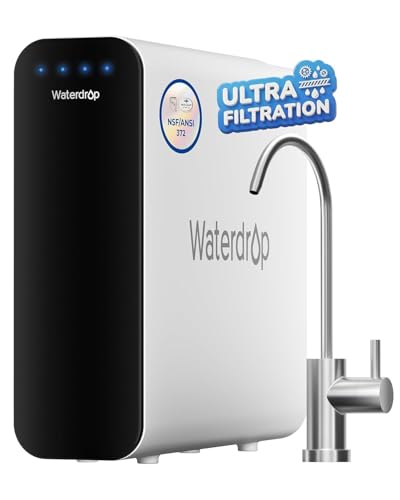
Ultra-filtration (UF) sits between basic carbon filters and full reverse osmosis on the spectrum. The TSU pushes water through a 0.01-micron membrane that catches most bacteria and larger contaminants but leaves minerals intact, so the output tastes closer to the source than RO. Because the membrane doesn’t reject dissolved solids, no wastewater stream flows to the drain, which is a real perk in apartments with tight plumbing access.
Compared with the Frizzlife PD1200 above, this unit trades filtration depth for simplicity and lower running cost. The 3-stage cartridge layout makes annual replacements straightforward, and there’s no pump or electrical hookup to wire up. You do need a dedicated faucet hole in the countertop, which can be a deal-breaker for renters.
Everyday Advantages
- No wastewater makes it friendlier to low-flow households and septic systems
- Mineral retention keeps calcium and magnesium in the drinking water
- Three-stage design is approachable for first-time under-sink installers
- 0.01-micron membrane targets bacteria, chlorine byproducts, and sediment
Trade Offs
- Won’t reduce total dissolved solids the way an RO system does
- Requires a countertop hole for the included dedicated faucet
- Not recommended for private well sources with unknown bacterial load
Who It Suits Best
Apartment dwellers on municipal water who want cleaner drinking water without modifying the drain plumbing.
A Better Fit Elsewhere
The Waterdrop TST-UF is a better choice if you can’t drill a new faucet hole into the countertop.
The PX600 is the smaller sibling of the PD1200, and it earns its spot by handling the same kind of work for a mid-sized household at half the daily throughput. At 600 GPD, you’re still well above what most filters produce, and the 2:1 pure-to-drain ratio keeps waste reasonable. The 0.0001-micron RO membrane sits behind eight layers of pre-filtration, which helps the membrane last longer in areas with moderately hard or chlorinated water.
Where the PD1200 is built to feed a large household that runs multiple taps at once, the PX600 fits a family of three to four without any noticeable wait at the faucet. Compared with the Waterdrop TSA later on, this one actually drops the total dissolved solids, which matters if your tap water reads high on a TDS meter.
Notable Gains
- Eleven-stage cascade filters down to 0.0001 microns for thorough contaminant reduction
- Tankless housing frees up under-sink space for bins and cleaning supplies
- Targets chlorine, lead, fluoride, arsenic, PFAS, and similar compounds commonly found in municipal reports
Some Limits To Know
- Drain saddle installation and a power outlet for the integrated pump are required
- Mineral content drops along with contaminants, a known RO trade-off
Feature Snapshot
Best Suited To
Mid-size households on municipal water who want RO-grade filtration without paying for the top tier.
Consider Something Else When
The Frizzlife PD1200 is the stronger pick for families of five or more who run multiple taps at once.
The TSA keeps things simple: eight layers of carbon and sediment media inside a compact under-sink canister, no power required, no drain saddle to wrestle with. The 1/2-inch and 3/8-inch female NPT compatibility covers most standard cold-water supply lines, and the included quick-connect fittings cut install time down to an hour for anyone comfortable with a wrench. NSF/ANSI 42 certification means the carbon side has been tested for chlorine taste and odor reduction.
Versus the TSU covered above, the TSA skips the dedicated faucet, which means you can install it on a branch line that feeds the existing cold-water tap. The trade-off is that you’re filtering all the cold water at that tap, including water used for rinsing produce, which accelerates cartridge wear somewhat.
A Strong Showing
- Tool-light install suits first-time under-sink projects
- Eight filtration layers tackle sediment, chlorine, and volatile compounds in stages
- NSF/ANSI 42 certification backs the chlorine-reduction claim
- No electricity, no drain connection, no pump noise
A Few Limitations
- Does not reduce total dissolved solids, unlike the Frizzlife RO units
- Need a pre-filtration step if your source is a private well
Whose Shelf It Belongs On
DIY renters on city water who want better taste and chlorine reduction without punching a new hole in the countertop.
Where Another Pick Suits Better
The Frizzlife PX600 makes more sense if your municipal water report shows elevated lead, fluoride, or arsenic levels.
The TSB is essentially the TSA with a dedicated dispenser faucet added to the box. That sounds like a small tweak, but it changes how you use the system day-to-day. With a separate filtered tap at the sink, you stop running the cold side through carbon media every time you wash vegetables or rinse dishes, which extends cartridge life and keeps filtered water reserved for drinking and cooking.
Next to the Frizzlife PX600 earlier in this list, the TSB trades filtration depth for installation ease. There’s no pump, no drain saddle, and no electrical outlet needed, just a tee fitting on the cold-water line and a small faucet hole. If you’re not chasing RO-grade contaminant reduction, this is a comfortable middle ground.
The Practical Payoff
- Eight-layer filtration captures chlorine, sediment, and volatile compounds without slowing flow
- Included dedicated faucet keeps filtered water separated from general cold use
- Mineral retention appeals to anyone who prefers not to strip their drinking water
Points To Keep In Mind
- Requires drilling a dedicated faucet hole, less appealing for renters
- Won’t reduce dissolved solids, unlike an RO system
Right Fit For
Households that go through several gallons of drinking water daily and want a dedicated dispenser without RO complexity.
Not Your Match When
The Waterdrop TST-UF is the stronger call for renters who can’t modify the countertop.
The TST-UF stands out for one specific reason: it doesn’t require a new hole in your countertop. The stainless steel housing tees into the existing cold-water line and feeds filtered water through the standard faucet you already own. For renters or anyone nervous about modifying a countertop, that alone removes the biggest friction point of under-sink filtration.
The 0.01-micron ultra-filtration membrane sits in the same family as the TSU covered earlier, with mineral retention and zero wastewater. Where this one differs is the brushed stainless housing, which holds up better to humidity under the sink than plastic alternatives and resists staining from any minor leaks during cartridge swaps.
Good Reasons To Consider
- No-drill design keeps the existing faucet and countertop untouched
- Stainless housing adds durability in humid under-sink environments
- Mineral retention keeps drinking water tasting closer to the source
- Three-stage cartridge replacement takes a few minutes once a year
Softer Spots
- Does not reduce total dissolved solids
- Not suited to private well sources without prior pre-filtration
At A Glance
Who Should Grab It
Renters and short-term homeowners who want better-tasting water without modifying the countertop or sink.
Look Elsewhere When
The Frizzlife PX600 is the better pick if your municipal water report flags lead or fluoride and you want those stripped out.
The WD-TSA-UF keeps the Waterdrop ultra-filtration formula and tightens up the install experience. The included fittings push onto standard 1/2-inch and 3/8-inch female NPT connections without needing a plumber’s tool bag, and the cartridge twist-locks in and out without any spring-loaded housing caps. For anyone who has wrestled with a traditional canister filter, that alone is worth the upgrade.
Stacked against the TSA covered earlier, this one adds the 0.01-micron ultra-filtration membrane for stronger bacteria and sediment capture. Versus the Frizzlife PX600, the WD-TSA-UF produces no wastewater and leaves minerals in place, which is a noticeable running-cost difference over time.
The Good Stuff
- Twist-lock cartridge changes beat traditional spring-loaded canisters for ease
- 0.01-micron membrane catches bacteria and micro-sediment
- No wastewater and no electricity draw during operation
- Mineral retention keeps the water profile closer to your source
Worth Bearing In Mind
- Not designed for private well water without prior sediment and bacterial pre-treatment
- Won’t strip dissolved solids the way an RO system does
Perfect Match For
Homeowners on city water who want a low-maintenance ultra-filtration system without RO complexity.
Where A Sibling Pick Shines
The Waterdrop TST-UF is the stronger choice when stainless housing matters more than the twist-lock cartridge design.
Switching gears from under-sink units, the Aquasure Harmony is a salt-based ion exchange softener, meaning it swaps calcium and magnesium ions for sodium or potassium to stop scale buildup at every tap, shower, and appliance. The 48,000-grain capacity covers households with three to four bathrooms and treats moderately hard water without regenerating too often. The digital metered control head regenerates based on actual gallons used, not a calendar guess, which trims salt and water waste during low-use weeks.
Compared with the Frizzlife PD1200 covered above, this isn’t about drinking water, it’s about protecting water heaters, dishwasher elements, and shower glass from scale. Owners commonly report needing less soap and seeing longer appliance lifespans after install. The trade-off is floor space and an electrical outlet near the install point.
Points In Its Favor
- 48,000-grain capacity handles homes with three to four bathrooms comfortably
- Digital metered regeneration cuts salt use versus timer-based units
- Triple-purpose pre-filter handles sediment and carbon in one housing
- Whole-house coverage means softer water at every tap and appliance
Practical Considerations
- Requires floor space near the main supply line and a nearby drain for backwash
- Salt purchases and brine tank refills are an ongoing ownership task
- Does not directly filter drinking water; pair with an RO unit for that role
Key Product Details
Who Will Love This
Homeowners in hard-water regions who want scale protection at every fixture and appliance in a three- to four-bath home.
Reach For A Different Pick When
The Aquasure Harmony 50,000 with pre-filter is a better match if your household runs five or more residents daily.
The 50,000-grain Harmony is the top of the line for Aquasure, and the bump in capacity translates into longer intervals between regenerations. For households of up to five people running three to four bathrooms, the extra grain buffer matters during heavy-use stretches like holidays or summer break when showers and laundry stack up. The bundled pre-filter catches sediment and chlorine before water reaches the resin tank, helping the softener last longer in areas with rust-colored or chlorinated supply lines.
Side by side with the 48,000-grain Harmony earlier, this one upgrades the control head and adds a more capable pre-filter. Compared with the Frizzlife PX600, you’re solving a different problem: whole-house scale protection rather than point-of-use drinking water purity. Many owners pair both styles together.
Why It Works Well
- 50,000-grain capacity stretches the time between salt refills
- Bundled pre-filter extends resin life in chlorinated or sediment-heavy supplies
- Digital metered head regenerates only when needed, trimming waste
- Whole-house coverage protects every appliance and shower from scale
Honest Caveats
- Install footprint is larger than under-sink units and needs a drain nearby
- Brine tank maintenance and salt purchases are ongoing ownership tasks
Built With In Mind
Large households in hard-water regions who want maximum capacity and minimal salt-handling interruptions.
Skip It When
The Aquasure 32,000-grain bundle with RO drinking system makes more sense in a smaller home that also wants purified drinking water.
This bundle solves two problems at once. The 32,000-grain softener handles whole-house scale for homes with one to three bathrooms, while the included 75 GPD reverse osmosis system tackles drinking water at the kitchen tap. That’s the same combination many homeowners eventually build toward in stages, only delivered as a single coordinated package with matched control heads.
Versus the 48,000-grain Harmony covered earlier, this one trades capacity for the RO add-on. For a couple or small family in a moderately hard-water area, 32,000 grains is usually enough, and having the RO already plumbed in avoids a second install project later. Owners commonly cite the convenience of one coordinated system over two separately sourced units.
Noteworthy Benefits
- Softener plus RO drinking system in one coordinated package
- 75 GPD RO capacity handles drinking and cooking for a small household
- 32,000-grain softener fits homes with one to three bathrooms
- Eliminates the need to source and install a separate RO system later
Things To Weigh
- 75 GPD RO flow is slower than the Frizzlife 600 or 1200 GPD units
- Salt purchases and brine maintenance still required
- Whole-home install footprint is the largest on this list
The Right Fit
Smaller households that want scale protection across the home plus purified drinking water without piecing systems together.
Another Choice May Suit
The Frizzlife PX600 makes more sense for a household that only needs drinking water filtration and doesn’t want a brine tank.
What To Weigh Before Choosing Home Water Softener And Filtration Systems
Know Your Water Source First
Municipal water, well water, and lightly hard city supply all push you toward different equipment. Pull a recent water quality report from your utility or run a home test kit, then match the system to what’s actually in the water. Hardness above 7 grains per gallon almost always justifies a salt-based softener, while elevated lead, fluoride, arsenic, or PFAS readings push you toward reverse osmosis.
Filtration Depth Versus Running Cost
Reverse osmosis strips the most contaminants but produces wastewater, uses electricity, and removes beneficial minerals. Ultra-filtration handles bacteria, chlorine, and sediment while leaving minerals intact and generating no waste. Carbon-only systems are the simplest and cheapest to maintain but won’t touch dissolved solids. Your tolerance for cartridge swaps, drain plumbing, and outlet access shapes which trade-off makes sense.
Whole-House Versus Point-Of-Use
Whole-house softeners protect every fixture, water heater, and appliance but don’t purify drinking water on their own. Under-sink units like the Frizzlife PD1200 polish a single tap to RO standards but leave the showerhead scaling up. Many households end up with both styles working together, an Aquasure softener handling the whole house and a Frizzlife or Waterdrop unit finishing the drinking tap.
Installation Realities
Before any purchase, check under the sink and near the main supply line for available space, a 110V outlet, and a drain within reach. Renters should default to no-drill options like the Waterdrop TST-UF. Homeowners with hard water and a larger property benefit from professional softener installation near the main shutoff.
Key Considerations Across These Picks
Pitfalls Shoppers Hit
The biggest mistake is buying an RO system to “fix” hard water scale at every fixture. RO polishes one tap; it doesn’t protect water heaters and shower glass. The other common slip is skipping a sediment pre-filter on well water, which clogs carbon and UF cartridges prematurely and shortens their useful life. Always match the system to your source rather than to marketing copy.
Where The Extra Money Goes
Higher-tier picks like the Frizzlife PD1200 and Aquasure Harmony 50,000 add faster flow rates, larger capacity, and longer service intervals. The Frizzlife steps up from 600 to 1200 GPD, which matters when multiple taps run at once. The Aquasure adds grain capacity and a coordinated pre-filter, both of which translate into fewer salt runs and longer resin life. Spending up pays off when usage is heavy and downtime for maintenance is hard to schedule.
Frequently Asked Questions
Do I need a softener if I already have an under-sink filter?
They do different jobs. An under-sink filter polishes drinking water at one tap. A softener prevents scale buildup at every fixture, water heater, and appliance. Hard-water homes typically benefit from both, with the softener installed near the main supply and the filter at the kitchen sink.
How often do cartridges need changing?
Most under-sink carbon and UF cartridges last six to twelve months under normal household use. RO membranes generally last two to three years, depending on incoming water quality and pre-filter maintenance. Whole-house softener resin can last ten or more years with proper regeneration and salt levels.
Can I install these systems myself?
Under-sink units like the Waterdrop TSA and TST-UF are approachable for anyone comfortable with basic wrench work and a hole saw. RO systems like the Frizzlife PD1200 require a drain saddle, power outlet, and dedicated faucet, which adds complexity but remains within reach for experienced DIYers. Whole-house softeners usually benefit from professional installation due to plumbing modifications and electrical needs.
Is reverse osmosis water safe to drink long term?
RO water is safe and widely used, though it strips beneficial minerals along with contaminants. Some owners remineralize with a post-filter cartridge or mineral drops. Households on sodium-restricted diets sometimes prefer potassium-based softeners or UF systems to avoid added sodium at the tap.
What maintenance does a whole-house softener need?
Brine tank salt refills every few months, occasional resin bed cleaning, and periodic checkups on the control valve. Skipping salt lets hard water slip through untreated and can damage the resin over time.
Closing Remarks
The right pick depends on whether scale, taste, or both are driving your search. For a small household on municipal water, a Waterdrop ultra-filtration unit solves taste and chlorine at the kitchen tap without much fuss. For larger homes in hard-water territory, an Aquasure softener tackles the whole house, with an RO add-on for purified drinking water. Match the system to your source, your install tolerance, and the flow you actually need, and you’ll end up with cleaner water and fewer scale headaches without overshooting the budget.