

Hard water leaves a chalky film on glassware, dulls laundry, and quietly shortens the life of water heaters and dishwashers. The right setup, whether a whole-home softener or a sharper under-sink filter, turns that around without turning your kitchen into a workshop. These ten picks cover the practical spectrum, from high-flow reverse osmosis units to whole-house ion-exchange softeners, so you can match a system to your plumbing, your water report, and the way you actually cook, drink, and bathe.
The Choices Worth Comparing

Frizzlife 1200GPD Reverse Osmosis Water Filter, PD1200 Tankless RO System

Waterdrop X8-PRO Dual Flow Reverse Osmosis Water Filter, 800 GPD RO System

Frizzlife 600GPD Reverse Osmosis Water Filter, PX600 Black

ICEPURE Under Sink Water Filter System, 22,000-Gallon NSF/ANSI 42

ICEPURE 21″ WFS5300A Under Sink Water Filtration System, 40,000-Gallon

ICEPURE WFS6310A Under-Sink Water Filter System

Aquasure Harmony Series 48,000-Grain Whole House Water Softener
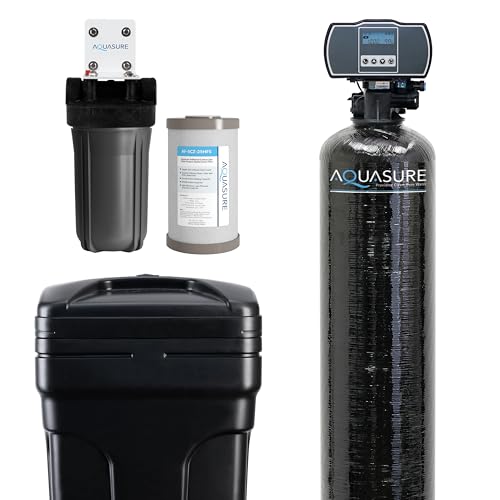
Aquasure Harmony Series 50,000-Grain Whole House Water Softener with Pre-Filter

Aquasure 32,000-Grain Whole House Softener with 75 GPD RO System

Waterdrop MNR35 Remineralization Filter for Undersink RO
Meet The Standout Selections
Large families that burn through drinking water, pitchers, espresso machines, and ramen pots all at once will appreciate what the Frizzlife PD1200 puts on the table. The tankless reverse osmosis (RO) design runs eleven filtration stages under your counter and pushes out up to 1200 gallons per day, which is enough to fill a 500 ml cup in roughly five seconds without the trickle typical of older RO units.
NSF/ANSI 42, 58, and 372 certifications cover the safety basics (chlorine, lead, arsenic, TDS reduction, and lead-free contact materials), and the 3:1 pure-to-drain ratio is meaningfully better than the 1:1 of legacy systems, so you waste less water per glass. Compared to the Frizzlife PX600 covered later, this one trades a slightly higher footprint for raw speed.
Useful Touches
- Tankless profile frees up the under-sink cabinet for cleaning supplies.
- Smart faucet with real-time filter and water-quality indicators, useful for keeping tabs on the cartridges.
- Eleven stages of media handle sediment, chlorine, and PFAS in a single pass.
- The 3:1 ratio matters for high-use households where wastewater adds up fast on the bill.
Honest Caveats
- Reverse osmosis strips beneficial minerals along with contaminants, so a remineralization add-on (like the Waterdrop MNR35 reviewed last) is a sensible pairing.
- Multi-stage systems like this one need scheduled filter swaps; owners commonly report that missing a change shows up in flow rate before taste.
Key Specs
Who It Suits Best
Households of four or more who drink and cook with filtered water all day and hate waiting at the tap.
Look Elsewhere When
You live alone in a small apartment and want a simple chlorine filter, where the ICEPURE Under Sink Water Filter System (Item 4) is a quieter fit.
The X8-PRO splits the difference between a pure drinking line and a cleaner utility line, which is the most useful innovation on a kitchen RO system in years. The dual-flow design routes one stream to your dedicated drinking faucet and a second, less-treated stream to things like rinsing produce or washing dishes, so you don’t spend ultra-pure water on jobs that don’t need it.
At 800 GPD, the unit lands between the Frizzlife PD1200 above and the Frizzlife PX600 further down, in a sweet spot where the flow is fast enough for daily cooking yet the footprint stays manageable in a tight under-sink cavity.
Bright Spots
- Two streams from one box: drinking-grade and cleaning-grade water on demand.
- 800 GPD is plenty for most households without the bulk of a 1200 GPD setup.
- Filter swaps are designed for tool-free changes, helpful in cramped cabinets.
- Reasonable wastewater ratio for an RO system with this much throughput.
Trade-Offs To Consider
- Two outgoing lines mean slightly more under-sink routing than single-outlet filters, so measure the cabinet first.
- RO units periodically need a remineralization stage, and this one benefits from the Waterdrop MNR35 covered in the last review.
Made For
Home cooks who want filtered drinking water and a separate cleaner rinse line without installing two separate systems.
Consider Something Else When
Your priority is raw speed and a five-second fill, in which case the Frizzlife PD1200 (Item 1) makes more sense.
The PX600 is what you reach for when a 1200 GPD system is overkill but a 100 GPD unit feels too sluggish. At 600 gallons per day, the tankless RO runs eleven stages and lands a 2:1 pure-to-drain ratio, a notable improvement over the old 1:1 standard that pushes so much water down the drain.
NSF/ANSI 42, 53, 58, and 372 certifications cover both aesthetic contaminants (chlorine taste) and health-related ones (lead, arsenic, TDS), so this is a confident middle-of-the-road pick for mid-size households.
What Makes Sense
- 600 GPD is enough to keep up with most family kitchens without the constant pressure-drop older units show.
- Eleven stages cover the usual suspects plus PFAS, which is increasingly a priority for municipal water.
- 2:1 ratio cuts wastewater by about half compared to legacy RO systems.
- Tankless form factor leaves room for trash bags, recycling bins, or cleaning supplies.
Worth Noting
- Slower than the 1200 GPD Frizzlife PD1200, which matters during back-to-back meal prep.
- Like all RO units, you’ll want a remineralization cartridge (the Waterdrop MNR35 fits) for better-tasting water.
Right Fit For
Mid-size households of three to five who want real RO filtration without committing to the largest tankless units.
Skip It When
You have a large household running two or three filtered taps at peak hours, where the Frizzlife PD1200 is a smarter fit.
Not every household needs the heavy lifting of reverse osmosis. The ICEPURE under-sink filter is a multi-stage carbon block system designed for renters, first-time homeowners, and anyone who wants a clean install without drilling new holes or running a drain line.
Direct-connect fittings mean the system ties into your cold-water line with quick-connect hardware, and a single cartridge is rated for up to 22,000 gallons or roughly three years, so the maintenance schedule stays light.
Real Benefits
- Quick-connect design means no plumber is required, and most owners finish in under 15 minutes.
- 22,000-gallon capacity works out to roughly three years of typical household use.
- NSF/ANSI 42 covers chlorine taste and odor, which is the most common complaint with city water.
- No electricity, no tank, and no wastewater line to route, simplifying small kitchens.
Trade-Offs To Consider
- Not an RO system, so it does not reduce TDS, lead, or arsenic the way the Frizzlife units above do.
- Cartridge swaps are infrequent but require enough under-sink clearance to twist the housing out.
Who Will Love This
People in apartments or rental homes who want cleaner drinking water without modifying the plumbing permanently.
Not Your Match When
Your water report flags high TDS, lead, or arsenic, in which case the Frizzlife PX600 (Item 3) is the better tool.
Step up to the WFS5300A and the headline number jumps to 40,000 gallons, which translates to roughly five years between cartridge changes for an average family. The 21-inch housing gives the carbon block more contact time, so it pulls out chlorine, odor, and heavy metals at a more leisurely pace than compact filters.
NSF/ANSI 42 and CAN 372 certifications handle material safety and chlorine reduction, and the direct-connect fittings are the same quick-install style used on the smaller ICEPURE unit (Item 4).
The Helpful Details
- 40,000-gallon lifespan means fewer cartridge orders and less chance of missing a change.
- Direct-connect install is friendly to first-timers and doesn’t require shutting off the main.
- 21-inch housing fits standard under-sink cabinets without modification.
- Improves flavor in coffee and tea noticeably, since chlorine removal is a primary job.
Things To Consider
- Like other carbon-block filters here, it doesn’t reduce TDS or remove fluoride the way an RO system does.
- The longer housing takes a bit more vertical clearance, so check the cabinet height before buying.
Best Suited To
Busy households that want set-and-forget maintenance, where a multi-year cartridge is more valuable than max filtration stages.
Reach For A Different Pick When
You’re filtering well water with high mineral content, where the Aquasure Harmony Series 48,000-Grain (Item 7) handles the scale issue at the source.
The WFS6310A is a more recent ICEPURE entry that leans into materials safety and a 0.5-micron precision layer, so it targets chlorine, odor, and heavy metals while leaving beneficial minerals in the water. For households that don’t love the stripped taste of RO, this is a calmer middle path.
The build is BPA-free and lead-free with food-grade components, and the coconut shell activated carbon adds a slight sweetness that regular carbon blocks don’t always deliver. Compared to the larger WFS5300A above, this one is tuned more for taste than maximum capacity.
Useful Highlights
- Mineral-preserving filtration is appealing for tea drinkers and baby formula preparation.
- BPA-free and lead-free food-grade materials add peace of mind for daily cooking use.
- 0.5-micron layer captures more sediment than standard 5-micron blocks.
- Compact housing fits tighter under-sink layouts than the 21-inch WFS5300A.
Possible Compromises
- Filter life isn’t listed in the source, so the swap cadence is harder to predict, and the manufacturer data here is thin compared to the other ICEPURE units.
- Not designed for TDS reduction, so well-water users with hardness issues will still need a softener.
Perfect Match For
Anyone who dislikes the flat taste of RO water and prefers minerals left intact for cooking and brewing.
A Better Fit Elsewhere
Whole-home scale control, where the Aquasure Harmony 48,000-Grain (Item 7) does the work at the main line.
Under-sink filters clean the water you drink, but a softener solves a different problem: scale on shower doors, stiff laundry, and the slow death of a water heater. The Aquasure Harmony Series 48,000-Grain uses ion exchange, where hardness minerals (calcium and magnesium) swap places with sodium or potassium on a resin bed, so the water coming out of every tap in the home is soft.
A digital metered control head regenerates the resin only when needed, which saves both salt and water compared to timer-based systems. Aquasure rates this unit for households with three to four bathrooms.
Advantages To Know
- Treats the whole house, so dishwashers, washing machines, and showerheads all benefit.
- Digital metered regeneration conserves salt and reduces wasted water cycles.
- 48,000-grain capacity handles 3-4 bathroom homes without frequent recharges.
- Pairing it with a dedicated drinking filter downstream is straightforward for kitchens.
Practical Considerations
- Installation typically requires a drain line, a brine tank location, and some basic plumbing know-how.
- Softener salt needs storage space and periodic refilling, which is a routine commitment.
- Softened water adds a small amount of sodium to the supply, worth noting for anyone on a sodium-restricted diet.
Key Specs
Built With In Mind
Suburban or rural homes on private wells and municipal supplies where hard water is leaving chalk on fixtures and shortening appliance life.
Another Choice May Suit
Small homes with one bathroom and modest hardness, where the Aquasure 32,000-Grain Bundle (Item 9) is a more measured fit.
The 50,000-grain Harmony adds a sediment and carbon pre-filter to the softener package, which matters more than it sounds. The pre-filter catches sand, silt, and chlorine before the water reaches the resin tank, so the softener lasts longer and the household water has fewer particulates to begin with.
Compared to the 48,000-grain version just above, this one nudges capacity slightly higher and bundles the pre-filter, which is a real convenience for well-water homes or older municipal lines.
What Stands Out
- Pre-filter protects the resin bed from sediment, extending softener life.
- 50,000-grain capacity suits families of up to five people.
- Digital metered control head keeps regeneration efficient.
- Removes hardness and the rust-colored staining that iron content can leave in tubs.
Points To Weigh
- The pre-filter housing adds bulk near the main line, so plan the install location carefully.
- Like all ion-exchange softeners, ongoing salt purchases are part of ownership.
The Right Fit
Larger households with both hardness and visible sediment issues, especially those on well water.
Where A Sibling Pick Shines
Simpler municipal-only setups where sediment isn’t an issue, where the Aquasure 32,000-Grain Bundle (Item 9) covers drinking and softening in one box.
Most bundles force you to choose between scale control and drinking-water purification, but this Aquasure package ships both. A 32,000-grain ion-exchange softener sits at the main line, and a 75 GPD reverse osmosis unit feeds the kitchen tap, so every shower runs soft and every glass runs pure.
The capacity is on the modest side (rated for 1-3 bathrooms and up to three people), so this bundle is well-matched to smaller homes, condos, and starter households rather than large families.
Well-Handled Touches
- Single purchase covers whole-home softening plus kitchen drinking water.
- Digital metered control head keeps regeneration on a real-usage schedule.
- RO system tucks under the sink, complementing the main softener.
- Cleaner setup than sourcing a softener and RO unit from two different vendors.
Factors To Consider
- 32,000 grains is the smallest in the Aquasure lineup, so larger homes will outgrow it.
- Two separate systems mean two ongoing maintenance routines (salt for the softener, filter changes for the RO).
Whose Shelf It Belongs On
Condos, small single-family homes, and 1-3 bathroom households that want scale control and clean drinking water in a coordinated package.
Swap It Out When
Your home has 4+ bathrooms or heavy daily water use, where the Aquasure 50,000-Grain (Item 8) handles the load better.
The MNR35 is a small inline cartridge that fixes the one thing most people dislike about reverse osmosis: the flat, almost mineral-free taste. Once the RO stage strips out contaminants, this filter adds back calcium and magnesium in measured amounts, so the water drinks more like bottled spring water than distilled.
It connects to 1/4-inch and 3/8-inch quick-connect tubing, so it works with most under-sink RO systems, including the Frizzlife and Waterdrop units in this list.
Strengths Worth Knowing
- Restores calcium and magnesium, addressing the stripped taste RO is known for.
- Standard quick-connect fittings drop in line with most under-sink RO setups.
- Compact enough to mount on the cold-water line behind the existing filters.
- 9-12 month service life, depending on household usage.
Small Limitations
- It’s an accessory, not a standalone filter, so it needs an RO system upstream to do meaningful work.
- Cartridges do need periodic swapping, adding a small line item to your maintenance budget.
Who Should Grab It
Anyone who already runs an under-sink RO like the Frizzlife PD1200 and wants better-tasting coffee, tea, and drinking water without abandoning RO filtration.
Where Another Pick Suits Better
Homes that want to skip RO entirely and keep minerals by default, where the ICEPURE WFS6310A (Item 6) is a simpler choice.
What Matters Most When Picking A Water Treatment Setup
Start With Your Water, Not The Catalog
A water quality report is the first purchase most shoppers skip and later regret. Municipal suppliers publish annual reports; well owners can order a basic test panel for a modest fee. Hardness is reported in grains per gallon (gpg), and anything above 7 gpg generally benefits from a softener. Lead, arsenic, PFAS, and nitrates point more toward reverse osmosis. The wrong tool in the wrong context, like a chlorine filter on water with high TDS, leaves the real problem untouched.
Match Capacity To The House
Whole-house softeners are sized in grains, and the rule of thumb is roughly 3,000 grains per household member, though water hardness, bathroom count, and daily usage all shift that number. An undersized softener regenerates constantly, wastes salt, and still leaves scale on fixtures. The Aquasure 32,000-grain bundle (Item 9) is calibrated for 1-3 bathrooms, while the 50,000-grain Harmony (Item 8) is the right size for a family of five across more bathrooms.
Think About Maintenance Cadence
Filter-based systems ask for cartridge swaps on a schedule. Long-life carbon blocks (the ICEPURE WFS5300A in Item 5) run for years and suit set-and-forget households. RO systems have multiple cartridges with different lifespans, so a missed swap usually shows up first as a slower flow at the tap. Softeners demand salt refills every few months, and that storage space often lives in a garage or utility closet.
Decide Between Filtration And Softening
These are different jobs. Filtration removes contaminants from drinking and bathing water. Softening swaps hardness minerals for sodium or potassium, which protects pipes and appliances but doesn’t clean the water per se. Homes on hard well water often want both: an Aquasure softener at the main and an under-sink RO at the kitchen tap. Homes on treated municipal water with low hardness can skip the softener entirely and focus on a good carbon or RO filter.
Key Considerations Across These Picks
Common Shopping Slip Ups
The most frequent mistake is buying a softener before testing the water. A 48,000-grain unit does nothing for a chlorinated municipal supply that’s already low in hardness. The reverse mistake is buying a fancy under-sink filter for a home with 15 gpg well water and expecting spotless shower glass, since no filter at the kitchen tap will soften the bathroom supply. The other common slip is ignoring drain and brine-tank space, which turns a softener install into a return-the-box moment.
What The Higher Tier Buys
Moving from a basic chlorine filter to a multi-stage reverse osmosis system buys finer contaminant reduction: lead, arsenic, PFAS, and TDS removal rather than just taste improvement. Stepping up from a 32,000-grain softener to a 50,000-grain model buys longer intervals between salt refills and the headroom to handle a busy household without regeneration during dinner. The right upgrade depends on what your water actually needs, since the top of the category is wasted on the wrong problem.
Frequently Asked Questions
Do I need both a softener and a filter?
A softener protects pipes and appliances from scale, and a filter (carbon or RO) handles taste, odor, and contaminants. Homes with hard well water usually want both, while homes on treated municipal water with low hardness often get away with a good under-sink filter alone.
How often do RO cartridges need changing?
Most reverse osmosis systems use multiple cartridges with different lifespans: sediment and carbon pre-filters usually swap every 6-12 months, while the RO membrane can last 2-3 years. The unit’s indicator light or app (on models like the Frizzlife PD1200) usually reminds you when service is due.
Will a softener remove chlorine?
Standard ion-exchange softeners do not target chlorine. That’s why the Aquasure 50,000-Grain package includes a sediment and carbon pre-filter, which handles chlorine before the water reaches the softener and the rest of the house.
Are tankless RO systems really better?
Tankless RO systems push water through the membrane on demand, so you avoid the stagnation and slight taste issues that come with a stored tank. They also tend to be more compact and have better pure-to-drain ratios, though they can flow slower if the home demand is high.
Can I install a whole-house softener myself?
A confident DIYer with plumbing experience can handle a softener install, but it requires a drain line for backwash, a brine tank overflow, and a bypass valve. Most people hire a plumber for the install and then do the routine salt refills themselves.
Closing Remarks
The right home water softener and filter setup depends less on the brand and more on what’s in your water and how your household uses it. Start with a quick test or a read of your municipal report, then match a softener to your home size and a filter to your drinking-water priorities. Once those two pieces click into place, the daily routine quietly improves: clearer glassware, softer towels, longer-lasting appliances, and water that simply tastes better.




