
Tap water tells a different story from house to house. Some neighborhoods deal with chlorine taste, others with reddish staining, and plenty of homes quietly accumulate scale inside pipes and water heaters. Picking the right setup means matching a filter’s specialty to whatever your local supply actually carries, and the list below covers whole-house options for the usual suspects, plus under-sink picks for renters or smaller spaces.
How The Shortlist Stacks Up

Express Water Whole Home 3-Stage Essential Protection

Express Water Whole House 3-Stage Heavy Metal

Express Water Whole House 3-Stage Iron & Manganese

Express Water Whole House 3-Stage Ultimate Protection

Express Water Whole House 3-Stage Anti-Scale

Waterdrop 10UB Under Sink Filter with Faucet

iSpring US31-NC 3-Stage Under Sink with Faucet

PureSec 1/4 Quick Connect Flow Restrictor 550CC
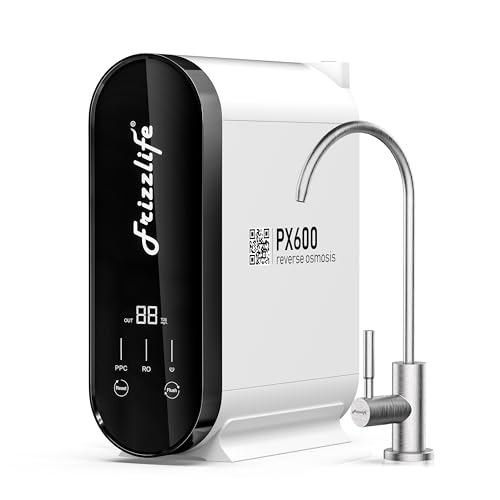
Frizzlife PX600 600GPD Tankless RO System
More Details On Our Top Picks
The Essential Protection system from Express Water sits at the entry point of their whole-house lineup, and for many homeowners on municipal water that’s exactly the right place to start. Three filter housings mount near the main shutoff, treating every drop that enters the home rather than just one tap at a time. Bath water, dishwasher water, and outdoor spigots all get the same treatment instead of a single filtered kitchen faucet.
You spend less on filters than you would running separate units at each fixture, and the housings use standard 4.5-inch cartridges that are easy to swap with a basic wrench. Depending on your local report card, this setup alone can noticeably cut chlorine taste in drinking water while keeping shower steam from smelling like a pool.
Noteworthy Benefits
- Three-stage layout hits sediment, chlorine, and finer particulates in a single pass.
- Standard 4.5-inch cartridges keep replacement straightforward and widely available.
- Whole-house coverage means ice makers, showers, and laundry all see the same water quality.
- Housings include pressure-relief buttons that simplify filter changes without a full depressurize dance.
Things To Consider
- Cartridge replacement intervals land roughly every 3 to 6 months, so ongoing filter cost adds up.
- This is not designed to strip dissolved metals or hardness, so a dedicated unit may still be needed in tough regions.
Key Specs
Made For
Homeowners on municipal supply who want straightforward chlorine and sediment reduction without committing to specialty media.
Consider Something Else When
You pull water from a private well with staining issues, where the Express Water Iron & Manganese system is a smarter specialty match.
Where the Essential system uses standard carbon to handle taste and odor, this Heavy Metal version swaps in KDF media (a copper-zinc alloy that uses a redox, or chemical exchange, reaction to neutralize dissolved metals) to address contaminants that carbon alone leaves behind. KDF is widely used to reduce lead, mercury, and other dissolved metals that leach from older service lines or brass fixtures.
Compared to the Essential Protection pick above, the upgrade here is less about filtration depth and more about which chemistry does the work. If your home was plumbed before the late 1980s, lead solder in joints is a realistic concern, and KDF is one of the more practical media choices to address it at the point of entry.
Where It Delivers
- KDF-55 media targets dissolved metals that carbon cartridges tend to miss.
- Redox action also helps control bacteria and algae growth inside the filter bed.
- Retains the same 4.5-inch housing footprint as the rest of the Express Water line, simplifying parts on hand.
Honest Caveats
- KDF media performs best on water with a neutral-to-slightly-alkaline pH, so very acidic supplies may need pre-treatment.
- Filter life can shorten in high-usage households, particularly with more than four occupants.
- Dissolved metal reduction is rarely absolute, so a drinking-water tap filter still makes sense for sensitive use.
Who Will Love This
Owners of older homes with original copper or lead-soldered plumbing who want whole-house coverage against metal leaching.
A Better Fit Elsewhere
You live in a hard-water region where scale is the dominant problem, since the Express Water Anti-Scale model is purpose-built for that.
Iron and manganese don’t make water dangerous, but they make it miserable: reddish-brown stains on porcelain, black streaks in the shower, and a metallic aftertaste that no one enjoys in morning coffee. The Express Water Iron & Manganese system is engineered around that specific nuisance pair, using a specialty oxidation media that converts dissolved forms into particles the back-end filters can catch.
This is the right pick for homes on private wells, where the previous two systems’ chlorine-focused media would do very little. Treat the supply at point of entry and those stubborn fixtures stay clean longer, and laundry stops coming out tinged yellow.
Features That Help
- Specialty media targets the two minerals most responsible for staining fixtures and laundry.
- Whole-house treatment prevents buildup in water heaters and washing machine valves.
- Fits the same Express Water mounting bracket used by the rest of the lineup, so upgrading later is mostly cartridge swaps.
Trade Offs
- Highly mineralized wells may still leave residual staining; a water test is wise before purchase.
- Pre-filters clog faster when iron levels run high, raising maintenance frequency.
- Not designed for hydrogen sulfide (rotten-egg odor), which requires its own treatment stage.
Quick Facts
Right Fit For
Households on private wells who see rust-colored stains in sinks and tubs and want a dedicated solution rather than a generic carbon filter.
Look Elsewhere When
Your water comes from a municipal system, where the Frizzlife PX600 reverse osmosis unit is the stronger drinking-water play.
The Ultimate Protection configuration is the catch-all of the Express Water line, layering a reusable 50-micron spin-down sediment filter in front of the specialty cartridges. That pre-filter catches sand, silt, and larger debris before they reach the more expensive media, which both protects the downstream filters and keeps flow rate from sagging during heavy use.
Think of it as a 4-stage system in spirit, even though it ships as the familiar 3-stage housing footprint. Homes with mixed water sources, construction nearby, or older municipal mains that occasionally stir up sediment tend to benefit most. You may also find the reusability of the pre-filter element appealing, since it rinses clean under a tap instead of heading to the trash every few months.
Useful Strengths
- Reusable 50-micron spin-down pre-filter extends the life of the specialty cartridges behind it.
- Acts as a flexible platform; you can swap in carbon, KDF, or anti-stage media depending on local water.
- Clear housing bowl on the pre-filter makes sediment buildup visible at a glance.
Worth Noting
- The pre-filter still needs occasional flushing, and forgetting it can cause flow restriction at the worst time.
- More stages mean more potential leak points at the push-to-connect fittings.
Best Suited To
Homeowners who want one platform they can reconfigure over time as water conditions change, or who deal with periodic sediment events from hydrant flushing or main breaks.
Skip It When
You just need a single-purpose drinking tap, where the Waterdrop 10UB under-sink system is a simpler install with no point-of-entry plumbing required.
Scale is the silent appliance killer, building up inside water heaters, dishwasher elements, and shower heads until heating efficiency drops and flow clogs. The Anti-Scale system from Express Water is built around a scale-inhibiting media that changes how hardness minerals behave, keeping them suspended rather than depositing on internal surfaces.
Compared to a true salt-based ion exchange water softener (a system that swaps calcium and magnesium for sodium to physically remove hardness), this template-assisted crystallization (TAC) approach is lower maintenance, no salt bags, no brine tank, and no electrical hookup. For homeowners who want scale control without the commitment of a full softener, the trade-off is appealing.
Standout Benefits
- Reduces scale buildup in water heaters, dishwashers, and ice makers without salt or electricity.
- Low-maintenance cartridge swap versus the regeneration cycles of a traditional softener.
- Whole-house coverage protects every appliance, not just the kitchen tap.
Soft Spots
- TAC media reduces scaling tendencies but does not soften water in the traditional sense, so soap lather behaves the same.
- Very high hardness levels may still need a softener downstream for stubborn spots.
Spec Overview
Whose Shelf It Belongs On
Homeowners in moderately hard water regions who want scale protection for appliances but want to avoid the salt, drainage, and regeneration hassle of a traditional softener.
Another Choice May Suit
You want a real drinking-water upgrade alongside scale control, in which case pairing this with a Waterdrop 10UB under the kitchen sink covers both jobs.
When renting rules out cutting into the main supply line, the Waterdrop 10UB slips neatly under a kitchen sink and adds a dedicated filtered faucet without altering the home’s plumbing. Its multistage cartridge uses carbon block and KDF media to handle chlorine, sediment, and certain heavy metals, and the included dedicated faucet keeps filtered water separate from regular tap flow.
For apartment dwellers, condo owners, or anyone not ready to commit to a whole-house system, this is a sensible middle ground. You get meaningful taste and odor improvement at the tap you actually drink from, without the install complexity of point-of-entry work.
Advantages To Know
- Compact under-sink footprint suits small kitchens and rental properties.
- Multistage filtration improves taste, odor, and certain metal content at one dedicated tap.
- Replacement cartridges twist in without shutting off the whole house.
Some Limits To Know
- Filters only the dedicated faucet, so showers and laundry bypass the unit entirely.
- Cold-water only, not designed to handle hot supply lines or private well water.
Perfect Match For
Renters and apartment owners who want better-tasting drinking water without modifying the building’s plumbing.
Swap It Out When
You want to filter every tap and not just one, in which case the Express Water Essential Protection whole-house system covers the entire home.
Many cities have quietly switched from chlorine to chloramine (a chlorine-ammonia compound) as a residual disinfectant, and standard carbon filters handle it poorly. The iSpring US31-NC uses a catalytic carbon stage (an upgraded carbon that breaks the chloramine bond rather than just adsorbing it) plus a sediment and post-polish stage to take chloramine out without losing flow.
Among the under-sink options in this list, it offers a noticeable step up in contaminant coverage. If you have tested your water and chloramine is the dominant residual, this is one of the more focused answers without jumping all the way to reverse osmosis.
Strong Points
- Catalytic carbon media specifically targets chloramine, which standard carbon misses.
- Three-stage layout adds sediment pre-filtration and a polishing stage for cleaner output.
- Quick-connect fittings make install friendlier for first-time under-sink setups.
Points To Keep In Mind
- Doesn’t reduce dissolved solids the way a reverse osmosis system does.
- Sediment pre-filter will need more frequent swaps in areas with older mains.
Feature Snapshot
Built With In Mind
Municipal-water households whose local utility uses chloramine and who want under-sink filtration that actually addresses it.
Reach For A Different Pick When
You want a tankless, high-flow system that also strips dissolved solids, where the Frizzlife PX600 is the more capable alternative.
Reverse osmosis systems need back pressure on the drain line to push water through the membrane efficiently, and that’s the job of a flow restrictor. The PureSec 550CC unit is a 1/4-inch quick-connect restrictor designed for RODI (reverse osmosis deionization) setups, where the wrong flow rate means wasted water and a membrane that fouls faster.
It only makes sense if you already own, or are building, an RO or RODI system, and it isn’t a filter on its own. Among the items in this list, it pairs naturally with the Frizzlife PX600 for owners who want to fine-tune the system’s waste-to-product ratio beyond the factory setting.
The Practical Payoff
- Quick-connect fittings require no extra tools to install or remove.
- Food-grade material keeps the drain line safe for potable RO applications.
- Helps the RO membrane run at a more efficient ratio, reducing wastewater at the drain.
Practical Considerations
- Not a standalone filter, and will do nothing without a compatible RO system behind it.
- Wrong flow rating for your membrane can actually reduce performance rather than improve it.
Who Should Grab It
RO owners, aquarium hobbyists, and hydroponic growers dialing in their system’s waste ratio and want a quick way to swap restrictor values.
Not Your Match When
You don’t already run a reverse osmosis system, in which case the Frizzlife PX600 is the more complete starting point.
Reverse osmosis has always had a flow-rate problem, with traditional systems dribbling into a storage tank and waiting. The Frizzlife PX600 skips the tank entirely, producing 600 gallons per day straight from the membrane and into a dedicated faucet, so a glass of water arrives at near-pressurized flow rather than a slow trickle.
Multi-stage filtration through an 0.0001-micron RO membrane is the workhorse here, stripping dissolved solids, lead, arsenic, fluoride, and a long list of trace contaminants that carbon-based systems leave behind. The tankless design also means no bulky reservoir under the sink and a lower chance of stagnant water sitting in storage.
What Works In Its Favor
- 600 GPD flow rate fills a glass quickly without waiting for a tank to refill.
- Multi-stage membrane filtration targets dissolved solids, lead, and other trace contaminants.
- Tankless design frees up under-sink space and avoids the stale-water concern of stored RO.
- Improved waste-to-product ratio cuts down on drain-water volume compared to older RO units.
- BPA-free construction on the lines and fittings that touch drinking water.
Where It May Fall Short
- RO membranes consume water; the 2:1 ratio helps but it’s still not as frugal as a simple carbon filter.
Feature Rundown
The Right Fit
Households that want the deepest contaminant reduction available without sacrificing faucet flow rate, and who have the under-sink space for a tankless unit plus a dedicated faucet.
Where Another Pick Suits Better
You need whole-house treatment, not just one tap, in which case the Express Water Ultimate Protection 3-Stage covers every fixture at the point of entry.
What To Weigh Before Picking A Home Water Filter Setup
Source Water Is The Starting Point
Municipal tap and private well water behave very differently, and a filter built for one often disappoints on the other. Pull a recent water quality report from your utility or run a basic home test kit before deciding, especially for iron, manganese, hardness, and chlorine or chloramine residuals.
Whole-House vs Point-Of-Use Trade-Offs
Whole-house systems like the Express Water line treat every fixture at the point of entry, which protects water heaters, dishwashers, and showerheads. Point-of-use units like the Waterdrop 10UB, iSpring US31-NC, and Frizzlife PX600 filter only one tap but install without modifying supply plumbing. Renters and small households usually do fine with point-of-use; owners with staining or scale problems across the whole home benefit more from point-of-entry.
Media Type Drives What Actually Gets Removed
Carbon handles taste, odor, and chlorine well. KDF (a copper-zinc redox alloy) addresses dissolved metals. Anti-scale media helps with hardness deposits. Reverse osmosis membranes strip dissolved solids, lead, arsenic, and trace contaminants that other media miss. Match the media to your actual water report rather than chasing the deepest filtration available.
Maintenance Realities
Every filter here runs on cartridges, and every cartridge runs on a clock. Sediment pre-filters clog faster in areas with older mains. Specialty cartridges last longer but cost more per swap. Budget for replacement media on top of the initial system, and confirm the housing format uses a common cartridge size so you are not locked into one supplier.
Key Considerations Across These Picks
Pitfalls Shoppers Hit
Skipping a water test is the most common misstep, since buying for “cleaner water” without knowing your actual contaminants leads to filters that miss the real problem. Underestimating cartridge cost is the second, since a $150 system with $80 annual filters costs more over five years than a pricier unit with cheaper media. Finally, ignoring flow rate can turn an otherwise good filter into a frustration; tankless RO units like the Frizzlife PX600 exist precisely because slow flow is a deal-breaker for many households.
Where The Extra Money Goes
Higher-tier systems earn their step up in two main ways: media quality and engineering. A catalytic carbon stage for chloramine, a reusable 50-micron pre-filter for sediment-heavy supplies, or a tankless RO design with faster flow all cost more because the components do more. The honest read is that the upgrade pays off when your water actually demands it, and sits as overhead when a simpler system would have done the job.
Frequently Asked Questions
How Often Do Replacement Cartridges Need Changing?
Most whole-house sediment and carbon cartridges in this list run on a 3 to 6 month interval, while specialty media like KDF or anti-scale can stretch to 12 months depending on usage and water quality. RO membranes last considerably longer, often 2 years or more, with pre- and post-filters swapped more frequently.
Can One System Handle Both City Water And Well Water?
Most cartridges are tuned for either municipal or well conditions, not both interchangeably. Whole-house systems from the same brand often share housings, so swapping media to match your actual source is usually a straightforward change.
Do Under-Sink Filters Need A Plumber To Install?
Many under-sink units, including the Waterdrop 10UB and iSpring US31-NC, are designed for homeowner installation with quick-connect fittings and an included dedicated faucet. Cutting into a main supply line for whole-house work is a different story and may warrant a professional.
Is Reverse Osmosis Worth The Wasted Water?
A 2:1 ratio like the Frizzlife PX600 uses about two gallons of drain water per gallon of filtered water, which is much more efficient than older 4:1 systems. That said, RO is still the thirstiest option on this list, and the deeper filtration is what justifies the trade-off.
Will A Filter Help With Hard Water Staining?
Scale and staining come from different minerals, so the right specialty media matters. The Express Water Iron & Manganese system targets staining minerals, while the Anti-Scale model helps with hardness deposits on appliances. A standard carbon filter alone rarely makes a visible dent in either problem.
Wrap Up
The right home water purifier system comes down to what your water actually carries and how much of the home you want treated. Start with a test, match the media to the result, and weigh point-of-entry coverage against point-of-use simplicity. Any of the nine picks above handles its niche well; the best one is the one that lines up with the tap you actually use and the contaminants you actually want gone.