

Tap water tells on itself in small ways. A faint chlorine smell in the shower, a rusty ring in the toilet, white crust on the kettle. A good whole-home setup tackles those everyday annoyances at the source, so every faucet, ice maker, and washing machine runs through the same filter. The nine systems below cover the most common pain points: sediment, chlorine, heavy metals, iron staining, and scale buildup, plus a few options for drinking-water refinement and a pro-grade accessory for backflow assemblies.
A Quick View Of The Lineup

Express Water Whole Home Water Filter, Essential Protection, 3-Stage

Express Water Whole House Water Filter, Heavy Metal, 3-Stage

Express Water Whole House Water Filter, Iron & Manganese, 3-Stage

Express Water Whole House Water Filter, Ultimate Protection, 3-Stage

Express Water Whole House Water Filter, Anti-Scale, 3-Stage

Katadyn Hiker Pro Replacement Cartridge with Field Maintenance Kit
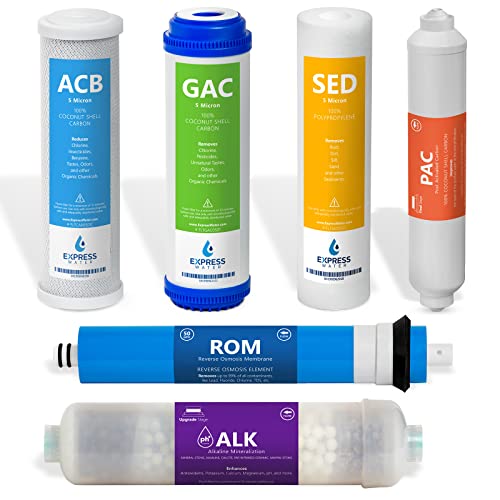
Express Water FLTSETALK065Q Reverse Osmosis Filter Set, Alkaline, 50 GPD

Zurn RK14-860XL Wilkins 0.25″ Law Compliant Test Cocks, Pack of 4

Express Water FLTSET085Q, Reverse Osmosis Replacement Filter Set, 1 Year
The Strengths Of Each Pick
Think of this as the friendly on-ramp to whole-home filtration. Express Water’s 3-stage setup sits on the main supply line and treats everything that flows through your plumbing, which matters if you cook with unfiltered tap water, wash baby clothes, or just want softer-feeling showers.
For municipal water with a noticeable chlorine bite, this is a sensible first step. The three filter housings give you room to swap in specialized media later, so the Essential tier doesn’t box you in.
Notable Gains
- Chlorine reduction that you can actually smell the difference in, especially in hot showers.
- Modular design, so the stage 2 and stage 3 cartridges can be upgraded without re-plumbing.
- Cuts sediment before it reaches water heaters, extending the life of appliances downstream.
- Mounting bracket and pressure gauges are typical for this Express Water family, simplifying install.
Things To Consider
- Does not target heavy metals or iron, so well water with those issues needs a different cartridge set.
- Cartridge swaps become an annual ownership cost; factor that into your decision.
Made For
City water households moving from a kitchen pitcher to whole-home coverage for the first time.
Where Another Pick Suits Better
Anyone on well water with reddish staining should reach for the Express Water Iron & Manganese system instead.
Older plumbing can leach metals into the water, and in some neighborhoods the source water carries them in from the start. The Heavy Metal version swaps standard carbon for KDF media, a copper-zinc alloy that pulls dissolved metals through a redox (oxidation-reduction, meaning it chemically transforms contaminants rather than just catching them) reaction.
You may find this the right call if you live in a house built before the mid-1980s and the faucets occasionally taste metallic. It’s also a fit for anyone on a private well drawing from mineral-rich aquifers.
Standout Benefits
- KDF media targets lead, mercury, and other dissolved metals at the whole-home level.
- Reduces chlorine simultaneously, so you don’t need a second system for taste and odor.
- Higher tolerance for hot water than straight carbon, which helps on recirculating lines.
Worth Noting
- KDF cartridges cost more per swap than basic carbon.
- Pre-filter sediment cartridges are still recommended upstream, adding to the install footprint.
Right Fit For
Households with confirmed or suspected metal content in their supply.
Not Your Match When
You live in a soft-water municipal area with no taste issues, the Express Water Essential Protection system is the smarter spend.
Reddish-brown streaks in the tub, black flecks in the laundry, a metallic tang in morning coffee: those are the calling cards of iron and manganese. This Express Water configuration loads the second and third stages with media that oxidizes and traps those minerals before they stain porcelain and clog aerators.
It’s a specialty build rather than a daily driver, which is why it earns a badge for narrow fit. If your water report shows iron above 0.3 mg/L, this is one of the more approachable DIY whole-home solutions.
The Value In It
- Specifically formulated for iron and manganese, not just generic sediment.
- Stops the staining that ruins fixtures and laundry over time.
- Standard 3-stage housing means no proprietary filter sizes to chase later.
Trade Offs
- Overkill for treated municipal water with no iron presence.
- Sediment pre-filtration is strongly recommended, since the iron media can clog on heavy silt loads.
Who It Suits Best
Well water owners dealing with visible staining and metallic taste.
Look Elsewhere When
You just want better-tasting city water, the Express Water Anti-Scale 3-Stage is the better daily-use pick.
The Ultimate Protection system adds a 50-micron reusable spin-down pre-filter to the front of the Express Water train. That pre-filter catches sand, silt, and rust flakes before they reach the specialty stages, which is a real benefit if your source water is turbid after storms or your old galvanized pipes are shedding debris.
Once you install a spin-down, you rinse it under a tap every few months instead of buying a new sediment cartridge, so the long-run filter spend drops. It also keeps flow rates higher in homes where multiple fixtures run at once.
A Few Highlights
- Reusable pre-filter cuts down on disposable cartridge waste.
- Protects downstream specialty stages from clogging prematurely.
- Pairs with the rest of the Express Water ecosystem for staged upgrades.
- Maintains strong flow even with multiple bathrooms running.
Honest Caveats
- Higher upfront cost than the Essential tier.
- You’ll need a little wall space to mount both the spin-down and the main filtration unit side by side.
Best Suited To
Homeowners who plan to layer on specialty filters over time and want the plumbing backbone to support it.
Consider Something Else When
You’re renting or just need a quick filter swap, the Essential Protection system keeps the install simpler.
Quick Facts
If your kettle turns crusty in a month and your shower head looks like it grew barnacles, hard water is the culprit. The Anti-Scale system targets calcium and magnesium, the minerals behind that chalky buildup, before they hit your water heater and fixtures.
This is not a salt-based softener, so it doesn’t add sodium to your water. Instead, it uses template-assisted crystallization media, which changes the structure of scale so it doesn’t stick to surfaces. In most kitchens, that means easier wipe-downs and longer-lasting appliances.
What It Does Well
- Cuts visible scale on faucets, glass shower doors, and dishware.
- No salt, no brine tank, no electricity to run.
- Helps water heaters and tankless units hold efficiency longer.
- Standard 3-stage footprint fits in basements and utility closets.
Points To Note
- Won’t fully replace a traditional softener in very high-grain hard water.
- Does not address chlorine taste, so pair with a carbon stage if that’s also a concern.
Who Should Grab It
Homeowners in moderate hard-water regions who want scale control without a salt system.
Reach For A Different Pick When
Heavy metal reduction is your bigger problem, the Heavy Metal system targets a different set of contaminants.
Feature Snapshot
This one breaks the whole-home mold because it isn’t one. The Katadyn Hiker Pro replacement cartridge is a spare element for backpackers and campers who already own the Hiker or Hiker Pro microfilter (a small hand-pump filter that physically strains water as you squeeze it through). The pleated glass-fiber core is built to handle silty streams, and a removable protector shields the cartridge when you drop it on rocks.
Including the field maintenance kit means you can backflush and store the element mid-trip, which extends its life when you’re far from a clean tap. For long-distance hikers, that spare cartridge often means the difference between a resupply stop and a skipped town.
A Favorable Mix
- Pleated glass-fiber element handles silt and muddy water without clogging immediately.
- Removable filter protector reduces damage from rough handling.
- Field maintenance kit supports backcountry cleaning without special tools.
- Up to 200-gallon capacity in clean water, per the brand spec.
Less Ideal Details
- Capacity drops sharply in turbid (cloudy with suspended particles) water, so heavy sediment cuts it short.
- Only fits Katadyn Hiker and Hiker Pro housings, not a general-purpose spare.
Perfect Match For
Thru-hikers and weekend backpackers who already run a Hiker-series filter.
Skip It When
You need home-scale filtration, the Express Water systems above handle the kitchen sink and shower line.
Reverse osmosis (RO) systems force water through a semipermeable membrane, which physically blocks dissolved solids, heavy metals, and most contaminants. This Express Water replacement set is sized for a 50-gallon-per-day unit and adds an alkaline remineralization stage at the end.
That last stage matters: pure RO water tastes flat to some people because the minerals are gone. The alkaline cartridge puts a small amount back, which lifts pH (a measure of acidity versus alkalinity on a 0-14 scale) and rounds out the flavor. If your home RO is approaching its first swap, this is the bundle to reach for.
Bright Spots
- Multi-stage set covers sediment, carbon, RO membrane, and alkaline polishing in one purchase.
- 50 GPD (gallons per day) flow suits a household’s drinking and cooking needs.
- Drop-in design for Express Water RO housings, no adapters needed.
Small Caveats
- Only fits Express Water-branded RO units, so cross-brand homes should confirm dimensions first.
- Annual swap adds up over time, so budget for repeat purchases.
Built With In Mind
Existing Express Water RO owners who want a one-shot yearly replacement with an alkaline finish.
A Better Fit Elsewhere
You don’t want to install a separate RO system, the Express Water Anti-Scale whole-home system covers showers and laundry in one go.
A backflow preventer is the device that stops contaminated water from siphoning back into your clean supply. A test cock is the small valve plumbers open to verify the preventer is doing its job. Zurn’s RK14-860XL set ships four quarter-inch test cocks, sized for 1.25-inch to 2-inch assemblies, the common residential and light-commercial size.
For homeowners, this is the kind of part that only matters during an annual cross-connection test, when a certified tester hooks up a gauge and checks the differential pressure. If yours are corroded or leaking, this is the OEM-spec (original equipment manufacturer specification) replacement most inspectors expect to see.
Real-World Strengths
- Fits 1.25-inch to 2-inch backflow preventers, the typical home and small-business size.
- Pack of four covers a full replacement in one trip to the cart.
- Quarter-inch standard matches the gauge ports on common test kits.
A Few Limitations
- Not a filtration product on its own, only useful alongside a backflow assembly.
- Plumbing skills required to drain the line and swap cocks without leaks.
The Right Fit
Plumbing contractors and homeowners replacing worn test cocks before a recertification test.
Swap It Out When
You don’t have a backflow preventer at all, the Express Water whole-home filter systems above are the relevant upgrade for you.
Key Product Details
The 1-Year set is the simpler cousin of the Alkaline bundle: same Express Water RO platform, no remineralization stage. The package includes the pre-filters, post-filter, and RO membrane sized to run a typical home system for twelve months before the next swap.
For households that want clean drinking water without the pH adjustment step, this is the straightforward path. It also tends to cost a bit less than the alkaline bundle, which matters if you’re replacing on a tight annual schedule.
Practical Pluses
- Complete annual replacement in a single bundle, no separate membrane hunt.
- Standard Express Water RO sizing for drop-in installation.
- Removes a wide range of dissolved solids at the membrane stage.
Where It May Fall Short
- Output water tastes flat to some palates without an alkaline polish.
- Limited to Express Water-branded RO housings.
Whose Shelf It Belongs On
Existing Express Water RO owners who want a no-fuss yearly filter set.
Where A Sibling Pick Shines
You prefer a higher-pH finish, the Express Water FLTSETALK065Q Alkaline set adds the remineralization stage.
Feature Card
What To Match Your Home Against Before Buying
Filtration is local. The right whole-home filter for a Phoenix suburb is rarely the right one for a well in upstate New York, so start with a free water report from your municipal supplier or a paid lab analysis on well water. Those numbers tell you which media actually need to do work: chlorine, lead, iron, manganese, hardness, sediment.
Next, think about flow. Whole-home systems need to keep up with showers, laundry, and the kitchen at the same time. Three-stage Express Water housings handle most homes comfortably, but if you run two showers while the dishwasher is on, look at the larger 1-inch port options and pair them with a spin-down pre-filter like the Ultimate Protection system. Cartridge cost is the third axis: KDF, anti-scale, and RO membranes run higher per swap than basic carbon, so model the annual filter spend, not just the upfront ticket.
Finally, look at installation. Most whole-home Express Water systems mount near the main shutoff with simple push-fit or threaded connections, but a tight crawl space or finished basement can complicate drain lines and bracket placement. For renters, a point-of-use RO under the sink often beats a whole-home install because it leaves the plumbing untouched at move-out.
Key Considerations Across These Picks
Wrong Turns To Avoid
A common slip-up is buying a whole-home filter for a problem that needs a point-of-use fix. If your only complaint is drinking-water taste, an under-sink RO (reverse osmosis) like the Express Water FLTSET085Q does the job without touching your showers. The reverse is also true: a fridge pitcher won’t clear up iron staining or protect your water heater from sediment. Match the system to the symptom, not the marketing.
Where The Extra Money Goes
The jump from the Essential tier to the Ultimate Protection or specialty systems pays for two things: more capable media and a longer pre-filter lifespan. KDF and anti-scale cartridges cost more per swap, but they target contaminants that carbon alone misses. The reusable spin-down in the Ultimate Protection setup also trims the long-run consumable cost, so the premium often evens out over a few years for busy households.
Frequently Asked Questions
How often do whole-home filter cartridges need to change?
Most sediment and carbon stages last six to twelve months under typical household use, while specialty media like KDF or anti-scale can stretch further depending on water quality. Heavy sediment or iron-rich water shortens those windows noticeably.
Can a 3-stage filter handle both city and well water?
The housing format is the same, but the media inside needs to match the source. City water usually does well with carbon-focused stages, while well water often needs iron, manganese, or sediment-specific media to address real problems.
Is a reverse osmosis system necessary if I already have a whole-home filter?
They do different jobs. A whole-home filter protects plumbing and improves shower and laundry water, while an RO polishes drinking and cooking water at the tap. Many households run both for full coverage.
Do anti-scale filters actually work without salt?
Template-assisted crystallization media changes how scale forms so it doesn’t adhere to surfaces, which reduces buildup without adding sodium. The effect is real on moderate hardness, though very high-grain water may still need a traditional softener.
Where should a whole-home filter be installed?
Mount it on the main supply line after the shutoff valve and before the water heater, in a spot with enough clearance to change cartridges. A basement utility room, garage wall, or crawl-space header are the usual candidates.
Closing Remarks
The right home water purification system comes down to what your water actually contains and how much of it you want treated. Whole-home filters handle the bulk of daily use, specialty media tackle the stubborn contaminants, and under-sink RO delivers a final polish at the tap. Pick the layer that matches your real complaint, and the rest tends to fall into place.




