Tap water tastes different from house to house, and so does the hassle of getting cleaner water into your glass. A filtration pitcher sidesteps the installation of a full under-sink system while still cutting the obvious stuff: chlorine flavor, sediment, and the occasional rust flake. The trick is matching capacity, filter media, and pour speed to how your household actually drinks water. This list of eight picks covers everything from whole-house sediment cartridges to compact fridge-door models and a glass-and-steel upgrade piece for design-focused kitchens.
The Picks In Brief

Culligan P5 Whole House Premium Water Filter 3-Pack (6 Filters Total)

PUR Water Pitcher Replacement Filter 4-Pack

Aarke Purifier Glass & Stainless Steel Water Filter Pitcher, 94oz

Aarke Purifier Bundle 81oz Glass Pitcher with Enriched Refills, 3-Pack

BRITA Marella Blue Water Filter Jug 2.4L with 3 MAXTRA PRO Filters

Brita XL 27 Cup Water Pitcher Dispenser with Elite Filter
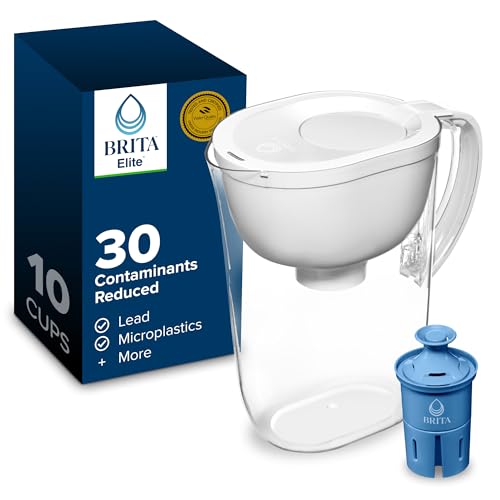
Brita Large 10-Cup Water Filter Pitcher with Elite Filter

LifeStraw Home Activated Carbon + Ion Exchange Replacement Filters, 3-Pack
More Details On Our Top Picks
The Culligan P5 is the outlier on this list: a replacement cartridge that drops into a whole-house filter housing, not a pitcher you set on the counter. For households on well water or older municipal lines with visible sediment, rust, or grit, it does the kind of pre-filtering that a standard pitcher simply cannot match. Each cartridge handles up to 8,000 gallons, and the box ships three units, with the listing sold as a six-filter total, which means roughly a year and a half of whole-house coverage before reordering.
If you already own a Culligan whole-house housing, this is the refill that keeps the system honest. If you do not, the cartridge alone will not help; it requires the dedicated filter head and mounting bracket. Compared with the PUR 4-pack and LifeStraw replacement filters later on this list, this is a different category entirely, working on every tap in the home rather than filling one pitcher at a time.
What Makes Sense
- 8,000-gallon rating per cartridge keeps replacement intervals comfortable for most households
- Multi-pack format brings the per-filter cost down for long-term budgeting
- Targets the coarse stuff, sediment, rust, and scale, that pitchers tend to miss
- Works as a first-stage defense upstream of any kitchen-side pitcher you also use
Things To Consider
- Requires a compatible Culligan filter housing; it is not a stand-alone drop-in solution
- Does not address chemical taste or odor on its own, so many owners pair it with a kitchen pitcher
Who It Suits Best
Homeowners with existing Culligan whole-house plumbing who want a reliable, multi-pack sediment replacement.
Where Another Pick Suits Better
Renters without a filter housing should start with the Brita Large 10-Cup Water Filter Pitcher for a tool-free countertop option.
This is a refill bundle, not a new pitcher, and that is exactly the point. The PUR 4-pack targets owners who already use a PUR pitcher or dispenser and want to keep their rotation on schedule without reordering every month. Each cartridge is rated for roughly 40 gallons of use, so the four-pack covers most households for the better part of a year, depending on how aggressively the family drinks water.
PUR’s pitch has long been its 2-in-1 media, which is designed to pull back both chemical and physical impurities in a single cartridge, and the brand markets a meaningful gap versus basic carbon blocks. Compared with the Brita Elite filter that comes with Items 6 and 7, the PUR approach is a simpler pour-through setup that lives or dies on consistent cartridge swaps. If you forget to change filters, any of these pitchers will underperform; this 4-pack at least removes the friction of running out.
Standout Benefits
- Four-cartridge pack lowers per-change cost and cuts down on reordering frequency
- Drop-in fit for existing PUR pitchers and dispensers, no new hardware required
- Single-step filter change keeps maintenance simple for new owners
Worth Noting
- Useless without an existing PUR pitcher, so first-time shoppers need to buy the vessel separately
- Filter life resets on a calendar rather than a sensor, which can encourage overdue swaps
- Pour-through flow rate is naturally slower than dispenser-style setups like the Brita XL
Feature Snapshot
Made For
Existing PUR pitcher owners who want a budget-friendly multi-pack to keep filter changes on schedule.
Not Your Match When
Households that prefer a complete starter setup should pick the Brita Large 10-Cup Water Filter Pitcher instead.
The Aarke Purifier is the pitcher on this list you buy partly because it looks at home next to a kettle and a pour-over. The carafe is borosilicate glass (a heat-shock resistant glass commonly used in lab and kitchenware) wrapped in a stainless steel collar, and the cartridge itself is a refillable stainless steel unit, not the throwaway plastic cylinders you find inside most pitchers. At 94 ounces it sits on the roomy end of a countertop pitcher, and the brand leans into its low-plastic, long-life philosophy.
Functionally, Aarke takes a different path than the carbon-and-ion-exchange cartridge from LifeStraw covered later, or the basic activated carbon in the Brita Marella. The filter uses refillable granule pouches, which Aarke calls customized filtration, that you swap in rather than tossing the whole cartridge. Compared with the budget plastic pitchers in this list, it is a deliberate upgrade choice, prioritizing material, weight, and visual presence on the counter.
The Value In It
- Glass carafe and stainless sleeve create a kitchen-counter piece that doubles as decor
- Refillable cartridge cuts single-use plastic waste over the life of the pitcher
- 94oz capacity handles daily hydration for a couple without constant refills
- Tight-fitting lid helps keep dust out of the reservoir between pours
Points To Note
- Glass carafe is heavier and breakable, a real concern in busy or shared kitchens
- Refillable granules mean more owner involvement than a standard drop-in cartridge
- Higher upfront cost than basic plastic pitchers like the Brita Marella
Best Suited To
Design-conscious households that want a glass-and-steel centerpiece pitcher and are willing to manage refill granules.
Consider Something Else When
Families with young kids or cluttered counters may prefer the lighter, more forgiving Brita XL 27 Cup Water Pitcher Dispenser.
Where Item 3 is the standalone Purifier, this bundle pairs an 81oz glass carafe with a 3-pack of Aarke’s enriched refill granules, so you have the pitcher and several months of media in one box. The 81oz carafe is the slightly smaller of the two Aarke sizes, which makes it more practical for fridge-door storage, an honest trade-off against the roomier 94oz version above. The refill granule system stays the same, so swapping media is the same routine either way.
The pitch is value over time: buying the bundle typically costs less per refill cycle than ordering granules and a pitcher separately. Compared with the PUR 4-pack, the Aarke bundle is a different ownership model altogether. PUR swaps the whole plastic cartridge, while Aarke keeps the stainless housing and only swaps the granule pouches inside, which reduces the plastic waste stream but adds a small step to the maintenance routine.
Good Reasons To Consider
- Bundle format keeps the pitcher and several months of refills in a single purchase
- 81oz size is a friendlier fit for a standard fridge door than the 94oz Purifier
- Refill granule system trims long-term plastic waste compared with throwaway cartridges
Trade Offs
- Glass carafe adds weight and breakability versus the all-plastic Brita Marella
- Granule refills are more involved than snapping in a new carbon cartridge
- Premium positioning makes the bundle the priciest option on this list
Spec Overview
Right Fit For
Households already sold on the Aarke aesthetic who want the carafe and refills bundled in one purchase.
Look Elsewhere When
Pure value shoppers should consider the PUR Water Pitcher Replacement Filter 4-Pack for a lower-cost plastic-cartridge path.
The Marella is the entry point that most people picture when they hear the word “Brita,” a slim 2.4L plastic jug that fits in a standard fridge door with room to spare. The listing ships with three MAXTRA PRO All-in-1 cartridges in the box, so you can start filtering the moment the jug arrives and have a six-month supply of replacements on the shelf. The flip-top lid fills with one hand, and the electronic memo strip on the lid tracks the four-week replacement cycle so you stop guessing when the cartridge is due.
The MAXTRA PRO targets the usual pitcher concerns: chlorine taste, limescale buildup, and the broader class of impurities Brita groups under its All-in-1 label. Compared with the larger Brita XL 27-cup dispenser covered next, the Marella is a daily pour-and-stow pitcher, not a party-sized reservoir. The plastic body is dishwasher safe (lid excluded), which is a real practical win for a kitchen tool you handle every day.
A Few Strong Suits
- Three MAXTRA PRO filters included, so you skip the first separate filter purchase
- 2.4L capacity slides into most refrigerator doors without rearranging shelves
- Electronic change-indicator strip removes the “did I change this?” guesswork
- One-handed flip-top filling works smoothly at the kitchen tap
Honest Caveats
- Smaller reservoir means more refills in a busy household
- Plastic body, while practical, does not match the premium feel of the Aarke Purifier
- Pour-through flow is slower than dispenser-style systems like the Brita XL
Who Should Grab It
First-time pitcher owners and smaller households who want a fridge-door jug with a few months of filters in the box.
Skip It When
Large families pouring for five or more should size up to the Brita XL 27 Cup Water Pitcher Dispenser for fewer refills.
The Brita XL is the volume pick: 27 cups of filtered water in a single fill, shaped more like a countertop dispenser than a traditional pitcher. The included Brita Elite filter is the brand’s higher-tier cartridge, designed to target a broader list of contaminants than the standard MAXTRA PRO that ships with the Marella above. The lid flips up for refilling and the spigot at the base means you can pour a glass without lifting the whole reservoir, a real bonus for kids and anyone with a sore wrist.
Capacity is the headline here, but footprint is the honest trade-off. This is not a fridge-door jug; it lives on the counter, takes up a meaningful slice of space, and wants room for the lid to swing open. Compared with the smaller 10-cup Brita in Item 7, the XL trades compactness for fewer refills per day. If you host often or have a household of five or more drinkers, that trade is usually a win.
Benefits That Matter
- 27-cup capacity handles large families, dinner parties, and meal-prep sessions
- Lower spigot design lets you fill a glass without lifting the heavy reservoir
- Elite filter targets a broader list of impurities than basic pitcher cartridges
- Wide mouth and flip lid make top-off filling easy at the kitchen tap
Points To Keep In Mind
- Countertop footprint is too large for many fridge doors, so plan for open counter space
- Elite filter replacements cost more than the standard MAXTRA PRO cartridges
- Plastic body and large reservoir mean a full unit is heavier than smaller pitchers
Feature Card
Perfect Match For
Large households and frequent entertainers who want a single-fill dispenser with a spigot for everyday pouring.
Another Choice May Suit
Tighter kitchens should drop down to the Brita Large 10-Cup Water Filter Pitcher for a more fridge-friendly footprint.
The 10-cup Brita is the middle child of the lineup, larger than the 2.4L Marella, smaller than the 27-cup XL, and the pitcher most couples or small families end up actually buying. It ships with one Brita Elite filter in the box, the same higher-tier cartridge used in the XL dispenser, with the same stated reduction claims for lead, microplastics, and a longer list of contaminants than the MAXTRA PRO family. The body is BPA-free plastic, the lid flips up for refilling, and the unit fits most refrigerator doors with the lid closed.
Where the XL commits to counter-top living, the 10-cup pitcher splits the difference, large enough to skip mid-day refills, small enough to live in the fridge. Compared with the Aarke Purifier covered earlier, the Brita is a tool-first purchase; it is not trying to be a design object, it is trying to be a reliable filter. For households that prioritize contaminant reduction claims and don’t care about glass or stainless, the 10-cup Elite is the honest, mainstream pick.
Well-Handled Touches
- 10-cup capacity hits the sweet spot for two-to-four-person households
- Brita Elite filter targets lead, microplastics, and chlorine taste at the source
- Fridge-door-friendly footprint keeps filtered water cold and out of the way
- BPA-free plastic body is light enough to handle one-handed at the tap
Soft Spots
- Only one Elite filter in the box, so expect to reorder within a couple of months
- Plastic construction lacks the premium feel of the Aarke Purifier carafe
- Pour-through flow is slower than the spigot-equipped XL dispenser
Quick Facts
Whose Shelf It Belongs On
Couples and small families who want a fridge-friendly pitcher with a higher-tier filter and a mainstream price tag.
Where A Sibling Pick Shines
Design-led kitchens that treat the pitcher as part of the counter will prefer the Aarke Purifier Glass & Stainless Steel Water Filter Pitcher for its material upgrade.
Like the PUR 4-pack earlier, this is a refill bundle, not a new pitcher, and it assumes you already own a compatible LifeStraw Home vessel. Where it sets itself apart is the two-stage media: activated carbon (the porous charcoal that traps chlorine and organic compounds) paired with ion exchange (a resin that swaps contaminant ions, like lead, for less harmful ones). The 3-pack covers roughly six months of typical use, with each cartridge rated for about 40 gallons, so the math works out to a similar cadence as the PUR option.
LifeStraw built its brand on travel-grade filtration, and the Home line brings that same contaminant-focused mindset to the kitchen. Compared with the MAXTRA PRO cartridges in the Brita Marella or the Elite filter in the Brita 10-cup, the LifeStraw media leans harder on the ion-exchange angle, which is the practical reason some shoppers with known heavy-metal concerns reach for it. The honest caveat is the same as every other refill on this list: skip the swaps, and the filter becomes decorative.
A Favorable Mix
- Two-stage media combines carbon and ion exchange in a single cartridge
- 3-pack covers about six months of use at typical household flow
- Targets PFAS, lead, mercury, and chlorine taste in one pour-through
Less Ideal Details
- Requires a compatible LifeStraw Home pitcher or dispenser, useless without one
- Pour-through flow is slower than dispenser-style options like the Brita XL
- Ion-exchange media may need more frequent swaps in very hard water
Built With In Mind
Existing LifeStraw Home owners who want a multi-pack of carbon-and-ion-exchange cartridges on hand.
Swap It Out When
Shoppers who want a complete starter setup should look at the Brita Large 10-Cup Water Filter Pitcher, which ships with a filter in the box.
What To Weigh Before Picking a Filtration Pitcher
Capacity And Fridge Fit
Capacity is the most concrete number on the box, and it cascades into almost every other daily-use decision. A 2.4L jug like the Brita Marella or the 10-cup Brita slides into a standard fridge door, while the 27-cup Brita XL is a countertop piece. Measure your shelf height and fridge-door depth before you commit; many owners who overbuy on capacity end up with a dispenser they can never refrigerate. For a single-person household, 6 to 8 cups is usually plenty, while families of four or more will want at least 18 to 27 cups to avoid constant refills.
Filter Media And Contaminant Targets
Pitcher filters fall into a few media camps, and the labels tell you which is which. Activated carbon is the baseline, stripping chlorine and improving taste. Ion exchange is a resin that swaps contaminant ions (like lead or copper) for less harmful ones, and it usually pairs with carbon. Sediment filters, like the Culligan P5, target the physical grit and rust you sometimes see in older plumbing. Aarke takes a different approach with refillable granule pouches, while Brita’s Elite filter leans on its carbon-core formulation. Match the media to your real concern: taste and odor call for carbon, hard water and metal concerns push you toward ion exchange, and visible sediment points you to a pre-filter.
Replacement Cartridge Cost And Schedule
Every filter on this list is a recurring purchase, so the long-term math matters as much as the upfront price. A 4-pack like the PUR bundle or a 3-pack like the LifeStraw cuts the per-cartridge cost and the reordering frequency, but only if you actually swap on schedule. The Brita Marella ships with three filters for exactly this reason, so the first six months are covered. Look for a change indicator on the lid; Brita’s electronic memo strip is the most obvious example, and it removes the calendar math that owners routinely get wrong.
Material, Weight, And Counter Feel
Plastic, glass, and stainless steel all have real trade-offs. Plastic pitchers like the Brita line are light, durable, and dishwasher safe, which is the practical choice for most kitchens. Glass-and-steel options like the Aarke Purifier upgrade the look and feel but add weight and breakability, a real concern in homes with kids or tight counter space. Pick the material that matches how you actually use the kitchen: a decorative centerpiece pitcher behaves differently than a daily workhorse that gets bumped and shuffled.
Key Considerations Across These Picks
Pitfalls Shoppers Hit
The most common misstep is buying a refill cartridge before checking the brand and model of the pitcher you already own. PUR, Brita, LifeStraw, and Aarke are not interchangeable, and a PUR filter will not seat in a Brita reservoir. The second trap is treating a countertop pitcher like a whole-house system; pitchers are point-of-use tools, so an upstairs bathroom tap or a basement utility sink will not benefit. A third mistake is ignoring filter lifespan, since a six-month-old cartridge that has been sitting in the fridge for years is not the same product as a fresh one, and the contaminants it claims to handle are largely unaddressed once the media is exhausted.
Where The Extra Money Goes
The premium tier on this list, including the Aarke Purifier and the Brita Elite cartridges, charges more for three concrete upgrades: broader contaminant reduction claims, higher-grade body materials, and longer-lasting media. The Aarke path trades disposable plastic for refillable granule pouches, which is an environmental and aesthetic upgrade with a higher sticker price. The Brita Elite filter versus the standard MAXTRA PRO is a media upgrade, and the Brita XL over a smaller pitcher is a capacity upgrade. Whether any of those upgrades pays off depends on how much you care about the specific benefit, the design, the heavier contaminant list, or the larger reservoir, and whether the rest of your household will actually use it day to day.
Frequently Asked Questions
How often should I change the filter in a home water filtration pitcher?
Most pitcher filters are rated for about 40 gallons of use, which works out to roughly two months for a typical household. Brita models with an electronic memo strip track the schedule for you, while other brands rely on a calendar reminder.
Do filtration pitchers remove lead and other heavy metals?
Carbon-only filters handle chlorine and taste concerns well, but lead and other heavy metals typically require a filter that includes ion exchange, like the LifeStraw Home cartridges, or a higher-tier formulation like the Brita Elite filter included with the 10-cup pitcher and the XL dispenser.
Can a filtration pitcher replace a whole-house filtration system?
For point-of-use drinking and cooking water, yes, but a pitcher will not improve the water coming from a showerhead or a laundry tap. Sediment-heavy or hard-water homes often pair a whole-house pre-filter, like the Culligan P5, with a kitchen-side pitcher for the best of both worlds.
Are glass pitchers better than plastic ones?
Glass and stainless steel pitchers like the Aarke Purifier look better on the counter and avoid plastic contact with the water, but they are heavier, more breakable, and usually cost more. Plastic pitchers are lighter, dishwasher safe, and more forgiving in busy households.
Is filtered pitcher water cheaper than bottled water?
Per gallon, pitcher water is consistently cheaper than bottled, especially once the initial pitcher cost is spread across months of use. The ongoing expense is the replacement cartridges, and buying a multi-pack, like the PUR 4-pack or the LifeStraw 3-pack, is the easiest way to keep that cost predictable.
Wrap Up
The right home water filtration pitcher depends on what your tap water actually does and how your household drinks it. A couple in a small apartment with mild chlorine taste will get along fine with a 10-cup Brita, while a family of five entertaining on weekends will appreciate the 27-cup XL. Design-led kitchens gravitate to the Aarke Purifier, and well-water homes build the Culligan P5 into the plumbing. Start with the problem you want to solve, taste, sediment, or just fewer plastic bottles, and the right pick usually follows.