

Tracking household electricity has shifted from a niche hobby into a practical step for anyone watching their monthly bill, planning a solar install, or just curious which appliances quietly drain power overnight. The right monitor turns the panel into a story you can read: peaks, idle loads, and the slow creep of vampire draw from electronics on standby. The picks below cover a range of needs, from whole-home smart monitoring down to compact meter bases for smaller dwellings, RVs, and accessory buildings. Each one earns its spot for a specific reason, whether that is app-driven insight, simple plug-in readability, or durable socket hardware ready for outdoor service.
A Quick View Of The Lineup

Shelly Pro EM 50A Wi-Fi & LAN Energy Meter

Round 100 Amp Meter Socket

120V Electric Voltage Meter Home Energy Monitor

240V KWH Watt Meter Electricity Usage Monitor
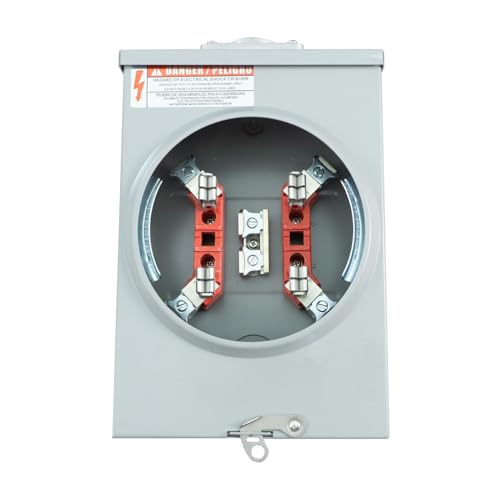
Square 125 Amp Meter Socket

Emporia Vue 3 Home Energy Monitor

Square 200 Amp Meter Socket
The Picks, Examined More Closely
The Shelly Pro EM 50A lives in a category of its own on this list: a DIN-rail-mounted energy meter that clips directly into a household distribution panel rather than sitting in an outlet. Two current transformers (CTs) clamp around your live conductors to track consumption on two separate circuits, and the readings land in a phone app, a home automation dashboard, or both over Wi-Fi or wired LAN. For a homeowner who already runs Shelly, Home Assistant, or a similar platform, the contactor control outputs also let you switch loads based on what the meter sees.
Compared with the plug-in HIITIO meters later in this roundup, the Pro EM trades simplicity for granularity. You see exactly which subpanel or appliance group is drawing power, and you can build automations around those numbers. Installation is best left to someone comfortable working near live busbars, even though the device itself is tidy and well-documented.
Notable Upsides
- Two independent measurement channels let you monitor a whole-home circuit and a subpanel (such as a workshop or EV charger) from a single device.
- Dual Wi-Fi and LAN connectivity keeps the meter reachable even in metal enclosures where wireless signals struggle.
- Built-in contactor control with potential-free contacts turns the meter into a switching hub, useful for load shedding heavy appliances during peak rate windows.
- Bluetooth gateway functionality bridges nearby Shelly Bluetooth sensors into the same automation ecosystem, reducing the need for extra hubs.
Worth Noting
- Requires a DIN-rail enclosure and confident electrical work, since the CTs sit around conductors that remain energized even with the main breaker off.
- Smart home value depends entirely on whether you actually run compatible automations; without that ecosystem, the app feels sparse next to whole-home options like the Emporia Vue 3 covered below.
Who It Suits Best
Tinkerers and automation-focused homeowners who want circuit-level data and the ability to trigger switches from real-time readings.
Where Another Pick Suits Better
The Emporia Vue 3 is a friendlier choice for households that want whole-home circuit insight without configuring a DIN-rail setup.
The Round 100 Amp Meter Socket from HIITIO is infrastructure, not a gadget, but it earns its place because every monitoring system eventually ends at the meter base. Rated as a single-phase, 3-wire, 4-jaw 100A enclosure with a built-in bypass, the housing is sized for smaller homes, accessory dwelling units, sheds, and compact RVs where a full 200A service would be overkill. The bypass lever lets a utility swap the meter without cutting power to the building, a practical touch for service work.
Construction is the headline. A thick metal enclosure with precision seams, a uniform paint coat for rust resistance, and copper terminals with a plated finish give the unit a reassuring weight. Where the Shelly Pro above focuses on data, this socket is the physical anchor that data flows through.
Noteworthy Benefits
- 100A rating suits compact dwellings and RV pedestals where a 200A service would be wasted capacity.
- Integrated bypass streamlines utility meter swaps, avoiding a power interruption to the home.
- Copper terminal blocks with a corrosion-resistant plating support low-resistance connections over years of outdoor exposure.
- Rugged metal enclosure with tight seams blocks dust and rain, useful for damp crawlspaces or exterior mount points.
Trade Offs
- 100A will not support larger homes with electric ranges, heat pumps, and EV charging all running concurrently; step up to the Square 200A socket in pick 7 if that describes your service.
- Requires a qualified electrician for installation and inspection by the local utility, so DIY savings are limited.
Made For
Small homes, ADUs, and RV owners who need a service-entrance socket sized to match a modest electrical load.
Consider Something Else When
The Square 200 Amp Meter Socket is a better match for standard single-family homes expecting heavier electrical demand.
The 120V plug-in monitor is the most approachable item in this roundup. It sits between a wall outlet and a single appliance or power strip, then shows watts, kilowatt-hours, and voltage on a built-in LCD. For someone curious about whether an old refrigerator is worth replacing, or how much an entertainment center pulls in standby, this kind of direct reading answers the question without an app, a hub, or an electrician.
Where the Round 100A socket above is the building’s front door, this little meter is a window into one device at a time. The trade-off is obvious: you only see what is plugged into it. Used as a diagnostic tool rather than a whole-home solution, however, it pays for itself quickly when it spots a single misbehaving appliance.
The Practical Payoff
- Plug-and-play design needs no installation beyond choosing an outlet, ideal for renters and first-time users.
- Large LCD display makes real-time wattage and cumulative kWh easy to read at a glance, no phone required.
- Useful for diagnosing vampire draw from entertainment centers, computers, and appliances left in standby mode.
Points To Keep In Mind
- Limited to 120V loads, so 240V appliances like dryers, ovens, and central air handlers stay invisible without the 240V model covered next.
- Single-outlet visibility means rotating appliances is the only way to build a complete picture of household usage.
Right Fit For
Casual households and renters who want a quick, low-commitment read on what individual devices cost to run.
Look Elsewhere When
The 240V KWH Watt Meter is the better match for households wanting to track large 240V appliances like water heaters or workshop tools.
The 240V KWH Watt Meter is the older sibling of the 120V pick above, built for the high-draw appliances that quietly dominate monthly bills: water heaters, well pumps, window AC units, and welders in a garage workshop. It installs into a standard 4-jaw socket, the same kind found at many RV pedestals, and serves as a real-time consumption meter for properties on the road as well as stationary homes.
The display carries a backlight, which makes evening checks in a dim basement or utility room far easier than squinting at an unlit LCD. Owners commonly rely on this style of meter to confirm that a newly installed heat pump is cycling correctly, or to spot when an aging water heater starts running constantly.
Reasons It Performs
- 240V compatibility covers the major energy users a 120V plug-in meter simply cannot see.
- Backlit LCD improves visibility in utility rooms, basements, and outdoor enclosures where lighting is often poor.
- Standard 4-jaw socket compatibility makes it useful in both residential and RV power setups, broadening its use cases.
Possible Compromises
- Requires a dedicated 240V outlet or socket for installation, so you may need an electrician to add a receptacle in the right spot.
- Single-circuit scope means the monitor still cannot replace a whole-home solution like the Emporia Vue 3 for full-panel visibility.
Best Suited To
Homeowners and RV travelers who want a clear reading on heavy 240V appliances and generator use over time.
Skip It When
The Round 100 Amp Meter Socket is a smarter starting point for new builds needing a full service-entrance solution rather than a single-appliance readout.
The Square 125 Amp Meter Socket occupies a useful middle ground between the compact 100A round base in pick 2 and the full-size 200A square socket in pick 7. Built as a single-phase, 3-wire, 4-jaw 125A enclosure with an integrated bypass, it suits mid-sized homes, larger RV sites, and small commercial outbuildings that draw more than 100A but do not need the headroom of a 200A service.
Like the other HIITIO socket, the focus is on durability. A thick metal housing with a uniform anti-rust coating stands up to coastal air, damp crawlspaces, and years of UV exposure. For properties upgrading from an aging 100A service, this 125A base provides comfortable headroom without the cost of a full 200A upgrade.
Everyday Advantages
- 125A capacity handles larger homes and mid-sized RV campground pedestals where 100A would feel tight.
- Built-in bypass simplifies utility meter swaps and routine maintenance without service interruptions.
- Thick metal enclosure with anti-rust coating suits outdoor or semi-exposed mounting in coastal and humid regions.
A Few Limitations
- Still undersized for homes planning major electrical additions like a Level 2 EV charger plus an electric range running simultaneously.
- Installation and inspection must be coordinated with the local utility, adding time before the meter base goes live.
Who Will Love This
Owners of mid-sized homes, larger RVs, and accessory buildings who need a step up from 100A without jumping all the way to 200A.
Swap It Out When
The Square 200 Amp Meter Socket is the better fit for standard single-family homes planning future electrification projects.
The Emporia Vue 3 is the most complete whole-home monitor in this lineup and the one most people picture when they imagine a home energy monitor. A small module installs inside the electrical panel, with current sensors clamping around each circuit breaker you want to track. The companion app then displays real-time consumption, historical trends, and solar production if your home has a photovoltaic setup with net metering.
Where the Shelly Pro in pick 1 focuses on two circuits and home automation integration, the Vue 3 aims for breadth. Sixteen channels handle the typical residential panel, and the system supports solar monitoring, which is increasingly relevant as more homeowners pair rooftop arrays with battery storage. The unit is UL Listed, a meaningful assurance when hardware lives inches from live busbars.
Why It Works Well
- Circuit-level monitoring across up to 16 channels gives a true whole-home picture rather than a single-outlet view.
- Solar and net metering support lets households with rooftop PV see production, consumption, and export on one dashboard.
- UL Listed safety certification provides meaningful assurance that the components meet recognized electrical safety standards.
- App-based historical data and cost estimation translate raw kilowatt-hours into the monthly dollars most people actually care about.
Details To Watch
- Panel installation requires working near energized conductors, so most homeowners hire an electrician for the physical setup even though the app configuration is straightforward.
- Advanced features depend on Emporia’s cloud platform, so a spotty home network connection can limit the live monitoring experience.
Perfect Match For
Homeowners who want a single system that covers solar production, net metering, and circuit-by-circuit consumption without juggling multiple devices.
Another Choice May Suit
The Shelly Pro EM 50A is a stronger fit for automation enthusiasts who want two high-priority circuits and contactor control in a DIN-rail format.
The Square 200 Amp Meter Socket rounds out the roundup as the standard residential service-entrance base. Rated 200A in a single-phase, 3-wire, 4-jaw configuration with a built-in bypass, it matches the upper limit of typical U.S. residential service and leaves room for heat pumps, electric ranges, EV chargers, and the slow electrification of appliances many households are planning. Like the other HIITIO bases, the housing is thick metal with a uniform rust-resistant paint coat.
This is the kind of hardware you install once and largely forget, which is exactly the point. Pair it with the Emporia Vue 3 from pick 6 for a system that gives you both a robust service entrance and a clear view of how every circuit is performing.
Notable Gains
- 200A capacity matches standard single-family service entrance ratings, supporting electrification upgrades without a panel replacement.
- Built-in bypass allows safe meter swaps by utility crews without cutting power to the home.
- Thick metal enclosure with rust-resistant coating provides long service life in outdoor and semi-exposed installations.
Small Caveats
- Overkill for small homes, ADUs, and RVs where a 100A or 125A base from picks 2 and 5 is a more efficient match.
- Installation and inspection must be coordinated with the local utility, similar to other meter bases on this list.
Built With In Mind
Standard single-family homes planning a full range of modern electrical loads, including future EV charging and heat pump conversions.
Reach For A Different Pick When
The Round 100 Amp Meter Socket is a more proportionate match for smaller dwellings, RVs, and accessory buildings with lighter loads.
What Matters Most Before Choosing Home Energy Monitor Systems
Match The Monitor To The Scope
Whole-home monitoring, single-circuit reading, and service-entrance hardware solve different problems. A plug-in meter like the HIITIO 120V model answers “what does this one appliance cost?” while the Emporia Vue 3 answers “where is my whole-house energy going?” Clarifying that scope first saves the cost of buying the wrong category entirely.
Voltage And Current Ratings Aren’t Optional
A 120V plug-in meter cannot see a 240V dryer, and a 100A meter base will not support a home with an EV charger. Match voltage to the appliance, match amperage to the panel or service entrance, and you avoid the most common reason these purchases end up returned. Sizing up slightly is usually cheaper than sizing up twice.
Data Without Action Is Decoration
Numbers on a screen only pay off if they lead somewhere: a behavior change, a switch in appliances, or a solar battery decision. For most households, that means choosing a monitor with a usable app and clear cost-per-period reporting, not just a raw wattage display. Automation-friendly options like the Shelly Pro add another layer by letting the data trigger switches.
Key Considerations Across These Picks
Where Shoppers Go Wrong
The most common mistake is treating a smart plug monitor as a whole-home solution, or expecting a meter socket to display energy data on its own. These are different categories with different jobs, and mixing them leads to frustration. Confirm what stage of the energy monitoring journey you are actually at: appliance-level curiosity, circuit-level visibility, or service-entire replacement.
Where The Extra Money Goes
Higher-tier monitors like the Emporia Vue 3 cost more because they add circuit-level granularity, solar and net metering support, and a polished app that turns raw data into actionable monthly cost estimates. For a homeowner with a PV array or a serious electrification plan, that upgrade pays for itself by surfacing savings that simpler monitors cannot see. For someone just curious about a single appliance, a budget plug-in meter is a more honest match.
Frequently Asked Questions
Do home energy monitors reduce electricity bills?
They make waste visible, which often leads to behavior changes or appliance swaps that lower bills. The monitor itself does not save energy; the decisions you make with the data do.
Can a plug-in meter handle a whole house?
A single plug-in meter only sees one outlet at a time. Whole-home visibility requires a panel-mounted system like the Emporia Vue 3 or a DIN-rail solution like the Shelly Pro EM 50A.
Is professional installation required for meter sockets?
Yes, in nearly every jurisdiction. Meter bases are part of the service entrance and must be installed by a qualified electrician and inspected by the local utility before the meter is energized.
Do these monitors work with solar panels?
Panel-mounted monitors with solar and net metering support, like the Emporia Vue 3, can track production and export alongside consumption. Plug-in meters and meter sockets on their own do not.
How accurate are residential energy monitors?
Circuit-level monitors and meter sockets typically meet utility-grade accuracy standards for residential billing-class measurements. Plug-in meters are accurate enough for behavioral insight but may drift a few percent compared to utility-grade equipment.
Final Verdict
Home energy monitoring lives on a spectrum, from a $20 plug-in display that exposes a single appliance’s appetite to a panel-mounted system that maps every circuit in the house. Start by identifying the question you actually want answered, then pick the tool that fits that scope. The right monitor is the one that turns a monthly bill from a mystery into a story you can act on.




