The tap water in your kitchen tells a different story depending on where you live, and a good filter is the simplest way to take that variability out of the equation. Renters who can’t drill into cabinets, busy families filling water bottles every morning, and anyone curious about what actually comes out of the faucet all land in the same place. These seven systems cover everything from install-free pitchers to under-sink setups, and each one solves a slightly different problem.
The Shortlist At A Glance

DREO Countertop RO Water Filter 3L Autofill

DREO Countertop RO Filter Dual Autofill Pitchers

Brondell Coral UC300 Three-Stage Undercounter Filter

Waterdrop 10UB Under-Sink Filter With Faucet

iSpring US31-NC 3-Stage Under-Sink Filter

DREO Countertop 7-Stage RO Water Filter WF511
DREO Countertop RO Water Filter Self-Cleaning
The Picks, Examined More Closely
The DREO Countertop RO Water Filter 3L Autofill lands at the top of this list because it removes the single biggest objection to home filtration: installation. The unit sits on the counter, draws from the tap, and the autofill pitcher refills itself while you go about your morning.
For renters, dorm dwellers, and anyone renting a kitchen they can’t modify, that install-free design is a quiet revolution. Unlike the under-sink options further down this list, there’s no drilling, no saddle valve, and no landlord conversation required.
Bright Spots
- Truly zero-install setup, perfect for renters and short-term stays.
- Self-cleaning cycle reduces the biofilm (slimy bacterial buildup) that plagues many countertop units.
- 3:1 pure-to-drain ratio means less wasted water per glass.
- Autofill pitcher means you don’t have to babysit the unit during brewing or cooking.
Worth Noting
- Countertop footprint may crowd smaller prep zones.
- RO systems generally run slower than carbon-only filters, so don’t expect instant pitcher fills.
Who It Suits Best
City dwellers in rentals who want genuine reverse osmosis (a membrane-based process that strips dissolved solids by forcing water through a microscopic filter) without touching their lease.
Consider Something Else When
You already have cabinet space and prefer a hidden under-sink system, in which case the Waterdrop 10UB Under-Sink Filter is a quieter choice.
The DREO Countertop RO Filter Dual Autofill Pitchers takes the same install-free DREO chassis and doubles the output capacity by adding a second autofill pitcher. In a household where two people are constantly refilling water bottles, that second vessel ends a quiet daily friction.
Compared with the single-pitcher DREO above, the trade-off is counter space. Two pitchers plus the main unit eat more real estate, so apartment dwellers with limited counters may find it tight.
Points In Its Favor
- Dual pitchers let partners or roommates both keep water cold and ready.
- Same 3:1 pure-to-drain efficiency as the single-pitcher model.
- Self-cleaning cycle cuts down on the manual rinse-outs competitors often require.
Trade Offs
- Notable counter footprint, larger than the single-pitcher sibling.
- TDS (total dissolved solids, a measure of minerals and contaminants in water) readings between batches may shift slightly, which data-driven households sometimes find annoying.
Right Fit For
Two-person households and small families who want install-free RO with enough capacity that nobody is waiting for a refill.
Look Elsewhere When
You live solo or in a studio with tight counter space, where the DREO Countertop RO Water Filter Self-Cleaning keeps things more compact.
The Brondell Coral UC300 Three-Stage Undercounter Filter takes a different philosophical stance from every DREO on this list. It uses sediment, pre-carbon, and carbon block stages rather than a reverse osmosis membrane, which means it leaves beneficial minerals in your glass instead of stripping them out.
For households that prefer their water’s mineral profile preserved, that’s a real feature rather than marketing fluff. Compared with the DREO units, the Brondell requires a dedicated faucet and some under-sink plumbing, so renters should pause here.
The Practical Payoff
- Three-stage design addresses sediment, chemical, and biological concerns in order.
- Preserves natural minerals, so water tastes closer to spring water than distilled.
- Replacement filters (UF-35) are widely available, simplifying long-term upkeep.
Honest Caveats
- Does not reduce TDS the way an RO system does, so dissolved solids stay put.
- Requires under-sink installation, ruling out most renter setups.
Made For
Homeowners with decent tap water who mainly want chlorine, sediment, and odor removed without the waste water of an RO system.
Swap It Out When
Your municipal water report shows high dissolved solids and you genuinely need them reduced, in which case the DREO Countertop RO Water Filter 3L Autofill handles that job more directly.
The Waterdrop 10UB Under-Sink Filter With Faucet is the entry point most homeowners consider first. It uses multistage filtration with a dedicated faucet, and the replacement cartridges are designed to be affordable over the long haul.
Compared with the DREO countertop models, this one hides out of sight once installed. The honest read is that installation takes longer and you do lose a small slice of under-sink storage, but the counter stays clear and the filter does its job quietly.
Useful Highlights
- Multistage filtration tackles sediment and chemical contaminants in a single cartridge change.
- Replacement filters are designed to keep long-term cost low.
- Out of sight once installed, which keeps the kitchen visually clean.
Points To Note
- Not designed for well water or hot water lines, so it’s a cold-water municipal-tap pick only.
- Installation is more involved than the DREO countertop units and may need basic tools.
Key Product Details
Who Will Love This
Homeowners on municipal water who want a budget-friendly under-sink unit and don’t mind a small installation project.
Reach For A Different Pick When
You want the simplest possible setup with no tools or plumbing, where the DREO Countertop RO Water Filter 3L Autofill makes more sense.
The iSpring US31-NC 3-Stage Under-Sink Filter targets a specific headache many city dwellers don’t realize they have: chloramine. That’s the disinfectant some municipalities have switched to from chlorine, and standard carbon filters often let it slip right through. This system’s catalytic carbon media is built to catch it.
Compared with the Waterdrop 10UB just above, the iSpring is more interested in heavy daily use and tougher chemical reduction than in long-term cartridge cost. For a household of four running multiple cooking pots and kettles a day, that daily-use posture matters.
Strong Points
- Catalytic carbon media targets chloramine specifically, where standard carbon can miss it.
- Two of the three cartridges carry NSF/ANSI 58 certification, an independent safety and performance standard, for added confidence.
- Three-stage architecture layers sediment and chemical reduction for broad coverage.
Small Caveats
- Filter life on the chloramine cartridge is generally shorter than on the other stages, so expect more frequent swaps in chloramine-served areas.
- Under-sink install still requires basic plumbing comfort.
Best Suited To
City water households on chloramine-treated lines who run a lot of water through the day and want one system to keep up.
A Better Fit Elsewhere
If you want simpler maintenance and a slightly more budget-friendly cartridge swap, the Waterdrop 10UB Under-Sink Filter is easier on the wallet long term.
The DREO Countertop 7-Stage RO Water Filter WF511 is the most layered filter on this list, with seven stages stacked behind a 0.0001 micron reverse osmosis membrane. The first DREO on this list already uses reverse osmosis, but the WF511 layers extra media in front of and behind the membrane for broader reduction of specific contaminants like PFAS (per- and polyfluoroalkyl substances, often called “forever chemicals”), lead, and nitrates.
For households with known water-quality concerns, those extra stages translate into a glass of water you can feel more confident about. The catch is that more stages generally mean a higher cartridge cost over the filter’s life, so consider how much daily volume you actually drink.
What Helps Most
- Seven-stage architecture reaches contaminants a basic three-stage unit may miss.
- Install-free, no drilling or saddle valves to wrestle with.
- 0.0001 μm RO membrane (a membrane with pores roughly a millionth of a millimeter wide) is among the tightest filtration grades in the consumer category.
Room For Improvement
- More stages typically mean filter replacement costs add up faster.
- RO filtration is slower than carbon-only, so the autofill pitcher takes patience.
Feature Card
Whose Shelf It Belongs On
Anyone whose local water report flags PFAS, lead, or nitrates and who wants the deepest contaminant reduction available without going under the sink.
Where A Sibling Pick Shines
For a slightly simpler and more affordable RO experience, the DREO Countertop RO Water Filter 3L Autofill covers the same install-free appeal with fewer stages.
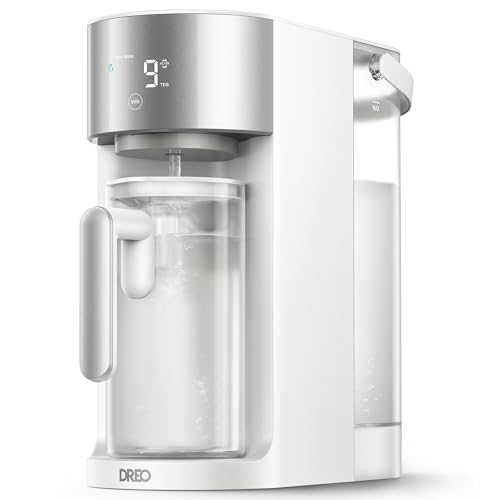
The DREO Countertop RO Water Filter Self-Cleaning closes this list by focusing on a feature many of us undervalue until we own one: real-time TDS feedback. Watching the numbers on the display drop as water moves from raw to filtered is the kind of small daily confirmation that builds long-term trust in a filter.
Compared with the DREO 7-stage WF511 reviewed just above, this model is a more accessible entry point. It still uses the brand’s self-cleaning architecture, which limits the biofilm buildup that owners commonly report on cheaper countertop RO units.
Key Advantages
- Real-time TDS readout makes filter performance visible at a glance.
- Self-cleaning cycle helps keep the membrane in better shape over time.
- 3:1 pure-to-drain ratio keeps wastewater reasonable for an RO unit.
Things To Consider
- Display is small and the numbers can be a little slow to update during heavy draws.
Perfect Match For
Data-curious drinkers who want visible proof their filter is working and who appreciate an install-free countertop setup.
Not Your Match When
You prefer the mineral-preserving path, where the Brondell Coral UC300 Three-Stage Undercounter Filter keeps natural content intact.
What Matters Most Before Choosing Home Drinking Water Filtration Systems
Decide Between Countertop And Under-Sink First
Countertop units like the DREO family win on portability and zero installation, which matters if you rent or move often. Under-sink options like the Waterdrop 10UB or iSpring US31-NC free up counter space but require drilling a faucet hole and connecting to a cold-water line. Your housing situation answers this question more than your preferences do.
Match Filtration To Your Water Report
Reverse osmosis strips dissolved solids, including beneficial minerals, and handles tougher contaminants like lead, nitrates, and PFAS. Carbon-block and catalytic carbon filters preserve minerals and tackle chlorine or chloramine, sediment, and many organic chemicals. Pull up your municipal water report before choosing, since the right match depends on what your tap water actually contains.
Think About Daily Volume And Cartridge Cost
A 3:1 pure-to-drain ratio is friendly to your water bill, and an autofill pitcher saves time during busy mornings. For high-volume households, a 3-stage under-sink unit usually wins on long-term cartridge cost. For a single person or couple, the install-free countertop route tends to be cheaper upfront and easier to maintain.
Filter Indicators And Self-Cleaning Are Worth Real Money
Real-time TDS readouts and filter-life reminders remove the guesswork that sinks many otherwise-good systems into the back of a closet. Self-cleaning cycles reduce biofilm, which is the slimy bacterial layer that owners commonly report forming in neglected countertop units. For most kitchens, those two features pay for themselves in cartridge life alone.
Smart Choices Across The Category
Pitfalls Worth Dodging
Choosing a system based only on the number of stages is a common trap, since more stages don’t always mean broader contaminant reduction. Match the system to your actual water report instead. Skipping the install difficulty question is another common miss, and renters often buy under-sink units they can’t legally install.
Where The Extra Money Goes
Higher-tier picks like the DREO 7-stage WF511 add layered media and tighter RO membranes, which translate to measurable reduction of harder-to-remove contaminants. If your local report is clean, that upgrade delivers diminishing returns. Where heavy metals or PFAS show up, the premium is usually worth it for the peace of mind alone.
Frequently Asked Questions
How Often Do Filters Need Replacing?
Most carbon filters in this category need replacement every six to twelve months depending on household volume, while RO membranes generally last two to three years under typical use. The DREO units track filter life on their displays so you don’t have to guess.
Are Countertop RO Systems As Good As Under-Sink?
Yes, when they use the same membrane rating, since the filtration chemistry is identical. The practical difference is waste water handling and flow rate, where under-sink units generally have an edge.
Will A Filtration System Remove Beneficial Minerals?
Reverse osmosis removes most dissolved minerals, while carbon-block systems like the Brondell Coral UC300 preserve them. If mineral content matters to you, an RO system paired with a remineralization cartridge is one workaround, or you can simply pick a carbon-block system from the start.
Can These Systems Handle Well Water?
The Waterdrop 10UB is specified for municipal tap water only, and most units in this list assume city water. Well water often needs pre-filtration for sediment and iron before any of these systems, so check your well water test results first.
Do I Need A Plumber To Install Any Of These?
The DREO countertop units are designed for install-free setup, so no plumber is required. The under-sink picks (Waterdrop, iSpring, Brondell) typically need basic tools and a couple of hours, and a plumber helps if you’re not comfortable with the cold-water supply line.
The Takeaway
The right home drinking water filtration systems choice depends almost entirely on your housing situation and your local water profile. Renters and frequent movers get the most from the install-free DREO family, while homeowners with chloramine concerns lean toward the iSpring US31-NC. Pull your water report, match the system to it, and the rest tends to fall into place.