

Picking the right home CCTV setup rarely comes down to spec sheets alone. The real question is how the cameras handle your specific property, your wiring comfort level, and how much footage you want to keep on hand. This list pulls together six solid options, from full multi-camera kits to a single add-on camera and a power accessory that solves one of the most common install headaches.
The Shortlist At A Glance

SMONET 5MP Wireless Home Security Camera System 8CH NVR 3TB

ZOSI 12V 2A AC to DC Power Adapter 4-Way Splitter

ANNKE 12MP Bullet PoE Security Camera Smart Dual Light
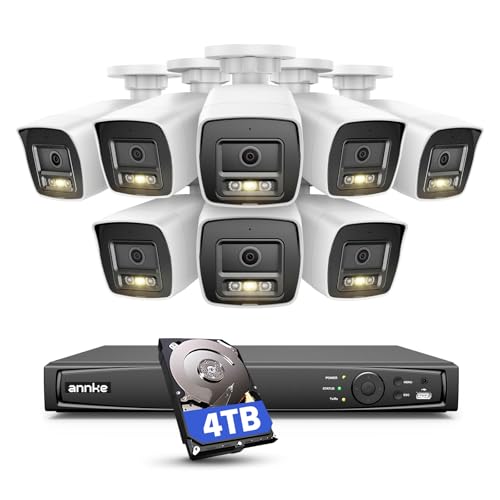
ANNKE 16 Channel 12MP PoE Security Camera System 4TB

ANNKE 8CH 12MP PoE Security Camera System 2TB

PANOOB 4K PoE Dome Camera PD93A3-8M
Why These Options Stand Out
Most homeowners who need eyes on every corner of a larger property end up cobbling together mismatched cameras over time. The SMONET 5MP kit sidesteps that headache by bundling eight IP cameras (IP cameras, meaning internet-connected cameras that stream and record digitally) with an 8-channel NVR (network video recorder, the box that stores and manages your camera feeds) and a 3TB hard drive in a single package. Resolution lands at 5MP, which is a meaningful step up from the older 1080p sets that still dominate entry-level kits.
The cameras are rated IP66 (a standard that means the housing is dust-tight and protected against heavy rain), so you can mount them under eaves or along fence lines without worrying about weather. You get eight infrared LEDs per camera, which translates to roughly 65 feet of black-and-white night vision, and the kit supports mobile app access so you can check in from a commute. This is the pick for people who’d rather unbox one box, mount eight cameras, and be done with it.
Positive Points
- Eight cameras and a 3TB drive ship together, so storage planning is done on day one
- 5MP resolution gives you enough detail to read a license plate across a driveway
- IP66-rated metal housing handles rain, dust, and temperature swings
- Wireless camera link to the NVR removes most of the data-cable hassle
- Mobile app access means a quick check from work or vacation
- 65-foot IR night vision covers a typical backyard without extra lighting
Worth Noting
- Still needs a power outlet at each camera, so plan outlet locations before mounting
- Eight cameras may be overkill for apartments or small homes
- The mobile app experience varies depending on your router’s bandwidth
Best Suited To
Owners of multi-acre lots or homes with detached buildings who want one purchase to cover every entry point.
Reach For A Different Pick When
The PANOOB 4K PoE Dome Camera is a better match if you only need a single low-profile camera for a porch or entryway.
Here’s the unsung hero of any multi-camera install: the power situation. The ZOSI 12V 2A adapter takes a single wall outlet and feeds up to four CCTV cameras through the included 4-way splitter cable. AC input handles 100 to 240V (so it works with North American outlets), and the DC output is the standard 12V that most analog, AHD, and IP security cameras expect.
Where this earns its spot is on install day. Instead of hunting for four separate outlets near the camera locations, you run a single outlet, route one cable, and branch out. It’s the kind of accessory that saves an hour of fishing wires through attics. Anyone retrofitting an older system with mismatched power bricks will find this tidies up the mess behind the TV.
The Upside
- Powers up to four cameras from one wall outlet, cutting down on adapter clutter
- Wide AC input range means it works with most residential circuits
- Compatible with common 12V analog, AHD, and IP camera standards
- Simple two-piece setup makes troubleshooting easier down the road
Trade Offs
- Single 2A output shared across four cameras may starve high-draw PTZ (pan-tilt-zoom) models
- Not weatherproof, so the outlet location needs to be sheltered or indoor
Made For
Installers running several low-power 12V cameras from one central location who want to skip four separate wall adapters.
Look Elsewhere When
The SMONET 5MP kit is a stronger starting point if you don’t already own cameras and need a full system rather than a power accessory.
ANNKE’s 12MP bullet (the classic cylindrical camera shape, easy to aim and mount on walls) leans into one specific promise: detail. The 1/2.7-inch progressive scan BSI (back-side illuminated) CMOS sensor (the image sensor that converts light into digital video) outputs 4096 by 3072, which is a serious jump over the 1080p cameras still common on porch installs. That resolution matters when you actually need to identify a face at 30 feet rather than just see motion.
The smart dual light setup defaults to infrared black-and-white at night, then flips to color when motion triggers the camera. That color-after-dark footage is genuinely useful for reading clothing colors or vehicle details. PoE (Power over Ethernet) means a single cable handles both data and power, so you don’t need a separate outlet at the camera location. For anyone already running a PoE NVR, this drops in cleanly.
The Good Stuff
- 12MP resolution produces footage detailed enough to crop and still see useful information
- Smart dual light switches from IR to color on motion, useful for identifying subjects
- Single PoE cable simplifies the install compared to separate power runs
- Bullet form factor makes aiming at driveways or gates straightforward
Honest Caveats
- No included NVR, so you need a compatible PoE recorder or switch to use it
- Higher resolution footage fills storage faster, so a smaller hard drive won’t go as far
Feature Snapshot
Right Fit For
Shoppers who already own a PoE NVR and want to swap a single weak link in their coverage for a much sharper camera.
Swap It Out When
The PANOOB 4K PoE Dome Camera suits covered porches and entryways where a low-profile mount looks better than a visible bullet.
Sixteen channels is more than most homes need, which is exactly why this kit exists for people planning ahead. ANNKE’s 16-channel NVR supports the same 12MP resolution as the standalone camera above, and the included 4TB hard drive buys you real archive time before footage starts rolling over. You don’t have to fill all sixteen slots on day one; you just have the room to grow.
The system runs AI motion detection that distinguishes humans and vehicles from general motion, so you stop getting phone alerts every time a shadow shifts. For a property with side gates, a detached garage, and a long driveway, the headroom matters. You start with the cameras you actually need today and add more over the next year without swapping the recorder.
Reasons It Performs
- 16 PoE channels give you room to add cameras gradually as coverage gaps show up
- 4TB HDD holds meaningfully more footage than smaller bundles
- AI motion detection reduces nuisance alerts from pets, leaves, and lighting changes
- 12MP per channel matches the standalone ANNKE bullet’s detail level
Things To Consider
- Bundled camera count is often lower than channel count, so check what’s in the box
- 4TB fills faster than expected at 12MP continuous recording; motion-only recording helps
Whose Shelf It Belongs On
Property owners who want max channel headroom and storage and don’t mind paying for slots they may not use right away.
Where A Sibling Pick Shines
The ANNKE 8CH 12MP PoE System is a better match for mid-size homes where sixteen channels is simply more than needed.
The 8-channel version of ANNKE’s 12MP PoE system is the practical middle ground for most single-family homes. You get the same 1/2.7-inch sensor and 4096 by 3072 resolution as the larger kit, just sized for fewer cameras and a 2TB drive. For a typical four-bedroom house, eight channels is plenty: front door, back door, driveway, garage, and a few angles left over.
PoE simplifies the wiring since one Ethernet run per camera handles both data and power. Smart dual light works the same way here as on the standalone ANNKE bullet, switching from IR to color when motion fires. The 2TB drive is the honest trade-off; at 12MP, you’ll lean on motion-triggered recording to keep more than a couple weeks of footage in the archive.
A Strong Showing
- 8 channels match the typical camera count for a mid-size home
- 12MP resolution across every channel keeps detail consistent
- PoE power-over-cable cuts install time compared to separate power runs
- Smart dual light kicks on color capture when something moves
Small Caveats
- 2TB fills quickly at full 12MP continuous recording
- Eight channels is a hard ceiling, so plan future expansion before committing
Key Attributes
Perfect Match For
Homeowners with a four-bedroom property who want 12MP detail without paying for sixteen channels they won’t fill.
Not Your Match When
The ANNKE 16 Channel 12MP PoE System fits better if you expect to add cameras across multiple buildings over the next year or two.
Dome cameras (rounded half-sphere housings that sit flush against ceilings or soffits) are the right call when you don’t want a chunky bullet hanging off the eaves. The PANOOB PD93A3-8M packs 8MP (3840 by 2160) into a low-profile dome with a 2.8mm lens that gives you roughly a 110-degree field of view. For a front porch, that single angle covers the whole entry without a fisheye curve.
IP67 weather rating (one step above IP66, meaning the camera can handle temporary water immersion) means the housing shrugs off heavy rain and dust. Infrared LEDs reach up to about 100 feet in total darkness, which is generous for a single add-on camera. You get PoE so the install still only needs one cable run, and the 4K resolution keeps it competitive with the bigger ANNKE kits on raw detail.
Notable Gains
- Low-profile dome form factor blends into soffits and porch ceilings
- 110-degree field of view covers a wide entry from a single mount point
- IP67 rating handles tougher weather than most consumer cameras
- 4K resolution stays competitive with multi-camera kit detail levels
Points To Keep In Mind
- Fixed lens means no remote zoom or aim adjustment after mounting
- Requires a separate PoE switch or NVR, so factor that into total cost
Who Should Grab It
Homeowners adding a single camera to a covered entryway who want the dome’s discreet look over a visible bullet.
Consider Something Else When
The ANNKE 12MP Bullet PoE Security Camera is a stronger fit for driveways and side gates where you want the camera to be visibly aimed.
What Matters Most Before Choosing Home Cctvs
Wired vs Wireless Power
Wired PoE (Power over Ethernet) systems are the more reliable path for most installs. One Ethernet cable carries both data and power, which means fewer points of failure and a cleaner install. Wireless kits like the SMONET 8CH still need a power outlet at each camera, so “wireless” really refers to the data link, not the absence of wires. Choose wireless when running cables isn’t realistic, and choose PoE when you have attic or crawlspace access.
Resolution and Storage Trade-Off
Higher resolution means more useful footage, but it also means more storage consumed per hour. A 12MP camera fills a 2TB drive far faster than a 5MP camera at the same frame rate. Plan for motion-triggered recording if you want longer archive windows, or pick a kit with a larger drive like the ANNKE 16-channel’s 4TB. There’s no point recording in 4K if the drive overwrites in three days.
Indoor, Outdoor, or Both
Camera housings carry IP ratings (Ingress Protection, a two-digit code where the first digit rates dust resistance and the second rates water resistance) that tell you what they tolerate. IP66 handles rain and dust for most outdoor mounts. IP67 adds temporary submersion protection, useful for low spots where water pools. Match the rating to the mount location, not to the camera’s marketing.
Power and Accessories
A multi-camera install can get messy with individual adapters at every outlet. The ZOSI 12V splitter consolidates that, but only for 12V systems, not PoE. Plan your power strategy before buying cameras, since retrofitting later often means rerunning cables.
Key Considerations Across These Picks
Common Buying Slip Ups
The most common mistake is buying more cameras than the property needs and underestimating storage. An 8-channel kit on a 1TB drive is a recipe for constant overwrites. Another trap is ignoring the difference between indoor and outdoor ratings; a camera without proper IP-rated housing will fail within a season under eaves. Always check what the bundle actually includes, since some listings advertise channels without specifying the camera count.
Where The Extra Money Goes
Stepping up from 5MP to 12MP isn’t a small upgrade; it’s a meaningful jump in identification detail, especially at distance. The premium also buys larger storage, AI motion detection that ignores pets and shadows, and PoE ports that simplify install. The upgrade pays off most on properties with longer sightlines, where plate and face detail actually matter. For a small apartment, the 5MP tier delivers more than enough clarity for everyday use.
Frequently Asked Questions
How many cameras does a typical home actually need?
For a standard single-family home, four to eight cameras cover the main entry points: front door, back door, driveway, and garage. Smaller properties can get by with three, while larger lots with outbuildings often want ten or more.
What is PoE and why does it matter?
PoE stands for Power over Ethernet. It lets a single cable deliver both data and power to each camera, which simplifies wiring and reduces the number of adapters and outlets you need at each mount point.
Is 12MP really better than 5MP?
For identification purposes, yes. 12MP gives you roughly six times the detail of 1080p, so a face or plate stays readable when you crop in. For general motion detection, 5MP is usually plenty.
Can outdoor cameras handle heavy rain?
Look for an IP66 or IP67 rating. IP66 handles rain and dust on most mounts, while IP67 adds protection against temporary submersion, useful in low spots where water collects.
How long does footage stay on the hard drive?
That depends on the drive size, resolution, and whether you record continuously or only on motion. A 2TB drive at 12MP with motion-only recording typically holds one to two weeks of footage before overwriting.
Wrap Up
Any of these six options covers a real need, from a full eight-camera kit down to a single add-on dome. Start with the property size and the spots you actually want to monitor, then match the camera count and resolution to that. For most homes, an 8-channel 12MP system hits the sweet spot between detail and storage. Larger properties benefit from the extra headroom, and a single dome makes sense when coverage is the only gap.




